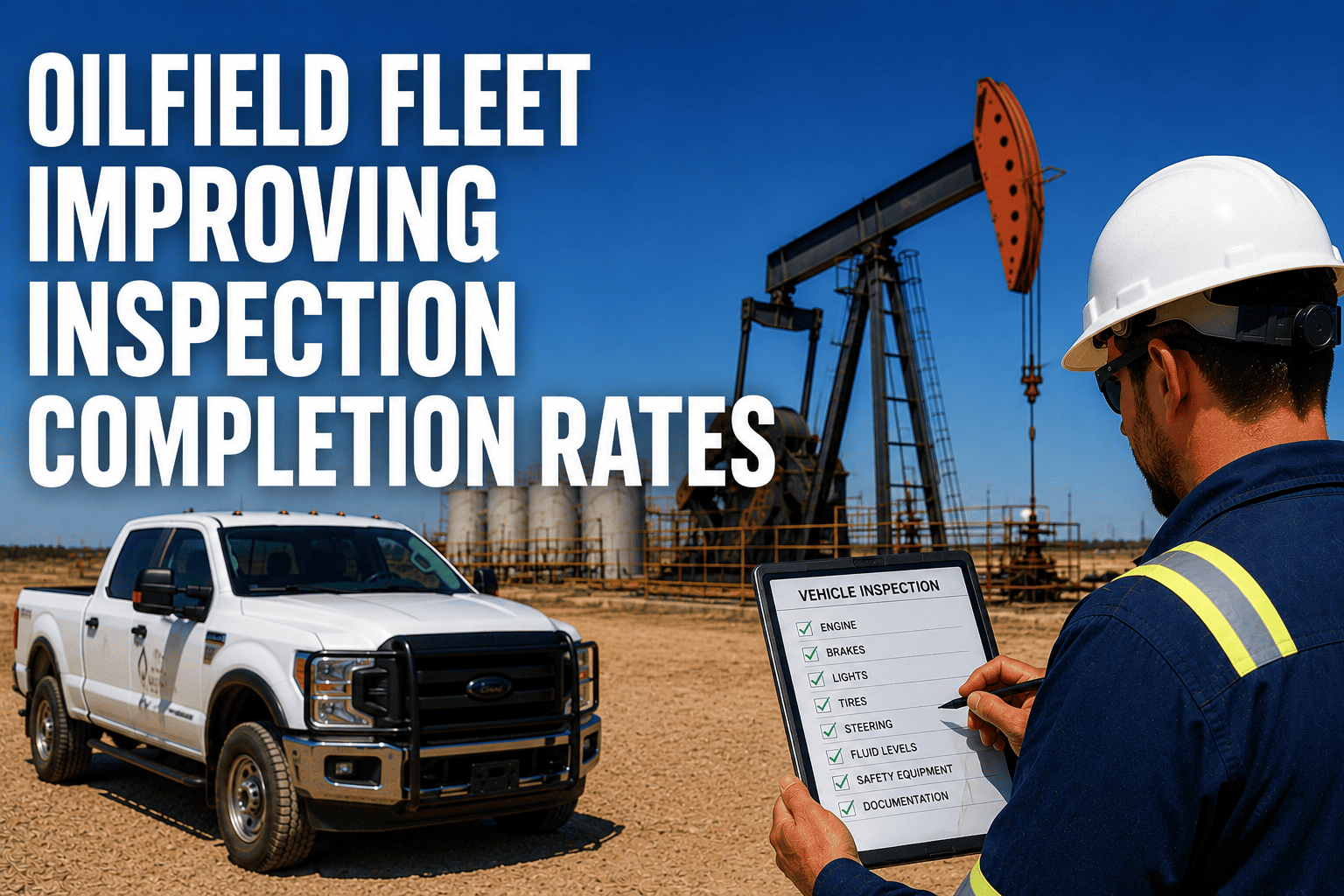
In the fast-paced oilfield industry, time is money, and drivers are often tempted to skip pre-trip inspections to get moving faster. However, low inspection completion rates expose your fleet to massive DOT fines, safety risks, and out-of-service violations. Relying on paper DVIRs leads to lost documents and pencil-whipped records that provide no real safety value. Improving your inspection completion rate requires fast digital DVIRs, automated reminders, and clear accountability. FleetRabbit provides the tools to ensure your required inspections are completed consistently. You can sign up for FleetRabbit to digitize your inspections today, or book a demo to see our compliance platform.
Oilfield fleets relying on paper DVIRs experience inspection completion rates below 60 percent. Drivers skip or pencil-whip inspections to save time, leading to massive compliance gaps. Implementing digital DVIRs with automated reminders and tracking pushes completion rates to 95 percent or higher, drastically reducing DOT violations and catching defects before they cause breakdowns.
The Challenge of Oilfield Inspection Compliance
The challenge of oilfield inspection compliance stems from the conflict between speed and safety. Oilfield drivers operate under intense pressure to reach remote well sites quickly. Pre-trip and post-trip inspections take time, and when dispatchers are calling, drivers prioritize movement over paperwork. Paper DVIRs exacerbate the problem. They are slow to fill out, easy to lose, and impossible to verify. When compliance relies on a piece of paper sitting in a messy cab, completion rates naturally plummet, leaving the fleet completely exposed to DOT audits and safety risks. A strong compliance program shifts the focus from manual paperwork to instant digital verification.
Why Drivers Skip Pre-Trip Inspections
Drivers skip pre-trip inspections for several reasons, but the primary cause is usually a lack of convenient tools. A 20-page paper form is cumbersome and time-consuming to complete in a dark cab at 4 AM. Additionally, if there is no enforcement mechanism, drivers take the path of least resistance. They know that if they simply sign the bottom of the form, the office will assume the inspection was done. Without immediate digital accountability, skipping the inspection is the easiest way to save 10 minutes. To stop this behavior, you need a system that forces engagement and tracks the exact time and location of the inspection.
The Danger of Pencil-Whipping
Pencil-whipping is the practice of signing off on an inspection without actually performing the checks. This is the most dangerous habit in fleet compliance. When a driver pencil-whips a DVIR, they are creating a legal document claiming the vehicle is safe to operate, even if it has a major defect. If that truck is involved in an accident, a lawyer will subpoena the DVIR. If the inspection was faked, the fleet is liable for gross negligence. To eliminate pencil-whipping, you can sign up for FleetRabbit to digitize your inspections today, or book a demo to see our compliance platform.
FleetRabbit's mobile app makes pre-trip inspections fast and easy. Drivers complete DVIRs in under 60 seconds, with automated reminders and real-time tracking ensuring no inspection is ever skipped. Stop relying on paper logs and achieve true compliance. Start your free trial today.
The Financial Impact of Low Completion Rates
Low inspection completion rates have a direct and severe financial impact on oilfield fleets. When inspections are skipped, defects go unnoticed until they cause a catastrophic breakdown on a remote lease road. A simple issue like a low tire pressure, which takes 2 minutes to fix in the yard, becomes a blown tire on the highway, costing thousands in towing and emergency road service. Furthermore, DOT audits that reveal missing or incomplete DVIRs result in steep fines. A single violation for operating without a proper inspection can cost 1,500 to 5,000 dollars, not including the downtime from placing the vehicle out of service.
| Inspection Issue | Typical Financial Impact | Root Cause | FleetRabbit Solution |
|---|---|---|---|
| Skipped Pre-Trip | 2,000 to 5,000 dollars | Driver rushing to meet dispatch time, no enforcement | Forced mobile app completion before vehicle ignition |
| Pencil-Whipped DVIR | Liability & Negligence | Paper forms with no verification or GPS timestamp | Photo capture and GPS-stamped digital signatures |
| Missed Defect | 5,000 to 15,000 dollars | Inspection not done, leading to catastrophic road failure | Standardized checklists ensuring all components are reviewed |
| Lost Paperwork | 1,500 to 3,000 dollars | Paper DVIRs destroyed by weather or left in the cab | Cloud-based records that cannot be lost or destroyed |
| DOT Audit Failure | 5,000 to 15,000 dollars | Incomplete inspection history during compliance review | Instant generation of historical DVIR reports for auditors |
Strategies to Improve DVIR Completion
Improving DVIR completion rates requires a combination of convenient technology and strict accountability. The first strategy is eliminating paper. Providing drivers with a mobile app that features a simple, guided checklist transforms a 10-minute paper chore into a 60-second digital task. The second strategy is automated enforcement. The system must track which vehicles have been inspected each day and automatically remind drivers who have not yet completed their checks. Finally, managers must be able to view completion rates in real-time, allowing them to intervene immediately if a driver attempts to leave the yard without a completed DVIR.
Fast and Easy Digital DVIRs
Digital DVIRs are the cornerstone of high inspection completion rates. A well-designed mobile app allows drivers to walk around the truck, tapping checkmarks for each component. If a defect is found, they can snap a photo and attach it directly to the report. The app automatically captures the GPS location and timestamp, verifying that the inspection was done at the truck, not from the breakroom. This ease of use removes the friction that causes drivers to skip inspections, ensuring that compliance becomes the path of least resistance.
Automated Reminders and Accountability
Accountability is what separates a 60 percent completion rate from a 95 percent completion rate. FleetRabbit's system allows managers to set automated reminders that ping the driver's phone if they have not submitted a pre-trip DVIR by a certain time. Furthermore, the dashboard visually flags any vehicle that is moving without a completed inspection on file. This level of visibility makes it impossible for drivers to hide missed inspections. To implement this accountability, you can sign up for FleetRabbit to digitize your inspections today, or book a demo to see our compliance platform.
How FleetRabbit Ensures Inspection Compliance
Modern fleet compliance requires technology that connects the driver directly to the safety team instantly. FleetRabbit's integrated platform combines mobile DVIRs, telematics, and defect management into a single dashboard. Drivers use the app to complete inspections, and the data syncs instantly to the cloud. Safety managers receive immediate alerts for critical defects, allowing them to pull the truck from service before it becomes a hazard. This integration eliminates the blind spots of paper logs and ensures your compliance records are 100 percent accurate and audit-ready.
Real-Time Completion Tracking
Real-time completion tracking means your safety team knows exactly who has inspected their truck this morning. The FleetRabbit dashboard displays a grid of all active vehicles, showing green for completed, yellow for pending, and red for missed inspections. This visual simplicity makes it incredibly easy to identify drivers who are habitually skipping their checks. By confronting drivers with this data, you enforce a culture where inspections are mandatory, not optional.
Immediate Defect Resolution
When a driver logs a defect on a paper DVIR, it often sits in a mechanic's inbox for days. With FleetRabbit, a logged defect instantly generates a work order. The truck is flagged as unsafe to drive, and dispatch is notified not to assign loads to it. The mechanic receives the work order on their phone, repairs the issue, and signs off digitally. The truck is then cleared for service. This immediate resolution loop ensures that defects are actually fixed, rather than ignored, protecting the driver and the company.
Key Takeaways for Fleet Inspections
Improving inspection completion rates is the most critical step in protecting an oilfield fleet from liability and breakdowns. Paper DVIRs are a liability that leads to pencil-whipping, lost data, and low compliance. A digital, data-driven approach to inspections ensures that every component is checked, every day. Fleets that implement digital DVIR systems see completion rates soar to 95 percent or higher, catching defects before they cause expensive roadside failures.
Implementing a comprehensive mobile inspection system eliminates pencil-whipping and reduces DOT audit penalties significantly. The return on investment is immediate, not just in prevented fines, but in reduced emergency repair bills and protected contract SLAs. Oilfield operators demand safe equipment, and FleetRabbit provides the exact digital documentation needed to prove compliance.
The path forward is clear. Evaluate your current inspection completion rate and ask if you can verify that every truck was actually checked today. If you are relying on paper, you are at risk. Fleet managers who address inspection compliance systematically protect their profitability and operational reliability. You can sign up for FleetRabbit to digitize your inspections today, or book a demo to see our compliance platform.
Frequently Asked Questions About Inspection Rates
Every skipped inspection is a massive liability waiting to happen. FleetRabbit transforms your paper DVIRs into fast, verifiable digital records, pushing your completion rates over 95 percent. Protect your fleet from DOT fines and accidents. Start your free trial today with no credit card required.