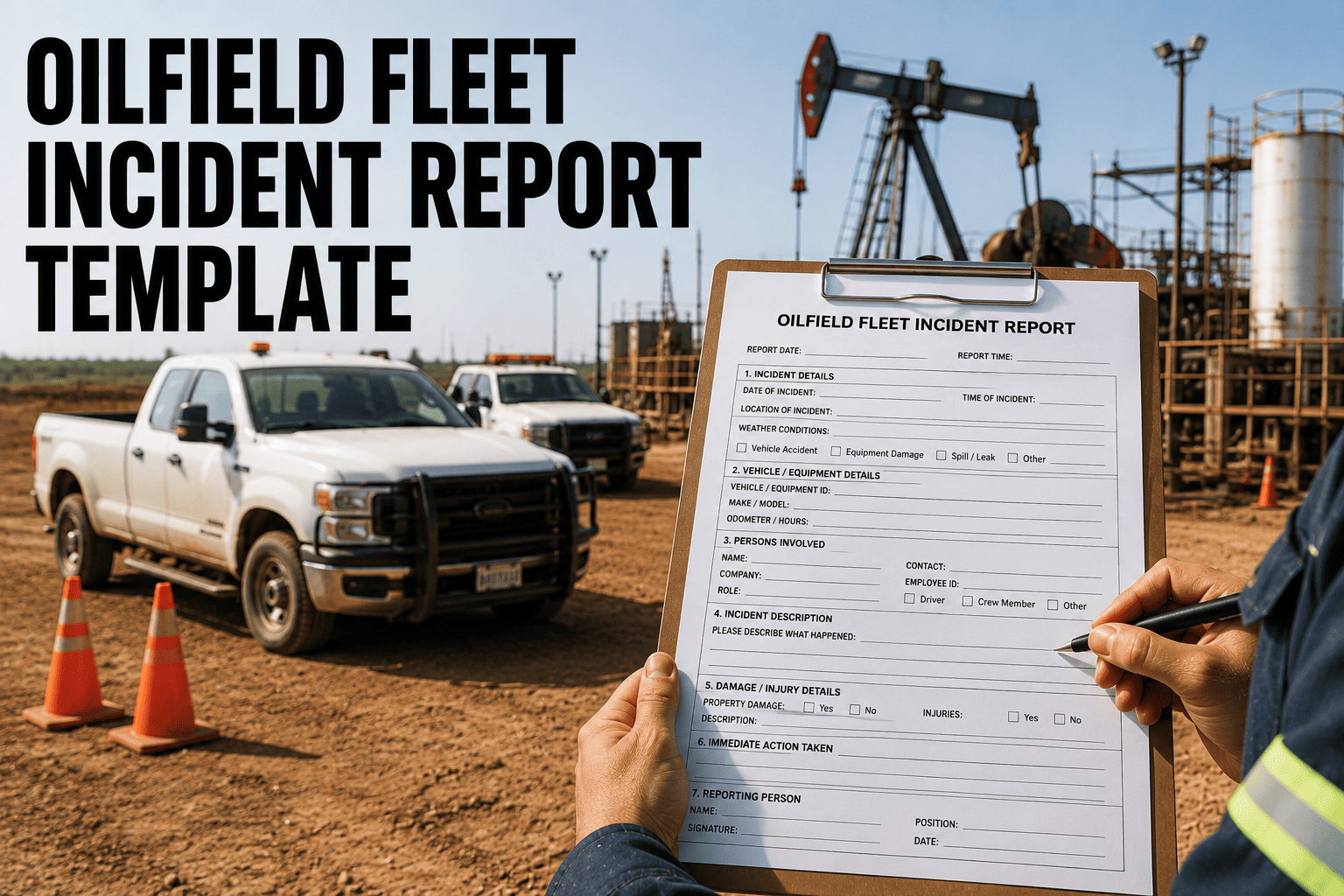
When an incident occurs on a remote oilfield lease road, the chaotic aftermath can obscure critical details if not managed properly. From minor near-misses to significant vehicle collisions or environmental spills, documenting the event accurately is a legal and operational necessity. Relying on memory or hastily scribbled notes leads to incomplete HSE documentation, leaving the company vulnerable to regulatory fines and liability claims. Implementing a standardized oilfield fleet incident report template ensures that safety managers capture every essential detail, from the exact timeline and witness statements to telematics data and root cause analysis. This structured approach forces investigators to look beyond the immediate surface and identify systemic issues that require corrective action. Moving this documentation from a static paper form to a dynamic digital platform transforms how quickly and accurately data is collected. FleetRabbit digitizes the entire incident reporting workflow, integrating vehicle telematics and driver inputs to ensure your HSE records are comprehensive, compliant, and audit-ready at all times.
An effective oilfield fleet incident report template standardizes the capture of timelines, witness statements, telematics evidence, and root cause analysis. Relying on paper forms leads to incomplete records and failed compliance audits. FleetRabbit digitizes the entire reporting workflow, ensuring your HSE documentation is comprehensive and audit-ready.
The Four Core Elements of an Incident Report Template
Timeline & Witnesses
Immediate Context
Telematics Evidence
Data Verification
Injury & Damage
Asset and Personnel Impact
Root Cause & Action
Preventative Strategy
Investigating an oilfield incident requires coordinating multiple data streams, from driver interviews to backend software systems. If your safety team relies on disconnected paper forms, critical evidence like telematics data is often left out of the final report. To see how our platform unifies this data into a seamless reporting workflow, you can sign up for FleetRabbit today or book a demo with our team to explore a better way to manage your HSE documentation.
Stop relying on paper forms that lead to incomplete data and failed compliance audits. FleetRabbit standardizes your incident report template, integrates telematics, and tracks corrective actions. Make HSE documentation quick, accurate, and audit-ready for your entire operation.
Standardized Incident Report Documentation Matrix
A structured documentation process ensures that no critical detail is overlooked during the stressful aftermath of an accident. Use the following matrix to guide your HSE investigations and maintain consistent compliance records across your fleet.
| Report Segment | Documentation Focus | Required Action | Digital Tracking Method |
|---|---|---|---|
| Immediate Response | Secure the scene, check for injuries, notify dispatch | Driver completes digital incident notification via mobile app | Real-time alert routing to HSE managers |
| Data Collection | Gather photos, witness contacts, and telematics data | System automatically pulls speed, location, and G-force metrics | Automated integration with vehicle GPS and sensors |
| Damage Assessment | Document vehicle damage and environmental impact | Capture timestamped photos of all affected areas and equipment | Secure cloud storage with geo-tagged photo verification |
| Root Cause Analysis | Identify contributing factors like weather or fatigue | Safety manager reviews data and conducts driver interviews | Digital workflow assigning corrective action tasks |
| Final Sign-Off | Management review and regulatory submission | HSE director approves the finalized digital report | E-signature capture with permanent audit trail |
The true value of an incident report lies not in documenting what went wrong, but in driving the corrective actions that prevent it from happening again. When reports are buried in filing cabinets, identifying recurring patterns across a fleet is nearly impossible. Modern oilfield operations require a proactive approach where every incident, no matter how minor, feeds into a centralized database that highlights operational vulnerabilities. By analyzing trends in telematics data and driver behavior alongside incident reports, safety managers can implement targeted training and route modifications. Utilizing comprehensive fleet management software ensures that corrective actions are not just recommended but actively tracked to completion, closing the loop on safety management and protecting both the workforce and the company bottom line.
The Role of Telematics in Incident Reconstruction
In the past, incident reconstruction relied heavily on subjective driver testimony and conflicting witness accounts. Today, telematics integration provides an objective, scientific approach to understanding exactly what occurred. When a collision or near-miss is reported, the system automatically extracts the vehicle speed, braking patterns, and engine status from the minutes leading up to the event. This data is permanently linked to the digital incident report template, providing HSE managers and insurance investigators with undeniable proof of the circumstances. This integration eliminates false claims and protects the company from fraudulent liability lawsuits.
Moving from Reactive to Proactive Safety
Simply filling out a report after a truck is damaged is a reactive safety strategy that does nothing to prevent the next incident. A digital template transforms this process by flagging near-misses and minor damage events that often go unreported on paper. When drivers know they can easily submit a digital report in minutes, management gains visibility into the smaller hazards that precede major accidents. Tracking these micro-incidents allows safety teams to address root causes, such as poor lighting at a specific loading dock or a dangerous intersection on a lease road, before a catastrophic event occurs.
Do not let incomplete records and missing evidence result in failed audits and increased liability. FleetRabbit standardizes your incident reporting, integrates telematics, and tracks corrective actions. Start building a safer, more compliant oilfield fleet today.