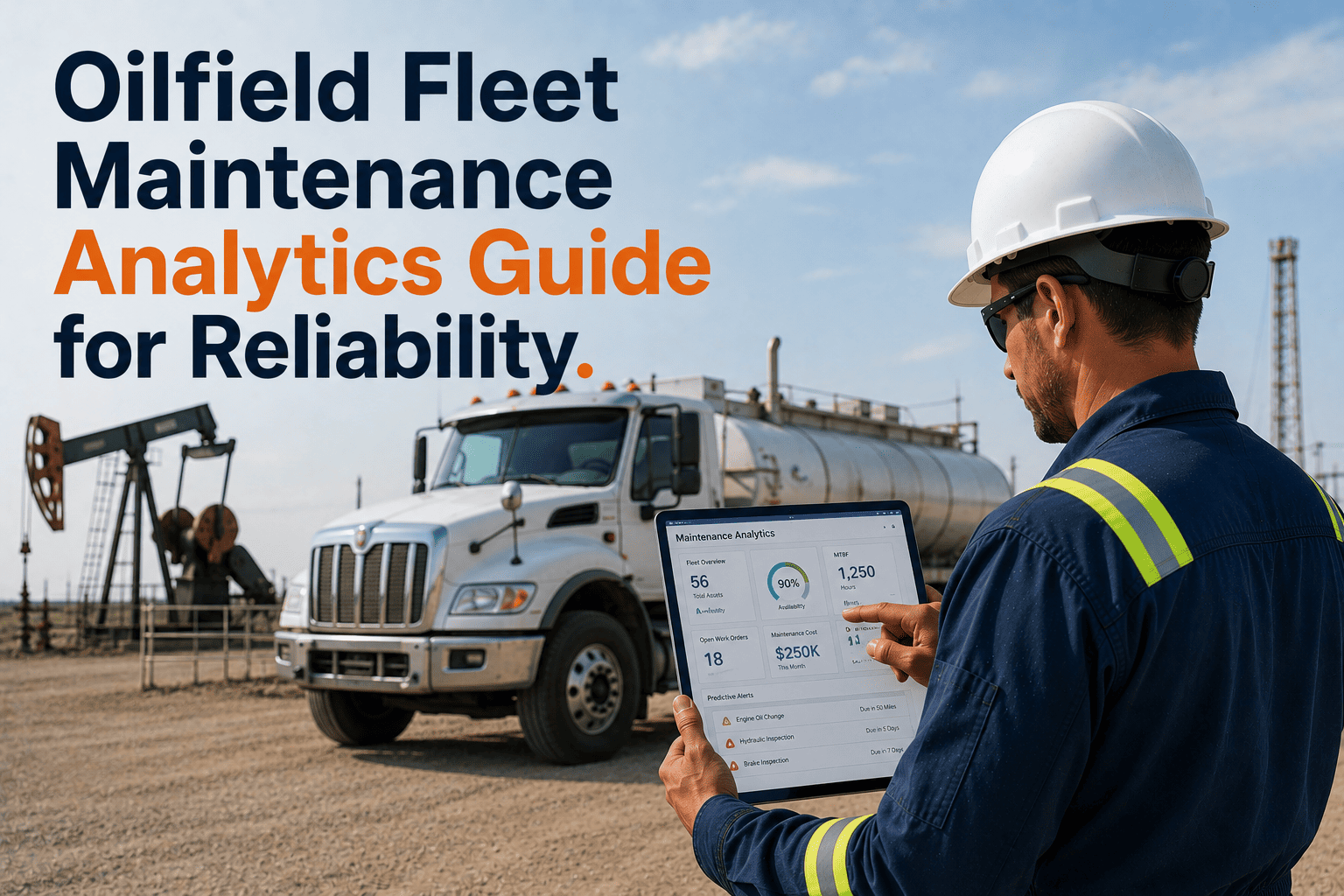
Maintenance analytics transforms oilfield fleet management from reactive breakdown response into proactive reliability optimization through systematic data collection, pattern recognition, failure prediction, and continuous improvement enabling fleet managers to reduce unplanned downtime 75-85 percent, decrease maintenance costs 35-45 percent, extend equipment lifespan 20-30 percent, and achieve sustained 92-96 percent fleet availability protecting revenue generation and operational competitiveness across drilling support, completion services, and production transportation operations. Traditional maintenance approaches lacking analytical foundation rely on fixed calendar-based service schedules ignoring actual equipment condition and usage patterns, reactive repair responding to breakdowns after failures occur creating expensive emergency situations, fragmented data preventing pattern recognition across fleet populations, and gut-feel decision-making unsupported by quantitative evidence resulting in suboptimal maintenance timing, unnecessary component replacements, missed failure warnings, and chronic reliability issues persisting undetected without systematic root cause analysis. FleetRabbit's comprehensive maintenance analytics platform captures complete equipment lifecycle data including operating hours, diagnostic fault codes, maintenance history, failure events, repair costs, and downtime duration feeding advanced algorithms that identify optimal service intervals, predict component failures 14-21 days before occurrence, quantify total cost of ownership by vehicle and component type, benchmark performance against fleet averages and industry standards, and generate actionable recommendations for maintenance program optimization delivering documented $280,000-$460,000 annual value for 100-vehicle operations through systematic data-driven reliability improvement replacing reactive crisis management with proactive analytical maintenance excellence. Schedule a demonstration to explore maintenance analytics capabilities transforming fleet reliability across your oilfield operations.
Oilfield Fleet Maintenance Analytics Guide for Reliability Excellence
Transform maintenance from reactive crisis response to proactive analytical program. FleetRabbit's comprehensive platform delivers 75-85 percent downtime reduction, 35-45 percent cost savings, and sustained 92-96 percent fleet availability through predictive analytics, optimization algorithms, and continuous improvement intelligence.
Seven Critical Analytics Domains Driving Maintenance Excellence
Predictive Failure Analytics and Early Warning Systems
Machine learning algorithms continuously analyze engine diagnostic codes, sensor readings, operating temperatures, vibration patterns, and historical failure signatures predicting mechanical issues 14-21 days before catastrophic breakdowns occur enabling proactive repair scheduling during planned downtime windows rather than emergency response during operational periods reducing unplanned downtime 75-85 percent and emergency repair costs 60-70 percent through controlled intervention timing.
Maintenance Cost Analytics and Budget Optimization
Comprehensive cost tracking captures parts expenses, labor hours, external service charges, downtime impact, and total maintenance expenditure per vehicle, per component type, and per operating hour enabling fleet managers to identify cost escalation patterns, benchmark against fleet averages, quantify vendor performance, and optimize maintenance budgets through data-driven resource allocation replacing historical spend patterns with analytical cost management.
Component Life Cycle Analysis and Replacement Optimization
Detailed tracking of component installation dates, operating conditions, service history, and replacement events quantifies actual component lifespan versus manufacturer specifications enabling optimization of replacement intervals balancing premature replacement waste against extended operation failure risk while identifying components consistently underperforming expectations warranting supplier quality discussions or specification changes.
Preventive Maintenance Effectiveness Measurement
Systematic analysis of preventive maintenance schedule adherence rates, service interval optimization, and correlation between PM execution and subsequent failure frequency validates maintenance program effectiveness enabling continuous refinement of service schedules based on actual reliability outcomes rather than manufacturer recommendations potentially misaligned with specific operational conditions and usage patterns characteristic of oilfield environments.
Downtime Impact Analysis and Availability Optimization
Comprehensive downtime tracking captures unplanned maintenance events, scheduled service duration, parts availability delays, and total equipment unavailability quantifying revenue impact and identifying bottlenecks limiting fleet availability enabling targeted improvement initiatives addressing root causes of excessive downtime whether maintenance scheduling inefficiency, parts inventory gaps, technician capacity constraints, or chronic equipment reliability issues.
Fleet Benchmarking and Performance Comparison
Comparative analytics benchmark individual vehicle performance against fleet averages, similar equipment types, and industry standards identifying outliers requiring investigation whether exceptionally poor performers warranting disposal consideration or superior performers revealing best practices applicable across fleet population enabling systematic reliability improvement through internal benchmarking and best practice replication.
Root Cause Analysis and Continuous Improvement
Structured failure investigation capturing root causes, contributing factors, corrective actions implemented, and effectiveness validation creates continuous improvement feedback loop where analytical insights drive systematic reliability enhancement through pattern recognition, targeted interventions, and outcome measurement replacing reactive firefighting with proactive analytical problem-solving methodology embedding continuous improvement into organizational maintenance culture.
Transform Maintenance Through Data-Driven Intelligence and Optimization
FleetRabbit's integrated maintenance analytics platform combines predictive failure forecasting, cost optimization analysis, component lifecycle tracking, PM effectiveness measurement, downtime impact quantification, fleet benchmarking, and root cause investigation delivering 75-85 percent downtime reduction and 35-45 percent cost savings through systematic analytical approach replacing reactive crisis management.
FleetRabbit Maintenance Analytics Features and Tools
Automated Predictive Maintenance Alerts
Machine learning algorithms analyzing diagnostic data, operating patterns, and failure history generate automated alerts 14-21 days before predicted breakdowns. Early warning enables proactive scheduling during planned downtime reducing emergency repairs 60-70 percent and unplanned downtime 75-85 percent through controlled intervention timing versus reactive crisis response.
Comprehensive Cost Analytics Dashboard
Real-time cost tracking captures parts, labor, services, and downtime impact calculating maintenance cost per operating hour by vehicle and component. Trend analysis identifies cost escalation patterns while vendor performance benchmarking supports contract negotiations and supplier optimization decisions reducing total maintenance expenditure 35-45 percent.
Component Lifecycle Optimization
Detailed component tracking from installation through replacement quantifies actual lifespan versus specifications enabling replacement interval optimization. Statistical analysis identifies underperforming components warranting supplier discussions while best performers reveal optimal operating conditions and maintenance practices applicable across fleet population.
Fleet Performance Benchmarking
Comparative analytics rank vehicle performance against fleet averages and industry standards identifying outliers requiring investigation. Statistical analysis reveals best practices from superior performers enabling replication across fleet while chronic underperformers receive targeted improvement initiatives or disposal consideration based on quantitative performance data.
Downtime Impact Quantification
Comprehensive downtime tracking categorizes unavailability by root cause quantifying revenue impact and identifying improvement opportunities. Analysis reveals whether parts availability, technician capacity, scheduling efficiency, or equipment reliability drives downtime enabling targeted interventions addressing actual bottlenecks limiting fleet availability.
Root Cause Analysis Tools
Structured failure investigation captures root causes, contributing factors, and corrective actions creating continuous improvement database. Pattern recognition across fleet population identifies systemic issues requiring design modifications or operational changes while effectiveness tracking validates improvement initiatives through subsequent failure rate monitoring.
Strategic Benefits for Fleet Executives and Operations Leadership
Predictive Intelligence and Reliability Optimization
Transform maintenance from reactive response to proactive program through predictive analytics forecasting failures 14-21 days in advance. Cost analytics identify optimization opportunities reducing expenditure 35-45 percent. Component lifecycle tracking optimizes replacement intervals. Continuous improvement methodology drives sustained reliability enhancement through systematic analytical approach.
Equipment Availability and Revenue Protection
Achieve 92-96 percent fleet availability through downtime reduction 75-85 percent enabled by predictive maintenance. Real-time analytics support informed dispatch decisions considering equipment health status. Benchmarking identifies underperformers requiring targeted intervention. Systematic reliability protects revenue generation and competitive market position through superior operational performance.
Strategic Resource Allocation and Performance Excellence
Data-driven insights support strategic decisions on fleet composition, vendor relationships, parts inventory, and technician staffing. Quantitative analysis replaces intuition-based management enabling optimal resource allocation. Performance benchmarking validates competitive positioning while continuous improvement metrics demonstrate operational excellence supporting customer confidence and premium pricing.
Cost Control and Financial Performance
Maintenance cost reduction 35-45 percent through optimization improves profitability and competitive positioning. Predictable spending patterns support accurate budget forecasting. Component lifecycle optimization extends asset lifespan preserving capital value. Downtime reduction protects revenue capacity. Analytics-driven approach delivers measurable financial returns on technology investment.