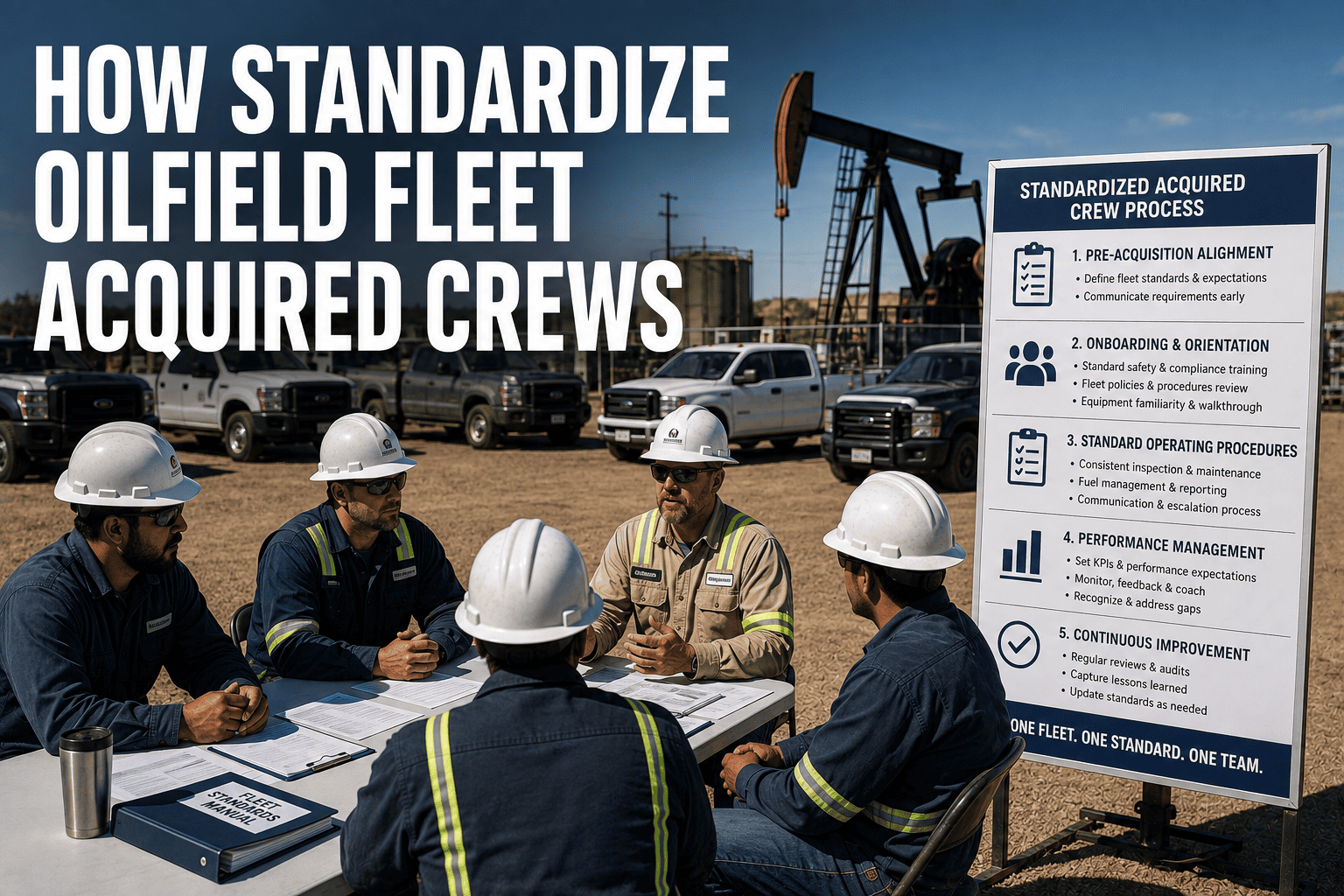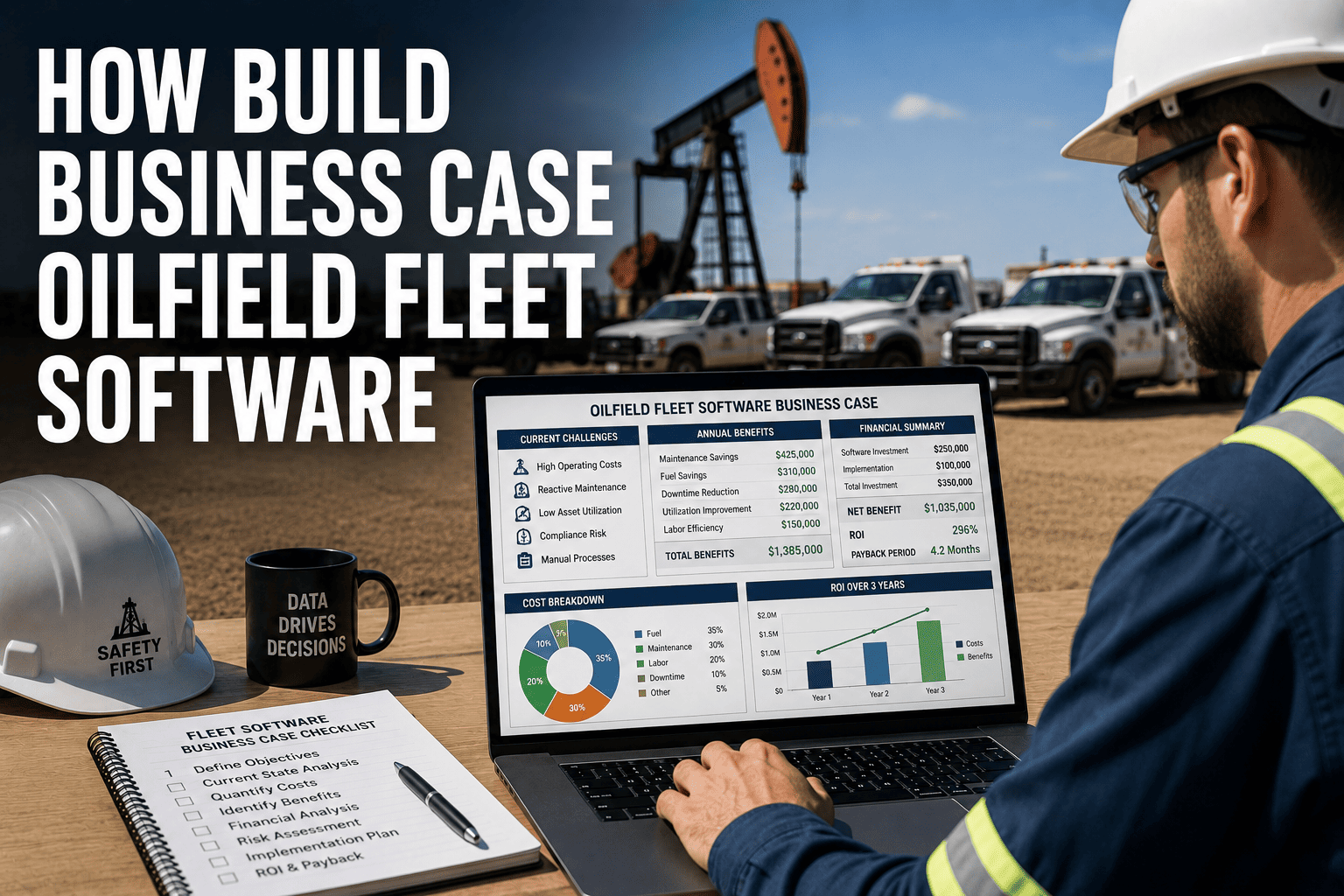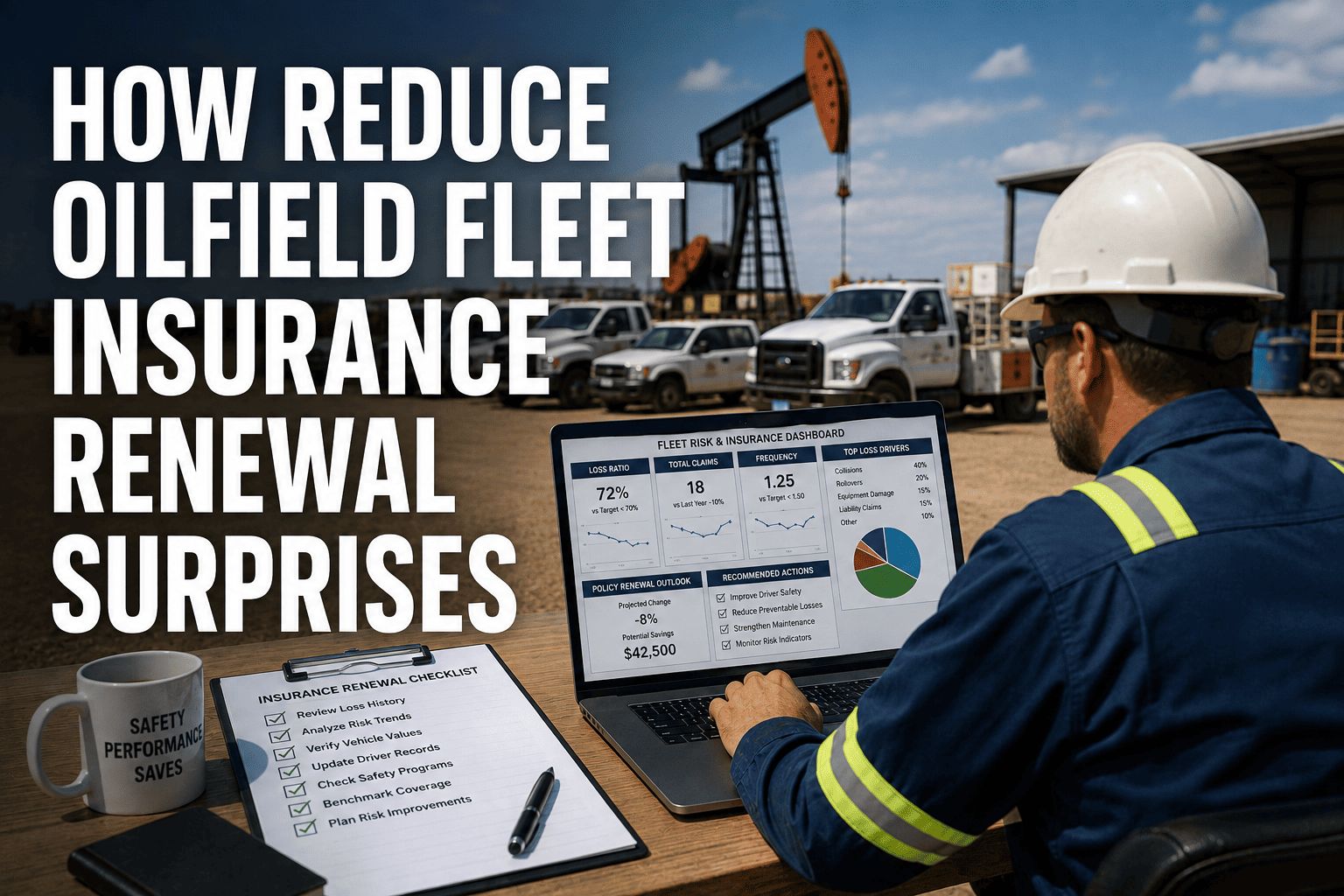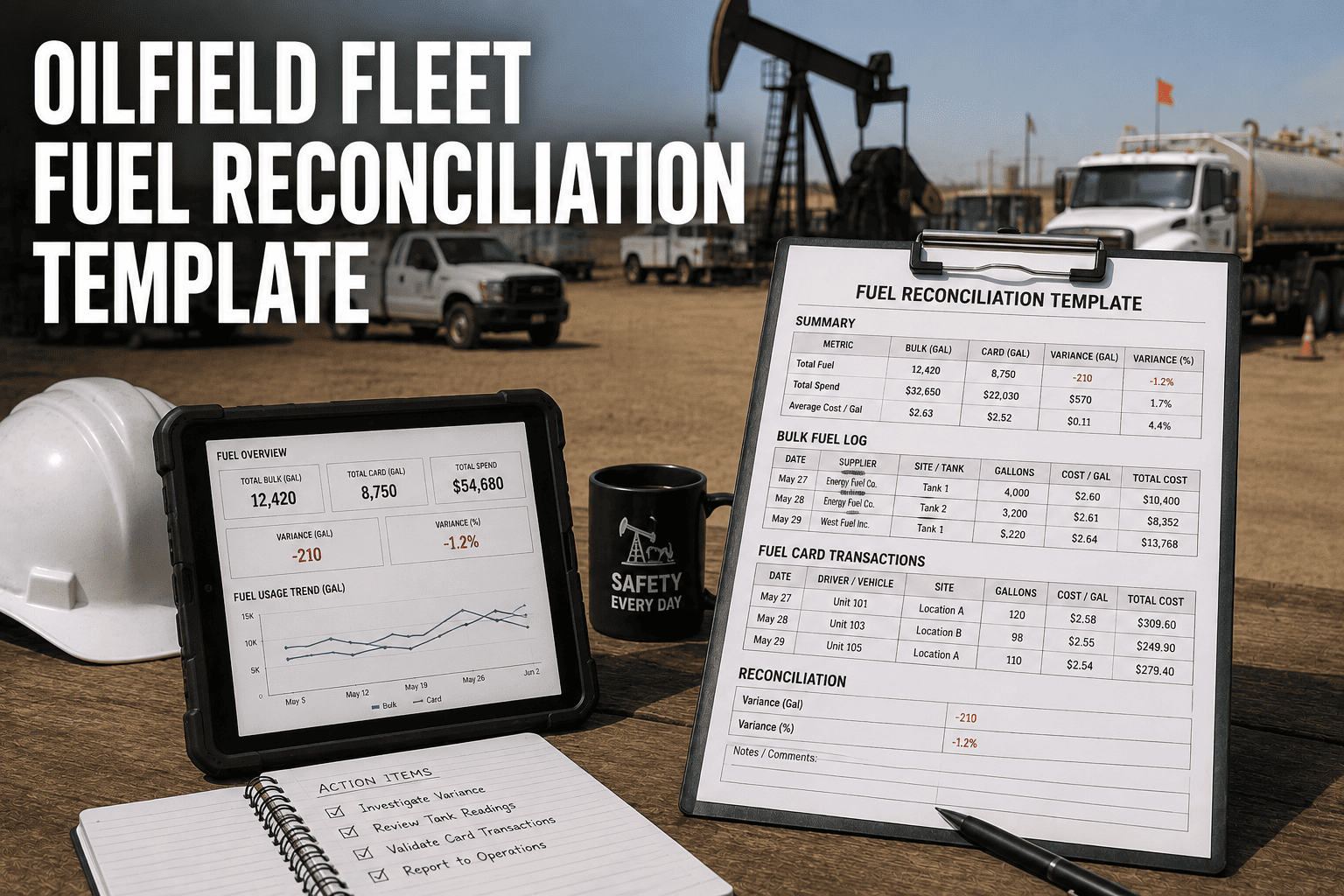
An oilfield operator rarely runs a job with just its own trucks. A single wellsite might see equipment moved by a prime contractor's fleet, a hauling subcontractor brought in for overflow capacity, and an owner-operator picked up for a single load. Each tier has different insurance, different safety records, and different levels of oversight, yet when something goes wrong on site, regulators and courts often trace liability straight back up the chain to the company that controlled the location. Fleet managers who cannot answer a simple question, which vehicles and drivers are on my site right now and are they qualified, are carrying risk they cannot see and cannot defend.
Oilfield work typically flows through three tiers: the prime or operating company, subcontracted hauling and service firms, and independent owner-operators. Regulatory guidance makes clear that the controlling company keeps safety responsibility even when work is subcontracted, and multiple employers on a single site can be cited for the same violation. Centralized tracking of insurance, certifications, and vehicle condition across every tier is what turns that liability into a manageable, documented process.
The Three Tiers Behind Every Oilfield Job
Understanding where risk concentrates starts with understanding who actually shows up on location. Each tier brings a different relationship, a different paper trail, and a different blind spot for the company ultimately responsible for the site.
Why the Gap Between Tiers Creates Real Liability
Federal safety guidance is consistent on one point, hiring a contractor does not transfer away the controlling company's responsibility for what happens on its site. When an incident occurs, investigators can and do cite both the prime contractor and the subcontractor tied to the vehicle involved. Contracts often include indemnification language meant to push liability down the chain, but that language only holds up when the operator can prove it exercised reasonable oversight before and during the work, not just at the point of signing the contract.
FleetRabbit brings prime, subcontractor, and owner-operator vehicles into a single dashboard, so you always know which assets are on your sites, whether their paperwork is current, and where your exposure actually sits.
What Fleet Managers Need To Track At Each Tier
Not every tier needs the same level of monitoring, but every tier needs some. The table below outlines the minimum records a fleet or safety manager should keep current for each level of the contractor chain, and where the biggest documentation gaps typically appear.
| Contractor Tier | Core Records To Track | Common Gap | Why It Matters |
|---|---|---|---|
| Prime Contractor | Vehicle maintenance history, driver qualification files, safety audit results | Records exist but sit in disconnected systems across departments | Sets the compliance benchmark every subcontractor is measured against |
| Hauling Subcontractor | Insurance certificates, DOT authority, driver credentials, prior incident history | Insurance verified once at contract signing, never rechecked before expiry | A lapsed policy leaves the operator exposed if that vehicle is involved in an incident |
| Owner-Operator | Individual driver license status, vehicle inspection date, site access authorization | Onboarded quickly for a single job with minimal documentation captured | Highest turnover tier, so outdated records accumulate the fastest |
Documentation That Actually Holds Up In An Audit
Due diligence has to be provable, not just performed. Confirming a hauler's credentials once during onboarding is not the same as maintaining a running record that shows their insurance, safety rating, and vehicle inspections stayed current for the entire length of the contract. When a client audit or a post-incident investigation asks for proof of oversight, a fleet manager needs to produce dated records, not a memory of a phone call made months earlier.
Insurance And Authority Verification
Liability, cargo, and workers compensation coverage should be checked against contract-required minimums before a subcontractor's first load and monitored for renewal dates afterward, since a policy that lapses mid-contract often goes unnoticed until it is needed.
Driver And Vehicle Qualification
Every driver tier, whether employed by the prime, a subcontractor, or operating independently, needs a verifiable license status and, where applicable, wellsite-specific safety training on file before being granted site access.
Reducing Risk Without Slowing Down Operations
The instinct to solve contractor risk is often to add more paperwork, but that usually just slows onboarding without closing the actual visibility gap. A better approach centralizes contractor and owner-operator data alongside owned fleet data from day one, so a new hauler's insurance, driver credentials, and vehicle status are checked automatically before dispatch rather than manually chased after the fact. Fleet managers evaluating how to bring subcontractor and owner-operator tracking into their existing operations can sign up for a free trial and connect a sample contractor roster to see the gaps surface in real time.
Real-time location and status visibility also changes how quickly a team can respond when something goes wrong. Knowing exactly which vehicles, across which tier, were on a specific site at a specific time turns an incident investigation from a multi-day records search into a lookup that takes minutes, and it gives the operator documented proof of the oversight it exercised well before any question of liability arises.
FleetRabbit keeps insurance certificates, driver qualifications, and vehicle status current across your prime fleet, subcontractors, and owner-operators, so you can prove oversight the moment an auditor or client asks for it.
Every tier of your fleet, prime, subcontractor, and owner-operator, deserves the same level of visibility. FleetRabbit brings insurance, credentials, and vehicle status into one place so you always know who is on your site and whether they are qualified to be there. Get started with no credit card required.