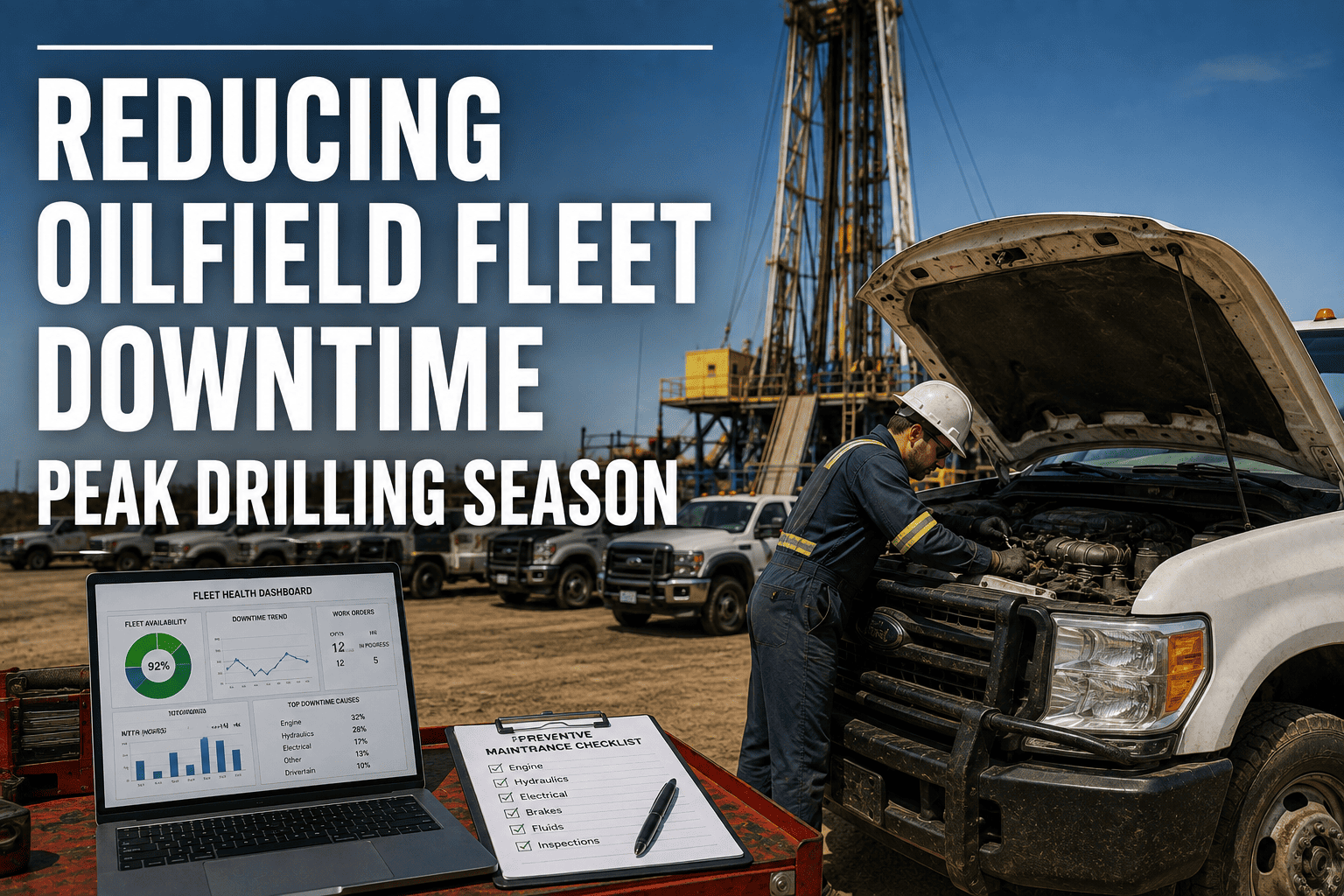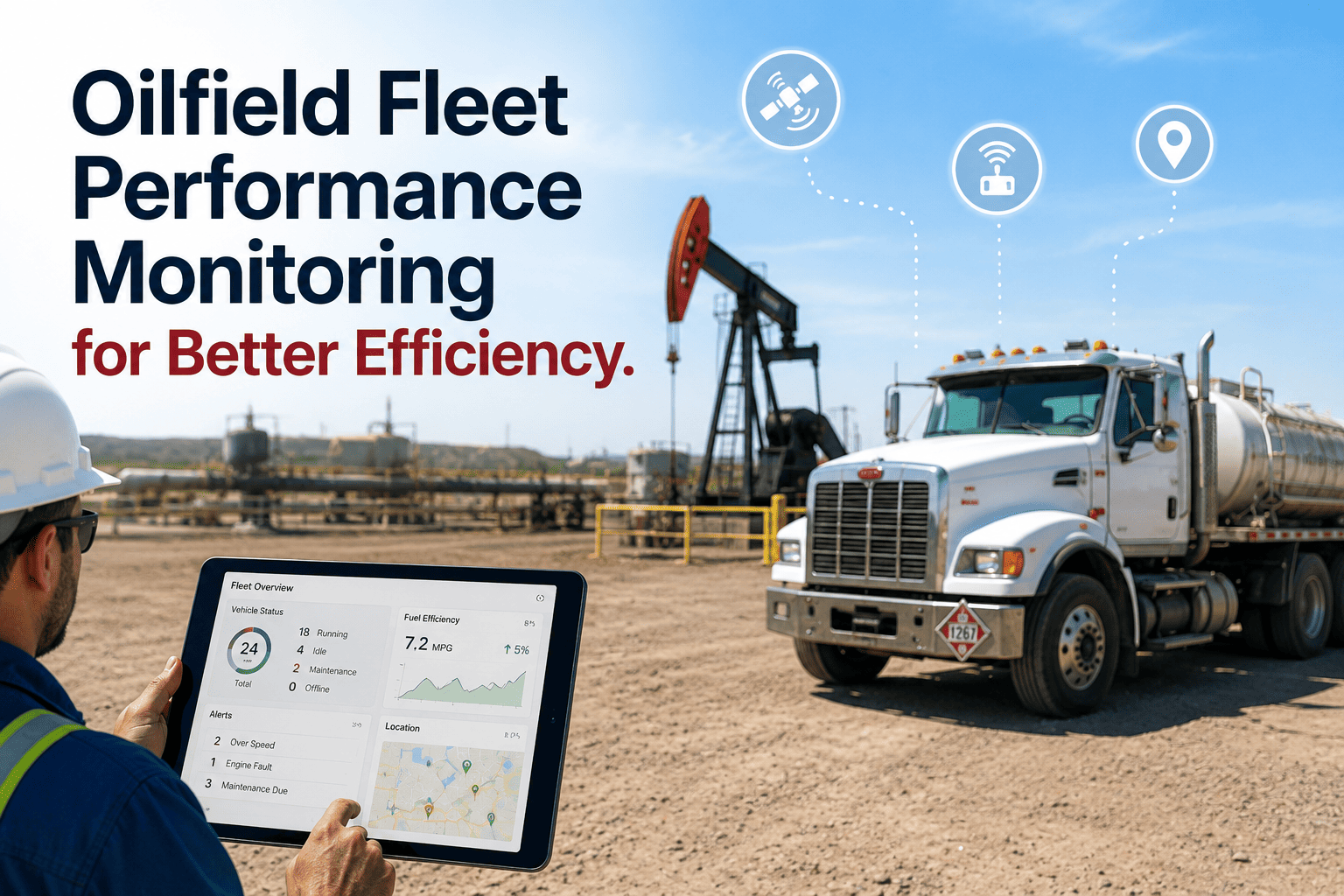
Real-time fleet performance monitoring in oil and gas operations is the foundational discipline from which every other fleet management outcome flows — because you cannot improve what you cannot measure, and you cannot manage what you cannot see in time to act on it. The distinction between reactive and proactive oilfield fleet management is almost entirely a monitoring capability distinction: operators who see performance deviations as they develop can intervene before they compound into breakdown events, compliance failures, and production delays; operators who see performance deviations in end-of-week reports or monthly maintenance invoices are managing the consequences of problems rather than the problems themselves. Real-time fleet performance monitoring for oilfield operations is technically more demanding than highway commercial fleet monitoring because the operating conditions are more extreme, the performance variables more complex, and the consequences of monitoring failure more severe. A frac truck engine temperature deviation that a highway fleet manager might notice at the next scheduled inspection is a potential catastrophic failure event for an asset running at continuous high load on a wellpad 80 miles from the nearest maintenance facility — where the cascade cost of an unplanned shutdown includes drilling programme delay, recovery logistics, crew standby, and emergency parts transport that collectively reach $500,000 per event. FleetRabbit's oilfield fleet performance monitoring platform is designed for these conditions — capturing 36+ simultaneous data streams per vehicle, applying AI-driven anomaly detection against vehicle-specific operating baselines, routing risk-rated performance alerts to fleet managers and operations executives in under 8 minutes of occurrence, and generating the performance intelligence reports that enable evidence-based fleet management decisions at every level of the organisation. This is not generic telematics data presented in a dashboard — it is purpose-built oilfield fleet performance intelligence that accounts for Basin duty cycles, lease road operating conditions, classified hazardous area requirements, and the regulatory compliance documentation standards that every performance monitoring event must satisfy. Book a demo to see FleetRabbit's oilfield fleet performance monitoring platform in operation.
Oilfield Fleet Performance Monitoring for Better Efficiency
Monitor fleet performance in real time across every oilfield transportation system — from frac trucks and water haulers to pipeline patrol vehicles and production support fleets. FleetRabbit's performance monitoring platform captures 36+ data streams per vehicle, routes risk-rated alerts in under 8 minutes, and delivers executive intelligence from wellsite to headquarters continuously.
Six Performance Dimensions FleetRabbit Monitors Across Every Oilfield Vehicle
Oilfield fleet performance is multi-dimensional — engine health, driver behaviour, fuel consumption, mechanical system status, compliance currency, and operational utilisation each contribute to the overall performance picture that determines fleet efficiency and risk exposure. FleetRabbit monitors all six simultaneously per vehicle.
Engine and Drivetrain Health
47 OBD-II parameters monitored simultaneously — coolant temperature trending, oil pressure deviation, fuel trim variance, transmission temperature, turbo boost, DPF back-pressure, and fault code status. AI engine establishes a vehicle-specific performance baseline within 14 days, enabling anomaly detection with under 3% false positive rate calibrated for Basin operating conditions.
Driver Behaviour and Safety Events
Continuous monitoring of hard braking events, harsh acceleration, speeding against zone-specific thresholds, seatbelt compliance, geofence adherence, and hours-of-service approaching-limit indicators — with in-cab real-time alerts to drivers and daily performance scoring for fleet manager coaching programmes.
Fuel Consumption and Efficiency
Real-time fuel consumption per engine hour, cross-referenced against vehicle-specific baseline for duty cycle and load profile. Idle accumulation monitored separately from productive consumption. Fuel drain anomaly detection under 8 minutes — distinguishing legitimate consumption from unauthorised removal events based on multi-variable cross-reference.
Mechanical System Status
Hydraulic system pressure and temperature, tyre pressure and thermal signature across all axles, load weight distribution from axle sensors, and PTO equipment operational status — each contributing to a composite vehicle health score that updates continuously and aggregates into the executive fleet health dashboard without requiring manual data entry.
Compliance Certificate Currency
Driver certifications, vehicle roadworthiness, pressure vessel certification, insurance documents, and site access credentials — each monitored against independent expiry dates with automated 60/30/7-day renewal alerts. Compliance status visible per driver and per vehicle in the performance dashboard alongside operational metrics — because a vehicle with expired documentation is a performance failure regardless of mechanical condition.
Operational Utilisation Rate
Productive deployment hours versus available hours per vehicle — calculated from GPS operational status, engine state, and dispatch assignment records. Standby time, maintenance downtime, idle accumulation, and compliance holds each attributed as distinct utilisation loss categories enabling targeted intervention rather than aggregate underperformance reporting.
36+ Data Streams. Under 8-Minute Alert Routing. Satellite Coverage at Remote Wellsites. One Platform.
FleetRabbit captures all six performance dimensions simultaneously across every oilfield vehicle — including at remote wellsite locations beyond cellular coverage where satellite fallback maintains continuous data transmission. Performance alerts route to fleet managers in under 8 minutes of occurrence. Executive dashboards update every 60 seconds without manual data entry.
How FleetRabbit Converts Performance Data Into Operational Intelligence
Raw sensor readings and GPS positions are not intelligence — they are numbers. FleetRabbit's performance monitoring architecture converts those numbers into actionable intelligence through a four-stage pipeline that runs continuously across every vehicle in the fleet.
Multi-Source Data Ingestion
OBD-II ports, dedicated IoT sensors, mobile app inspection inputs, satellite telemetry, and third-party hardware all feed into FleetRabbit's unified vehicle data model — normalising diverse data streams per asset. Satellite fallback ensures zero data gap at remote wellsites beyond cellular coverage.
Vehicle-Specific AI Baseline
Within 14 days of first data collection, FleetRabbit's AI establishes a personalised operating baseline per vehicle — learning normal parameter ranges for the specific vehicle type, duty cycle, load class, and basin environment. Baseline continuously self-updates as conditions and equipment age change.
Multi-Variable Anomaly Detection
Every incoming sensor reading is compared against the vehicle's baseline across 36+ simultaneous parameters. Multi-variable correlation identifies fault signature patterns that single-sensor monitoring misses — generating a probability-scored alert that distinguishes genuine anomalies from normal operational variance.
Automated Intelligence Routing
When anomaly probability crosses the configured threshold, FleetRabbit automatically routes the finding — fleet manager push notification, maintenance team work order, dispatch blocking, or executive dashboard flag — with full evidence attached. Average detection-to-alert time: under 8 minutes from sensor reading to notification.
What Real-Time Fleet Performance Monitoring Delivers at Each Level of the Organisation
Common Questions About Oilfield Fleet Performance Monitoring With FleetRabbit
Deploy Real-Time Performance Monitoring Across Your Entire Oilfield Fleet — Starting This Week
FleetRabbit monitors engine health, driver behaviour, fuel efficiency, mechanical systems, compliance currency, and utilisation rate across every oilfield vehicle — in real time, from wellsite to headquarters, including at remote Basin locations via satellite — deployed in 5–7 working days at $3/vehicle/month. At that investment level, a single prevented frac spread standby event pays for the platform for over a decade.