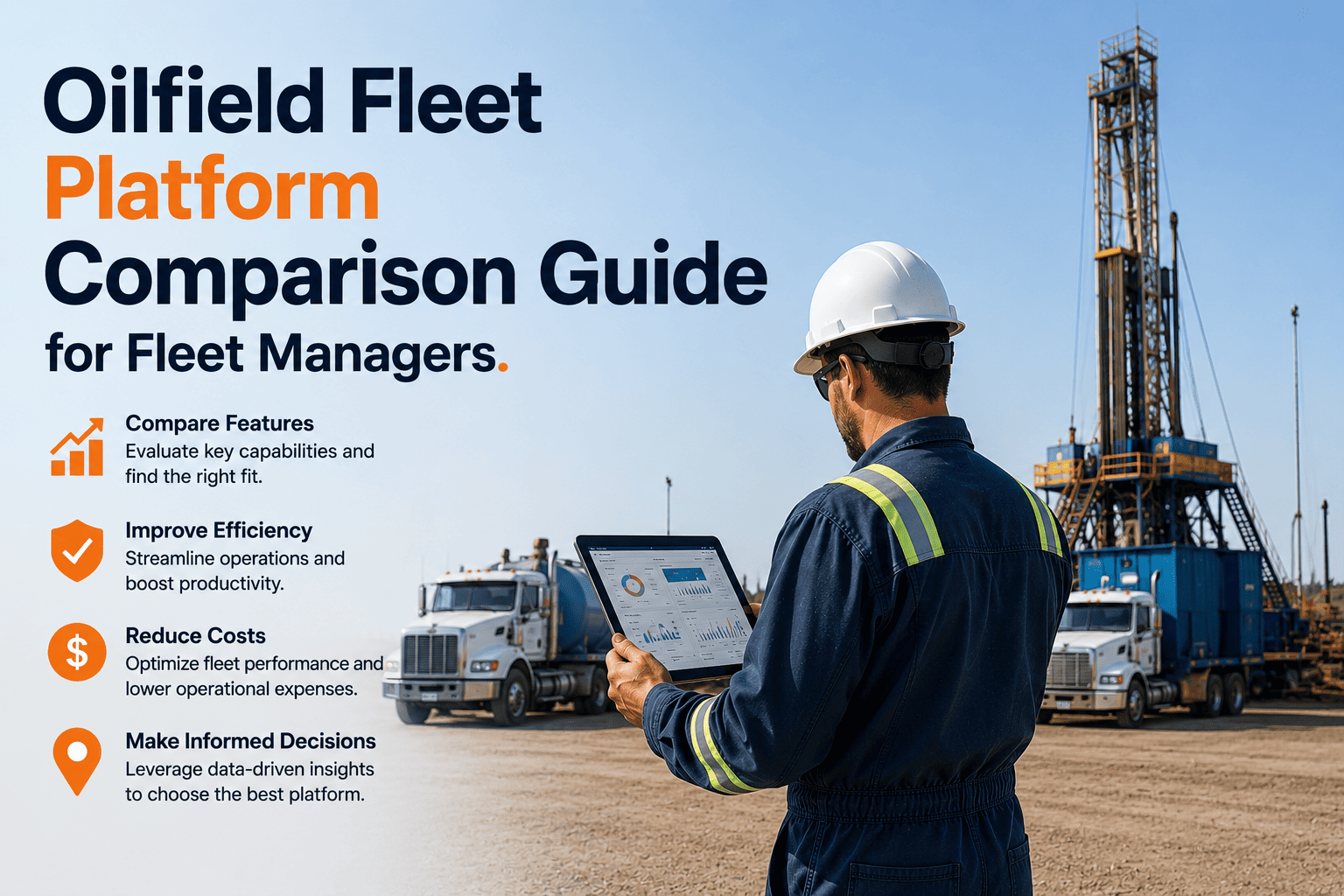
Selecting the right fleet management platform for oilfield operations requires evaluating capabilities across dimensions that generic commercial fleet software does not address — DOT FMCSA compliance automation, OSHA PSM inspection documentation, EPA environmental monitoring, remote location offline capability, and the oilfield-specific HSE prequalification reporting that major operator clients demand from service contractors. This guide evaluates the essential platform capabilities that oilfield fleet managers and operations executives should prioritize when selecting a fleet intelligence solution for upstream and midstream operations. Book a demonstration to see how FleetRabbit addresses each capability area for oilfield fleet operations.
Oilfield Fleet Platform Comparison Guide for Fleet Managers
A structured evaluation framework covering the seven capability domains that determine platform fit for upstream and midstream oilfield fleet operations — with FleetRabbit's purpose-built oilfield solution benchmarked against each requirement.
What Oilfield Fleet Managers Must Evaluate That Generic Fleet Software Misses
Generic commercial fleet platforms address standard transportation management requirements — vehicle tracking, basic maintenance scheduling, and mileage reporting — but oilfield fleet operations impose requirements that purpose-built platforms must address to deliver genuine operational value. Platforms designed for urban delivery fleets or highway trucking operations lack the regulatory integration, remote location capability, and HSE documentation architecture that oilfield operators require for both compliance defense and client contract retention.
The evaluation domains in this guide focus on the capabilities where platform differentiation most directly impacts oilfield fleet manager outcomes — compliance audit exposure, inspection quality, maintenance reliability, and the reporting that operations executives and sustainability teams require from fleet data.
FleetRabbit was built from the ground up for oilfield fleet operations — not adapted from a generic commercial fleet platform. Every compliance module, inspection workflow, and reporting capability reflects the regulatory and operational realities of upstream and midstream fleet management. Start your free trial and evaluate FleetRabbit against your specific oilfield requirements.
Regulatory Compliance Automation — DOT, OSHA, EPA Integration
The most consequential platform capability for oilfield fleet managers is regulatory compliance automation — the difference between paper records that accumulate audit risk and digital systems that eliminate it.
What to Require from Any Platform
FleetRabbit Compliance Capability
GPS Asset Tracking and Operational Visibility
Real-time asset visibility across dispersed oilfield operations requires more than basic map display — platform evaluation must examine connectivity resilience, alert architecture, and the operational intelligence derived from position data.
Remote Location Connectivity
Platforms that depend exclusively on cellular connectivity create tracking blind spots across the remote lease road networks and well pad locations that characterize oilfield operations. FleetRabbit maintains asset position continuity through offline store-and-forward capability and satellite connectivity integration — ensuring fleet managers retain visibility across the most remote operational areas where cellular infrastructure does not reach.
Geofence and Operational Zone Management
FleetRabbit's geofence architecture supports oilfield-specific zone configurations — well pad perimeters, staging areas, hazardous zone exclusions, and lease road route boundaries — with automated entry and exit alerts that replace manual gate check-in radio calls with GPS-verified timestamps. Cross-zone movement analysis surfaces unauthorized route departures and unauthorized site access events requiring immediate security response.
Idle Time and Fuel Waste Detection
Oilfield vehicles idling at remote sites for extended periods represent the largest controllable source of fleet fuel waste — consuming 0.8 to 2.5 gallons per hour without productive work. FleetRabbit quantifies idle time by vehicle, driver, and site in dollar and CO2 terms, enabling fleet managers to target idle reduction programs at the specific locations and operators producing the highest avoidable fuel cost.
Live Position Visibility Across Every Remote Oilfield Site
FleetRabbit maintains GPS asset tracking across cellular dead zones through offline store-and-forward architecture — ensuring fleet managers never lose visibility at the most remote and operationally critical locations in the oilfield operating footprint.
Digital Inspection Management — Mobile Workflow and Evidence Architecture
FleetRabbit's mobile inspection application covers DOT DVIR, OSHA PSM mechanical integrity, EPA SPCC environmental monitoring, and customizable HSE checklists within a single platform — eliminating the multi-system inspection management that creates documentation gaps between regulatory frameworks. The platform enforces inspection quality through mandatory field completion requirements that prevent abbreviated inspections under operational time pressure, while GPS verification and photographic documentation create the tamper-evident audit trail that increasingly stringent regulatory and client requirements demand.
Predictive Maintenance Intelligence — From Reactive to Proactive Fleet Management
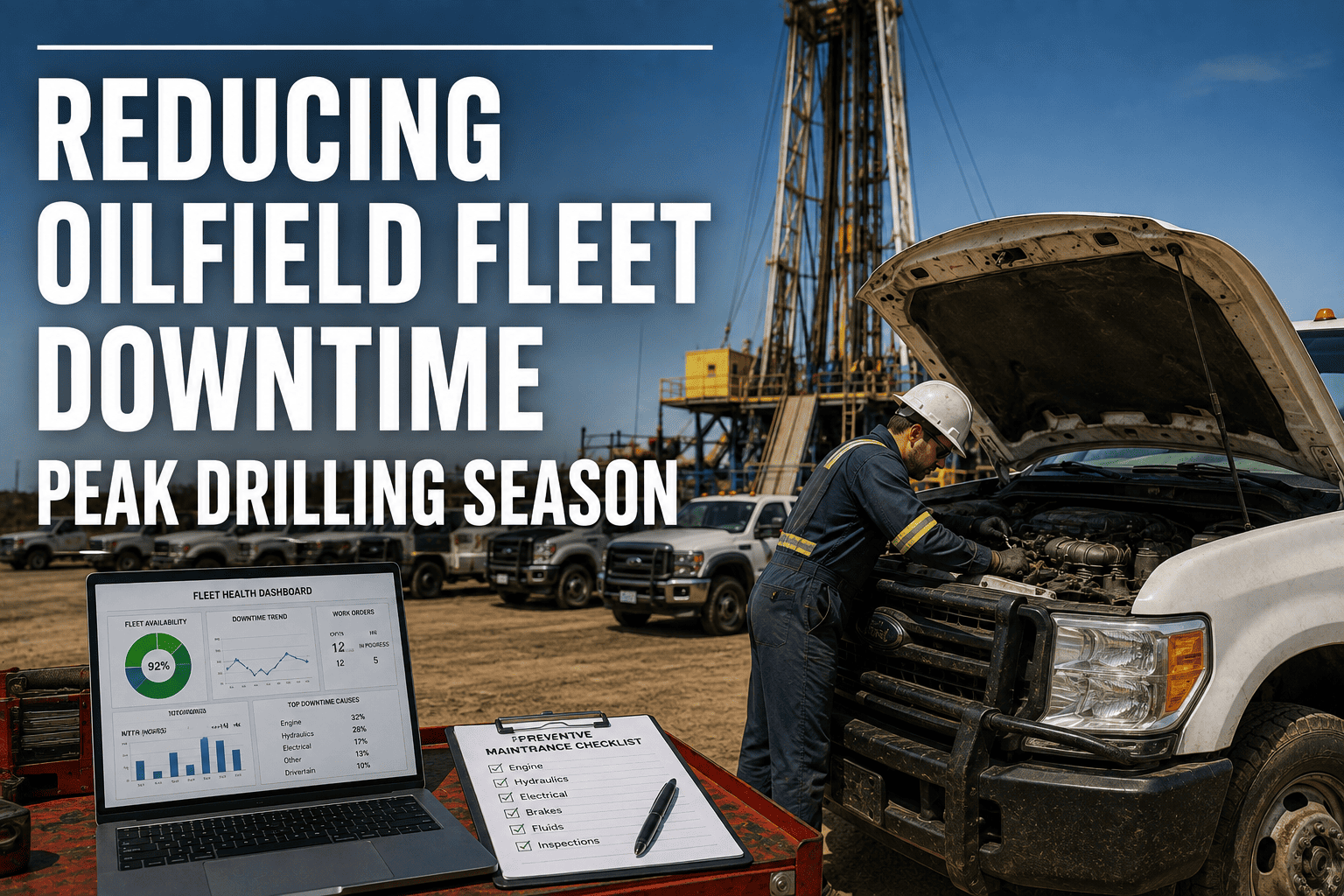
Maintenance scheduling capability is where oilfield fleet platforms most dramatically diverge from generic fleet software — the difference between calendar-based PM reminders and equipment-hour predictive maintenance with fault code monitoring represents the difference between reactive breakdown management costing $12,000 to $28,000 per incident and planned maintenance programs that prevent those incidents entirely.
Fleet Analytics and Operational Intelligence
Platform analytics capability determines whether fleet data generates actionable management intelligence or remains raw operational output requiring manual interpretation by fleet managers who lack the time for extensive data analysis.
Fuel Consumption and Carbon Analytics
Per-vehicle fuel economy benchmarking against fleet averages, idle time cost quantification, and carbon emissions calculation per EPA methodology — enabling both fuel cost reduction programs and ESG reporting obligations that oilfield contractors increasingly face from major operator clients and institutional investors.
Driver Behavior Safety Scoring
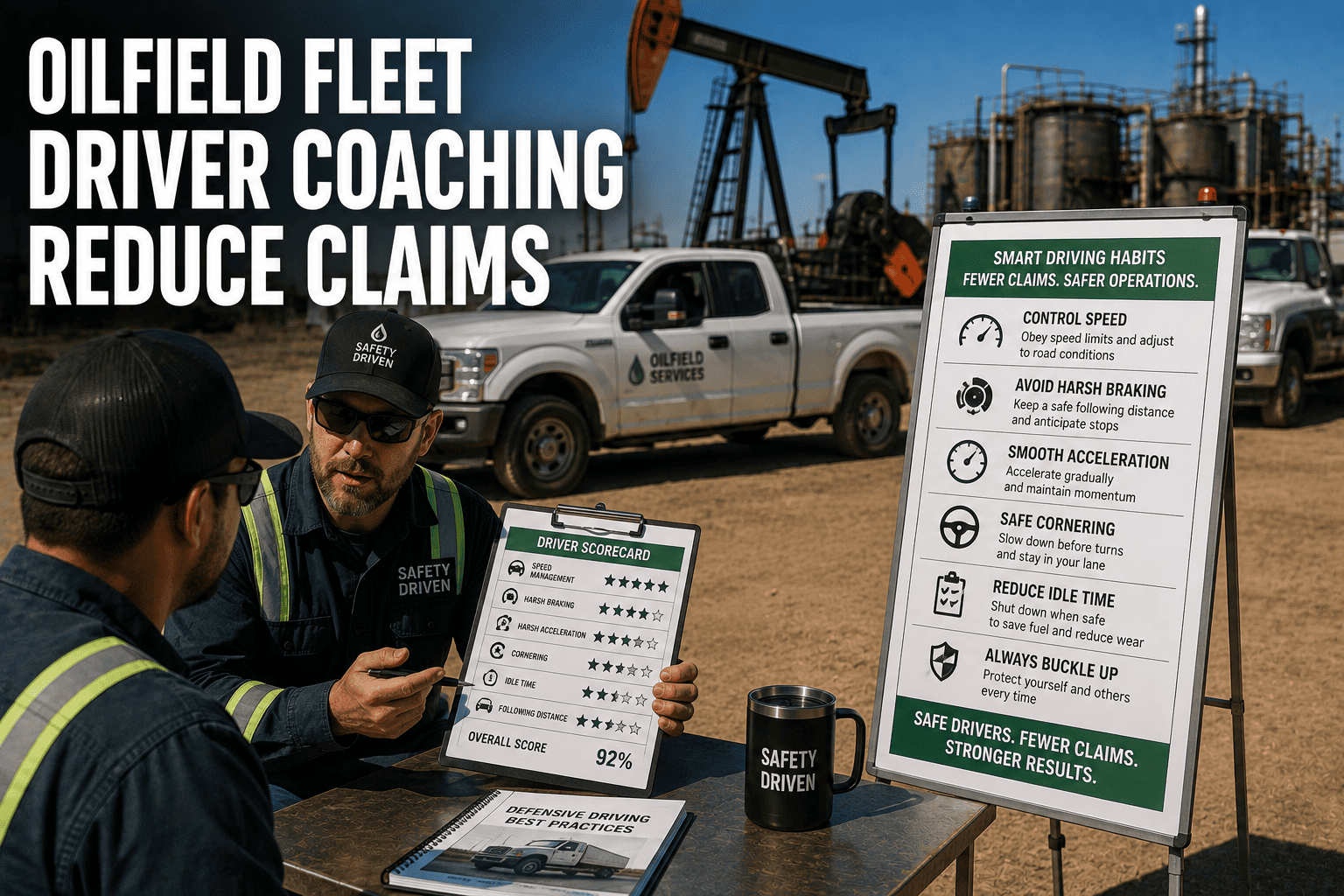
Per-driver safety scorecards incorporating harsh braking frequency, speeding events, idle rate, and inspection completion into objective performance rankings that fleet managers use to prioritize coaching conversations — replacing subjective performance assessments with data-driven accountability across large driver populations.
Asset Utilization and Right-Sizing Analysis
Fleet utilization rate analysis identifying underdeployed assets consuming ownership costs without proportional revenue contribution — enabling data-driven fleet right-sizing, equipment redeployment across operational regions, and capital acquisition deferral decisions based on actual utilization evidence rather than anecdotal capacity assessments.
Maintenance Cost Lifecycle Tracking
Per-unit maintenance cost profiles tracking cumulative labor, parts, and third-party service expenses against individual VINs and serial numbers — surfacing capital replacement candidates with lifecycle cost justification data that finance leadership requires before approving fleet modernization investment proposals.
See FleetRabbit's Oilfield Analytics in a Live Platform Demonstration
Fleet analytics that connect fuel consumption to carbon reporting, driver behavior to safety incident reduction, and maintenance costs to capital replacement decisions — purpose-built for oilfield fleet operations not adapted from generic commercial fleet software.
Offline Capability — The Non-Negotiable Requirement for Oilfield Platform Selection
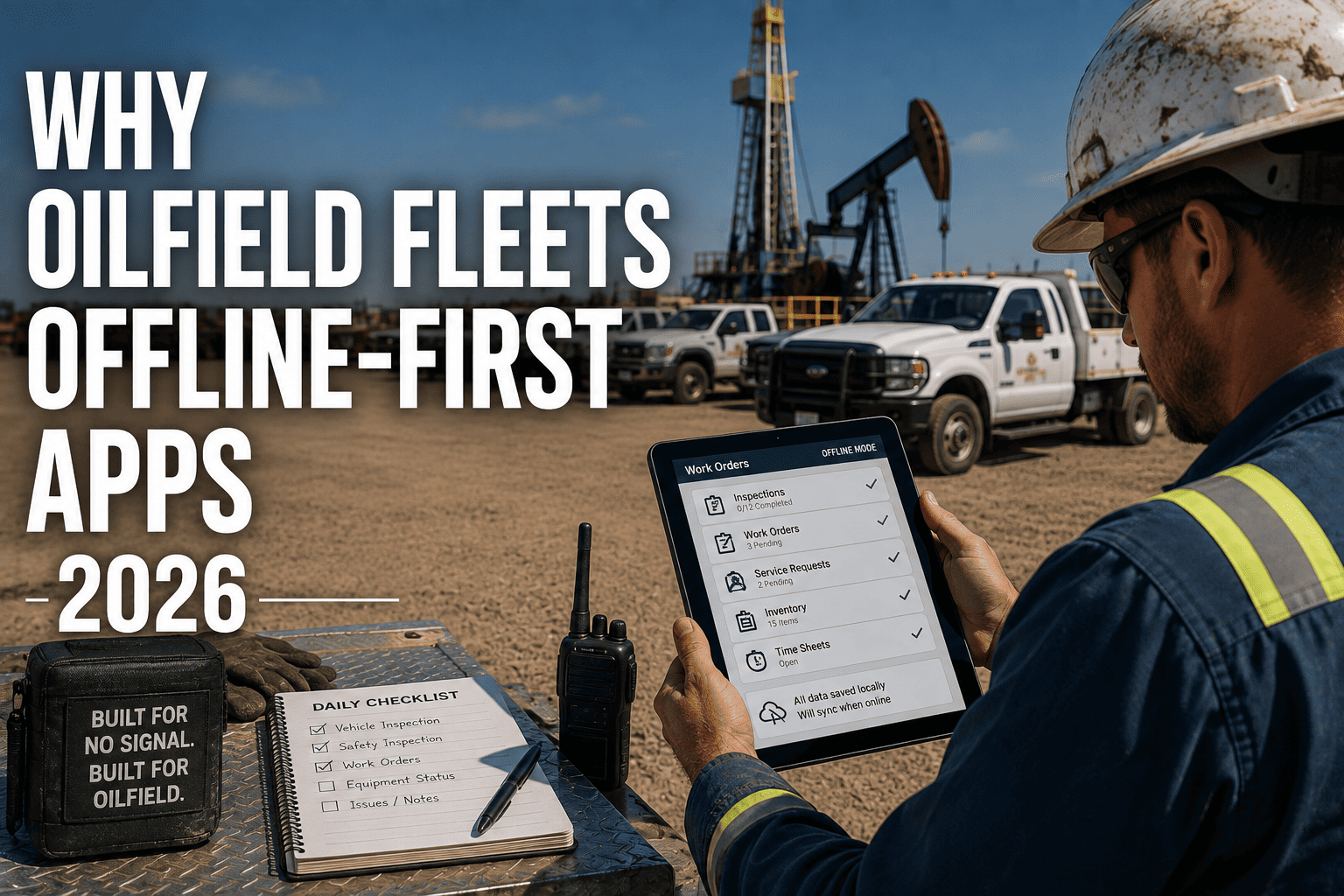
Offline platform capability is a binary evaluation criterion for oilfield fleet platform selection — a platform that requires cellular connectivity to execute inspections, record maintenance, or alert on defects is operationally incompatible with oilfield environments where a significant proportion of operational activity occurs in cellular dead zones. Evaluating offline capability requires examining not just whether offline mode exists, but how it handles timestamp integrity, data completeness enforcement, and synchronization conflict resolution when multiple devices sync simultaneously after extended offline periods.
Inspection timestamps must be captured at the moment of field execution — not at cloud synchronization time. Platforms that timestamp at sync create backdating vulnerabilities that regulatory auditors increasingly challenge as insufficient documentation integrity for enforcement defense.
All inspection categories, mandatory photo requirements, defect severity classifications, and completion enforcement rules must function identically offline as online. Platforms that disable mandatory fields or photo requirements in offline mode allow abbreviated inspections at the locations where systematic inspection execution matters most.
For operations requiring immediate defect escalation from remote locations — safety-critical findings during active drilling operations, environmental incidents requiring immediate regulatory notification — satellite connectivity integration provides real-time transmission capability regardless of cellular infrastructure at the operational location.
Executive Reporting and Stakeholder Intelligence Delivery
Platform reporting capability determines whether fleet data reaches the leadership stakeholders who make resource allocation, capital investment, and compliance program decisions — or remains accessible only to fleet managers who lack the organizational authority to act on strategic insights.
Operational Control Console
Fleet Performance KPI Dashboard
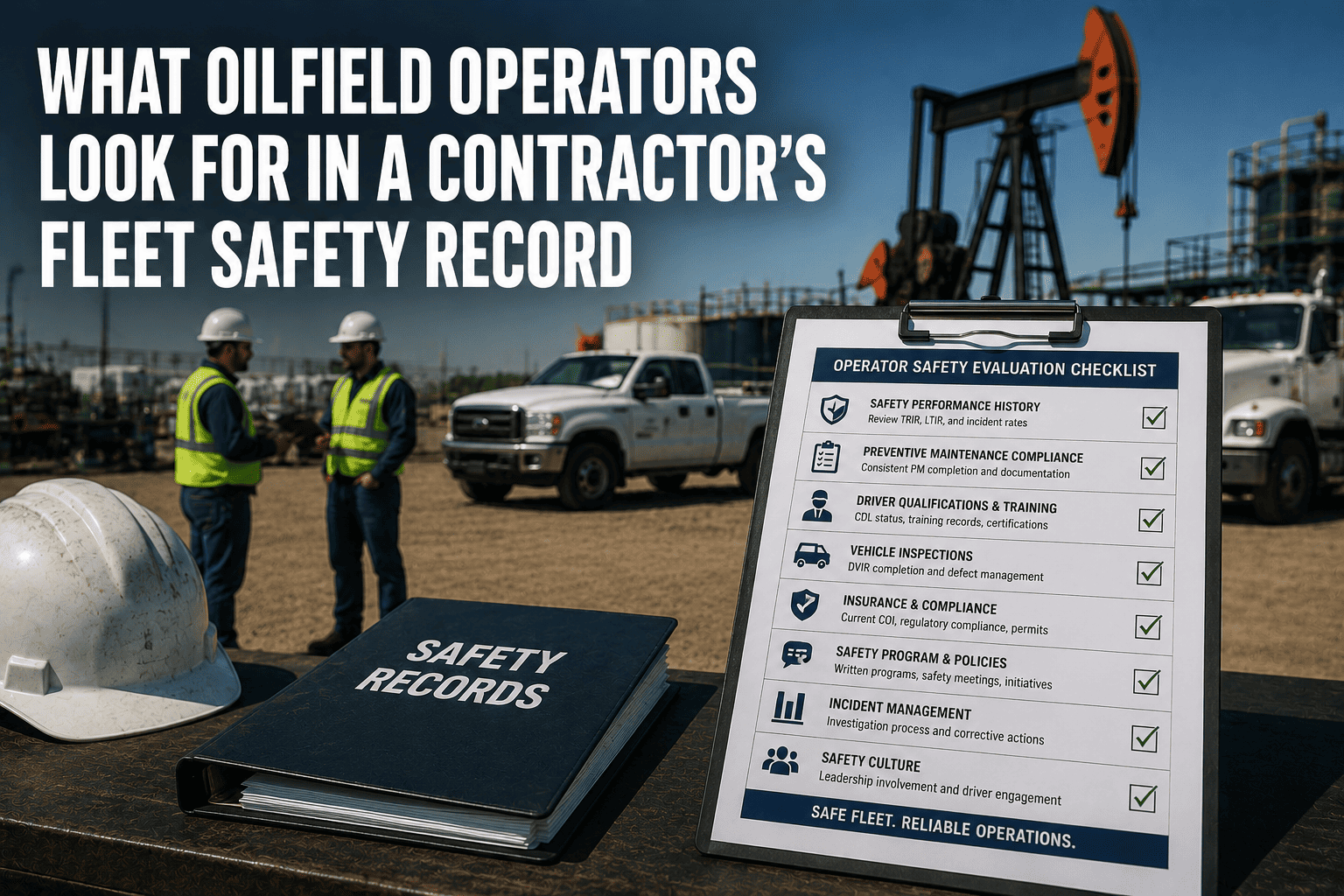
Regulatory Audit Readiness Reports
Common Questions When Evaluating Oilfield Fleet Platforms
Evaluate FleetRabbit Against Every Oilfield Platform Requirement — Free Trial Available
FleetRabbit's purpose-built oilfield fleet platform delivers compliance automation across DOT, OSHA, EPA, and API standards; GPS tracking with offline capability across remote lease road operations; AI predictive maintenance with fault code monitoring; digital inspection with mandatory evidence architecture; and executive reporting covering fleet availability, maintenance ROI, and ESG emissions documentation — deployable across 50 to 200 vehicle oilfield fleets in 3 to 4 weeks.