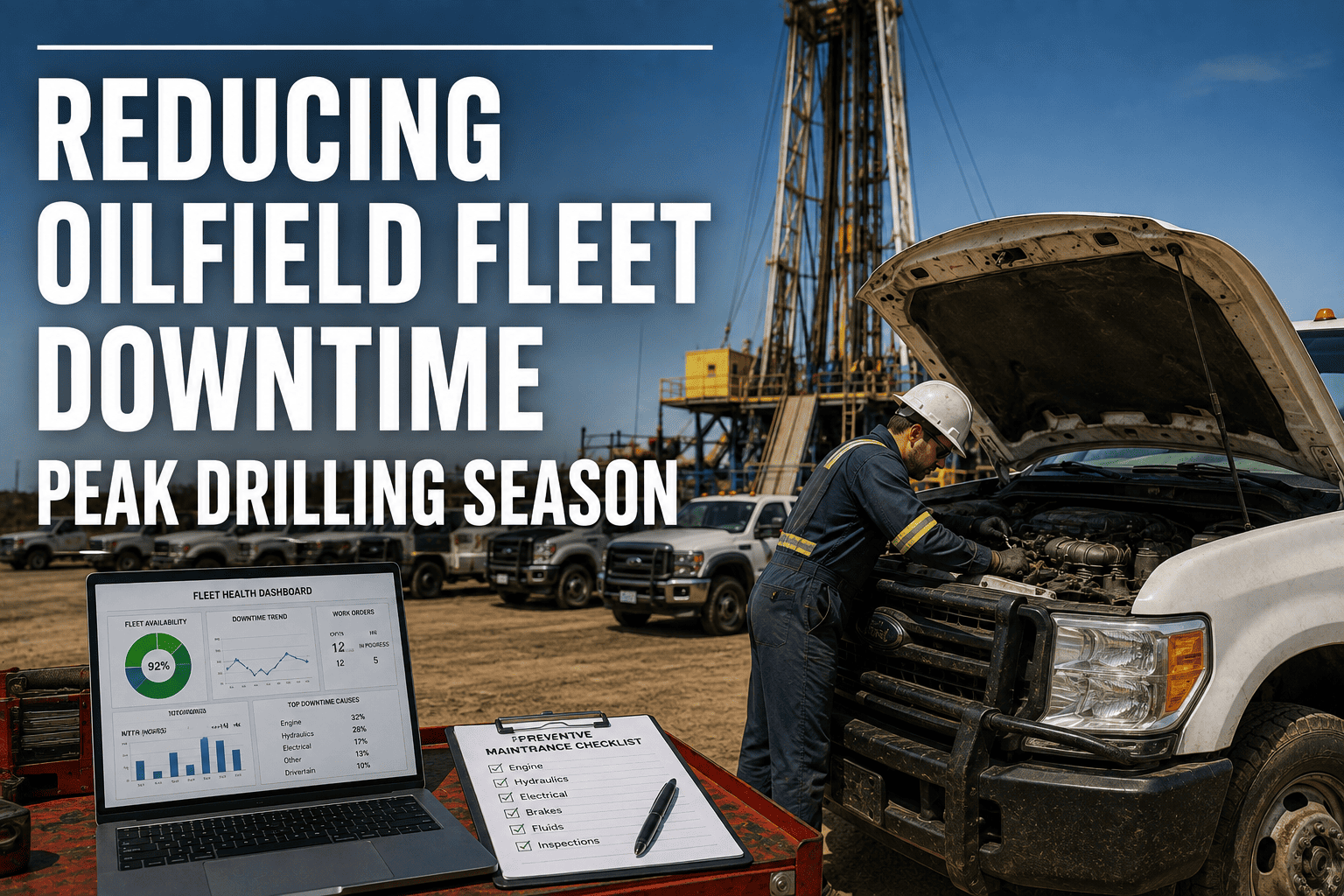
A truck sitting still on a wellsite looks like it is resting. Its engine disagrees. Idling still means fuel burning, oil circulating, and combustion happening, just at temperatures and pressures that are worse for the internals than normal highway driving. For oilfield fleets where trucks sit running for hours waiting on a job, that quiet idle time can wear an engine down faster than the odometer ever shows.
One hour of engine idling produces roughly the same internal wear as 25 to 33 miles of normal highway driving, according to industry maintenance guidance. Heavy idling can also cut engine oil's effective service life from around 600 hours down to as little as 150 hours. Fleets that track idle hours separately from mileage and adjust maintenance intervals accordingly extend engine life and avoid premature failures.
How Idling Silently Wears Down a Diesel Engine
An idling engine runs cooler and under less load than one working at highway speed, and that sounds like it should be gentler on the internals. In practice, the opposite happens. Lower combustion temperatures create conditions that damage engine components in ways a mileage-based service schedule never anticipates.
One Idle Hour Equals How Many Miles of Wear
Fleet maintenance guidance consistently points to the same rough equivalency: an hour of idling produces wear comparable to 25 to 33 miles of normal highway driving, depending on engine type and duty cycle. For a truck that idles for several hours a day waiting on a wellsite, that adds up to a meaningful amount of hidden wear that never shows up on the odometer, which is exactly why relying on mileage alone to schedule maintenance can leave a heavily-idling truck under-serviced for months.
FleetRabbit logs engine hours and idle time for every vehicle automatically, so maintenance schedules reflect real wear instead of just the odometer. Explore it with a free sign up or see it applied to your own idle-heavy fleet.
Signs Your Maintenance Schedule Is Behind Real Engine Wear
A handful of warning signs usually show up before an idle-heavy engine suffers a serious failure. Catching them early is far cheaper than waiting for a breakdown to force the issue.
| Warning Sign | What It Usually Means | Recommended Response |
|---|---|---|
| Oil Looks or Smells Like Fuel | Fuel dilution from extended low-temperature idling | Shorten oil change intervals and run an oil analysis |
| Low Oil Pressure Warnings at Idle | Thinned, contaminated oil losing lubrication ability | Inspect oil condition immediately, do not defer |
| Excess Black Smoke on Startup | Soot buildup from incomplete idle combustion | Check filters and schedule an inspection sooner |
| Engine Hours Far Exceed Mileage Pace | The vehicle is accumulating more wear than the odometer shows | Switch that vehicle's maintenance trigger to engine hours |
Building an Idle-Aware Maintenance Program
Most fleets can put an idle-aware maintenance program in place without overhauling their existing service schedule, by adjusting how intervals are triggered rather than replacing the whole process.
Step 1: Log Engine Hours and Idle Hours Separately
Telematics data should distinguish time spent idling from time spent driving, giving a clear picture of how much wear a vehicle is actually accumulating beyond its mileage.
Step 2: Set Maintenance Triggers by Whichever Comes First
Instead of scheduling oil changes purely by mileage, set the interval to trigger at either a mileage threshold or an hours threshold, whichever the vehicle reaches first.
Step 3: Flag High-Idle Vehicles for Oil Analysis
Vehicles with idle hours well above the fleet average get periodic oil analysis to catch fuel dilution or soot contamination before it causes measurable damage.
Step 4: Coach Drivers on Reducing Unnecessary Idle Time
Some idling is unavoidable on a wellsite, but idle reports that show which drivers or routes run longest at idle help target coaching where it will save the most engine life.
Why This Protects More Than Just the Engine
An idle-aware maintenance approach does not just extend engine life, it also reduces the odds of an unplanned breakdown at the worst possible moment, since the maintenance schedule finally matches how the vehicle is actually being used rather than a generic mileage assumption.
FleetRabbit tracks idle hours across your fleet and flags high-idle vehicles before wear becomes a failure. Get started with a free sign up, or book a demo to see it applied to your own trucks.
Frequently Asked Questions
Every hour your trucks idle adds hidden wear that mileage alone will never show you. FleetRabbit tracks idle hours automatically so your maintenance intervals match real engine wear. Start with a free sign up or book a short demo to see it on your own fleet.