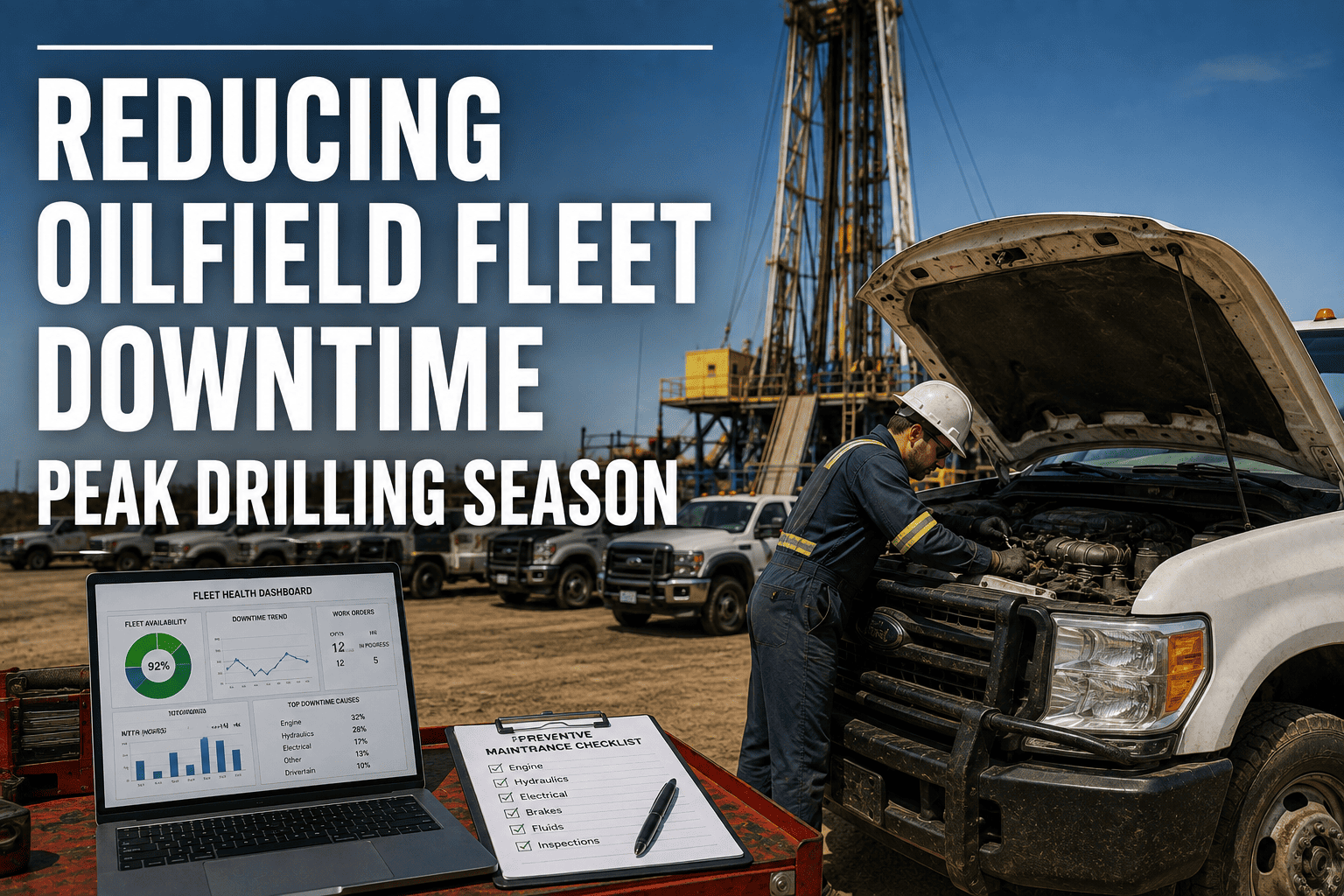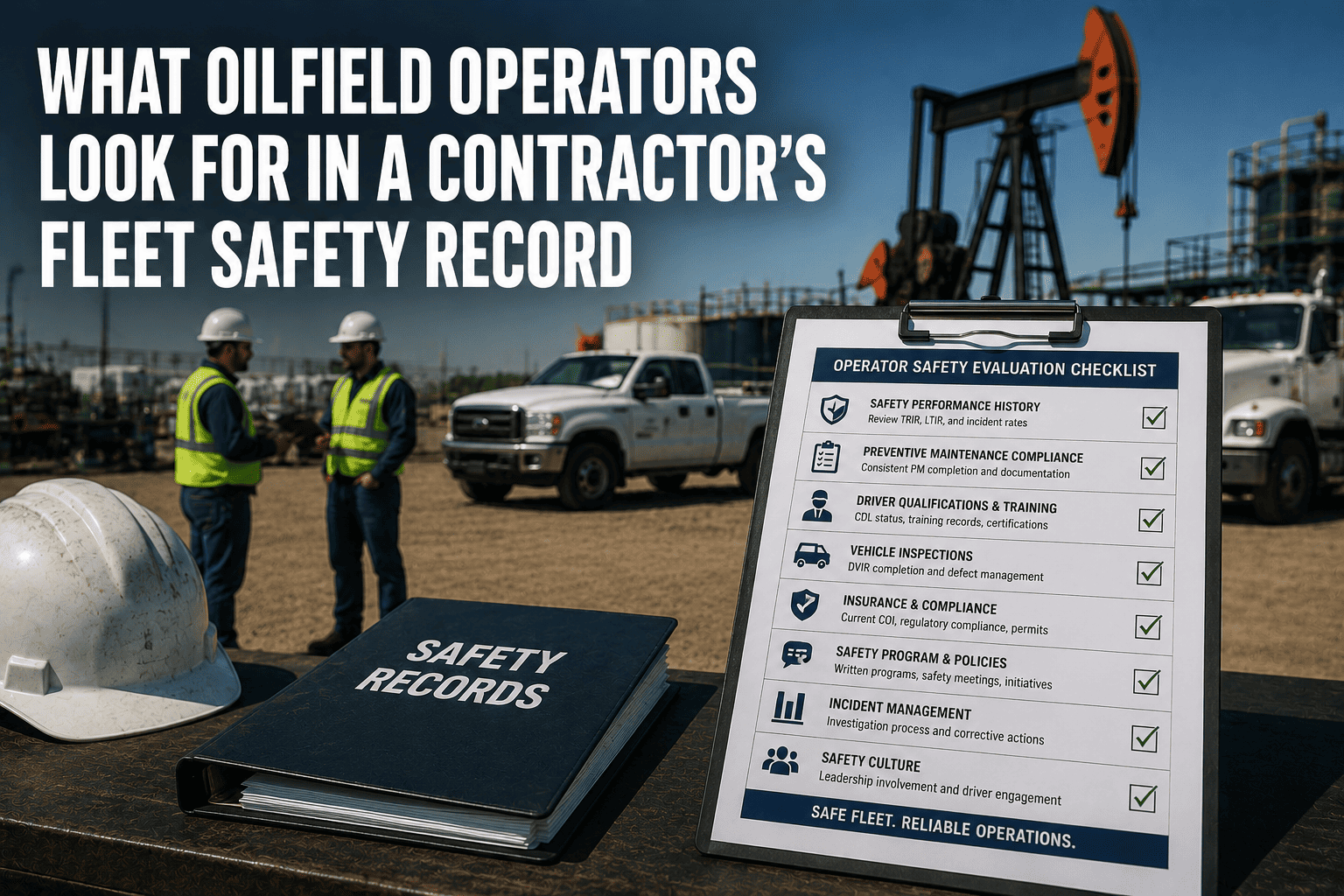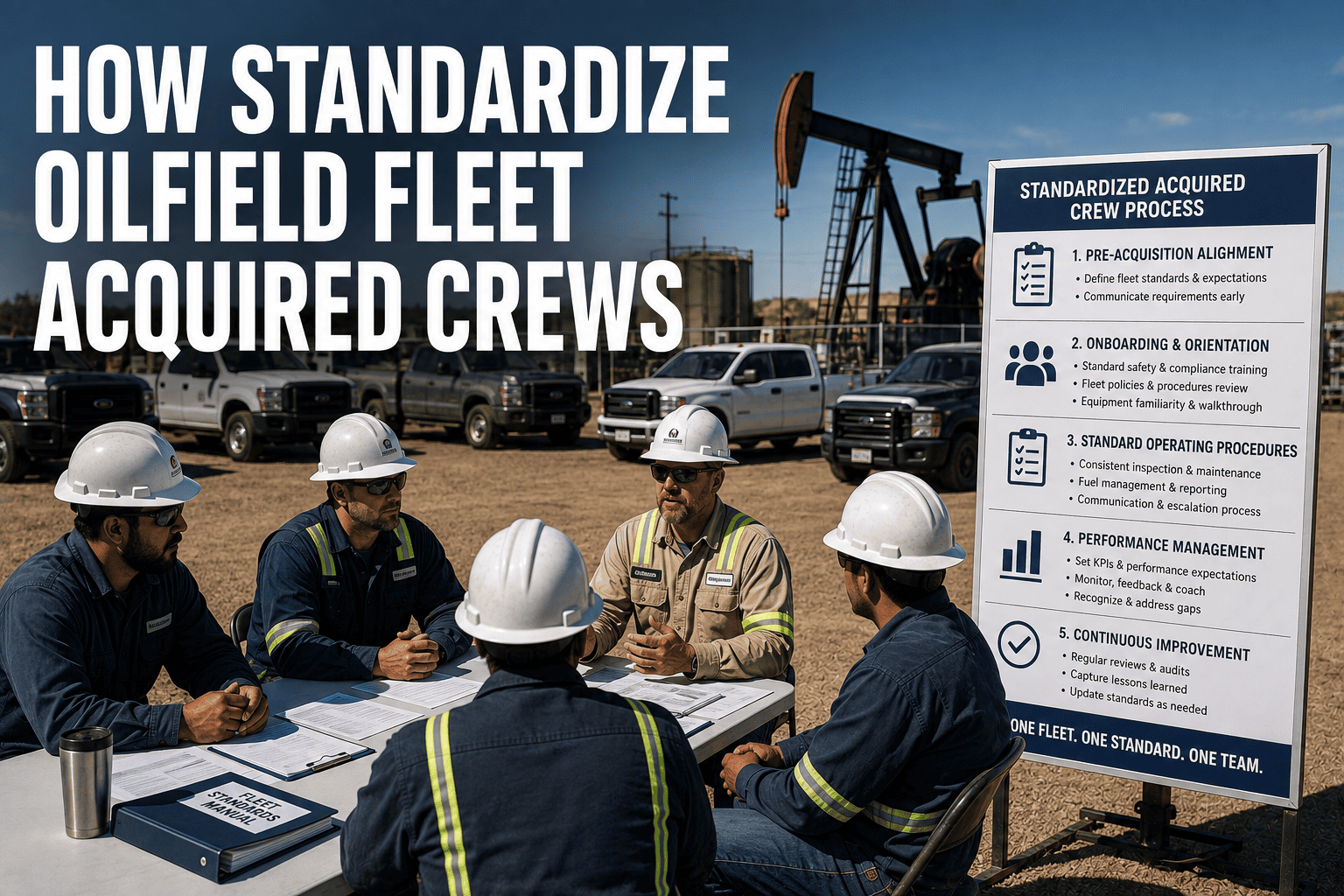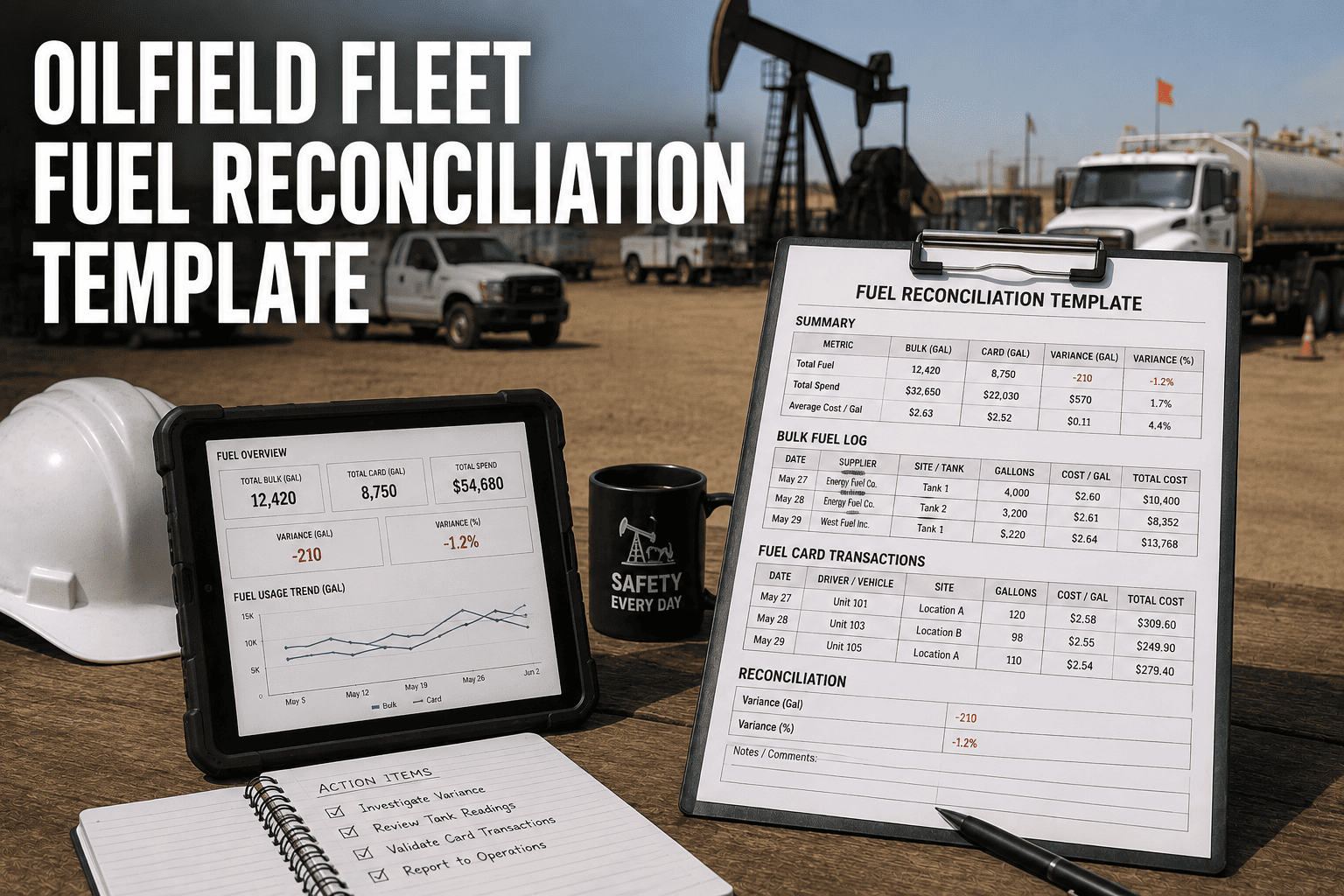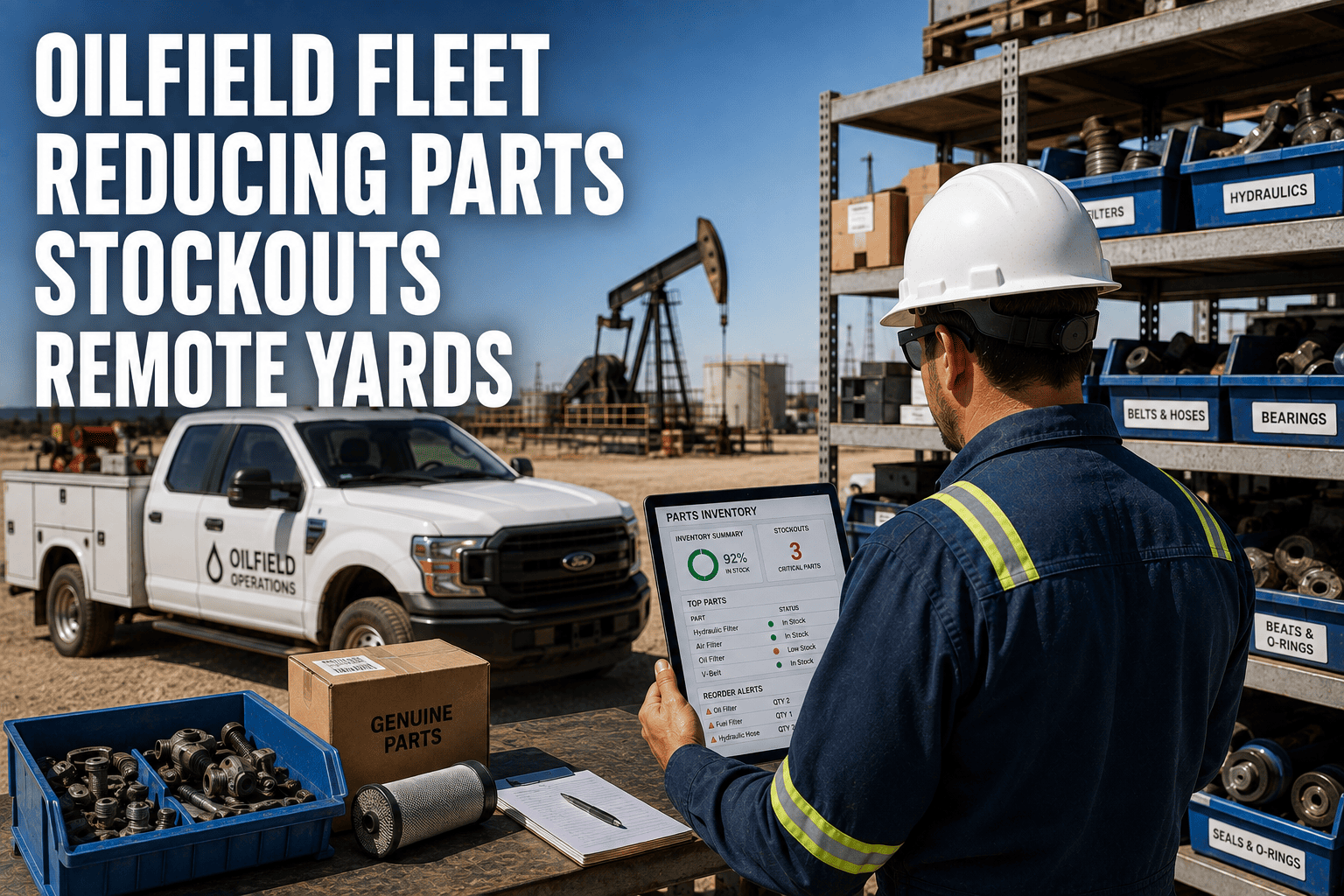
Running a fleet out of a remote oilfield yard is a different game than running trucks out of a city depot. The nearest parts counter might be two hours down a lease road, the part you need might be back-ordered at the regional warehouse, and the truck that needs it is scheduled to haul water or crude in six hours. When a filter, belt, or hose isn't on the shelf when a technician reaches for it, that single missing part can take a rig-support vehicle out of rotation for a full day or more — not because the repair is hard, but because the part had to travel farther than the truck ever will.
A parts stockout at a remote oilfield yard typically costs 1500 to 4000 dollars per incident once idle-truck time, emergency freight, and rush-order markups are added together. Fleets that set usage-based min/max levels and track critical parts separately cut stockout-driven downtime by 30 to 45 percent within the first few months.
Why Remote Yards Run Out of Parts Faster Than Anyone Expects
Oilfield support fleets don't fail on parts because nobody is paying attention. They fail because the ordinary rules of inventory management assume a supplier is close by. In the Permian, the Bakken, or the Eagle Ford, that assumption breaks down fast, and a yard that looks well-stocked on paper can be one busy week away from an empty shelf.
Distance From Suppliers
The nearest parts distributor may be 60 to 150 miles from the yard. A same-day reorder that takes 20 minutes in a city can take a full shift to resolve on a lease road, turning a small gap into a multi-day wait.
Demand That Spikes Overnight
A single pad move or a run of harsh weather can triple wear on brakes, tires, and filters in days. Static reorder points built for average demand run empty exactly when the yard needs parts most.
No Real-Time Visibility
Paper logs and spreadsheets updated once a week can't show a technician what's actually on the shelf right now. By the time a shortage is noticed, the truck is already parked.
What a Single Stockout Actually Costs You
The invoice for the missing part is rarely the real cost. Once you add up idle-truck time, emergency courier or freight charges, and the premium suppliers charge for rush orders, a stockout at a remote yard costs several times more than the part itself.
| Cost Driver | Typical Range | Why It Happens |
|---|---|---|
| Idle Truck Time | 400 to 1200 dollars | Vehicle sits parked while the part is located and transported to a remote location |
| Emergency Freight or Courier | 150 to 600 dollars | Same-day delivery to a lease road location costs far more than standard shipping |
| Rush-Order Part Markup | 100 to 400 dollars | Suppliers charge a premium for out-of-cycle, urgent orders |
| Missed Load or Dispatch | 300 to 1000 dollars | A parked truck can't complete a scheduled haul, pushing the job to another vehicle or day |
FleetRabbit tracks parts usage against every truck in your yard and flags shortages before a technician ever reaches for an empty bin. Sign up free and connect your first yard in minutes, or book a demo to see it running on your own parts list.
Building a Stockout-Proof Parts System
Fixing stockouts at a remote yard isn't about buying more parts. It's about knowing which parts matter most and setting rules that reorder them before the shelf goes empty. Here's the sequence that works for most oilfield support fleets.
Pull 90 Days of Usage History
List every part issued in the last quarter with quantity and date. This is your real demand pattern, not a guess based on last year's budget.
Rank Parts By Downtime Risk
Separate parts that stop a truck cold, like filters and belts, from parts that can wait a few days, like cab accessories or trim pieces.
Set Min and Max Levels Per Part
Base the reorder point on lead time from your nearest supplier, not a flat number applied across every yard.
Automate The Reorder Alert
Route a low-stock alert to the yard supervisor the moment inventory crosses the minimum, well before a technician discovers the shelf is empty.
Review Monthly Against Actual Breakdowns
Compare stockout incidents to your min/max levels each month and adjust. Demand at a remote pad changes as work shifts across the field.
Classify Every Part Into a Tier
Not every part deserves the same reorder discipline. Grouping parts into tiers keeps your yard focused on what actually causes downtime instead of stocking everything equally.
Critical, Stock Always
Filters, belts, brake components, and common hoses. A shortage here parks a truck within hours. Keep at least two weeks of buffer stock.
Semi-Critical, Watch Closely
Sensors, hydraulic fittings, and specialty gaskets. Lead time matters more here, since these often ship from a regional warehouse.
Non-Critical, Reorder As Needed
Cab accessories, cosmetic trim, and low-use items. A short wait rarely affects operations, so lean stock is fine.
How FleetRabbit Keeps Remote Yards Stocked
FleetRabbit connects parts usage to maintenance activity so every yard knows exactly what's on hand and what's about to run out. Instead of a supervisor manually checking bins, the platform tracks consumption against your min/max levels for every part in every tier, and sends an alert the moment a critical item needs reordering. Teams that sign up for FleetRabbit typically get their first remote yard fully tracked within a day, with historical usage imported directly from existing maintenance records. If you'd rather walk through your own parts list first, you can book a short demo and see how the alerts would have flagged your last three stockouts before they happened.
What Good Looks Like: Benchmarks For Remote Yards
Frequently Asked Questions
Every stockout at a remote yard costs far more than the part itself. FleetRabbit tracks every bin against real usage and warns you before the shelf goes empty. Sign up free to connect your first yard today, or book a demo to see it in action.