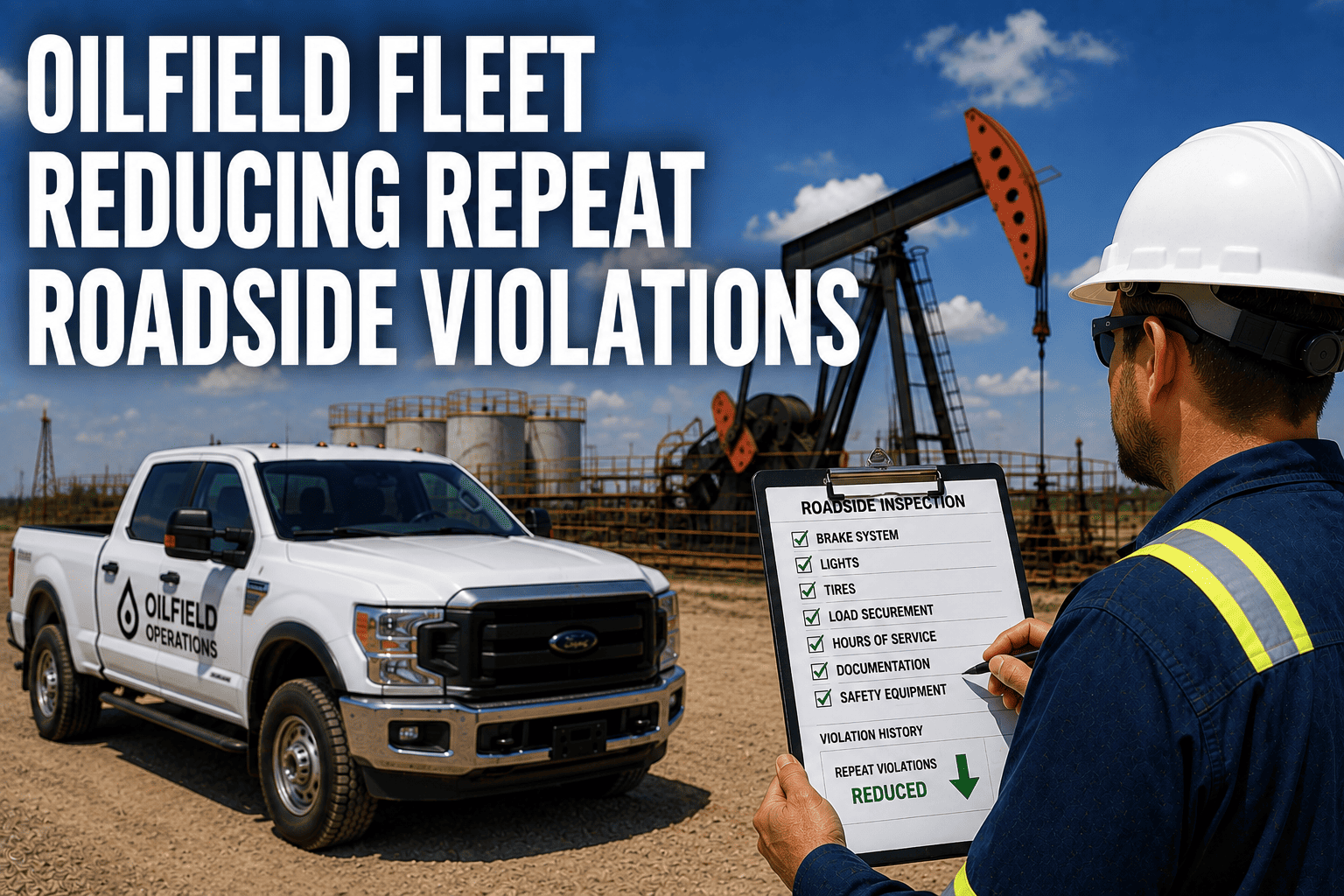
In the heavily regulated oilfield industry, repeat roadside violations are a massive drain on profitability and safety. When a truck is cited for a defective brake or a broken light, simply fixing it on paper is not enough. If the underlying root cause is not documented and resolved, the same truck will be cited again next week, destroying your CSA (Compliance, Safety, and Accountability) score. Reducing repeat violations requires connecting inspection defects directly to maintenance histories. FleetRabbit provides the unified platform to identify recurring issues and fix them permanently. You can sign up for FleetRabbit to modernize your compliance today, or book a demo to see our roadside safety tools.
Repeat roadside violations occur because paper DVIRs and maintenance logs are disconnected from compliance data. Fleets with unmanaged defect histories see a 40 percent recurrence rate on the same components. Connecting digital inspection data to automated maintenance records reduces repeat violations by up to 85 percent, protecting CSA scores and eliminating DOT fines.
Understanding Repeat Roadside Violations
Repeat roadside violations happen when a fleet fails to permanently resolve a defect identified during a DOT inspection. If a truck is pulled over for an air leak, the driver might patch it to get back on the road. The office receives the violation ticket, pays the fine, and assumes the issue is handled. However, if the root cause of the air leak—a failing compressor—is never diagnosed or replaced, the truck will fail its next roadside inspection. This cycle of temporary fixes and recurring citations destroys a fleet's safety rating and drains operational budgets through continuous fines and out-of-service downtime.
The Problem with Disconnected Compliance
The root cause of repeat violations is almost always disconnected compliance data. In many oilfield fleets, the safety department handles DOT citations, the maintenance team handles repairs, and dispatch handles routing. These three departments rarely share data in real-time. A safety manager might know a truck has a history of brake violations, but the mechanic fixing the truck only sees a work order saying "replace brake pad." They do not see the underlying DOT violation history. Without a unified platform connecting these data points, the left hand does not know what the right hand is doing, and defects are destined to repeat themselves.
The Cost of CSA Score Degradation
Repeat violations directly degrade your CSA score. The DOT tracks seven Behavior Analysis and Safety Improvement Categories (BASICs). When a fleet receives repeat violations in categories like Vehicle Maintenance or Unsafe Driving, their scores rise. A high CSA score means more frequent roadside inspections, which compounds the problem. It also leads to loss of contracts, as oilfield operators increasingly require fleets to maintain a "Satisfactory" or better rating to work on their sites. To protect your CSA score, you can sign up for FleetRabbit to modernize your compliance today, or book a demo to see our roadside safety tools.
FleetRabbit links your roadside inspection results directly to your digital maintenance records, enforcing root cause analysis for every defect. Stop fixing the symptom and start curing the disease. Protect your CSA score and eliminate DOT fines by starting your free trial today.
The Financial Impact of Recurring Defects
The financial impact of recurring defects extends far beyond the initial DOT fine. A single out-of-service (OOS) violation can cost thousands of dollars. The immediate fine might be 1,500 to 5,000 dollars, but the hidden costs are much higher. An OOS order means the truck cannot move until repaired. The driver is stranded, requiring a hotel stay and a tow truck. The missed delivery triggers contract penalties from the oilfield operator. Furthermore, recurring violations trigger targeted DOT audits, which can shut down a terminal for days and result in massive fleet-wide fines. Insurance premiums also skyrocket for fleets with poor CSA scores.
| Violation Type | Typical Financial Impact | Root Cause Ignored | FleetRabbit Solution |
|---|---|---|---|
| Brake System OOS | 2,500 to 5,000 dollars | Replacing pads without fixing a failing air compressor | Linking brake repair history to air system diagnostics |
| Lighting Defects | 500 to 1,500 dollars | Replacing bulbs instead of repairing frayed wiring harness | Tracking component replacement vs wiring repair frequency |
| Tire Blowouts | 1,000 to 3,000 dollars | Replacing tires without fixing a dragging brake caliper | Temperature monitoring and brake inspection alerts |
| Load Securement | 1,000 to 2,500 dollars | Replacing straps without training driver on proper tension | Digital driver coaching logs linked to load violations |
| Oil & Fluid Leaks | 500 to 2,000 dollars | Tightening bolts instead of replacing blown seals | Maintenance workflow enforcing seal replacement over tightening |
Strategies to Connect Inspections and Maintenance
Eliminating repeat violations requires a fundamental strategy: connecting inspection data to maintenance actions. When a DOT inspector cites a defect, that citation must instantly generate a work order in the maintenance system. The mechanic must not only see the defect, but the entire history of that specific component on that specific truck. If a tire has been cited for low pressure three times in six months, the system must flag it for a deeper diagnostic, not just another air refill. By forcing this connection, fleets ensure they are treating the disease, not the symptom, permanently closing the loop on recurring defects.
Centralized Defect Tracking
Centralized defect tracking means every stakeholder—safety, maintenance, and dispatch—looks at the same screen. When a driver submits a digital DVIR noting a spongy brake pedal, the system automatically checks if that truck has a history of brake violations. If it does, the system escalates the work order to a high-priority diagnostic check. Centralized tracking ensures that no defect is viewed in isolation. Every repair is informed by the complete history of the asset, making it much harder for a root cause to slip through the cracks.
Enforcing Root Cause Analysis
Enforcing root cause analysis means changing the way mechanics close work orders. In a traditional system, a mechanic writes "replaced bulb" and closes the ticket. With FleetRabbit, the system requires the mechanic to categorize the repair: was it a part failure, an environmental issue, or an operational misuse? If the same part fails repeatedly, the system automatically flags it for a root cause investigation. Was the wrong part specified? Is the driver destroying the equipment? To enforce this level of scrutiny, you can sign up for FleetRabbit to modernize your compliance today, or book a demo to see our roadside safety tools.
How FleetRabbit Eliminates Repeat Violations
Modern compliance management requires technology that connects the roadside to the repair bay instantly. FleetRabbit's integrated platform combines digital DVIRs, DOT inspection data, and maintenance work orders into a single dashboard. When a violation occurs, it is logged against the truck's permanent profile. The system automatically generates a corrective action workflow, requiring a mechanic to diagnose the root cause before the truck can be cleared for dispatch. This integration eliminates the blind spots that allow repeat violations to occur and ensures your fleet maintains a clean CSA score.
Automated Compliance Alerts
Automated compliance alerts ensure that recurring patterns are never ignored. If a specific truck receives a second lighting violation within 90 days, FleetRabbit instantly sends an alert to the safety director and head mechanic. This alert prevents the fleet from treating the issue as a routine repair and forces a deeper investigation. By catching these patterns early, you can intervene before the third violation leads to a severe DOT penalty or an out-of-service order that cripples your operations.
Unified Maintenance Histories
A unified maintenance history is the ultimate defense against repeat violations. When a DOT auditor asks to see how you resolved a previous defect, you can instantly produce a complete, timestamped record of the digital DVIR, the work order, the mechanic's sign-off, and the parts used. This proves that the fleet took definitive, documented action to correct the issue. This level of documentation not only prevents repeat violations but exonerates the fleet during personal injury lawsuits stemming from accidents.
Key Takeaways for Roadside Compliance
Reducing repeat roadside violations is the most effective way to protect your oilfield fleet's profitability and safety rating. Disconnected compliance data is the root cause of recurring defects. Fleets that rely on paper logs and siloed departments are doomed to repeat the same mistakes, racking up fines and destroying their CSA scores. A connected, data-driven approach to defect tracking ensures that every violation is permanently resolved at the root level.
Implementing a unified compliance and maintenance system reduces repeat violations by up to 85 percent and significantly lowers DOT audit risks. The return on investment is immediate, not just in prevented fines, but in reduced emergency repair bills, lower insurance premiums, and protected operator contracts. Oilfield operators demand safe, compliant contractors, and FleetRabbit provides the exact digital documentation needed to deliver it.
The path forward is clear. Evaluate your current roadside violation history and ask if you can easily identify recurring defects across your fleet. If you are relying on paper, you are at risk. Fleet managers who address compliance systematically protect their profitability and operational reliability. You can sign up for FleetRabbit to modernize your compliance today, or book a demo to see our roadside safety tools.
Frequently Asked Questions About Roadside Violations
Every repeat roadside violation is a failure of data, not just a failure of parts. FleetRabbit connects your inspections to your maintenance, enforcing root cause analysis and eliminating recurring defects. Protect your CSA score and your bottom line. Start your free trial today with no credit card required.