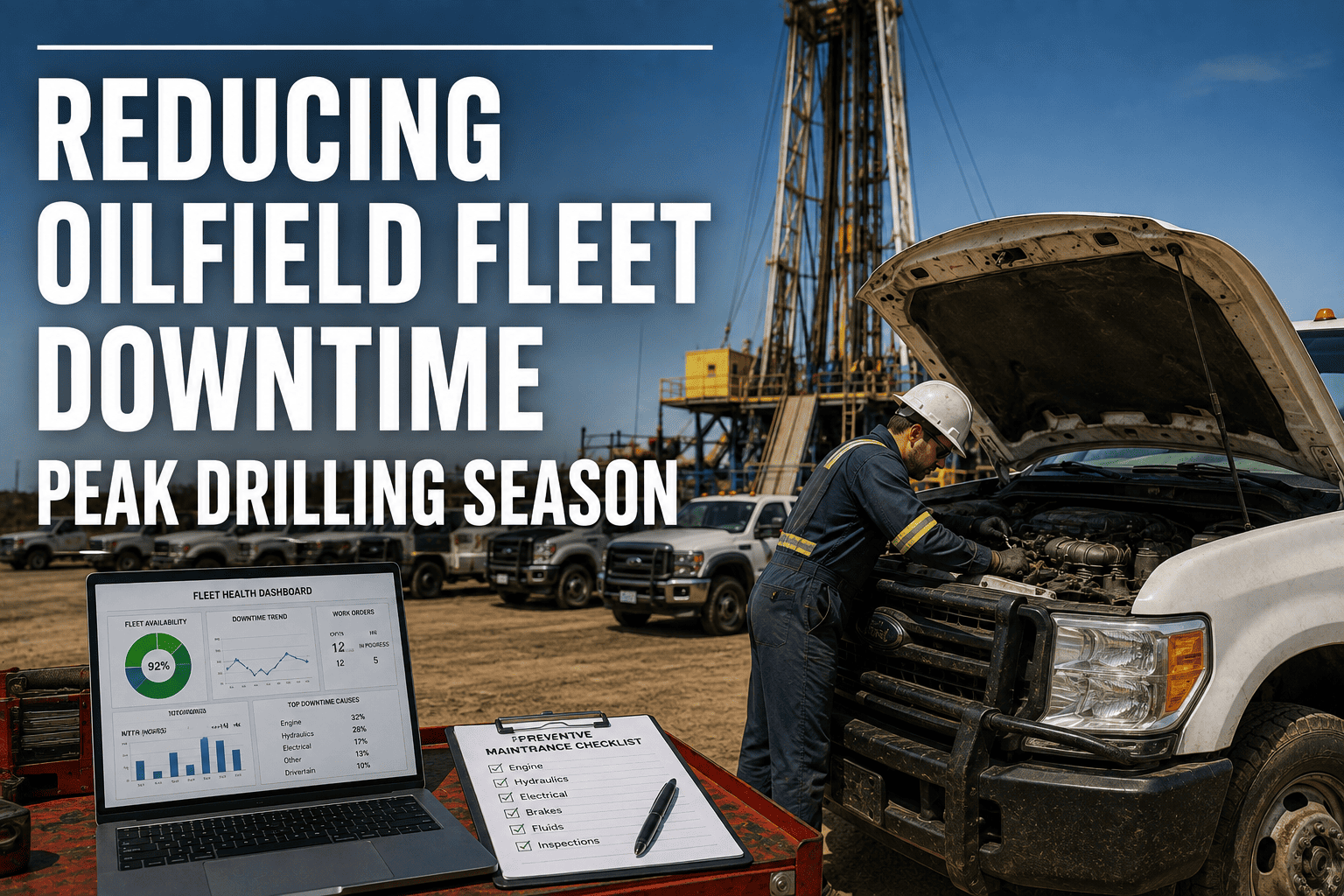
Every oilfield truck is already broadcasting the exact data needed to calculate its Scope 1 emissions. Fuel burn, engine hours, idle time, and route distance stream off the engine control unit every second a vehicle runs, whether anyone is watching or not. The question most operators haven't answered is whether that data is actually being captured and turned into a number, or whether it is quietly disappearing the same way it does when nobody is looking. Telematics is not a separate sustainability tool bolted onto a fleet. It is the instrumentation that was already there, waiting to be pointed at Scope 1.
Oilfield fleet telematics tracks four signals that drive Scope 1 emissions: fuel consumption, idle time, engine hours, and route distance. Idle time is usually the largest lever, since long-haul and wellsite equipment idle 1,800 to 2,400 hours a year, burning roughly a gallon of diesel per idle hour with zero miles to show for it. Feeding these signals into standard emission factors turns raw vehicle data into an auditable Scope 1 number instead of a year-end estimate.
How Each Telematics Signal Feeds the Scope 1 Number
Scope 1 emissions are direct emissions from sources an operator owns or controls, and for a fleet that means fuel burned in company vehicles and equipment. Telematics doesn't estimate this figure, it measures the inputs that calculate it.
Fuel Data Drives the Core Calculation
The standard method multiplies fuel consumed by a fuel-specific emission factor, commonly around 10.21 kilograms of CO2 per gallon of diesel. Telematics-reported fuel burn, cross-checked against fuel card transactions, produces a far more reliable figure than estimating consumption from mileage alone.
Idle Time Hides in Plain Sight
A parked truck with the engine running looks identical to a parked truck with the engine off on a basic GPS view. Only engine-status telematics data distinguishes the two, which matters because idle fuel burn is invisible to any emissions estimate based on distance traveled.
Engine Hours Matter More in Oilfield Duty Cycles
Wireline trucks, cement pumpers, and hot oilers can run their engines for hours powering hydraulics while covering only a few miles of road. Engine-hour tracking captures that fuel burn where mileage-based reporting would show almost nothing happened.
FleetRabbit pulls fuel, idle, and engine-hour data from your existing telematics hardware and builds an auditable Scope 1 baseline automatically. Sign up free to connect your fleet, or book a demo to see the calculation run on your own vehicle data.
Telematics Signal vs Emissions Impact
| Data Signal | What It Reveals | Typical Reduction Achievable |
|---|---|---|
| Fuel Consumption | Actual gallons burned per vehicle, per period | Baseline accuracy, not a reduction lever itself |
| Idle Time | Fuel burned with zero productive distance | Meaningful cut through idle-reduction policy and driver coaching |
| Route Optimization | Unnecessary mileage and inefficient dispatch | Up to 20 percent fuel consumption reduction |
| Eco-Driving Behavior | Harsh acceleration, braking, and speeding events | Up to 10 percent fuel use reduction through coaching |
| Engine Hours | Stationary hydraulic operation invisible to mileage tracking | Captures emissions that would otherwise go unmeasured |
Why Idle Time Is the Biggest Lever in Oilfield Fleets
Idle time deserves its own conversation because the math is unusually stark for oilfield operations. A single truck idling one hour burns close to a gallon of diesel, and the U.S. Department of Energy estimates long-haul trucks idle 1,800 to 2,400 hours a year. At current fuel prices, that works out to roughly 4,000 to 8,000 dollars in wasted diesel per truck annually, and every one of those gallons adds directly to the Scope 1 total.
Not All Idling Is the Same
A hot oiler idling to power a pump at a wellsite is doing productive work. A truck idling unnecessarily at a rest stop is not. Geo-fenced, context-aware telematics alerts distinguish between the two automatically, so idle reporting reflects operational reality rather than penalizing equipment that is idling for a legitimate reason.
Small Percentage Cuts Add Up Fast
Fleets that actively manage idling through telematics-driven policy have documented idle time reductions in the range of 40 percent, translating into measurable fuel savings and a corresponding drop in reported CO2 output without touching a single vehicle purchase decision.
From Raw Telematics to an Audit-Ready Scope 1 Number
Step 1: Connect Fuel, Idle, and Engine-Hour Data
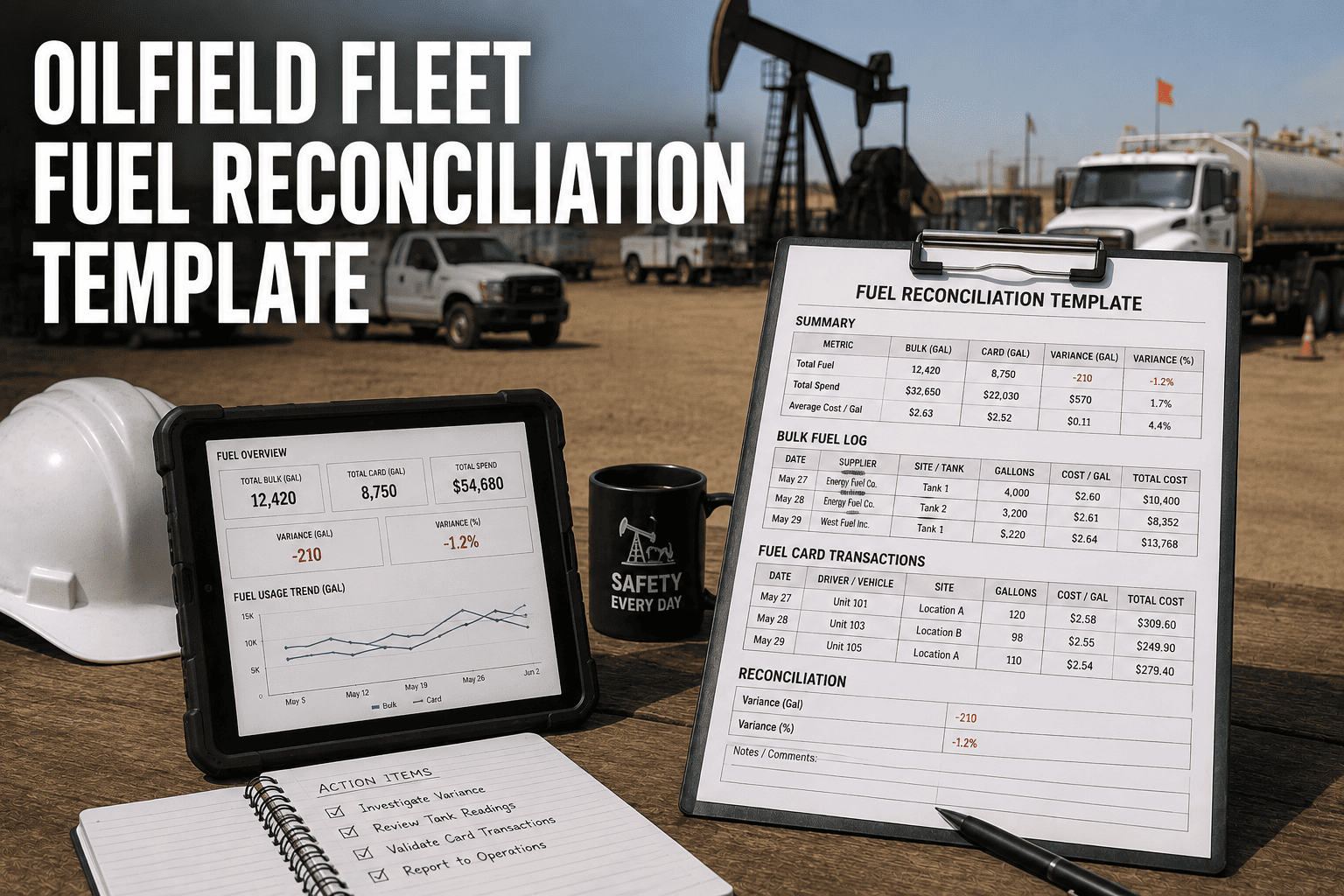
Pull fuel card transactions and telematics-reported consumption into one record per vehicle so nothing is double-counted or missed.
Step 2: Reconcile the Two Data Sources
Compare fuel card gallons against telematics-reported burn regularly and investigate any meaningful variance before it compounds into a reporting error.
Step 3: Apply Standard Emission Factors
Multiply reconciled fuel consumption by fuel-specific factors to produce a CO2e figure by vehicle, route, or time period.
Step 4: Surface the Number Where Decisions Happen
Emissions data buried in a report nobody checks does not change behavior. Putting it next to maintenance schedules and dispatch tools keeps it actionable.
How FleetRabbit Connects Telematics to Scope 1 Reporting
FleetRabbit ingests fuel card transactions, telematics-reported fuel burn, idle time, and engine-hour data from your existing hardware, no new devices required, and applies standard emission factors automatically to produce a Scope 1 baseline by vehicle. Context-aware idle alerts separate productive hydraulic operation from unnecessary engine run time, so idle reporting reflects what actually happened at the wellsite rather than flagging every stationary hour equally. If your Scope 1 numbers are still built from year-end fuel card totals, you can sign up free and see a vehicle-level baseline within days, or book a demo and our team will walk through your current telematics data to show exactly what it already reveals about your emissions.
Fuel burn, idle time, and engine hours are streaming off every vehicle in your fleet right now. FleetRabbit turns that existing telematics data into an audit-ready Scope 1 emissions number, no new hardware required. Start free and see your baseline today, or talk to our team about your specific fleet.