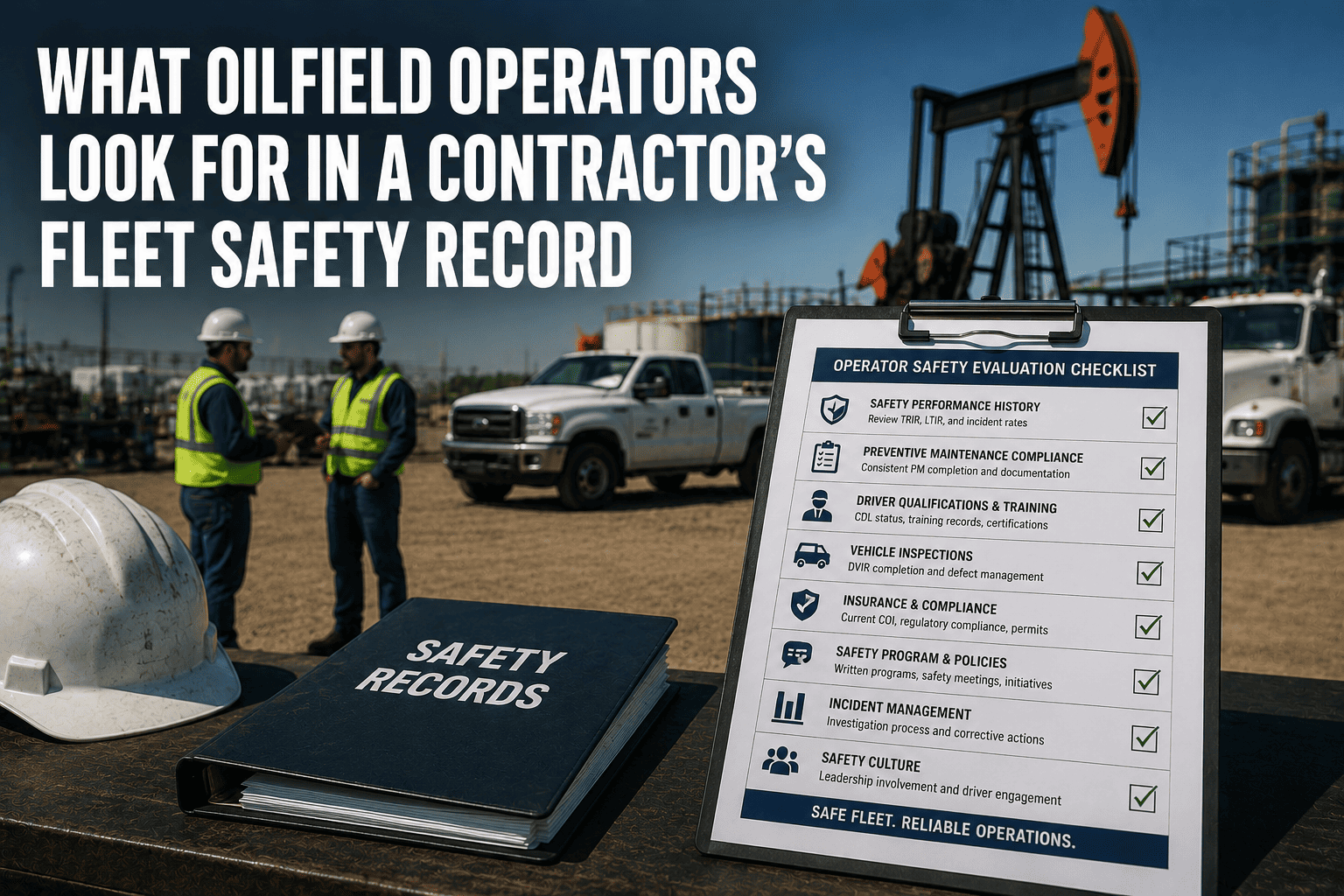
Most oilfield fleets do not run on owned trucks alone. When volume spikes during a completion push or a basin-wide surge in activity, operators lean on sub-haulers to fill the gap. That contracted capacity is essential, but it also means your compliance exposure now depends on paperwork sitting in someone else's filing cabinet: their insurance certificate, their driver credentials, their inspection records. If any one of those documents lapses without you knowing, the liability often lands back on you.
Tracking sub-hauler compliance means monitoring insurance certificates, driver credentials, and inspection records for every contracted carrier in one place, with automatic alerts before anything expires. Fleets managing this manually often lose significant staff time chasing documents by spreadsheet and email, while automated tracking cuts that manual workload dramatically and closes coverage gaps before they become liability exposure.
Why Sub-Hauler Compliance Is Harder Than It Looks
A certificate of insurance is proof of coverage on the day it was issued, nothing more. It does not update itself when a policy lapses, and it does not notify you when a sub-hauler switches carriers mid-contract. Multiply that single document across insurance, driver licensing, drug and alcohol program status, and vehicle inspection records, and across every contracted carrier your fleet uses, and the tracking burden grows far faster than most back offices can keep up with using spreadsheets alone.
What Happens When a Document Slips Through
When a sub-hauler's insurance or credential lapses unnoticed, the exposure rarely surfaces until something goes wrong, at which point it is far too late to fix retroactively. A claim, an audit, or a roadside inspection can reveal that a document expired weeks earlier, and depending on the contract terms, the liability can shift back to the operator who hired the sub-hauler in the first place.
The Documents That Matter Most and Why
Not every compliance document carries the same risk if it lapses. Understanding which ones need the tightest monitoring helps prioritize where automated tracking delivers the most protection.
| Document Type | What It Confirms | Risk If It Lapses |
|---|---|---|
| Certificate of Insurance | Active liability, cargo, and workers compensation coverage | Uninsured loads and shifted liability back to the operator |
| Driver License and Medical Card | Legal qualification to operate a commercial vehicle | Unqualified drivers on active loads and audit violations |
| Drug and Alcohol Program Status | Compliance with federal testing requirements | Regulatory penalties and disqualification from contracts |
| Annual Vehicle Inspection | Mechanical safety and roadworthiness of the truck | Roadside violations and increased breakdown risk |
| Signed Contract and W-9 | Legal and tax standing of the sub-hauler relationship | Payment delays and unclear liability terms in a dispute |
FleetRabbit tracks insurance, credentials, and inspection records for every sub-hauler in one place, with alerts before anything expires. Explore it with a free sign up or walk through your current sub-hauler list on a live call.
How a Renewal Alert Timeline Protects Your Fleet
The most effective compliance systems do not wait until a document expires to react. They warn you well in advance, giving the sub-hauler time to renew before a gap ever opens.
Building a Sub-Hauler Compliance Workflow
Most fleets move from spreadsheet chasing to automated tracking in four practical steps rather than overhauling their vendor relationships all at once.
Step 1: Centralize Every Sub-Hauler's Documents
Insurance certificates, driver credentials, and inspection records for every contracted carrier live in one searchable system instead of scattered emails and folders.
Step 2: Set Automated Expiration Alerts
The system tracks every expiration date and sends reminders on a set schedule, so nothing depends on someone remembering to check a calendar.
Step 3: Require Self-Service Renewal Uploads
Sub-haulers upload their own renewed documents through a portal when they receive a reminder, removing the need for your team to chase them by phone.
Step 4: Flag Non-Compliant Carriers Before Dispatch
Dispatch sees compliance status alongside availability, so a sub-hauler with an expired document is automatically excluded from new assignments until they renew.
Why This Matters Beyond Avoiding Penalties
Clean sub-hauler compliance is not just about passing an audit. It protects the relationships you depend on during peak season, because a carrier who knows their documents are tracked and reminded automatically is far more likely to stay in good standing and available when you need contracted capacity the most.
FleetRabbit centralizes documents and sends automatic renewal alerts so your contracted capacity stays compliant. Get started with a free sign up, or book a demo to see it applied to your current sub-hauler roster.
Frequently Asked Questions
Every sub-hauler document you cannot see is a risk you cannot manage. FleetRabbit centralizes insurance, credentials, and inspection records with automatic alerts so nothing slips through. Start with a free sign up or book a short demo to see it on your own contracted fleet.