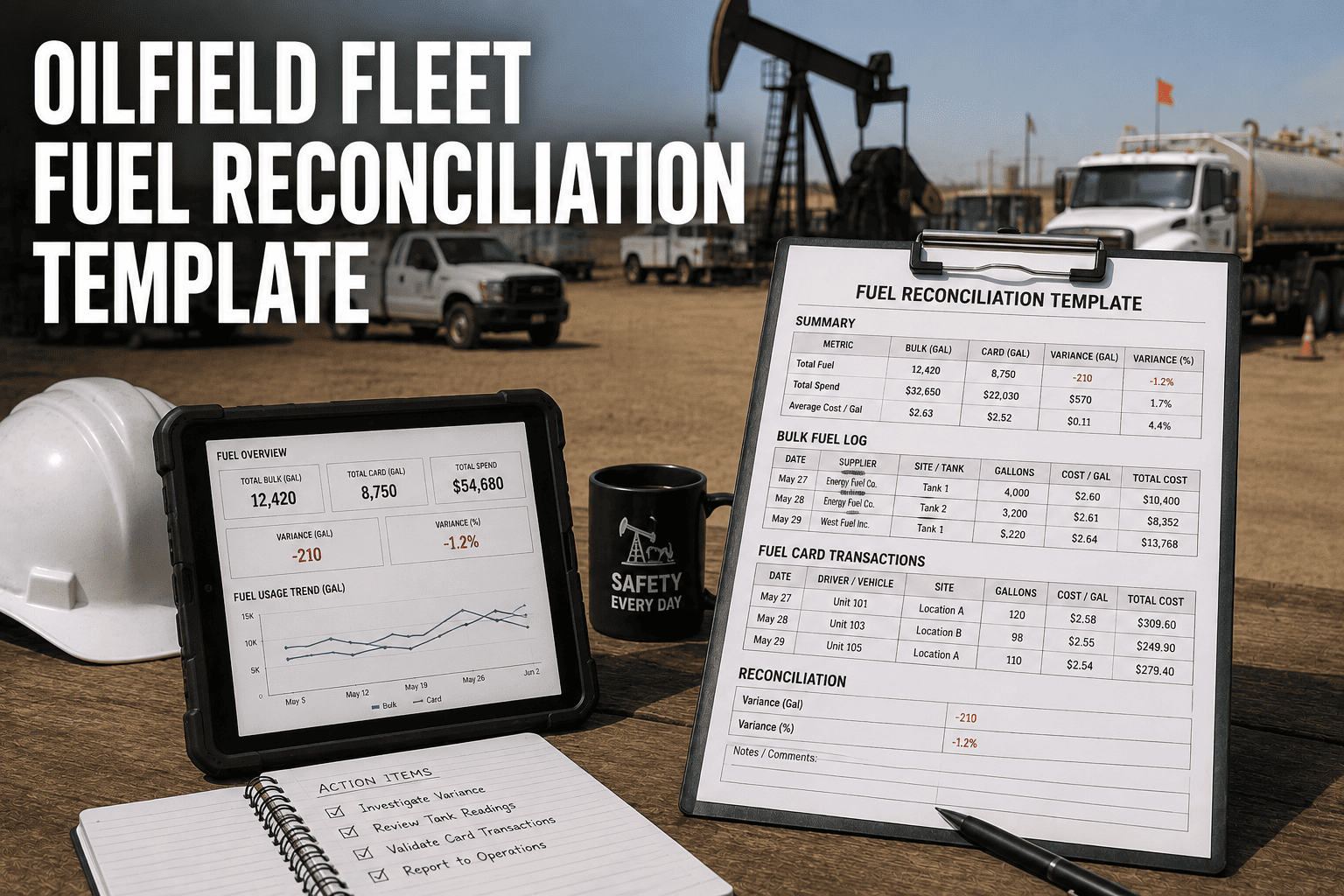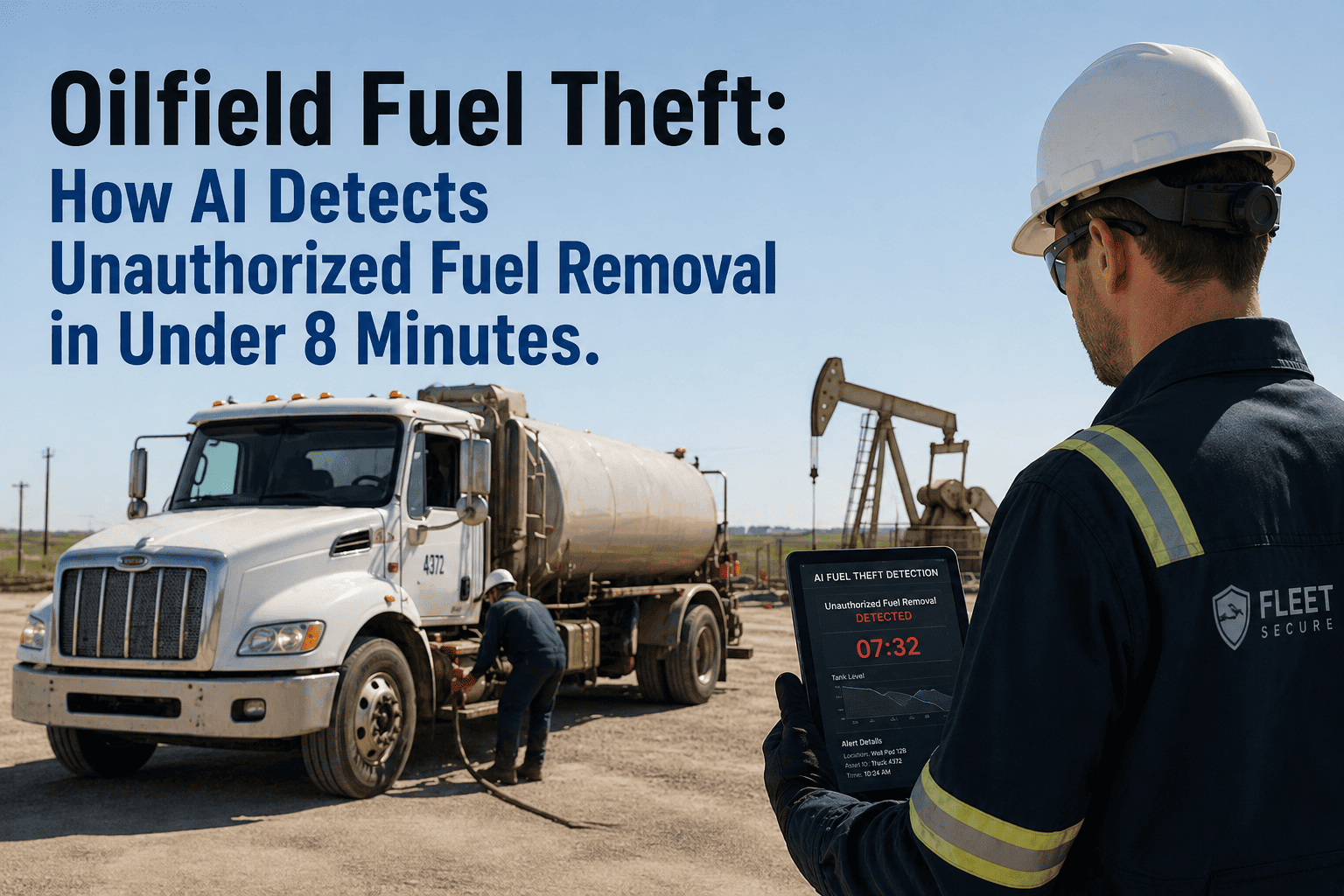
Oilfield fuel theft is not a petty crime — it is a systematic, organised, and frequently insider-driven operation that drains $45,000 to $120,000 per fleet annually before most fleet managers know it is happening. Remote wellsite locations, unmonitored overnight dwell periods, and the operational complexity of managing hundreds of mobile assets across multiple basin sites create the conditions that fuel theft operations exploit. The fleet manager running spreadsheet-based fuel reconciliation is not managing fuel security — they are providing a 72-hour delay between theft event and detection, during which the same theft pattern repeats across multiple vehicles in the same fleet. FleetRabbit's AI fuel monitoring engine changes the detection window from days to minutes — monitoring 36 simultaneous variables including GPS position, tank level telemetry, engine ignition status, PTO engagement, fuel flow rate, and timestamp correlation to surface an unauthorized fuel removal alert in under 8 minutes of the event occurring. This guide covers exactly how oilfield fuel theft happens, what variables the AI monitors, and how fleet managers and operations executives use FleetRabbit to eliminate fuel loss before the next morning's fuel reconciliation reveals a problem that is already days old. Book a demo to see FleetRabbit's AI fuel theft detection for oilfield fleet operations.
Oilfield Fuel Theft: How AI Detects Unauthorized Fuel Removal in Under 8 Minutes
FleetRabbit's AI engine monitors 36 simultaneous variables — GPS position, tank levels, engine status, PTO engagement, fuel flow rate, and timestamp correlation — to surface fuel theft alerts before the next morning's reconciliation reveals a loss that's already days old.
Why Oilfield Fuel Theft Is Invisible Until It Is Already Expensive
Oilfield fleet fuel theft operates in the gap between what fuel management systems measure and what actually happens at a remote wellsite at 02:30 on a Tuesday when no supervisor is present and no camera has line of sight to the vehicle's tank access point.
The structural problem with oilfield fuel management is that most fleet operations are built around end-of-day or end-of-week fuel reconciliation — comparing fuel dispensed against mileage driven and engine hours logged. This model has three exploitable weaknesses that every professional fuel theft operation knows to target.
First, reconciliation delay. A fuel theft event at 22:00 on Monday is not discovered until Friday's reconciliation — by which point the same theft method has been repeated three more times across three different vehicles. Second, attribution failure. When the reconciliation gap is detected, it is attributed to fuel system inefficiency, driver error, or faulty fuel flow meters rather than intentional removal — because the data required to distinguish theft from waste (GPS position at time of tank level drop, engine ignition status, PTO engagement state) is not captured or cross-referenced. Third, insider advantage. The most damaging fuel theft operations in oilfield environments are conducted by individuals who understand exactly where the reconciliation blind spots are and operate precisely within them.
FleetRabbit's AI fuel security engine closes all three gaps simultaneously — real-time monitoring eliminates reconciliation delay, multi-variable correlation eliminates attribution failure, and tamper-evident alert logs eliminate the insider advantage.
How FleetRabbit AI Monitors 36 Variables to Surface Theft in Under 8 Minutes
Single-variable fuel monitoring — comparing fuel dispensed against mileage driven — is categorically inadequate for oilfield fuel theft detection. FleetRabbit's AI engine cross-references 36 simultaneous data streams to identify the multi-variable signature patterns that distinguish legitimate fuel consumption from unauthorized removal.
AI detects tank level drop inconsistent with engine status, GPS position, and scheduled operation — flags as anomalous fuel event requiring multi-variable verification.
AI cross-references 35 additional variables simultaneously — GPS, ignition, PTO, shift status, historical pattern, geofence — to determine unauthorized removal probability score.
Multi-variable correlation crosses configured theft probability threshold — distinguishing unauthorized removal from legitimate consumption with fleet-specific baseline calibration.
Fleet manager and HSE coordinator receive simultaneous push notification with vehicle ID, GPS position, estimated fuel volume, probability score, and evidence data package attached.
36 Variables. Under 8 Minutes. Zero Fuel Theft Going Undetected.
FleetRabbit's AI fuel monitoring engine is the only system purpose-built for oilfield fuel theft detection — monitoring tank telemetry, GPS, engine status, PTO engagement, and timestamp patterns simultaneously to surface unauthorized fuel removal before the next shift cycle begins.
FleetRabbit Fuel Security: Platform Capabilities for Fleet Managers
Fleet managers running oilfield operations need fuel security tools that work in the field, not just in the office. FleetRabbit's mobile-first platform delivers real-time fuel intelligence at every level of fleet management — from individual vehicle fuel events to fleet-wide consumption analytics visible to operations executives.
Real-Time AI Fuel Anomaly Detection
FleetRabbit's AI fuel engine establishes a calibrated consumption baseline for each vehicle within 14 days of deployment — learning the normal fuel consumption curve for that vehicle's duty cycle, load class, terrain type, and basin environment. Any deviation from this baseline is cross-referenced against all 36 monitoring variables to generate a theft probability score that distinguishes unauthorized removal from consumption variance caused by legitimate operational changes.
Fleet managers receive a fuel anomaly alert the moment the probability threshold is crossed — with a full evidence package (GPS position, tank level timeline, engine status log, shift schedule correlation, and estimated fuel volume removed) attached to the notification. No manual investigation required before escalation. No hours of spreadsheet reconciliation to understand what happened. The answer is in the alert.
Satellite-Mode Monitoring
Fuel telemetry monitored continuously at remote wellsite locations beyond cellular coverage — satellite transmission ensures no monitoring gap in basin interiors where theft most commonly occurs.
Driver Pattern Analysis
AI identifies which driver assignments correlate with anomalous fuel events — enabling fleet managers to intervene with specific individuals based on data evidence, not management intuition.
Geofenced Fuelling Zones
Authorised fuelling locations defined in FleetRabbit geofence registry — any tank level increase outside a geofenced fuelling zone flagged for immediate review regardless of volume.
Multi-Vehicle Cluster Detection
AI identifies fuel theft patterns across multiple vehicles at the same site during the same shift window — distinguishing organised operations from individual opportunistic events.
What VP-Level Operations Leaders Get From FleetRabbit Fuel Intelligence
For operations executives, oilfield fuel theft is a balance-sheet erosion issue — not a field-level security concern. FleetRabbit delivers the executive-grade fuel intelligence to quantify the problem, evidence the solution, and present the ROI of AI fuel monitoring to finance and board-level stakeholders.
Fleet-Wide Fuel Consumption Intelligence Dashboard
Live fuel consumption trending across every vehicle, every site, and every basin in a single executive dashboard view. Variance-from-baseline flagged by vehicle, by driver assignment, and by site location — without requiring manual reconciliation from field supervisors. Executives see the fuel security status of their entire fleet in real time.
Tamper-Evident Fuel Theft Evidence for Legal Proceedings
Every fuel anomaly alert generates a tamper-evident, timestamped evidence package — GPS track, tank level timeline, engine status log, driver assignment record, and probability score — stored in FleetRabbit's immutable record system. This evidence package meets the evidentiary standards required for employment termination proceedings, civil recovery claims, and criminal complaint filing with law enforcement.
ROI Quantification — Fuel Loss vs. Platform Cost
FleetRabbit's executive reporting module quantifies recovered fuel value against platform cost — enabling finance directors to calculate the direct return on investment of AI fuel monitoring. At $3/vehicle/month on a 100-vehicle fleet, the annual platform cost is $3,600. A single systematic fuel theft operation detected and stopped within 6 months typically recovers $15,000–$45,000 in fuel losses. The ROI case writes itself.
Insurance and Contractual Compliance Evidence
Major oilfield operator clients and insurance underwriters increasingly require demonstrable fuel security measures as part of contractor fleet management standards. FleetRabbit's AI fuel monitoring records provide the evidence of proactive fuel security management that satisfies ADNOC, Saudi Aramco, and North Sea operator contractor audit requirements — and supports premium reduction discussions at insurance policy renewal.
Deploy AI Fuel Theft Detection on Your Oilfield Fleet in 5–7 Days
Hardware Installation & Asset Configuration
Fuel telemetry sensors, OBD-II monitoring hardware, and GPS units installed across fleet vehicles. FleetRabbit asset hierarchy built with vehicle type, duty cycle, and load class — enabling correct baseline calibration per asset from day one of data collection.
Geofence Configuration & Alert Threshold Setup
Authorised fuelling point geofences defined for every wellsite, depot, and remote bowser location. Fleet manager and executive notification chains configured. Alert probability thresholds set to match fleet's operating environment — calibrated to minimise false positives without sacrificing detection sensitivity.
AI Baseline Learning & Live Monitoring Activation
AI fuel engine begins baseline calibration using first 14 days of live vehicle data — establishing normal consumption curves per vehicle before anomaly detection activates. Parallel monitoring begins immediately: any statistically significant fuel event during baseline period is flagged for review regardless of baseline completion status.
Continuous AI Monitoring & Executive Intelligence Reporting
AI fuel engine monitors 36 variables continuously — surfacing anomalies in under 8 minutes, routing alerts to fleet managers, and building the executive fuel intelligence reports that demonstrate fuel security performance to finance directors, audit committees, and client operator compliance reviews.
Your Fleet's Fuel Security Gap Is Already Costing You — FleetRabbit Closes It in Under a Week
At $3/vehicle/month on a 100-vehicle fleet, FleetRabbit costs $3,600 annually. The average systematic fuel theft operation detected and stopped within 6 months recovers $15,000–$45,000 in losses. The first detected theft event pays for the platform for over 4 years.
FleetRabbit AI Fuel Security Outcomes at Oilfield Fleet Deployments
Frequently Asked Questions
Stop Oilfield Fuel Theft at the Point of Occurrence — Not at the End of the Week's Reconciliation
FleetRabbit's AI fuel monitoring engine detects unauthorized fuel removal in under 8 minutes — cross-referencing GPS, tank telemetry, engine status, PTO data, and timestamp patterns simultaneously to surface theft events before they compound into $45,000–$120,000 annual losses. Deployed on your oilfield fleet in 5–7 working days at $3/vehicle/month.