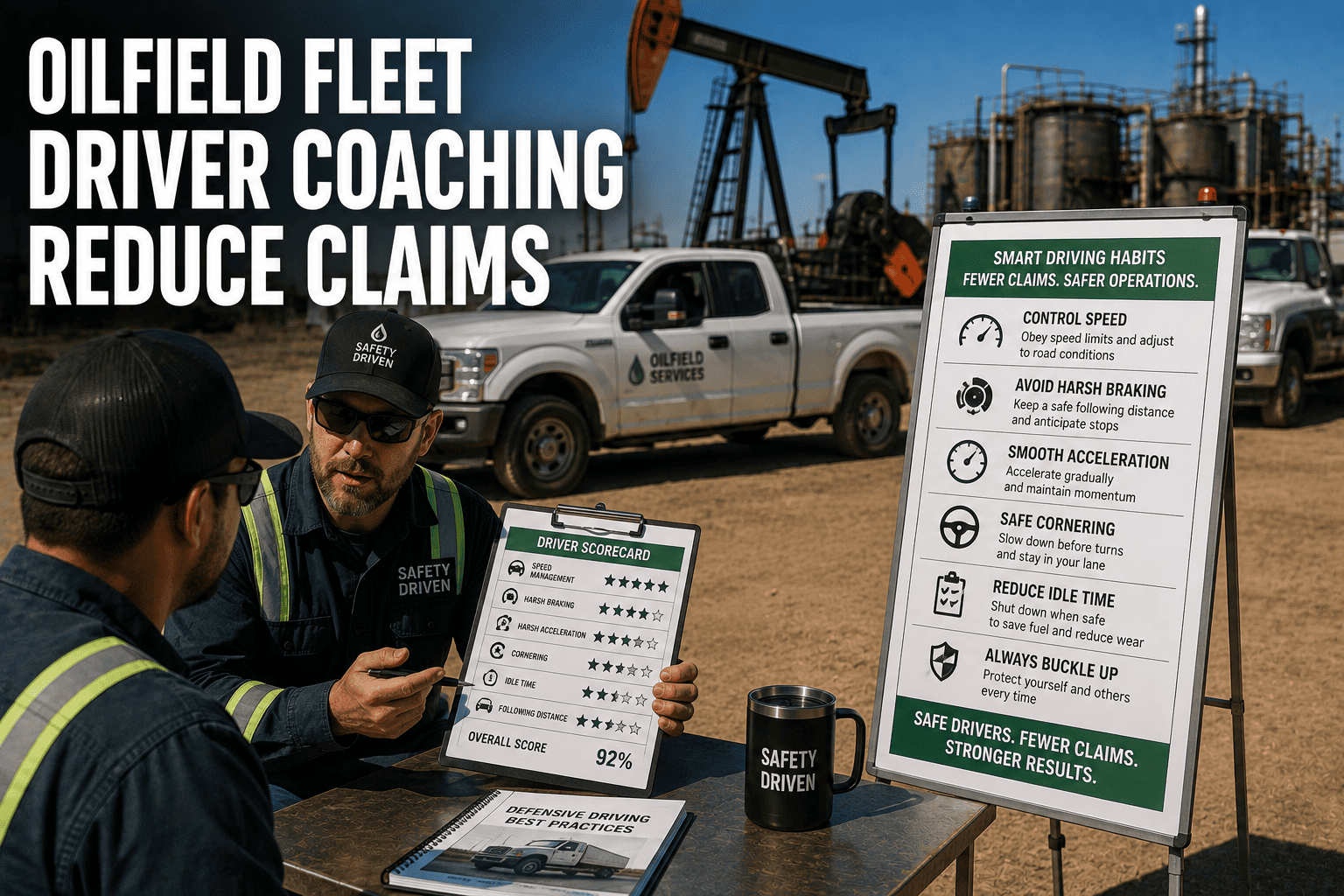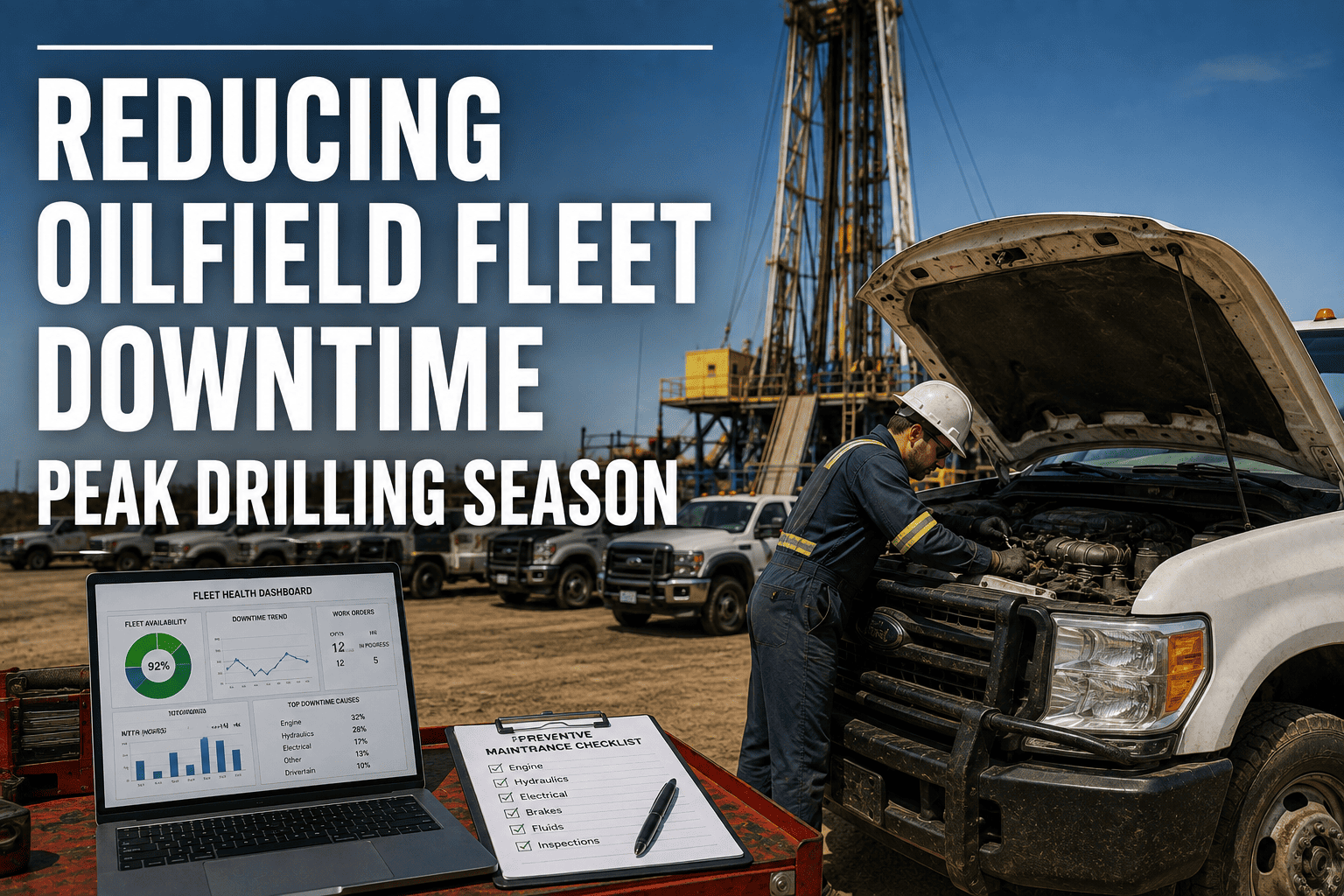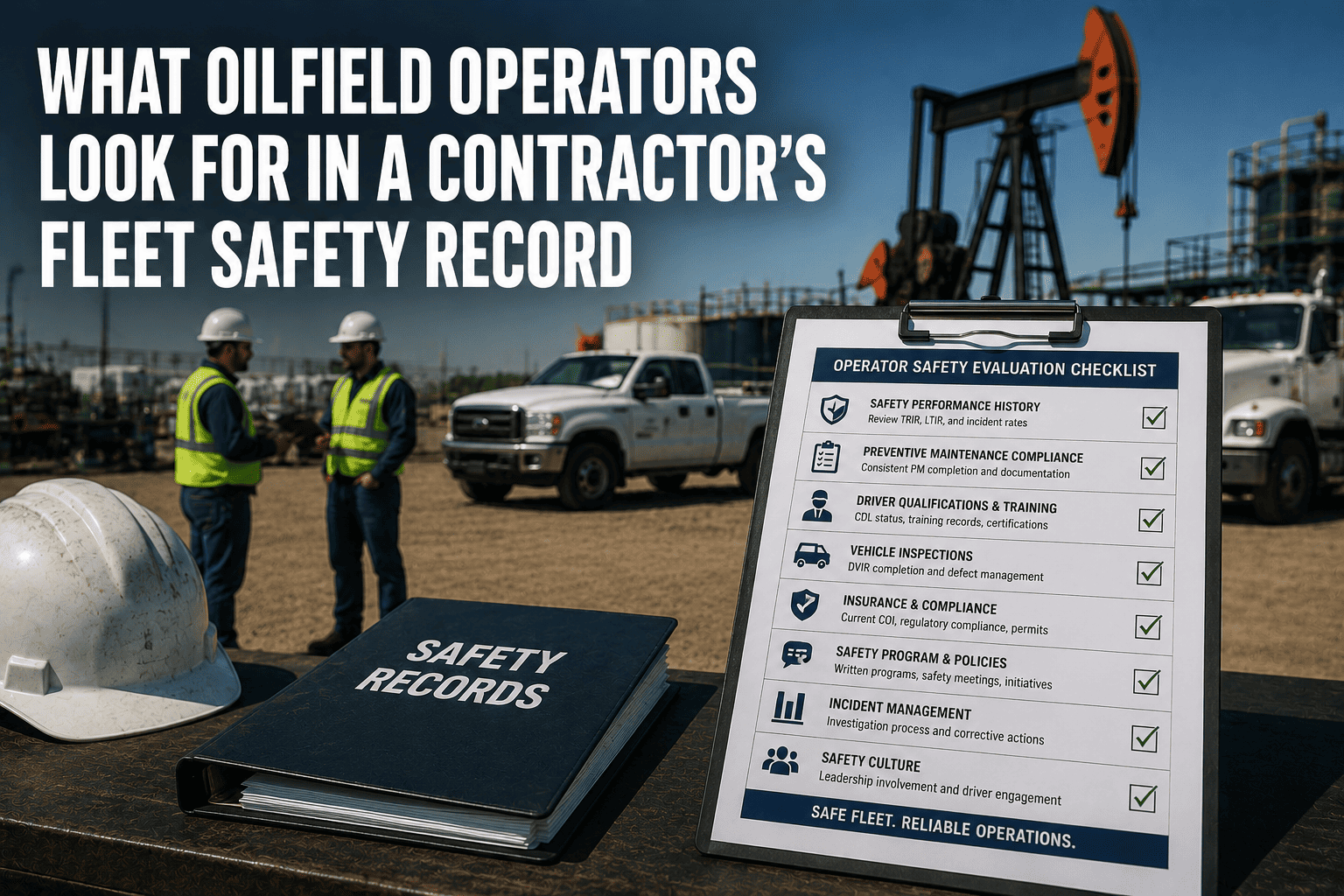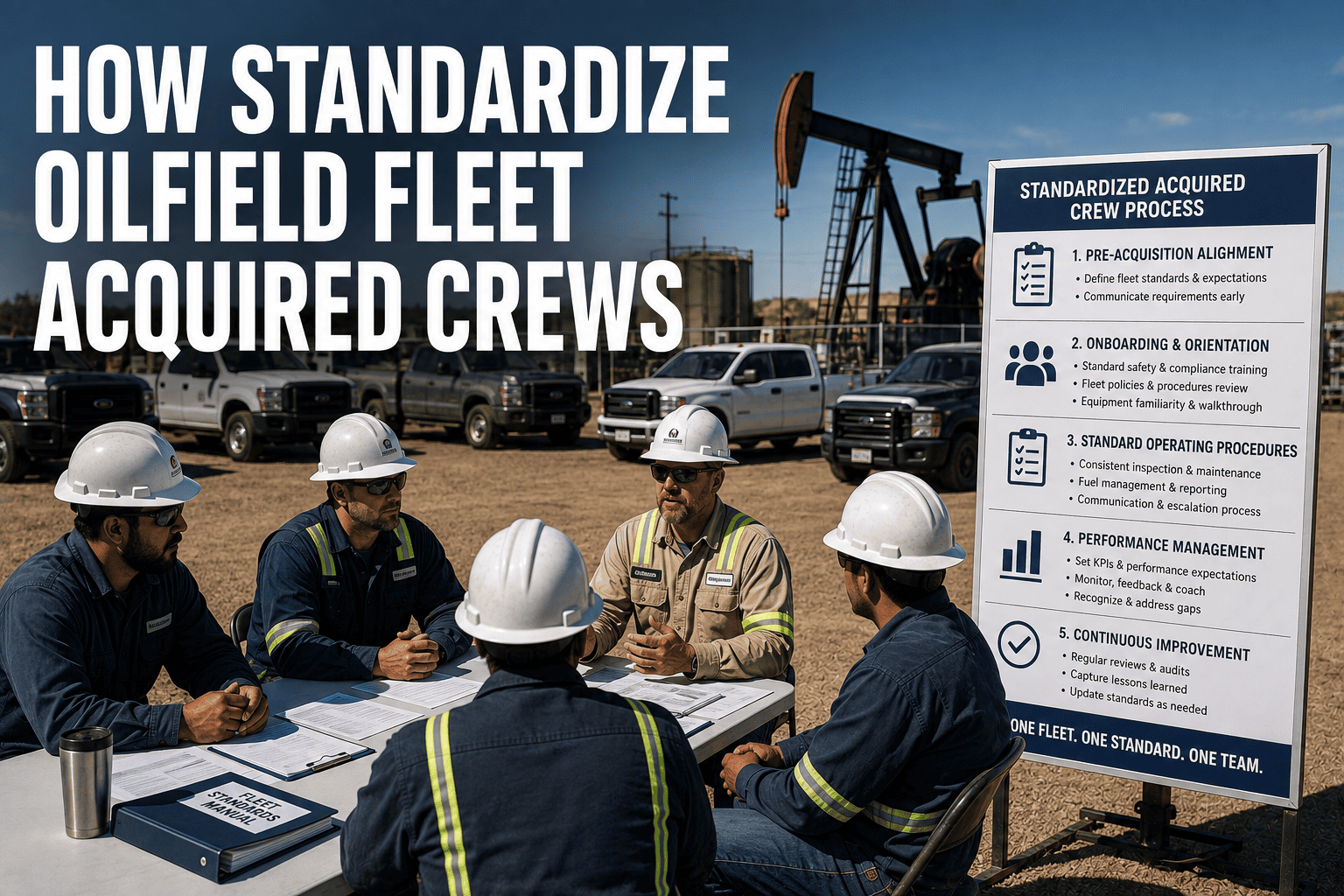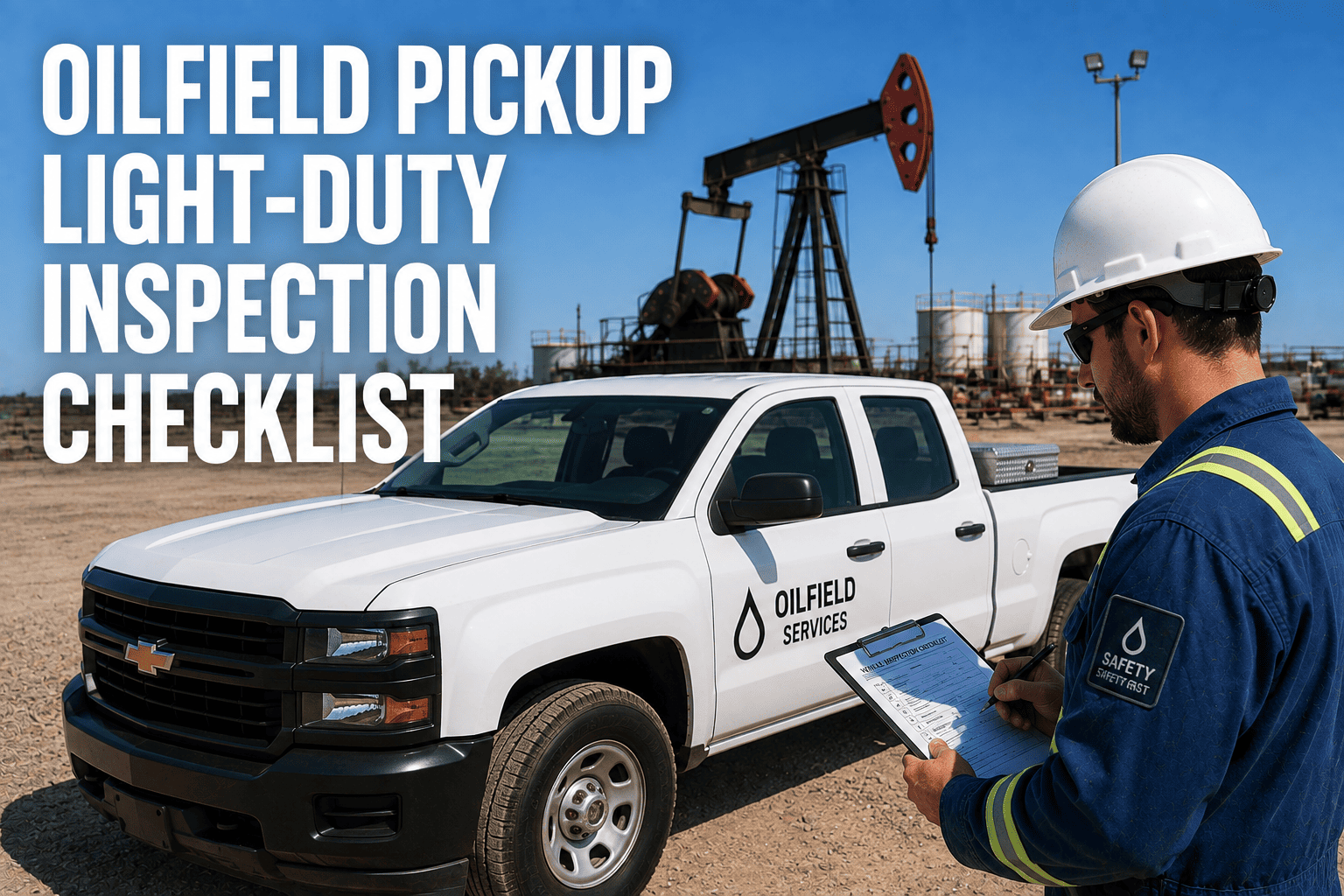
Nobody thinks about the pickup truck. Crews walk right past it to get to the rig, the frac spread, or the wellhead, treating the drive out to location as the easy part of the day. It isn't. Highway crashes are the single leading cause of death for oil and gas workers, and roughly half of the vehicles involved in those fatal wrecks are ordinary pickup trucks, not the heavy iron everyone associates with oilfield risk. A five-minute walkaround before every shift is the cheapest safety measure a field supervisor has, yet it is the one most often skipped when the location is running behind. Sign up free to turn that walkaround into a guided digital checklist your crew actually completes, or book a demo to see how FleetRabbit tracks pickup inspections across every lease.
A complete oilfield pickup inspection covers four zones: tires and wheels, lights and signals, fluids and the engine bay, and in-cab safety equipment, and takes roughly 5 to 8 minutes when done in a consistent order. Motor vehicle crashes cause close to 3 in 10 oilfield worker deaths nationally, and about half of those crashes involve a pickup truck, which makes this short walkaround one of the highest-value habits a field supervisor can enforce.
Why the Pickup Gets Overlooked
Field crews are trained to be careful around wellheads, pressure equipment, and heavy trucks because the danger there is obvious. The pickup truck feels routine by comparison, which is exactly why worn tires, a burnt-out brake light, or a low coolant level get ignored shift after shift. Long, monotonous drives on rural lease roads, tight schedules, and back-to-back 12 or 14-hour days make it easy to skip a walkaround that takes less time than filling a coffee thermos.
What a Field Supervisor Is Actually Checking For
A good pickup inspection is not about paperwork. It is about catching the three or four things that are statistically most likely to put a truck and a crew into a ditch: a tire that will not hold up to a rough lease road, a light that keeps another driver from seeing the truck at dusk, a fluid leak that leaves a crew stranded miles from cell coverage, and safety gear that will not be there if something does go wrong.
FleetRabbit puts a step-by-step pickup inspection on every driver's phone, flags anything marked as a defect, and notifies the field supervisor before the truck leaves the yard. Sign up free and load your first checklist in minutes.
The Four-Zone Pickup Walkaround
Walking the same route around the truck in the same order every time is what makes an inspection fast and reliable. These four zones cover the checks that matter most for a light-duty pickup running lease roads.
- Tread depth on all four tires plus the spare
- Tire pressure against the door-jamb rating
- Sidewall cuts, bulges, or embedded debris
- Lug nuts snug with no visible rust streaks
- Headlights on high and low beam
- Brake lights, turn signals, and hazards
- Reverse lights and license plate light
- Windshield free of cracks blocking the view
- Oil level and condition on the dipstick
- Coolant level in the overflow reservoir
- Brake fluid and windshield washer fluid
- No fresh leaks or drips under the truck
- Seatbelts function and retract properly
- Fire extinguisher present and charged
- First aid kit stocked and unexpired
- Two-way radio, GPS unit, and horn working
Extra Checks for H2S and Remote Locations
Pickups running to active H2S zones or fully remote pads need a couple of items beyond the standard four zones. Confirm the H2S monitor is charged and calibrated, verify a full-size spare and working jack are actually in the truck rather than assumed to be there, and check that fuel level is enough to cover the round trip plus a reasonable buffer, since a low tank on a lease road with no signal turns a minor oversight into a stranded crew.
A Note on Cold Weather Routes
Winter routes deserve one more look: battery terminals free of corrosion, an ice scraper in the cab, and antifreeze concentration checked rather than just topped off, since a coolant mix that is too weak can freeze exactly when a truck needs it most.
What Grounds a Truck vs. What Gets Logged and Watched
Not every defect found on a walkaround needs to keep a truck parked, but every defect needs to be written down. This table gives field supervisors a fast way to sort what they find.
| Defect Found | Action | Reasoning |
|---|---|---|
| Bald or damaged tire | Ground the truck | Highest-risk factor on rough lease roads and highway speeds |
| Brake or headlight out | Ground the truck | Removes visibility other drivers depend on, especially at dawn or dusk |
| Active fluid leak | Ground the truck | Risk of breakdown far from cell coverage or service |
| Missing fire extinguisher | Ground the truck | Required safety equipment, no exceptions on active locations |
| Minor cosmetic damage | Log and monitor | Does not affect safe operation, track for the next service visit |
| Low washer fluid | Log and top off | Quick fix, not a safety-critical failure on its own |
FleetRabbit turns every flagged tire, light, or fluid issue into an instant alert with a photo attached, so a truck never leaves the yard on a defect the office never saw. Book a demo to see the supervisor dashboard in action.
Frequently Asked Questions
A consistent pickup walkaround is one of the simplest ways to reduce the single biggest cause of oilfield fatalities. FleetRabbit gives every driver a guided checklist and every supervisor real-time visibility into defects before a truck ever leaves the yard. Sign up free with no credit card required, or book a demo to see it running on your own fleet.