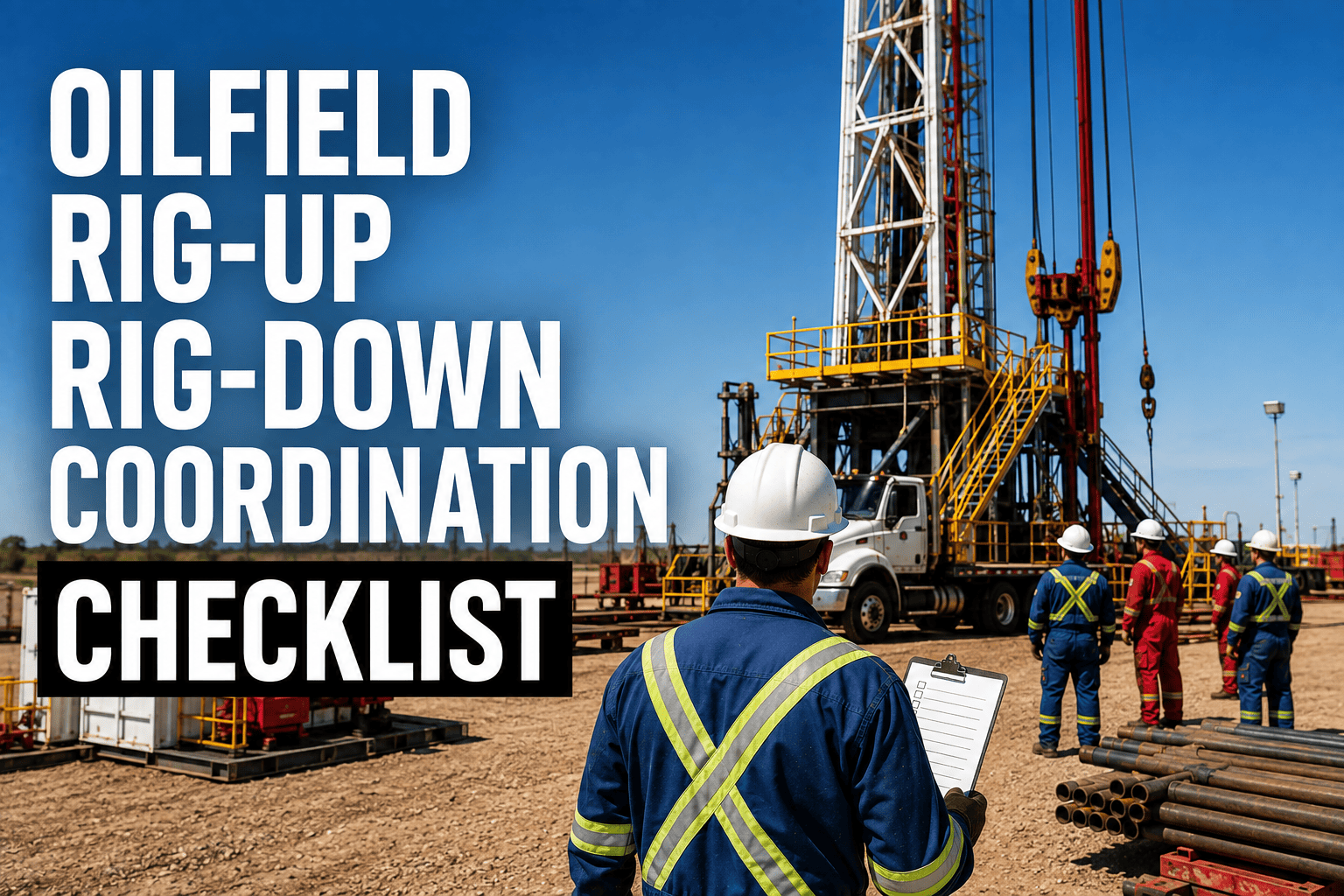
Oilfield rig moves are among the most complex logistical puzzles in the energy sector. A single rig-up or rig-down operation requires the precise coordination of dozens of heavy haulers, flatbeds, crew vehicles, and specialized equipment. When vehicle sequencing falls apart, costs skyrocket. Unplanned delays during a rig move can cost operators tens of thousands of dollars per day in lost drilling time and standby crew wages. Without a centralized rig-up and rig-down vehicle coordination checklist, dispatchers face a chaotic environment of disconnected phone calls, misaligned arrival times, and severe congestion at the well pad.
A standard rig move requires 20 to 40 truckloads of equipment. Poor vehicle coordination adds 12 to 24 hours of downtime, costing $15,000 to $30,000 daily in non-productive time. A structured coordination checklist reduces move times by up to 30 percent, ensuring equipment arrives in the exact sequence needed for safe, efficient assembly.
Anatomy of a Flawless Rig Move
A successful rig move is essentially a massive, choreographed puzzle. Every truck, trailer, and crew bus has a specific window for arrival and unloading. When dispatchers rely on outdated whiteboards or disconnected text messages, critical details slip through the cracks. The result is a well pad choked with idle trucks, frustrated drivers, and delayed operations. To combat this, modern oilfield operators are turning to digital fleet management platforms to gain real-time visibility and enforce a strict coordination checklist.
The High Stakes of Oilfield Logistics
Every minute a drilling rig sits unassembled, money burns. The rig-up and rig-down phases are notorious for logistical bottlenecks. Dispatchers must account for variable road conditions, weather delays, and equipment breakdowns while simultaneously managing a rolling staging area. By implementing a structured vehicle coordination protocol, operators can move from a chaotic reaction-based model to a proactive, sequenced operation.
Key Coordination Challenges
Dispatchers face limited cell coverage in remote areas, making real-time communication difficult. Furthermore, coordinating the return trip during a rig-down requires tracking empty trucks back to the yard while dispatching the next wave of loaded heavy haulers to the new wellsite. Without a centralized system, tracking asset locations becomes nearly impossible.
FleetRabbit provides real-time GPS tracking, automated arrival sequencing, and digital checklists to keep your rig-up and rig-down perfectly coordinated. Stop burning money on idle standby time and start moving your equipment efficiently. Start your free trial today.
The Rig-Up and Rig-Down Vehicle Checklist
To eliminate non-productive time, oilfield transport teams must follow a rigorous vehicle coordination checklist. This ensures that every piece of equipment arrives exactly when the rig crew is ready to receive it. Below is the industry-standard framework for managing vehicle movements during a rig move.
| Operational Phase | Vehicle Coordination Task | Logistics Goal | Expected Outcome |
|---|---|---|---|
| Pre-Move Preparation | Verify all heavy hauler permits and pilot car scheduling | Ensure legal compliance and route clearance for oversized loads | Zero transit delays or regulatory fines during rig transport |
| Rig-Down Transit | Sequence departing trucks based on tear-down order | Prevent yard congestion and streamline unloading at the new site | Smooth flow of departing assets without staging bottlenecks |
| Staging Area Control | Hold incoming trucks at a designated geofenced staging yard | Release trucks to the well pad only when rig crew is ready | Zero idle trucks lining the lease road waiting to unload |
| Rig-Up Assembly | Dispatch heavy haulers in exact reverse order of assembly | Match vehicle arrivals to crane lifting schedules | Continuous rig-up operation without crane standby time |
| Crew Transport | Sync crew bus arrivals with shift changes and rig milestones | Ensure adequate manpower is present for each assembly phase | Maximized labor efficiency and reduced overtime costs |
| Post-Move Demobilization | Track empty trailers and support vehicles back to yard | Confirm asset availability for the next scheduled rig move | Accurate fleet inventory and rapid turnaround readiness |
Solving the Visibility Gap in Rig Logistics
When dispatchers lack real-time visibility into vehicle locations, they cannot adjust sequences on the fly. A delayed lowboy carrying the substructure can hold up the entire crane operation, costing thousands per hour. This is where fleet management technology shifts the balance from reactive scrambling to predictive coordination. You can start your free trial at FleetRabbit to gain real-time GPS tracking and automated staging alerts that keep your rig move perfectly sequenced.
Moving from Reactive to Predictive Logistics
Digital coordination allows dispatchers to set virtual perimeters, known as geofences, around the staging yard and the well pad. When a heavy hauler crosses that invisible line, the system automatically logs the arrival time and alerts the rig supervisor. This eliminates the need for constant radio checks and manual status updates. Furthermore, predictive maintenance alerts ensure that no critical transport vehicle breaks down mid-transit, which could derail the entire rig-up timeline.
Key Benefits of Digital Coordination
By utilizing a comprehensive platform like FleetRabbit, operators gain absolute control over their oilfield moves. You can book a demo with our team to see how automated dispatching and real-time asset tracking eliminate the guesswork from your rig moves, ensuring every truck arrives exactly when needed.
Implementing the Checklist with FleetRabbit
Transitioning from a paper-based coordination system to a digital platform does not have to be disruptive. FleetRabbit is designed specifically to handle the heavy demands of oilfield logistics. The platform integrates vehicle health monitoring, driver hours-of-service tracking, and real-time GPS location into a single dashboard. This allows dispatchers to confidently sequence 40 truckloads of equipment knowing exactly where every asset is at any given moment. By digitizing the rig-up and rig-down checklist, supervisors gain a permanent record of arrival times, sequencing compliance, and operational efficiency for post-move analysis.
Key Takeaways for Rig Move Efficiency
Executing a flawless rig-up or rig-down is not about moving faster; it is about moving smarter. The difference between a profitable drilling operation and a costly delay often comes down to vehicle sequencing. When heavy haulers arrive out of order, the entire operation grinds to a halt. By utilizing a comprehensive vehicle coordination checklist, oilfield operators can eliminate well pad congestion, reduce standby costs, and protect their crews from unnecessary safety risks. The future of oilfield logistics relies on real-time data and centralized control.
FleetRabbit empowers oilfield dispatchers to replace guesswork with precision. Real-time GPS tracking, automated arrival alerts, and predictive maintenance ensure that every truck is exactly where it needs to be, precisely when the rig crew needs it. Do not let disorganized logistics drain your operational budget. Take control of your next rig move and experience the efficiency of a digitally coordinated fleet.
Stop burning money on idle standby time and disorganized vehicle sequencing. FleetRabbit's oilfield fleet management platform delivers the real-time tracking and coordination tools you need to execute flawless rig-ups and rig-downs. Sign up now to transform your oilfield logistics and keep your operations on schedule.