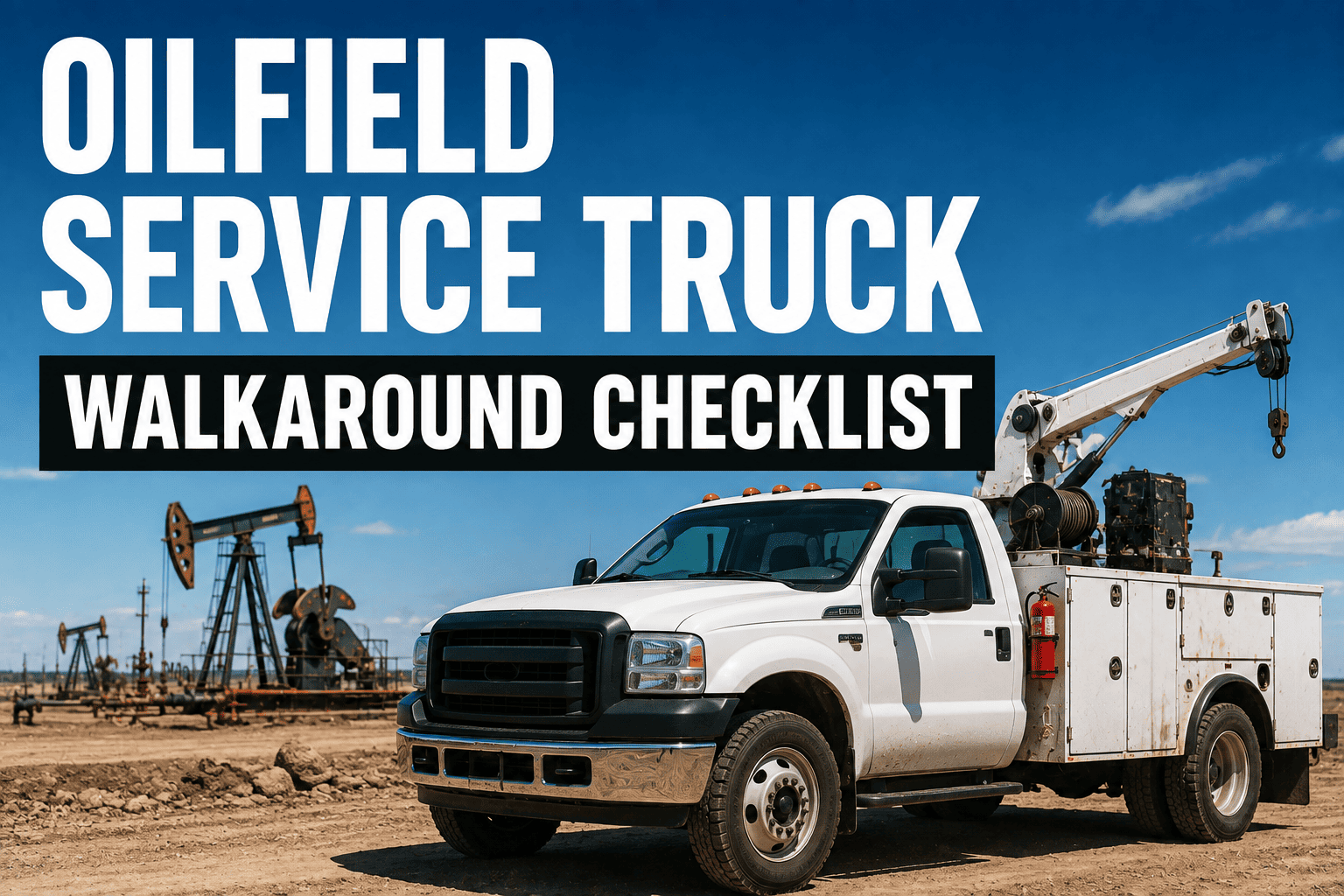
An oilfield service truck rolls out before sunrise, loaded with tools, chemicals, hoses, and pumps that a crew depends on for the entire shift. If a light is out, a hose fitting is cracked, or a tire is riding low, that problem doesn't stay small. It follows the truck onto lease roads, into hazardous zones, and straight into a shutdown that costs the crew hours and puts the driver at risk. A disciplined walkaround catches these issues while they're still cheap and easy to fix.
Unlike a standard delivery van, a service truck carries mounted equipment, pressure lines, and specialty systems that a generic pre-trip form was never built to cover. This guide breaks the walkaround into clear zones so drivers know exactly what to check, supervisors know what "done right" looks like, and fleet teams can prove compliance every single day.
Why the Daily Walkaround Matters More in the Oilfield
Service trucks in oil and gas operate on unpaved lease roads, in H2S-classified zones, and under punishing heat and vibration that accelerate wear far faster than highway driving. A skipped inspection doesn't just risk a roadside breakdown, it risks a truck idling inside a hazardous zone with a defect nobody caught. Fleets that run a strict daily walkaround catch small issues before they become the kind of failure that shuts down a location or triggers a DOT out-of-service order.
The walkaround is also the first line of documentation. When a defect is logged, timestamped, and routed to maintenance the same morning, fleet managers get a paper trail that holds up during audits and roadside checks. Teams that want this process running without missed steps or lost paperwork can sign up for FleetRabbit and move inspections onto a digital form drivers actually complete.
The Six-Zone Walkaround Method
Rather than checking items in random order, the most reliable service truck walkarounds move around the vehicle in a fixed loop. This keeps drivers from skipping sections and makes the inspection repeatable across every crew member and every shift.
Turn This Checklist Into a Digital Form Your Drivers Actually Use
FleetRabbit lets every driver complete the six-zone walkaround from a phone, attach photos of any defect, and route it straight to your maintenance queue before the truck ever leaves the yard.
Full Daily Walkaround Checklist by Zone
Use this table as the working reference for training new drivers or building out a digital inspection form. Each zone lists the core check points and the red flag that should stop the truck from leaving the yard.
| Zone | What to Check | Ground the Truck If |
|---|---|---|
| Front End & Lighting | Headlights, signals, wipers, horn, windshield | Any signal or brake light is non-functional |
| Engine Bay & Fluids | Oil, coolant, belts, hoses, leaks | Active fluid leak or belt cracking visible |
| Tires & Undercarriage | Tread depth, sidewalls, inflation, lug nuts | Tread below 4/32 inch or sidewall bulge present |
| Cab & Safety Systems | Seat belts, gas detector, extinguisher, spill kit | Gas detector uncharged or extinguisher missing |
| Mounted Equipment | Pump, hoses, fittings, PTO engagement | Hose cracking, fitting leak, or PTO malfunction |
| Rear & Load Security | Tailgate, tie-downs, tool boxes, markings | Load not secured or reflective markings damaged |
Mounted Equipment Deserves Its Own Close Look
The pump, hose reel, and hydraulic lines on a service truck take more abuse than the vehicle itself. A hairline crack in a hose or a loose fitting can turn into a product spill during transport, and a PTO that fails to disengage can cause a serious loss of control. Drivers should cycle the PTO, inspect every visible fitting, and check tank manway covers are sealed before the truck moves an inch.
Quick Reference: Fastest Failure Points on Service Trucks
Approximate distribution of defects found during oilfield service truck walkarounds, based on common field inspection patterns.
From Paper Checklist to DVIR Documentation
A walkaround only protects the fleet if it gets documented. A Driver Vehicle Inspection Report tied to each truck creates the record that DOT roadside inspectors, HSE auditors, and insurance carriers all expect to see. Paper forms get lost in the cab, defects get mentioned verbally and forgotten, and by the time a truck reaches the shop nobody remembers exactly what the driver flagged that morning.
A digital DVIR closes that gap. The driver logs each zone, attaches a photo of anything questionable, and a supervisor reviews it before dispatch approves the truck for the day. Fleets that want to see how this workflow fits their current inspection process can book a free demo and walk through it with the FleetRabbit team.
Building the Habit Across the Whole Crew
The biggest risk to any walkaround program isn't the checklist itself, it's inconsistency. A truck inspected thoroughly on Monday and rushed through on Friday still carries the same risk on Friday. Three habits keep the process consistent across every driver and every shift.
Fixed sequence every time. Drivers who follow the same six-zone loop rarely skip a section, because muscle memory carries them through it even on a rushed morning.
Photo evidence for anything questionable. A quick photo of a worn hose or a low tire removes any ambiguity for the mechanic reviewing the report later that day.
Same-day defect routing. A defect logged at 6 a.m. should reach maintenance before the truck reaches the first well site, not at the end of the week during a paperwork catch-up.
Give Every Driver a Walkaround They Can Complete in Minutes
FleetRabbit combines the daily walkaround, DVIR documentation, and maintenance alerts into one mobile workflow, so nothing gets missed between the yard and the well site.
Frequently Asked Questions
Stop Relying on Memory for Truck Condition
A missed defect on an oilfield service truck can shut down a location for hours. FleetRabbit turns this checklist into a digital walkaround your drivers complete in minutes, with every defect routed straight to your maintenance team.