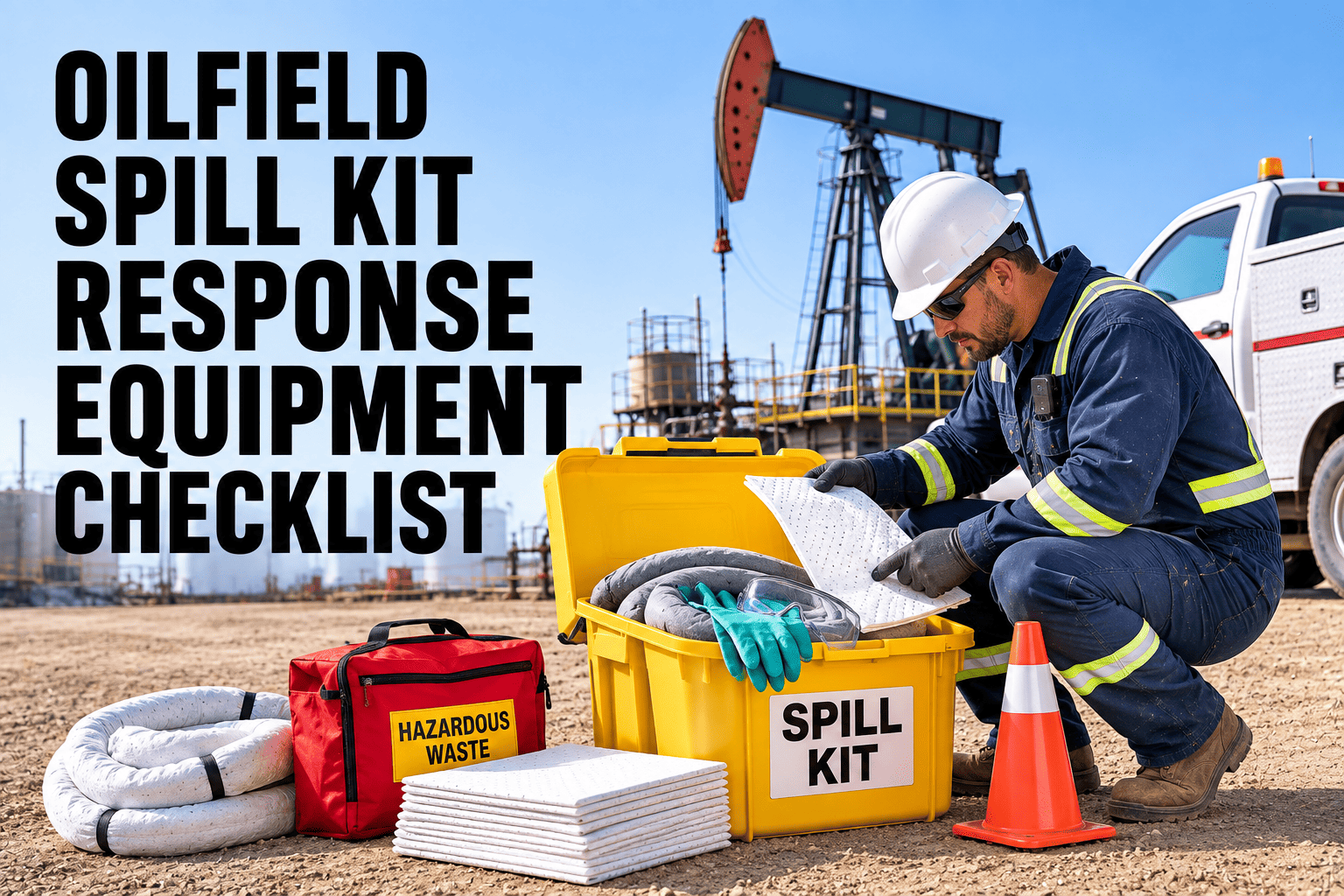
Environmental safety in the oilfield is not just a regulatory requirement; it is a fundamental responsibility that protects our ecosystems, workers, and the longevity of the business. When a spill occurs, whether it is a minor hydraulic fluid leak or a significant crude oil discharge, the first few minutes dictate the severity of the environmental impact and the resulting financial penalties. Having a fully stocked, operational, and easily accessible spill kit is the frontline defense against these disasters. However, assuming a spill kit is ready simply because it exists on site is a dangerous oversight. Components get used and not replaced, absorbents degrade over time, and kits are sometimes moved to inaccessible locations. Implementing a rigorous oilfield spill kit and response equipment inspection checklist ensures that when an incident occurs, your team is not left scrambling for inadequate or expired materials. By shifting from paper logs to a digital tracking system, safety managers can maintain real-time visibility into their environmental response readiness across multiple remote sites. FleetRabbit provides the digital infrastructure necessary to track these critical inspections, verify component inventories, and ensure that every piece of response equipment is properly staged and ready for immediate deployment before an incident ever takes place. This proactive approach not only safeguards the environment but also shields your company from crippling regulatory fines and operational shutdowns that follow unmanaged spills.
Verifying oilfield spill kits and response equipment through regular inspections ensures that absorbents, booms, and PPE are fully stocked, undamaged, and accessible. Relying on manual checks often leads to missing inventory and regulatory fines during an actual emergency. FleetRabbit tracks inspections, geolocations, and component readiness, guaranteeing your environmental response is always prepared for immediate action.
Core Elements of Spill Kit and Equipment Inspections
Inventory Verification
Absorbents and Booms
PPE and Safety Gear
Responder Protection
Tools and Containment
Physical Equipment Check
Accessibility and Staging
Strategic Placement
The logistics of maintaining spill response equipment across a sprawling oilfield operation are incredibly complex and demanding. Unlike a static warehouse environment, oilfield sites are highly dynamic, with heavy machinery constantly moving, weather conditions changing rapidly, and remote locations making routine physical audits difficult and time-consuming. A spill kit left out in the elements can suffer degraded absorbency, while high-traffic areas might lead to kits being relocated or borrowed without proper documentation. When safety officers rely on traditional clipboard checklists, the data is often outdated by the time it reaches the central office, creating dangerous blind spots in your environmental defense strategy. Transitioning to a centralized digital platform transforms how organizations manage environmental compliance and safety readiness. To see how our platform streamlines these critical safety tasks, you can sign up for FleetRabbit today or book a demo with our team to explore a better way to manage your environmental response readiness. With FleetRabbit, every spill kit is tagged, every inspection is timestamped, and every missing component triggers an immediate restock alert, ensuring that your field crews are never caught off guard when rapid response is required to contain a hazardous situation.
Stop relying on paper checklists that get lost or ignored. FleetRabbit tracks every spill kit inspection, component replacement, and equipment location, ensuring your oilfield response readiness is always audit-ready. Make environmental compliance quick and easy for your safety teams.
Detailed Spill Response Equipment Checklist
Executing a thorough inspection requires a systematic approach to ensure no critical component is overlooked. Maintenance teams and safety officers must verify not only the presence of each item but also its operational condition. Use the following matrix to guide your inspections and maintain complete environmental readiness across all oilfield locations.
| Component Category | Inspection Criteria | Required Action | Tracking Method |
|---|---|---|---|
| Absorbent Materials | Verify exact counts of pads, socks, and pillows; check for moisture damage | Restock immediately if counts are below mandated minimums or if degraded | Digital inventory logs with automated low-stock alerts |
| Personal Protective Equipment | Inspect gloves, goggles, and coveralls for tears, chemical degradation, or expiration | Discard and replace any compromised gear to ensure responder safety | Timestamped photo verification via mobile inspection app |
| Containment Tools | Ensure non-sparking shovels, drain covers, and patch kits are present and functional | Repair or replace damaged tools; clean any tools with previous chemical residue | QR code scanning to confirm physical presence at location |
| Disposal Supplies | Check supply of heavy-duty disposal bags, ties, and hazardous waste labels | Replenish supplies to ensure spilled materials can be legally secured for transport | Automated restock ordering triggered by inspection completion |
| Documentation | Verify site-specific spill response instructions and emergency contact lists are legible | Reprint and laminate instructions if faded, outdated, or missing from the kit | Cloud-stored documents accessible via mobile devices for instant updates |
Failing to maintain proper spill response equipment is a direct violation of environmental protection agency guidelines and occupational safety regulations, leading to catastrophic financial consequences for unprepared operators. Regulatory bodies do not accept ignorance as an excuse when a spill occurs; they demand documented, verifiable proof that your organization took every reasonable precaution to prevent and mitigate environmental damage. If an inspector finds an empty spill kit or expired response gear during a site audit, the fines can easily reach tens of thousands of dollars per violation, compounding exponentially if an actual spill occurs and the equipment fails to perform. Furthermore, the reputational damage of an improperly handled spill can destroy community trust and result in the immediate loss of lucrative drilling or transportation contracts. Modern oilfield operations require a proactive approach where safety managers are alerted weeks before a component degrades or a kit falls below minimum stock levels. By utilizing comprehensive fleet management software, companies can automate these inspection schedules, generate compliance reports instantly, and ensure that every operator on the lease road has the tools they need to protect the environment immediately. This shift from reactive panic to proactive readiness is what separates industry leaders from those burdened by constant regulatory violations and equipment failures.
Why Digital Tracking is Superior to Manual Checklists
The inherent flaw of a paper checklist is that it exists only in a single place and time, providing no real-time oversight for centralized management. When a field worker checks off a box on a clipboard, the safety manager in the central office has no way of knowing if the inspection was actually performed thoroughly or if it was pencil-whipped just to meet a quota. Digital tracking eliminates this dangerous ambiguity. By requiring timestamped photo verifications and utilizing QR code scanning at the physical spill kit location, FleetRabbit enforces absolute accountability. Every inspection is instantly synced to a centralized dashboard, flagging missing items and generating work orders for restocking before the kit is needed in an actual emergency.
Enhancing Rapid Response Capabilities
During a high-pressure spill scenario, operators do not have the luxury of time to inventory a kit or search for missing tools. A digitally tracked spill kit guarantees that when a worker grabs the container, it contains exactly what the manifest says it contains. This reliability allows responders to focus entirely on containment and cleanup rather than logistics. By ensuring your response equipment is meticulously maintained through automated digital oversight, you significantly reduce the environmental impact of any incident and protect your workers from exposure to hazardous materials.
Do not let missing absorbents or expired gear result in catastrophic environmental damage and regulatory fines. FleetRabbit tracks every spill kit inspection and component replacement, ensuring your oilfield response readiness is absolute. Start your journey toward zero compliance violations today.