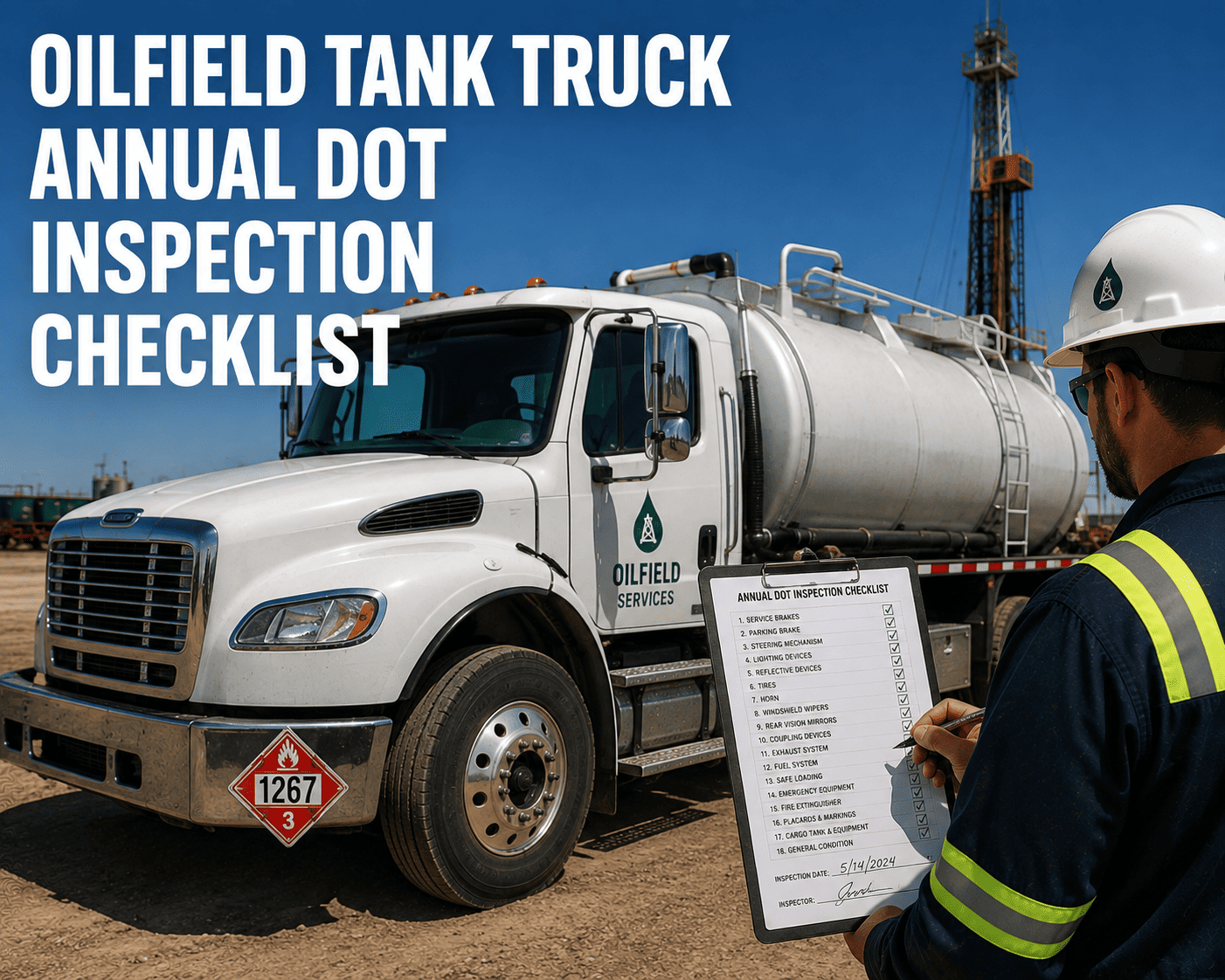
A tank truck running crude, produced water, or fuel between wellsites carries two separate compliance clocks, and missing either one can pull the unit off the road. The first clock is the annual DOT vehicle inspection required under 49 CFR 396.17, the same brakes-lights-steering inspection that applies to any commercial motor vehicle. The second clock belongs to the cargo tank itself, governed by 49 CFR 180.407, which requires a rotating schedule of external, internal, pressure, and thickness tests that have nothing to do with the chassis underneath. Fleets that track only one clock are the ones that get flagged at the scale house for the other. Sign up free to put both compliance clocks on one calendar, or book a demo to see how FleetRabbit keeps tank truck certificates current across your whole fleet.
An oilfield tank truck needs two separate annual reviews to stay compliant: a full vehicle inspection under 49 CFR 396.17 covering brakes, lighting, steering, and coupling, and a cargo tank test cycle under 49 CFR 180.407 covering external visual and leakage checks every year, with internal visual and pressure tests every five years and thickness testing every two years. Vehicle inspection records must be kept for 14 months, and roughly 133,000 vehicles are cited annually for operating without a current inspection, making it the second most common maintenance violation nationwide.
Two Compliance Clocks, One Tank Truck
It is easy to assume that a current annual DOT sticker means the whole vehicle is compliant. For a straight box truck that is close to true. For a cargo tank hauling crude, water, or fuel, it is only half the picture, because the tank itself is regulated separately from the chassis it rides on.
Clock One: The Vehicle Under 49 CFR 396.17
Every commercial motor vehicle, tank trucks included, needs a periodic inspection at least once every 12 months, performed by a qualified inspector and covering the full list of components in the federal Appendix. This is the inspection that catches worn brake linings, out-of-adjustment pushrods, cracked frame members, and failing lights before they turn into a roadside out-of-service order.
Clock Two: The Cargo Tank Under 49 CFR 180.407
The tank shell, valves, manholes, and pressure-relief devices run on their own separate schedule. Some of these checks happen every year alongside the vehicle inspection, but others are only required every two or five years, which is exactly why they get missed. A tank truck can pass its annual DOT inspection with a perfectly current vehicle sticker while its internal tank test has quietly lapsed for months.
FleetRabbit tracks the 396.17 vehicle inspection and every 180.407 tank test on the same per-unit timeline, with alerts before either one comes due. Sign up free and load your tank truck fleet in minutes.
The Five Cargo Tank Tests and How Often Each Comes Due
49 CFR 180.407 breaks cargo tank certification into five distinct tests, each with its own inspector qualification and its own interval. Missing any one of them takes the tank out of specification even if the truck itself is fully street legal.
Why Staggered Intervals Cause the Most Missed Dates
A test due every five years is the easiest one to lose track of, since it falls well outside the normal rhythm of daily and annual maintenance work. Fleets that rely on a single wall calendar or spreadsheet often catch the two-year and five-year tests only after a scale-house check or a customer audit flags them as overdue.
What the Annual Vehicle Inspection Actually Covers
The 396.17 annual inspection is far more thorough than a daily pre-trip walkaround. It follows a fixed list of systems, and every item carries a specific pass or fail standard rather than a general impression of condition.
| Situation | Result | What to Do |
|---|---|---|
| Vehicle inspection expired | Truck cannot legally operate | Schedule a qualified inspector immediately, do not dispatch |
| Tank test cycle lapsed | Tank loses specification status | Take tank out of hazmat service until retested and recertified |
| Inspection record missing | Treated as no inspection performed | Store digital copies for the full 14-month retention window |
| Damage found between cycles | May trigger an early retest | Document damage and re-test before returning tank to service |
FleetRabbit sends reminders at 90, 60, and 30 days before every vehicle and tank certification deadline, routed straight to your maintenance team. Book a demo to see the alert system configured for your fleet.
Frequently Asked Questions
Vehicle inspections and cargo tank tests run on different schedules, but a missed date on either one can ground a truck. FleetRabbit tracks both together, with automated alerts and organized digital certificates ready for any audit. Sign up free with no credit card required, or book a demo to see your fleet's compliance calendar built out.