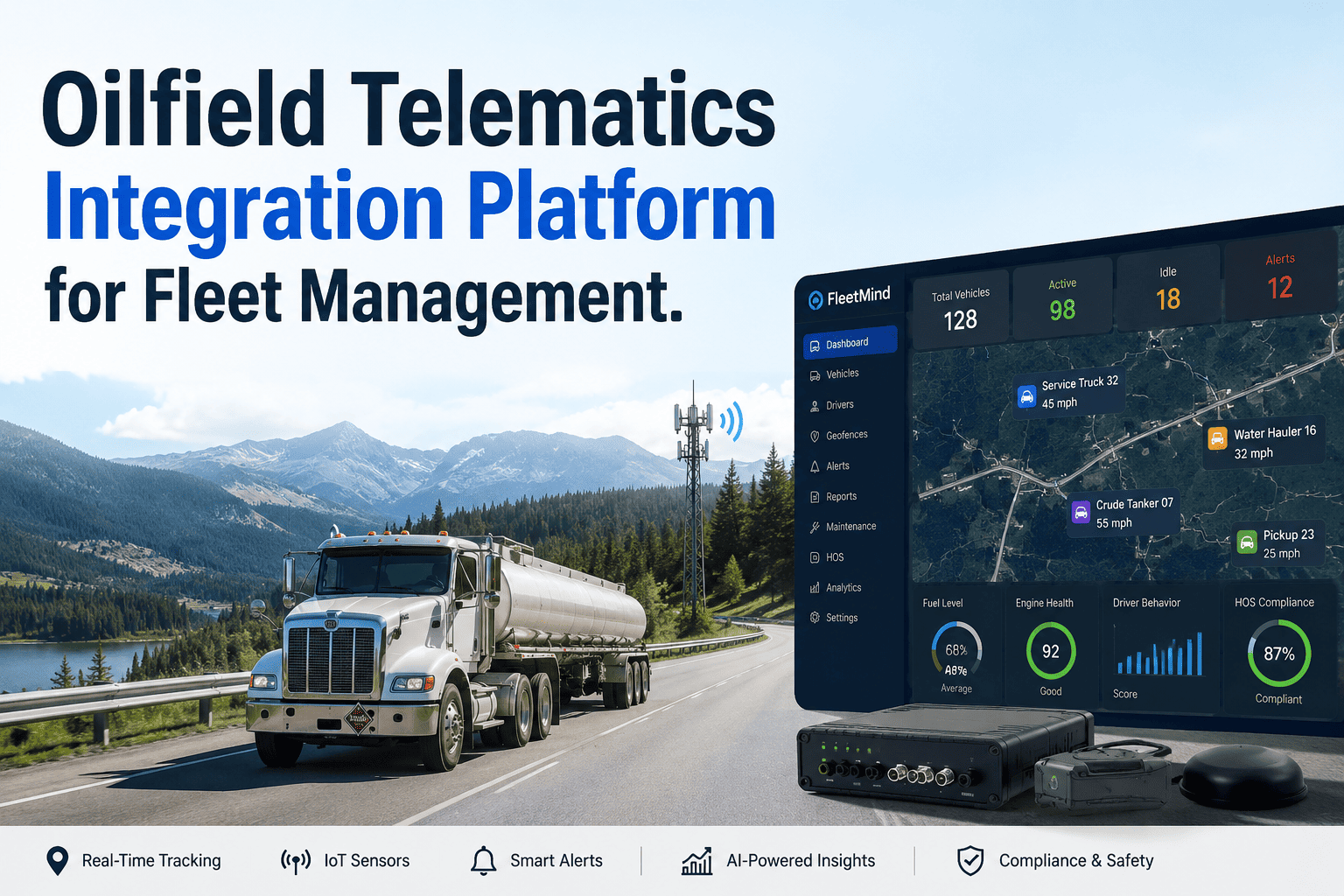
Oilfield telematics integration is no longer optional for fleet managers operating in competitive energy markets. When your vehicles span remote well sites, pipeline corridors, and production facilities across hundreds of miles, disconnected systems create blind spots that cost you compliance, safety, and operational efficiency. FleetRabbit's telematics integration platform unifies every data stream into a single command center — giving fleet managers and executives the real-time intelligence they need to make decisions that matter. Book a personalized demo to see how FleetRabbit connects your entire fleet ecosystem.
Unified Telematics Integration That Transforms How Oilfield Fleets Operate
FleetRabbit connects GPS tracking, compliance systems, maintenance data, and safety analytics into one platform — eliminating the fragmented visibility that costs energy operators millions every year.
The Integration Gap Costing Oil and Gas Fleets Millions
Most energy sector fleets run on a patchwork of disconnected tools — one system for GPS, another for compliance logs, a spreadsheet for maintenance, and manual phone calls for dispatch. This fragmentation creates compounding operational failures that erode profitability and expose operators to regulatory risk.
Fleet managers have no unified view of vehicle location, driver availability, maintenance status, and compliance standing simultaneously. Decisions are made with incomplete information, leading to costly errors in dispatch and resource allocation.
Expired driver certifications and HOS violations go undetected when qualification data lives in HR systems that never talk to dispatch. A single unqualified driver assignment can trigger regulatory investigations and substantial penalties.
Without telematics data feeding directly into maintenance workflows, service schedules run on calendar time rather than actual operating conditions. Equipment failures at remote sites generate emergency repair costs that dwarf proactive intervention.
When behavior analytics, incident reports, and inspection findings exist in separate silos, safety managers can only identify patterns after incidents occur — not before. The window to prevent accidents closes unnoticed.
FleetRabbit Integration Architecture: How It Works
Connect Your Existing Fleet Technology Stack
FleetRabbit's implementation team handles every integration from existing Geotab and Samsara hardware to ERP and HR systems — with most operators fully connected within 16 weeks. Schedule a technical discovery call to map your integration requirements.
How FleetRabbit Solves the Core Problems for Fleet Managers
No Real-Time Fleet Visibility Across Remote Sites
Dispatchers spend hours calling drivers, estimating arrival times, and managing assignments without knowing where vehicles actually are — especially at well sites in areas with patchy connectivity.
Live Fleet Map With Offline-Resilient Tracking
Every vehicle appears on a real-time map with 10-second GPS refresh. When connectivity drops at remote locations, the mobile app stores all data locally and syncs automatically once signal is restored — with zero gaps in the position history. Dispatchers see exactly where every asset is, whether it is at a producing well, in transit, or staged at a depot.
Driver Certification Lapses Triggering DOT Violations
With 100 or more drivers holding CDLs, medical cards, HAZMAT endorsements, and specialized oilfield certifications, manual tracking in spreadsheets misses expiration dates until regulators discover the violation during an audit.
Automated Qualification Tracking With Dispatch Blocking
FleetRabbit maintains a live qualification file for every driver, synced with HR onboarding and updated automatically as credentials are renewed. The dispatch engine checks qualification status before every assignment and blocks non-compliant drivers from being assigned to field operations. Three escalating alerts at 90, 60, and 30 days before expiration ensure renewals happen proactively — not under regulatory pressure.
Equipment Failures at Remote Locations
Vacuum trucks, frac support vehicles, and heavy equipment failing at remote well sites generate emergency repair costs, production delays, environmental risk, and potential OSHA incidents that could have been prevented with earlier intervention.
Predictive Maintenance Analytics Powered by Telematics Data
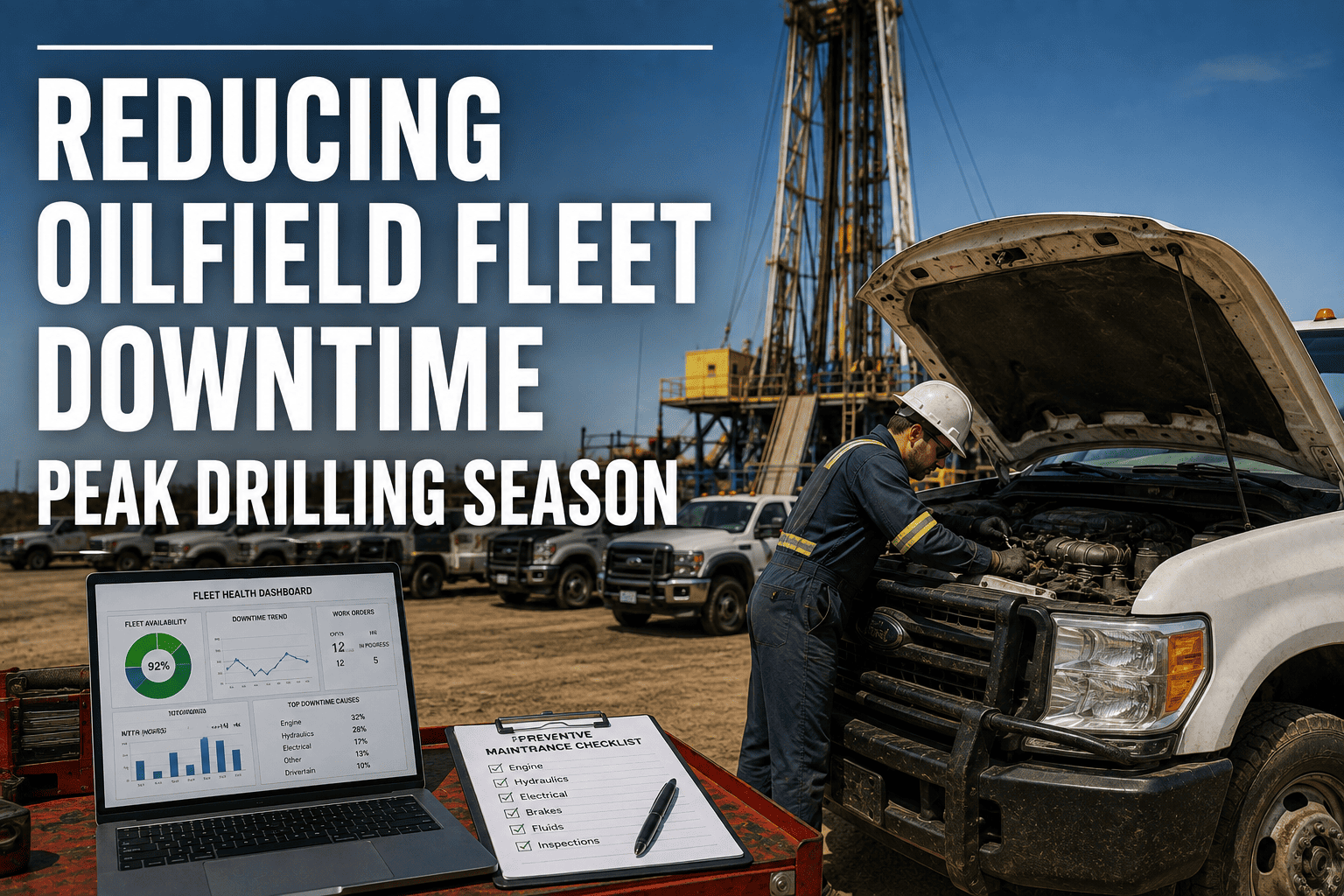
Operating hours, load patterns, temperature extremes, and fault code histories feed FleetRabbit's AI maintenance algorithms, which flag component wear 2 to 8 weeks before failure. Maintenance work orders generate automatically, parts availability is checked against depot inventory, and technician assignments are coordinated without manual intervention. A $840 proactive repair replaces a $450,000 incident response.
High-Risk Driving Going Undetected Until Accidents Occur
Without behavior analytics integrated into the fleet management platform, supervisors only learn about speeding, harsh braking, and seatbelt violations through incident reports — after the damage is done.
Real-Time Behavior Scoring With Automated Coaching Workflows
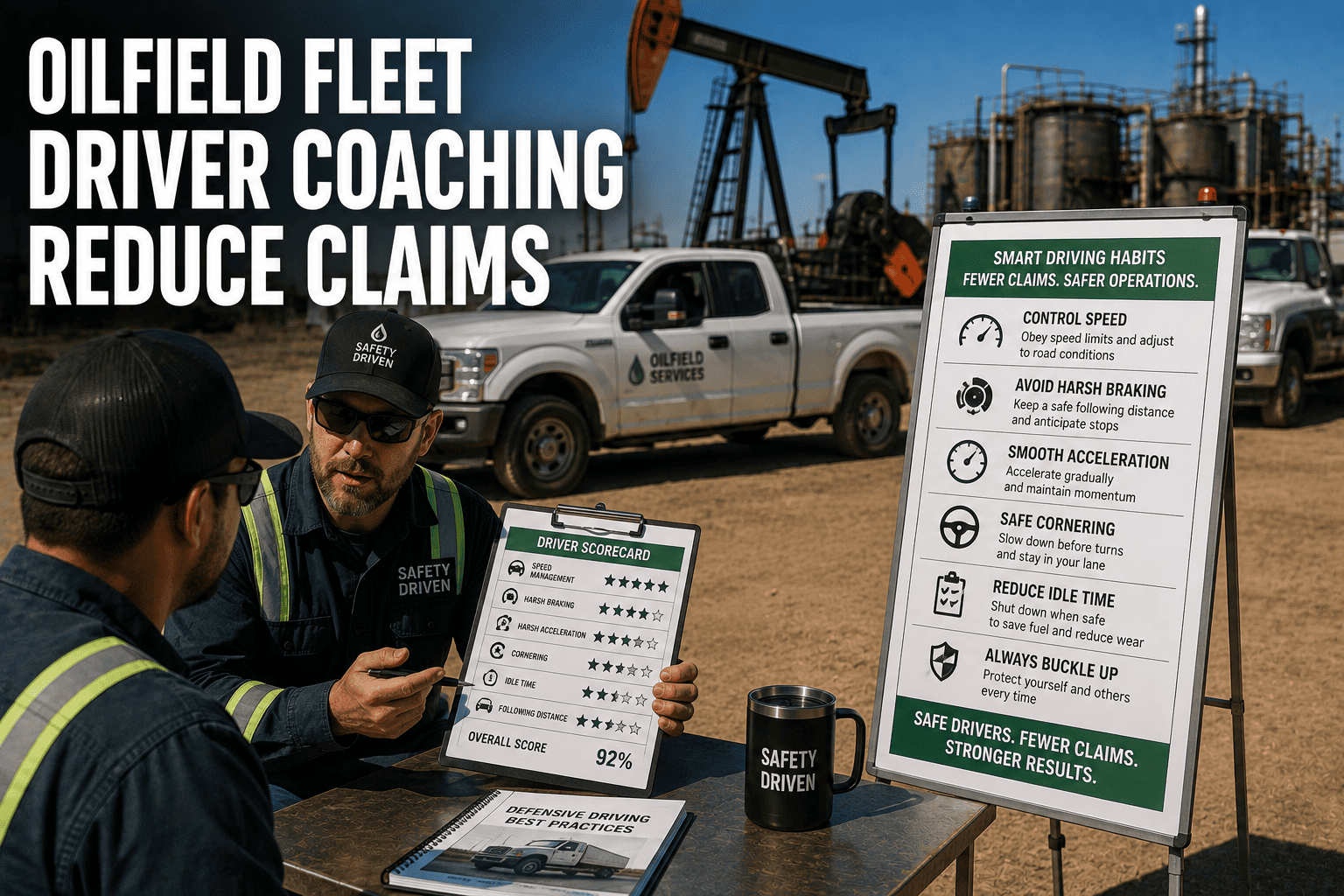
Telematics data on harsh braking, rapid acceleration, cornering, speeding, and seatbelt compliance flows into FleetRabbit's behavior scoring engine, calibrated for oilfield terrain and route conditions. High-risk events trigger immediate supervisor notifications with coaching workflow activation. Safety performance becomes visible, measurable, and improvable — driving engagement scores from under 50% to above 90% across entire driver populations.
Executive Intelligence: Fleet Data That Informs Strategic Decisions
Real-Time KPI Dashboard
Fleet-wide utilization rates, safety scores, maintenance cost trends, fuel efficiency, and compliance standing visible on any device. Leadership sees the complete operational picture in under 60 seconds without requesting reports from multiple departments.
Predictive Risk Intelligence
Emerging safety trends, maintenance cost trajectories, and compliance gap forecasts surface in the executive dashboard weeks before they become operational problems. Proactive intervention becomes possible because leadership sees risks on the horizon, not in the rearview mirror.
Audit-Ready Documentation
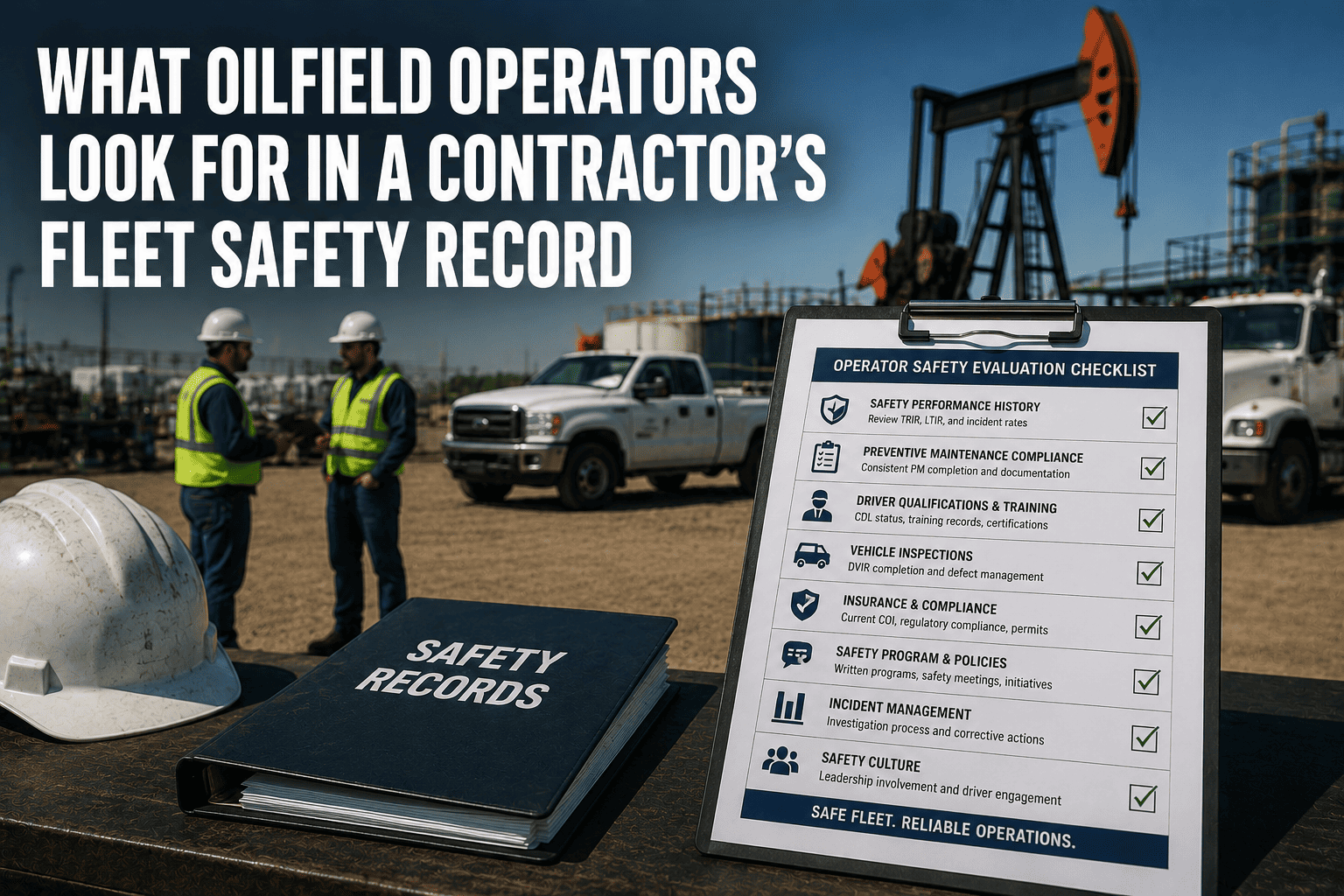
Complete digital audit trails for every inspection, driver qualification, HOS record, and incident report generate instantly for regulatory reviewers. Operators who previously spent days assembling paper documentation for DOT audits now present complete compliance records in under 20 minutes.
Financial Impact Reporting
Maintenance spend, incident costs, fuel variance, and operational efficiency metrics appear alongside operational data, giving executives the context to evaluate fleet investments and identify areas where telematics integration is delivering measurable returns.
Cross-Fleet Benchmarking
Compare performance across vehicle classes, operational regions, driver cohorts, and time periods. Identify which depots, routes, or vehicle types generate disproportionate safety incidents or maintenance costs, and direct resources to where improvement yields the greatest operational return.
Automated Report Distribution
Weekly safety summaries, monthly compliance reports, and quarterly fleet performance analysis distribute automatically to stakeholder inboxes without manual compilation. The 14 hours of weekly administrative overhead consumed by manual reporting becomes 14 hours of productive time.
What FleetRabbit changed most for us was the shift from managing data to managing operations. Before, my team spent the first hour of every day pulling reports from three different systems just to understand what happened overnight. Now everything is on one screen when I open my laptop. The integration with our existing Geotab hardware meant no rip-and-replace — we kept our hardware investment and gained a platform that actually makes that data useful at every level of the organization.
Telematics Integration Across Every Oilfield Fleet Use Case
Vacuum Truck and Fluid Hauling Operations
Real-time tank status monitoring, route optimization between collection points and disposal facilities, and automated DVIR compliance for HAZMAT-classified vehicles. FleetRabbit tracks fluid volumes, journey times, and disposal facility certifications in a single workflow — eliminating the paperwork burden that slows fluid hauling operations.
Well Site Service and Completions Support
Geofencing around active well sites triggers automatic job arrival and departure logs, tracks equipment time on location for billing accuracy, and monitors vehicle access permissions in restricted areas. Supervisors see exactly when each asset arrived, how long it worked, and when it departed — with no driver reporting required.
Pipeline Inspection and Maintenance Fleets
Route compliance verification for pipeline corridor inspections, automated mileage and coverage reporting for regulatory documentation, and integration with inspection findings databases. FleetRabbit ensures every inspection run is logged, timestamped, and linked to the corresponding compliance documentation automatically.
Production Facility Shuttle and Crew Transport
Crew transport scheduling integrated with site access rosters, automated headcount verification via mobile check-in, and driver certification verification for personnel carriers. Safety compliance requirements for crew transport differ from equipment logistics — FleetRabbit handles both within the same platform without workflow conflict.
Emergency Response and Well Intervention
Real-time vehicle location and availability status enable dispatchers to identify the closest qualified asset to an emergency location in seconds. Certified responders can be dispatched with full equipment verification and route guidance before traditional coordination calls would have even identified available resources.
Multi-Basin and Multi-Region Fleet Coordination
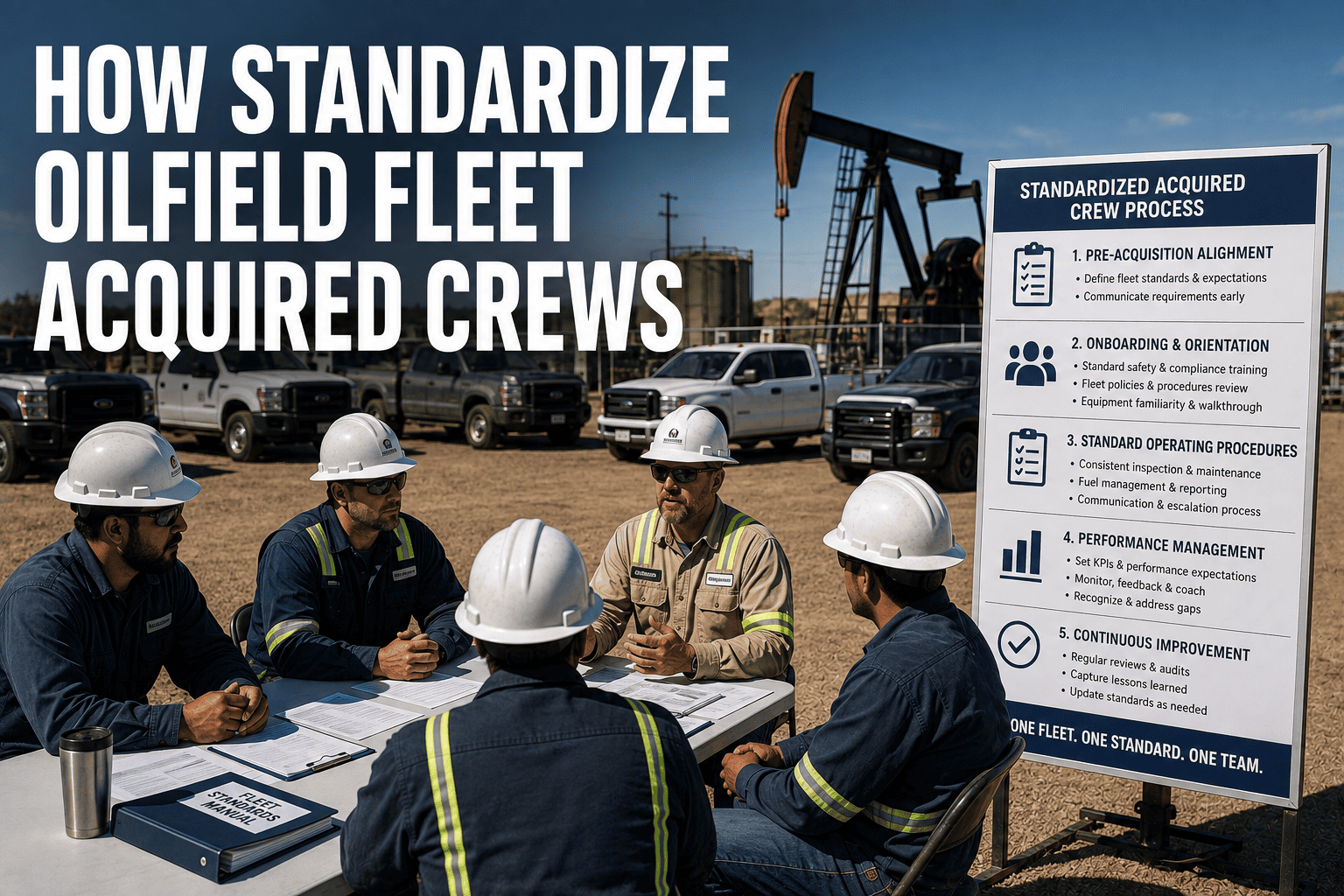
Operators running assets across the Permian, Eagle Ford, Bakken, and DJ Basin manage all regions through a single FleetRabbit instance with region-specific configuration, separate compliance rule sets, and consolidated executive reporting. Regional managers see their fleet; executives see the whole picture.
Implementation Roadmap: From Fragmented Systems to Unified Intelligence
Infrastructure Discovery and Integration Mapping (Weeks 1-2)
Telematics Hardware Integration and Live Data Flows (Weeks 3-6)
Safety and Compliance Workflow Activation (Weeks 7-10)
Full Intelligence Platform and Executive Dashboards (Weeks 11-16)
Measurable Outcomes Operators Achieve with FleetRabbit
Strategic Recommendations for Telematics Integration Success
Audit Your Existing Technology Before Adding New Systems
The most common integration mistake is procuring new telematics hardware before understanding what existing devices can contribute. FleetRabbit connects to hardware already deployed across most major brands — preserving capital investment while unifying data under one intelligence layer.
Establish Data Quality Standards Before Integration
Integrated platforms only deliver value when the underlying data is accurate. Invest time before deployment in auditing driver qualification files, vehicle asset records, and maintenance histories. Clean data entering the platform produces reliable insights from day one.
Deploy Inspection Digitization as the First Visible Win
Digital pre-trip inspections generate immediate, visible improvements within the first two weeks of deployment. The jump from 58% paper completion to 96% mobile completion is measurable, demonstrable, and builds organizational confidence for the broader transformation ahead.
Configure Alert Thresholds for Oilfield Operating Conditions
Behavior analytics calibrated for highway driving generate excessive false positives on gravel lease roads. Work with FleetRabbit's implementation team during the calibration period to set thresholds that reflect actual operating environments — ensuring alerts represent genuine risk, not terrain artifacts.
Align Dispatch Blocking Rules With Safety Policy
Automation is only as effective as the policies behind it. Before activating compliance-based dispatch blocking, confirm that qualification requirements, inspection pass criteria, and HOS thresholds reflect current regulatory standards and internal safety policy. Misaligned rules create friction without improving safety.
Plan for Continuous Optimization Beyond Initial Deployment
Telematics integration delivers compounding value as operating data accumulates. Schedule quarterly platform reviews to refine maintenance prediction models, update inspection checklists, recalibrate behavior thresholds, and incorporate operational learnings into the platform configuration.
Frequently Asked Questions
Does FleetRabbit work with GPS hardware already installed in our fleet?
Yes. FleetRabbit integrates natively with Geotab, Samsara, and other major telematics hardware platforms. Existing devices continue operating while FleetRabbit aggregates and contextualizes their data within the unified platform. No hardware replacement is required in most deployments.
How does the platform handle remote well sites with no cellular coverage?
FleetRabbit's mobile app stores all inspection data, incident reports, and position logs locally when cellular connectivity is unavailable. Everything syncs automatically when signal is restored, ensuring complete data integrity across even the most remote operating locations in the Permian, Bakken, or Eagle Ford.
How long does a full telematics integration take to complete?
Most operators with 50 to 500 vehicles complete full integration within 12 to 16 weeks. The timeline includes hardware integration, data migration, system configuration, compliance workflow setup, and comprehensive user training across all departments.
Can FleetRabbit integrate with our existing SAP or Oracle ERP system?
FleetRabbit offers native integrations with SAP and Oracle alongside an open API for custom enterprise system connections. Maintenance costs, incident data, and fleet performance metrics flow bidirectionally, keeping financial systems synchronized with operational reality without manual data transfer.
How does the platform scale if our fleet size changes seasonally?
FleetRabbit licenses on a per-active-vehicle basis with monthly adjustments. Operators can add assets during drilling campaigns and reduce the active count during slower operational periods without platform limitations or long-term contracts constraining flexibility.
What ongoing support does FleetRabbit provide after implementation?
Every operator receives a dedicated account manager, access to technical support, and quarterly optimization reviews. The FleetRabbit team proactively monitors platform performance and recommends configuration updates as regulatory requirements or operational conditions change.
Unify Your Fleet Data. Eliminate Operational Blind Spots.
FleetRabbit connects your existing telematics hardware, compliance systems, maintenance workflows, and safety analytics into a single platform built for the demands of oil and gas fleet operations. From real-time GPS visibility at remote well sites to executive-level financial reporting, every capability your fleet needs is available from one interface.