A single undetected pipeline leak on a regulated crude oil or natural gas transmission line triggers regulatory enforcement that compounds geometrically — from $500,000 initial civil penalties under PHMSA jurisdiction to multi-million-dollar remediation costs, mandatory third-party audits, and potential criminal prosecution if environmental damage occurs. Pipeline operators managing hundreds of kilometers of transmission infrastructure across remote basin terrain face a coordination challenge that paper-based patrol systems cannot solve: ensuring every mandated inspection route is driven, every required observation point is documented, and every anomaly finding is reported to operations control — all while maintaining tamper-evident audit records proving compliance with 49 CFR Part 195 and equivalent regulatory frameworks. FleetRabbit's pipeline integrity patrol platform eliminates the compliance gap between what PHMSA requires and what manual patrol management can deliver — with GPS-tracked route verification, offline mobile inspection forms, geofence alerts when patrol vehicles deviate from designated corridors, and automatic generation of regulatory audit documentation showing every inspection was completed on schedule across the entire pipeline network. Book a demo to see FleetRabbit's pipeline patrol management platform for oil and gas operations.
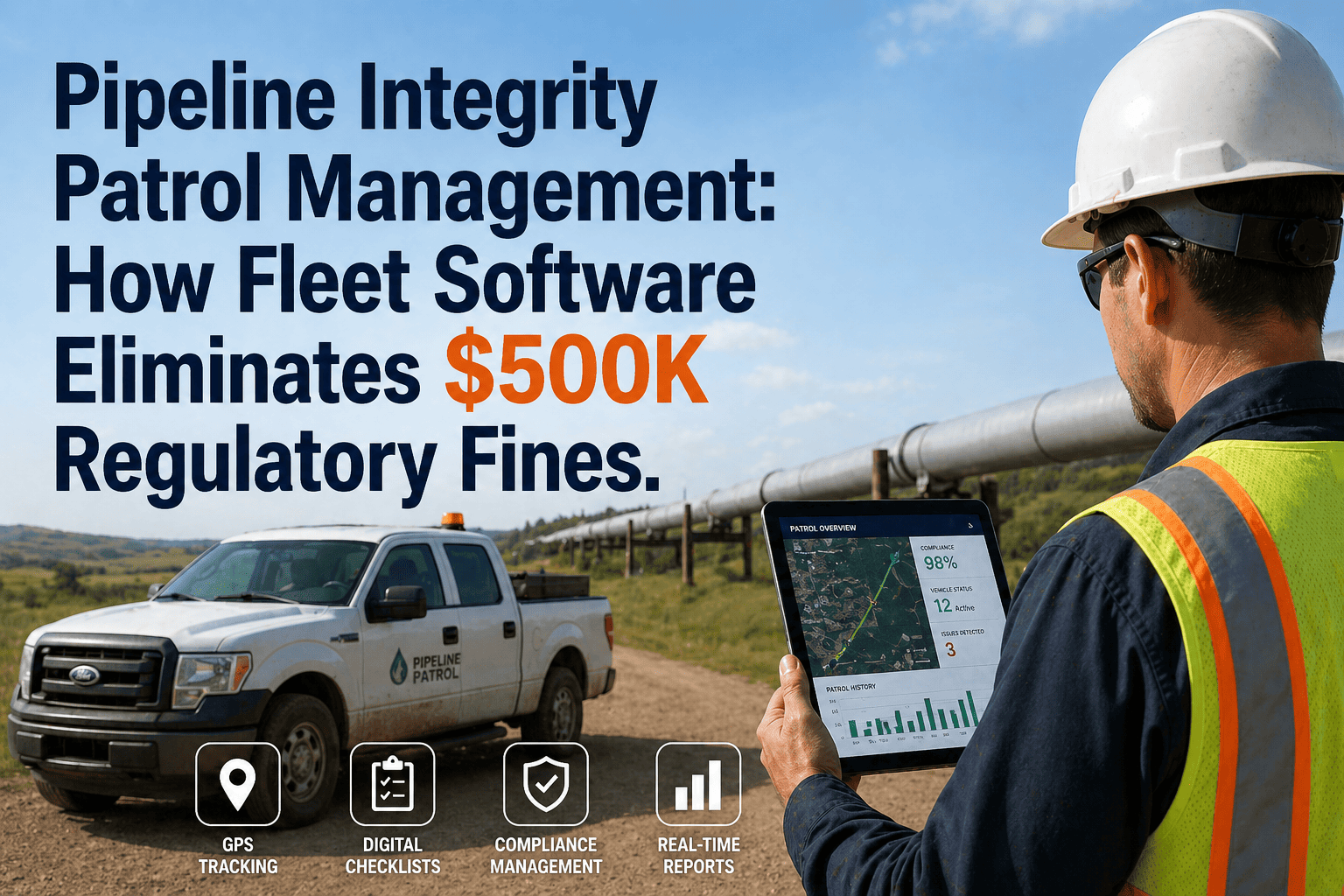
Pipeline Integrity Patrol Management: How Fleet Software Eliminates $500K+ Regulatory Fines
A single undetected pipeline leak triggers $500,000+ in PHMSA fines. FleetRabbit's AI pipeline patrol platform delivers GPS-tracked route verification, offline mobile inspections, geofence alerts for route deviations, and automatic regulatory audit documentation across hundreds of kilometers of transmission infrastructure.
Every pipeline patrol route not completed on schedule is a compliance violation waiting to surface during PHMSA audit. FleetRabbit deploys GPS-tracked pipeline patrol management in 5–7 days — route verification and audit documentation live from day one →
Why Pipeline Patrol Compliance Cannot Be Managed With Paper Logs and Driver Reports
PHMSA regulations under 49 CFR Part 195 require pipeline operators to conduct regular patrols of transmission lines at intervals sufficient to identify conditions requiring corrective action — with patrol frequency determined by line class location, population density, and environmental sensitivity. For most regulated crude oil and natural gas pipelines, this translates to bi-weekly or monthly patrol requirements across hundreds of kilometers of right-of-way, often traversing remote terrain with limited road access and zero cellular connectivity.
The traditional approach to pipeline patrol management relies on drivers following printed route maps, manually completing paper inspection forms at designated observation points, and submitting completed paperwork to operations managers for filing in regulatory compliance folders. This model creates three systematic failure modes that expose operators to enforcement risk during PHMSA audits: route verification failure, observation point documentation gaps, and audit record incompleteness.
FleetRabbit's pipeline patrol platform closes all three compliance gaps simultaneously — GPS tracking provides tamper-evident route verification showing every patrol was driven as designated, mobile inspection forms ensure every required observation point is documented with photo evidence and GPS coordinates, and automatic audit record generation eliminates paperwork loss between field completion and regulatory submission.
The Three Ways Paper-Based Pipeline Patrol Systems Fail During PHMSA Audits
PHMSA auditors examining pipeline operator compliance records systematically identify the same three documentation failures that manual patrol management cannot prevent.
Route Verification Failure — No GPS Proof Patrol Was Driven
Paper patrol logs show driver signature and completion date but provide zero evidence the designated route was actually traveled. A driver can sign a patrol form at the office without ever visiting the pipeline corridor — and paper documentation cannot distinguish between a completed patrol and a fraudulent signature. PHMSA auditors examining compliance during incident investigations require GPS-tracked route evidence proving the patrol vehicle traveled the designated right-of-way on the documented date.
Observation Point Documentation Gaps — Skipped Locations
Pipeline patrol routes include designated observation points where drivers must stop, visually inspect specific infrastructure (valve stations, river crossings, road intersections), and document findings. Paper systems cannot detect when drivers skip difficult-access observation points to save time — the patrol form shows all locations "inspected" but no evidence confirms the driver physically visited each point. Auditors cross-referencing GPS tracks against observation point coordinates identify skipped locations immediately.
Audit Record Incompleteness — Lost or Illegible Documentation
Paper inspection forms completed in field conditions suffer from illegible handwriting, water damage, physical loss during transport from vehicle to office filing, and misfiling in incorrect folders. When PHMSA requests patrol records for a specific pipeline segment and date range during incident investigation, operators cannot produce complete documentation — the patrol was conducted but the paperwork was lost, damaged, or filed incorrectly.
How FleetRabbit Automates Pipeline Patrol Compliance Across Hundreds of Kilometers
Geofenced Pipeline Route Configuration and Schedule Assignment
Pipeline operators define designated patrol routes in FleetRabbit by uploading GPS corridor coordinates or drawing routes directly on the map interface — creating geofenced zones that represent the required right-of-way coverage for each pipeline segment. Each route is assigned a patrol frequency (bi-weekly, monthly, quarterly) and scheduled for specific patrol vehicle assignments, generating automatic dispatch reminders when patrols are due.
Observation points are marked as geofenced waypoints along each route — valve stations, compressor sites, river crossings, road intersections, environmental monitoring locations — requiring drivers to stop within the designated radius and complete a mobile inspection form before the patrol can be marked complete.
Real-Time GPS Route Tracking and Deviation Alerts
As patrol vehicles travel designated pipeline routes, FleetRabbit tracks GPS position continuously — comparing actual vehicle track against the geofenced route corridor. When a patrol vehicle deviates from the designated right-of-way by more than the configured threshold (example: 500 meters), the system generates an automatic deviation alert to operations managers.
GPS tracking operates in dual-mode (cellular primary, satellite fallback) ensuring continuous position monitoring even at remote pipeline segments beyond cellular coverage. Track data syncs automatically when connection is restored.
Offline Mobile Inspection Forms with Photo Evidence
Patrol drivers complete digital inspection forms on mobile devices at each geofenced observation point — documenting visual findings, capturing photo evidence of infrastructure condition, and recording GPS coordinates automatically at the time of inspection. Mobile forms work offline at locations without cellular coverage, storing inspection data locally and syncing to the cloud database when connection is restored.
Inspection forms are customizable per observation point type — valve station inspections include different checklist items than river crossing inspections. Any anomaly finding triggers automatic escalation to operations control for immediate corrective action.
Automatic PHMSA Audit Documentation Generation
Every completed patrol automatically generates a regulatory audit record package — including GPS track log showing route coverage, timestamped inspection forms for all observation points, photo evidence attachments, and anomaly findings with corrective action documentation. All records are stored in tamper-evident cloud storage with immutable timestamp verification, satisfying PHMSA evidentiary standards.
When PHMSA requests patrol records during incident investigation or routine compliance audit, operators export complete documentation packages in under 2 hours — covering any pipeline segment, any date range, with zero manual file retrieval.
FleetRabbit deploys GPS-tracked pipeline patrol management on your transmission infrastructure in 5–7 working days — route configuration, mobile forms, and audit documentation all included. See the platform demonstrated in a 30-minute live walkthrough →
How Pipeline Patrol Automation Delivers Strategic Value Beyond Regulatory Compliance
For operations executives managing regulated pipeline assets, automated patrol management is not just a compliance tool — it is a risk mitigation platform that reduces incident exposure, improves audit defensibility, and demonstrates systematic integrity management to regulators and stakeholders.
Incident Response Defense Documentation
When pipeline incidents trigger PHMSA investigation, the agency examines pre-incident patrol records to determine if the operator conducted required inspections. FleetRabbit's GPS-tracked patrol records provide tamper-evident evidence that routes were driven, observation points were inspected, and no anomaly indicators were visible during patrol periods leading up to the incident — reducing operator liability exposure during enforcement proceedings.
Insurance Premium Reduction Through Documented Risk Management
Pipeline operators seeking liability insurance face underwriting scrutiny of integrity management programs. FleetRabbit's automated patrol platform provides the documented evidence of systematic risk management that supports premium reduction negotiations, with some operators reporting 12–18% cost savings at policy renewal when presenting GPS-tracked compliance records to carriers.
Real-Time Anomaly Escalation to Operations Control
When patrol drivers identify conditions requiring corrective action (vegetation encroachment, erosion, unauthorized construction activity near right-of-way), FleetRabbit automatically escalates anomaly findings to operations managers with GPS coordinates, photo evidence, and severity classification — enabling same-day response rather than waiting for end-of-week paperwork submission.
Multi-Jurisdiction Compliance Record Consolidation
Pipeline operators managing transmission infrastructure across multiple states face varying regulatory requirements. FleetRabbit maintains consolidated patrol records satisfying federal PHMSA requirements (49 CFR Part 195) and state-specific mandates (Texas Railroad Commission, California DOGGR, Alberta Energy Regulator) — generating jurisdiction-specific audit packages without manual record reformatting.
Deploy GPS-Tracked Pipeline Patrol Management in 5–7 Working Days
Pipeline Route Mapping and Geofence Configuration
Pipeline operator provides right-of-way coordinates (GPS waypoints, KML files, or drawn routes on map interface) for all regulated transmission segments requiring patrol coverage. FleetRabbit implementation team configures geofenced route corridors with designated observation points at valve stations, compressor sites, crossings, and environmental monitoring locations — establishing the patrol coverage zones that GPS tracking will verify during operations.
Mobile Inspection Form Configuration and Driver Training
Digital inspection forms customized per observation point type — valve station checklists, river crossing inspections, road intersection surveys — with photo attachment requirements and anomaly escalation workflows configured to match operator protocols. Patrol drivers receive mobile app training covering offline inspection form completion, photo evidence capture, and GPS verification requirements.
Patrol Schedule Setup and Live Monitoring Activation
Patrol frequency and vehicle assignments configured per pipeline segment — bi-weekly routes assigned to specific patrol vehicles, monthly inspections scheduled with automatic dispatch reminders. GPS tracking activated, geofence deviation alerts configured, and audit documentation export templates prepared for regulatory submission format. System goes live with first scheduled patrols tracked in real time.
Continuous GPS Verification and Automatic Audit Record Generation
Every patrol tracked automatically — GPS routes verified against geofenced corridors, mobile inspection forms completed at required observation points, anomaly findings escalated to operations control in real time. Audit documentation generated automatically for every completed patrol, exportable within hours for PHMSA compliance requests covering any pipeline segment and any date range.
Stop Managing Pipeline Patrols With Paper Logs — Deploy GPS Verification in One Week
At $3/vehicle/month for a 10-vehicle patrol fleet, FleetRabbit costs $360 annually. A single avoided PHMSA penalty ($500,000 for undetected leak) pays for the platform for 1,388 years. The compliance insurance alone justifies deployment — the audit efficiency and anomaly escalation are operational bonuses.
FleetRabbit Pipeline Patrol Platform Results at Regulated Transmission Operators
Common Questions About Pipeline Patrol Fleet Management
Every pipeline patrol conducted without GPS verification is a compliance vulnerability waiting to surface during PHMSA audit. Book a demo today and see GPS-tracked pipeline patrol management running on a live transmission network →
Stop Exposing Your Pipeline Operations to $500K+ PHMSA Fines — Deploy GPS Verification in 5–7 Days
FleetRabbit's pipeline patrol platform ensures every required route is driven on schedule, every observation point is documented with photo evidence, and every inspection record is stored in regulatory-compliant format — eliminating the three failure modes that cause PHMSA audit citations. Deployed on your transmission infrastructure in 5–7 working days at $3/vehicle/month.