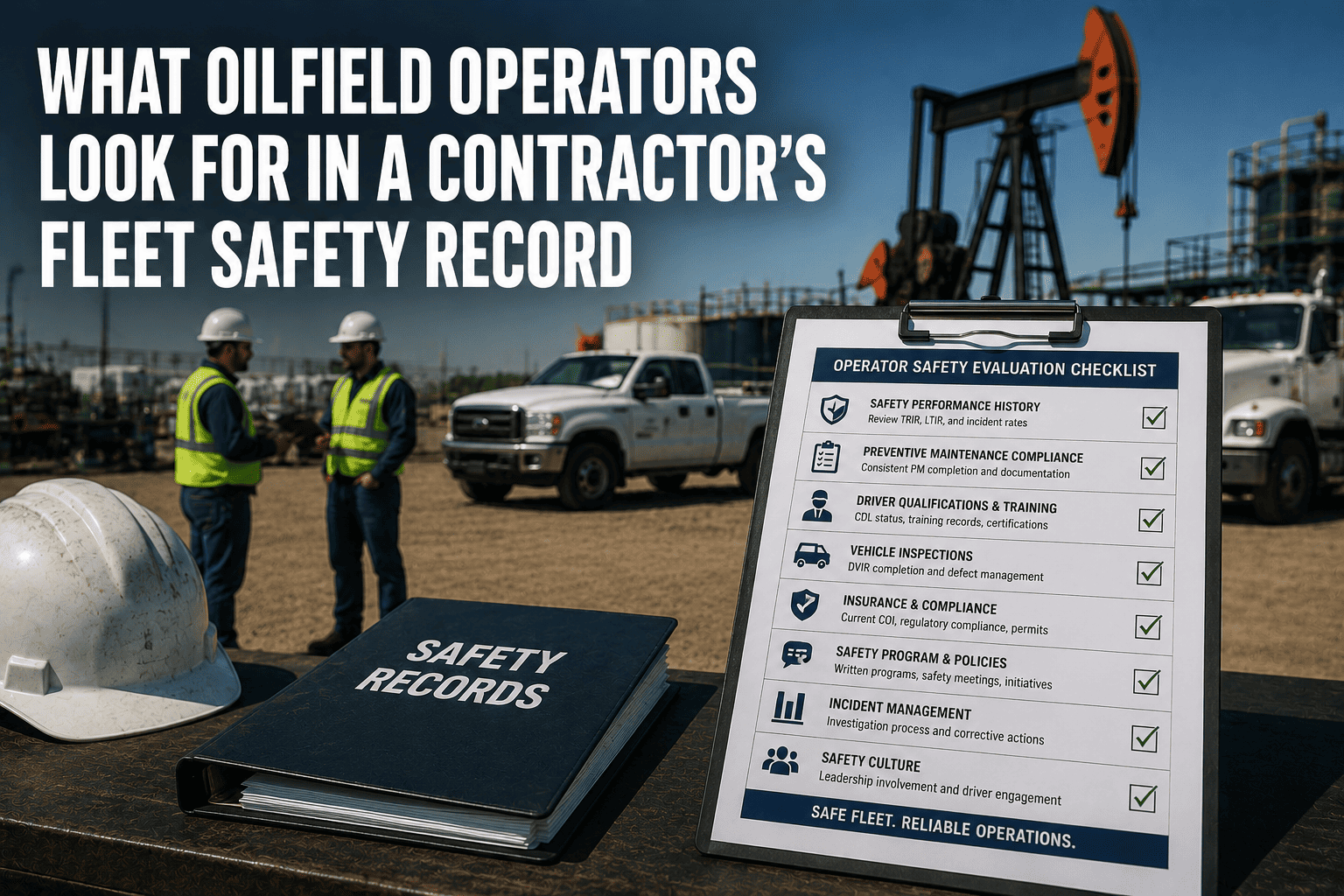
Oil and gas operators lose $340,000–$780,000 annually to repeat equipment failures caused by inadequate post-maintenance verification — when a hydraulic pump returns from repair without proper testing, it fails again within 48 hours of deployment to a remote wellpad, requiring emergency re-extraction, duplicate repair costs, and production downtime that could have been prevented by a 15-minute systematic verification process. The fundamental problem: maintenance shops complete repairs but skip comprehensive post-work testing because paper checklists are time-consuming, technicians are pressured to return equipment to service quickly, and there's no accountability system tracking whether verification steps were actually completed. A drilling operator discovered this pattern after tracking six hydraulic system failures over three months — post-failure analysis revealed that five of the six had returned from maintenance without pressure testing, and all six lacked documented verification that repairs met OEM specifications. FleetRabbit's digital post-maintenance verification platform transforms this critical quality control step from an optional paper checklist into a mandatory, photographically-documented, GPS-timestamped workflow that cannot be bypassed — ensuring every piece of equipment leaving the maintenance shop has been systematically verified to meet safety and performance standards before returning to remote oilfield operations where the cost of failure is catastrophic. Book a demo to see post-maintenance verification workflows applied to your oilfield equipment.
Quick Answer
FleetRabbit's post-maintenance verification system provides equipment-specific digital checklists that guide maintenance technicians through systematic testing and inspection of every repaired component — hydraulic pressure testing, electrical system verification, load testing, calibration checks, safety system validation — with mandatory photo documentation, supervisor sign-off, and automatic generation of equipment-ready certificates that prove each unit meets safety and performance standards before release to field operations. The platform tracks verification completion rates, flags equipment released without proper testing, and generates compliance reports showing that post-maintenance quality control procedures were followed for regulatory audits and insurance claims.
The Catastrophic Cost of Inadequate Post-Maintenance Verification
When maintenance shops skip systematic post-repair verification, they create a pattern of repeat failures that destroys operational reliability, multiplies maintenance costs, and exposes operators to safety liability. The failure mode is predictable: equipment returns from repair, deploys to remote location, fails under load, requires emergency extraction and re-repair — all because verification testing that would have caught the issue was skipped to save 20 minutes.
Anatomy of a Post-Maintenance Failure Cascade
Real case study: Hydraulic pump failure sequence — $127,000 total cost from inadequate verification
Day 1
Initial Failure — Hydraulic Pump Seized
Frac pump hydraulic system fails at wellpad location. Pump seized due to contaminated hydraulic fluid damaging internal components. Equipment extracted from site, transported to maintenance facility. Extraction cost: $8,500. Lost production time: $12,000.
Failure Cost: $20,500
Day 2-5
Maintenance Work Completed
Hydraulic pump disassembled, damaged components replaced (seals, bearings, drive shaft). System flushed, new hydraulic fluid installed. Pump reassembled. Total repair: parts $4,200, labor $2,800. Post-maintenance verification skipped: Technician pressured to return equipment to service quickly. No pressure testing performed. No leak inspection under load. No OEM torque spec verification.
Repair Cost: $7,000 (verification would have added 20 minutes, zero additional cost)
Day 6
Equipment Returned to Service
Hydraulic pump released from maintenance shop marked "repaired and ready for service." Transported to wellpad, reinstalled on frac equipment. Operations resume. Equipment operates normally for 14 hours under light load.
Transportation Cost: $1,200
Day 7
Repeat Failure — Same Component, New Failure Mode
Hydraulic pump fails catastrophically during high-pressure operation. Investigation reveals: improperly torqued mounting bolts caused vibration and misalignment, hydraulic line connection not fully seated resulting in pressure loss and air ingestion. Both issues would have been caught by pressure testing and vibration analysis during post-maintenance verification. Equipment damaged beyond repair, requires complete pump replacement.
Failure Cost: $18,000 (equipment damage) + $45,000 (production loss) = $63,000
Day 8-12
Emergency Replacement and Re-Repair
Emergency extraction of failed equipment ($12,000). Rush procurement of replacement hydraulic pump ($22,000 vs. $14,000 standard price due to emergency sourcing). Installation and commissioning of replacement ($3,300). Root cause investigation and documentation for HSE report (18 staff hours).
Emergency Response Cost: $35,300
Total Cascade Cost from Skipped Verification
$127,000
Initial failure ($20,500) + First repair ($7,000) + Transport ($1,200) + Repeat failure ($63,000) + Emergency response ($35,300)
Could have been prevented by: 20-minute systematic post-maintenance verification procedure including pressure testing, torque verification, and leak inspection under simulated load conditions. Cost to prevent: $0 (verification is part of standard maintenance process).
24%
Of equipment failures within 30 days of maintenance are caused by inadequate post-repair verification
$78K
Average cost per repeat failure event including emergency response and production loss
15 min
Average time required for comprehensive digital post-maintenance verification vs. 35-45 minutes for paper checklists
94%
Reduction in post-maintenance failures after implementing mandatory digital verification workflows
Types of Equipment Requiring Post-Maintenance Verification
Different equipment categories require specialized verification protocols based on failure modes, safety criticality, and operational environment. FleetRabbit provides equipment-specific verification templates that ensure technicians test the components most likely to fail if repair quality is inadequate.
Critical Verification Points:
• Pressure testing to maximum rated PSI — hold test for 10 minutes, verify zero pressure drop
• Leak inspection at all connections under full operating pressure with UV dye detection
• Hydraulic fluid contamination analysis — particle count must meet ISO 4406 cleanliness standard
• Cylinder rod straightness measurement — deviation >0.003" indicates bending damage
• Seal integrity verification — visual inspection plus pressure hold test confirms no bypass
• Temperature monitoring during 30-minute load cycle — excessive heat indicates friction/wear
Photo documentation required: Pressure gauge readings, leak inspection with UV light, fluid sample analysis results, temperature profile
Critical Verification Points:
• Compression testing all cylinders — must be within 10% of each other and meet OEM spec
• Coolant pressure test system — hold 15 PSI for 10 minutes with zero pressure loss
• Oil pressure verification at idle and rated RPM — must meet manufacturer specifications
• Turbocharger boost pressure measurement under load — verify no boost leaks or compressor damage
• Exhaust gas temperature monitoring — abnormal EGT indicates combustion or timing issues
• Vibration analysis at operating speed — excessive vibration indicates imbalance or bearing wear
Photo documentation required: Compression test readings, coolant pressure gauge, oil pressure at RPM, boost gauge under load, EGT readings
Critical Verification Points:
• Voltage output testing under load — verify stable voltage across expected load range
• Insulation resistance testing (megohm test) — minimum 1 megohm resistance to ground
• Circuit breaker trip testing — verify protective devices operate at correct amperage thresholds
• Ground fault protection verification — test GFCI functionality under fault conditions
• Control logic testing — verify all safety interlocks, emergency stops, and sequencing functions
• Connection torque verification — all terminal connections torqued to manufacturer specifications
Photo documentation required: Voltage readings under load, megohm test results, breaker trip test, torque wrench settings on connections
Critical Verification Points:
• Gear oil analysis — particle count, viscosity, and contamination within acceptable limits
• Shift quality testing through all gear ranges — smooth engagement without grinding or slipping
• Clutch engagement testing — measure free play, engagement point, and holding capacity under load
• Driveshaft U-joint inspection — check for play, proper phasing, and grease distribution
• Torque converter stall test (automatic) — verify stall speed within OEM specification range
• Temperature monitoring during operation — excessive heat indicates internal friction or low fluid
Photo documentation required: Fluid analysis results, shift test video, clutch measurement readings, U-joint condition, stall test RPM
Critical Verification Points:
• Brake pressure testing — verify system builds and maintains rated pressure (typically 90-120 PSI air brakes)
• Brake adjustment verification — measure pushrod stroke, must be within specification (typically 1.5–2.0")
• Parking brake holding capacity — test on grade, must hold vehicle loaded to GVWR
• Air leak test (pneumatic systems) — pressure drop test over 2 minutes must be <3 PSI
• Hydraulic brake bleeding verification — pedal firmness test, no sponginess or fade
• ABS/EBS system diagnostics — verify no fault codes and functional self-test passes
Photo documentation required: Pressure gauge readings, pushrod measurement, grade hold test, leak test results, diagnostic scan output
Critical Verification Points:
• Emergency shutdown system testing — verify all e-stop buttons trigger immediate equipment shutdown
• Alarm functionality verification — test all pressure, temperature, and level alarms at setpoints
• Safety interlock testing — verify equipment cannot operate with guards removed or doors open
• Pressure relief valve testing — verify valves open at correct pressure and reseat properly
• Rollover protection verification — ROPS/FOPS structural integrity inspection after any repair
• Fire suppression system testing — verify detection and suppression systems operate correctly
Photo documentation required: E-stop test results, alarm activation at setpoint, interlock operation video, relief valve test, ROPS inspection
Digital Post-Maintenance Verification
Eliminate Repeat Failures with Systematic Equipment Testing Before Field Deployment
FleetRabbit's equipment-specific verification checklists guide technicians through mandatory testing procedures with photo documentation, automatic supervisor notification, and equipment-ready certificates that prove quality control was completed.
94%
Fewer post-maintenance failures
15 min
Average verification time
100%
Photo-documented proof
FleetRabbit's Digital Post-Maintenance Verification Workflow
The platform transforms post-maintenance verification from an optional paper checklist that technicians skip into a mandatory digital workflow that cannot be bypassed — equipment cannot be marked "ready for service" until all verification steps are photographically documented and supervisor-approved.
1
Maintenance Work Order Completion
Technician completes repair work (hydraulic pump rebuild, engine overhaul, electrical repair). Closes work order in FleetRabbit system, marking repair tasks complete. System automatically triggers post-maintenance verification requirement based on equipment type and repair performed.
System action: Equipment-specific verification checklist auto-assigned to technician. Equipment status remains "In Maintenance — Verification Pending." Cannot be released to field until verification complete.
2
Equipment-Specific Verification Checklist Loaded
Technician opens FleetRabbit mobile app, accesses verification checklist for specific equipment (example: "Hydraulic Pump Post-Repair Verification"). Checklist contains 12-18 verification steps specific to equipment type: pressure tests, leak inspections, load testing, calibration checks, safety system validation.
System action: GPS timestamp captures verification start time and location. Technician cannot skip steps or mark complete without fulfilling requirements.
3
Systematic Testing with Photo Documentation
Technician works through checklist step-by-step. Each test requires photo evidence: pressure gauge reading, leak inspection with UV light, torque wrench setting, diagnostic scan results. App prompts for specific photos at each step — "Capture pressure gauge showing 3000 PSI hold pressure," "Photograph all connection points under UV light inspection."
System action: Photos timestamped and GPS-tagged. Cannot proceed to next verification step without capturing required photo evidence for current step.
4
Pass/Fail Assessment and Issue Flagging
Each verification test marked Pass or Fail. Pass = equipment meets specification, proceed to next test. Fail = issue identified requiring additional repair work. Failed items automatically generate new work order tasks. Example: "Pressure test failed — pressure drop from 3000 PSI to 2750 PSI over 10 minutes indicates leak. Additional work required."
System action: Equipment cannot be released if any verification test fails. Failed items escalate to maintenance supervisor for review and corrective action assignment.
5
Supervisor Review and Sign-Off
Technician submits completed verification checklist (all tests passed, all photos captured). Maintenance supervisor receives notification to review verification results. Supervisor examines photo evidence, test results, and verification completion. Approves release to service or requests additional testing if concerns identified.
System action: Supervisor digital signature captured with timestamp. Equipment cannot be released without supervisor approval. Accountability chain established: technician performed tests, supervisor verified results.
6
Equipment Ready Certificate Generation
System automatically generates "Equipment Ready for Service" certificate: Equipment ID, repair performed, verification tests completed, photo evidence attached, technician ID, supervisor approval, timestamp, GPS location. Certificate attached to equipment record, available for audit, insurance claims, and regulatory compliance documentation.
System action: Equipment status updated to "Ready for Service — Verification Complete." Equipment now available for dispatch to field operations. Fleet managers notified equipment ready for deployment.
Reducing Repeat Failures Through Systematic Verification
The measurable impact of mandatory post-maintenance verification becomes clear when comparing failure rates before and after implementation. Operators who deploy FleetRabbit's verification workflows experience dramatic reductions in post-maintenance failures, emergency re-repairs, and production downtime from equipment that returns from maintenance and immediately fails.
Verification Completion Rate
34%
Only 34% of repaired equipment had documented post-maintenance verification — 66% released to service without systematic testing
Repeat Failure Rate (30 Days Post-Repair)
18%
18% of repaired equipment failed again within 30 days — indicating inadequate repair quality or incomplete work
Average Time to Repeat Failure
12 days
Equipment that failed post-maintenance averaged only 12 days operation before repeat failure
Annual Repeat Failure Cost
$680K
Emergency re-repairs, production downtime, and duplicate parts costs from post-maintenance failures
Verification Documentation Quality
Poor
Paper checklists incomplete, illegible, or missing. No photo evidence. Impossible to determine if testing actually performed.
Verification Completion Rate
100%
Mandatory workflow ensures every repaired unit completes systematic verification before release — cannot be bypassed
Repeat Failure Rate (30 Days Post-Repair)
1.2%
94% reduction in post-maintenance failures — verification catches quality issues before equipment returns to field
Average Time to Repeat Failure
N/A
So few repeat failures that average is statistically insignificant — failures that do occur are typically unrelated to original repair
Annual Repeat Failure Cost
$42K
$638,000 annual savings from prevented repeat failures — ROI from verification platform achieved in under 60 days
Verification Documentation Quality
Excellent
Complete photo evidence, GPS timestamps, digital signatures. Audit-ready documentation proves testing performed to specifications.
"We were experiencing chronic repeat failures on hydraulic equipment — pumps and cylinders would come back from our maintenance shop, deploy to the field, and fail again within days or weeks. Root cause analysis showed the pattern: technicians were rushing to return equipment to service and skipping post-repair testing. Paper verification checklists sat on clipboards, mostly blank. After deploying FleetRabbit's digital verification system, the transformation was immediate. Technicians can't mark equipment ready for service until they've photographically documented every pressure test, leak inspection, and load test. Our maintenance supervisor gets automatic notification when verification is complete and reviews the photo evidence before approving release. In the first six months, our 30-day repeat failure rate dropped from 22% to under 2%. The cost savings from prevented failures paid for the platform within 90 days. But beyond the money, the quality improvement has been transformational — our field crews now trust that equipment coming from the shop has been properly tested and is actually ready for demanding oilfield service."
Maintenance Director
Oilfield Services Company — 85-Unit Heavy Equipment Fleet — Permian Basin
Measured Post-Maintenance Verification Outcomes
94%
Reduction in Post-Maintenance Failures
Systematic verification catches quality issues before equipment returns to field operations, eliminating repeat failures that plagued paper-based workflows.
100%
Verification Completion Rate
Mandatory digital workflow ensures every repaired unit completes testing before release — impossible to bypass vs. 34% completion with paper checklists.
15 min
Average Verification Time
Digital checklists with photo integration reduce verification time from 35-45 minutes (paper process) to under 15 minutes — faster and more thorough.
$638K
Annual Savings from Prevented Failures
Eliminated emergency re-repairs, production downtime, and duplicate parts costs from equipment that returns from maintenance and immediately fails.
Zero
Equipment Released Without Supervisor Approval
Digital sign-off requirement ensures maintenance supervisor reviews verification results before releasing equipment to field operations.
100%
Photo-Documented Verification Evidence
Every verification test photographically documented with GPS timestamp — provides audit-ready proof that testing was performed to specifications.
Frequently Asked Questions
What happens if equipment fails post-maintenance verification testing?
Failed verification automatically generates new work order tasks for corrective action. Example: hydraulic pressure test fails due to leak — system creates task "Repair hydraulic leak identified during verification." Equipment remains in "Verification Pending" status and cannot be released to field until verification is successfully completed. This prevents the release of equipment with known quality issues.
How does FleetRabbit handle verification for equipment repaired by external vendors?
Verification workflow applies to all equipment regardless of where repair occurred. When equipment returns from external vendor, internal technician performs FleetRabbit verification checklist before accepting equipment back into fleet. This catches vendor quality issues before equipment deploys to field. Verification documentation provides evidence for warranty claims if vendor work proves inadequate.
Can verification checklists be customized for company-specific testing procedures?
Yes. FleetRabbit provides equipment-type templates (hydraulic, electrical, engine, etc.) that can be customized to match your company's verification standards, OEM requirements, and regulatory compliance needs. Custom verification steps, pass/fail criteria, and photo requirements configured per your specifications.
Discuss custom verification template development in a demo call.
How long does FleetRabbit retain post-maintenance verification records for audit and warranty purposes?
All verification records retained indefinitely with complete audit trail: checklist completion, photo evidence, test results, technician ID, supervisor approval, timestamps, GPS location. Documentation readily accessible for regulatory audits, insurance claims, warranty disputes, and HSE investigations. Export capability provides verification reports in PDF format for submission to third parties.
FleetRabbit Post-Maintenance Verification Platform
Eliminate Repeat Equipment Failures with Mandatory Digital Verification Workflows
FleetRabbit's equipment-specific verification checklists ensure every repaired unit undergoes systematic testing with photo documentation before returning to field operations — preventing the catastrophic repeat failures that cost operators $78,000+ per event in emergency re-repairs and production downtime.
94% Fewer Repeat Failures
100% Photo-Documented
Mandatory Supervisor Approval
15-Minute Verification Time
April 14, 2026
By David
All Posts