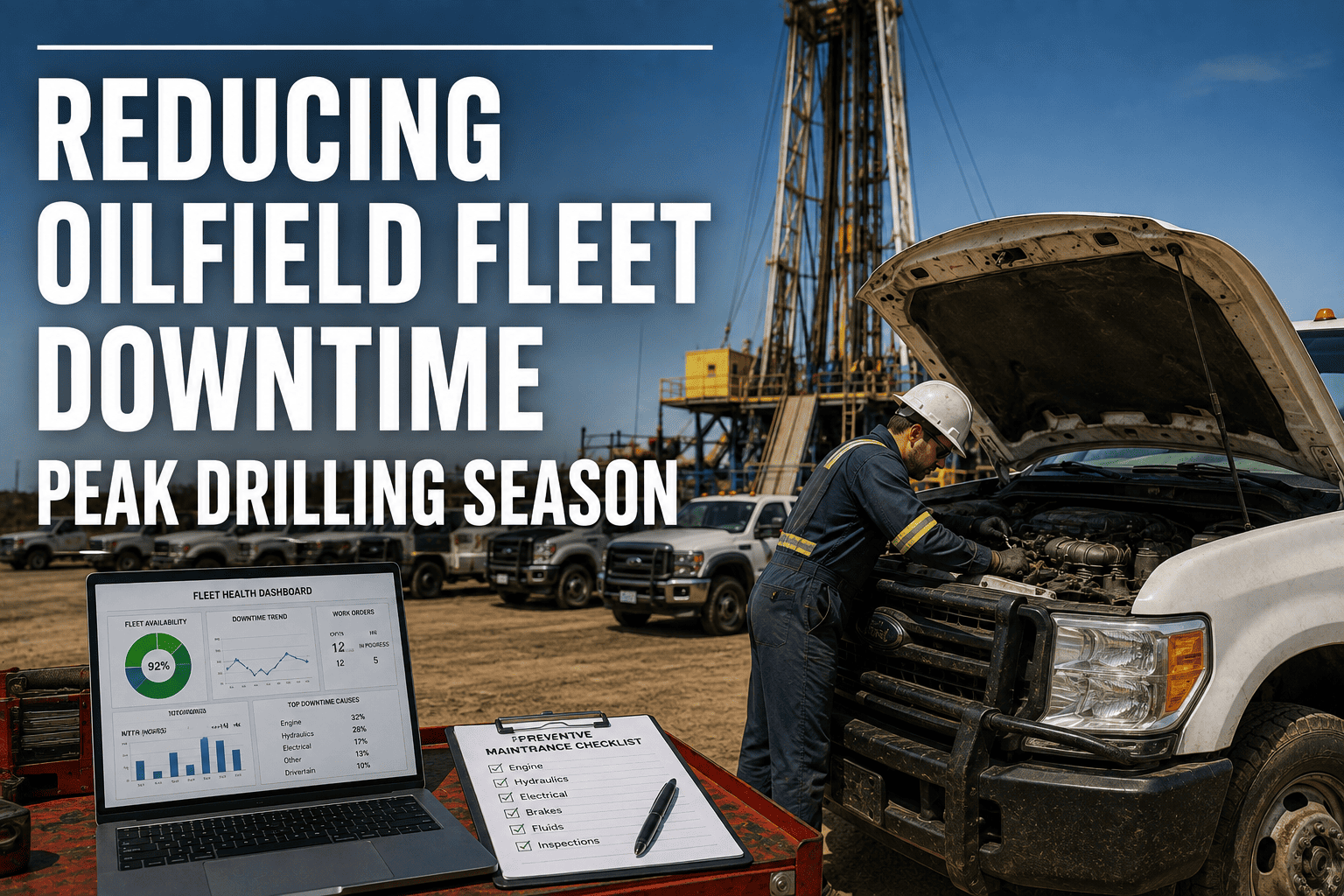
A single unplanned vehicle breakdown on an active oilfield drilling programme does not cost the price of a tow truck and a repair bill — it costs the full mobilised day rate of the rig, the service crew, the logistics chain, and the production deferment behind it. Independent cost modelling across Permian, North Sea, and GCC basin operations consistently places unplanned drilling downtime between $150,000 and $500,000 per hour when the full operational cascade is counted. The critical insight that most fleet managers miss is this: the mechanical failure that halts a rig typically began showing detectable symptoms 3 to 6 weeks before the breakdown event — in OBD-II fault code trends, in engine temperature deviations, in fuel consumption anomalies, and in vibration signatures that predictive maintenance systems can detect, flag, and work-order before the asset ever leaves the yard. FleetRabbit's AI-powered predictive maintenance engine gives oilfield fleet managers and executives the detection window they need to convert $500,000 breakdown events into $2,000 scheduled service appointments. Book a demo to see FleetRabbit's predictive maintenance platform for oil and gas fleets.
Gas Fleets:
Prevent $500K/Hour Drilling Delays
FleetRabbit's predictive maintenance engine detects developing faults 3–6 weeks before breakdown — using engine diagnostics, OBD-II fault trending, IoT sensor data, and AI-driven anomaly detection. Convert catastrophic field failures into scheduled service appointments before they halt your drilling programme.
Why Reactive Maintenance Is Destroying Oilfield Profitability
Most oilfield fleet operations have a maintenance programme. Very few have a predictive one. The gap between the two is where the $500,000-per-hour events live.
The maintenance model most oilfield fleet operations run today is time-based or mileage-based scheduling — oil changes at 10,000 miles, filter replacements at 6-month intervals, brake inspections at annual service dates. This model was designed for highway transport operations where vehicles accumulate mileage predictably and operate in relatively stable mechanical environments.
Oilfield vehicles operate in none of those conditions. A water well service truck may accumulate 400 engine hours at idle on a wellsite for every 50 miles driven. A chemical bowser may experience 40°F temperature differential between a desert night start and a midday engine operating temperature. A drill pipe transport vehicle may cover identical mileage over loose gravel every day for three months, creating a completely different wear profile than the same vehicle would develop on tarmac.
The result: mileage-based and time-based maintenance schedules systematically miss the fault conditions that lead to oilfield breakdowns — because they measure the wrong variables. FleetRabbit measures the right ones: engine operating hours, OBD-II fault code trends, coolant and oil temperature deviations, fuel consumption anomalies, and IoT sensor signatures that indicate developing mechanical stress before it becomes visible failure.
The 6 Mechanical Fault Modes Most Likely to Cause Oilfield Breakdown
Engine Coolant System Failure
Oilfield vehicles operating in extreme temperature environments develop coolant system degradation 3–4 weeks before catastrophic overheating. OBD-II coolant temperature trending, combined with fluid quality analysis, provides the detection window FleetRabbit uses to generate preventive work orders before the engine failure event.
Brake System Deterioration
Loaded oilfield vehicles on gradient terrain experience brake wear at 3–5× highway rates. Brake fluid contamination, pad thickness trending, and rotor thermal cycling anomalies give FleetRabbit 4–6 weeks of detection lead time before the brake condition becomes a safety-critical field event.
Transmission and Drivetrain Stress
Heavy loads, off-road terrain, and temperature extremes create transmission fluid degradation and torque converter stress that mileage-based oil changes systematically miss. OBD-II transmission temperature monitoring and gear-slip event trending identify developing failure 3–5 weeks before complete drivetrain loss.
Tyre System Failure on Remote Roads
Tyre blowouts on remote lease roads are the single most common cause of vehicle immobilisation in oilfield operations. FleetRabbit's tyre pressure monitoring integration and tread wear trending — adjusted for oilfield surface types rather than highway mileage — identify failure risk 2–4 weeks before immobilisation.
Fuel System Contamination
Oilfield fuel supplies — particularly at remote wellsite bowsers — carry contamination risk from water ingress, sediment accumulation, and microbial growth that degrades injector performance over 3–6 weeks before causing engine management faults. OBD-II fuel trim trending flags this developing condition weeks before power loss occurs.
Electrical System Degradation
Battery and alternator failures cause more vehicle hold events in oilfield operations than any mechanical system. Charging voltage trending, battery capacity decline monitoring, and parasitic draw detection give FleetRabbit a 2–3 week detection window before an electrical failure immobilises a vehicle at a remote site with no recovery access.
Stop Waiting for Breakdowns. Start Preventing Them.
FleetRabbit's AI engine monitors every oilfield vehicle 24/7 — detecting the fault signatures that precede breakdown 3–6 weeks before failure, and converting every detection into an automatic corrective work order before your vehicle leaves the yard for a remote wellsite.
FleetRabbit's Predictive Maintenance Architecture for Oilfield Fleets
FleetRabbit's predictive maintenance engine operates across four integrated layers — from raw sensor data collection to executive-level fleet health reporting — converting oilfield vehicle data into prevention-oriented maintenance decisions.
Layer 1: Multi-Source Data Collection
FleetRabbit ingests data from three simultaneous sources: OBD-II engine diagnostic ports (fault codes, temperature, fuel trim, transmission parameters), IoT sensors (tyre pressure, vibration, load weight), and driver DVIR findings (physical inspection observations with photo evidence). All data streams are timestamped, geotagged, and linked to the vehicle asset record in real time — including data collected in satellite-only mode on remote wellsite locations.
Layer 2: AI Anomaly Detection and Fault Trending
FleetRabbit's AI engine establishes a baseline operating profile for each vehicle within the first 14 days of deployment — learning the normal OBD-II parameter ranges, typical fuel consumption curves, and expected temperature profiles for the vehicle type, load class, and basin environment. Deviations from this baseline trigger anomaly flags at configurable sensitivity thresholds — surfacing developing faults weeks before they become symptomatic to the driver or visible on a standard diagnostic scan.
Layer 3: Automatic Work Order Generation and Routing
Every fault detection — whether from an AI anomaly flag, an approaching engine-hour service interval, or a critical DVIR finding — automatically generates a structured work order in FleetRabbit, assigned to the correct maintenance team, with full vehicle context, fault history, and photo evidence attached. Fleet managers cannot lose a defect report in a paper trail. Dispatchers cannot send a vehicle with an open safety-critical work order to a remote location. The system enforces the intervention before the vehicle leaves the yard.
Layer 4: Fleet Health Intelligence for Executives
Fleet managers and VP-level executives see a live fleet health score for every vehicle across every site on the FleetRabbit dashboard — without requiring manual data aggregation from field supervisors. Open work orders, overdue service intervals, high-risk vehicle flags, and maintenance cost trending are visible in a single consolidated view. Automated weekly and monthly maintenance intelligence reports are distributed to C-suite stakeholders without requiring a single manual data pull from field teams.
Every Predictive Maintenance Capability Your Oilfield Fleet Needs
Engine-Hour Maintenance Scheduling
FleetRabbit replaces mileage-based service intervals with engine-hour triggers configured per vehicle type and duty cycle. A wellsite service truck accumulating 500 idle hours without significant mileage triggers its oil change at the correct interval — not 10,000 miles later when it finally reaches the service centre for an overdue visit that mileage tracking never flagged.
AI Fault Trending and Anomaly Detection
FleetRabbit's AI monitoring engine watches 47 OBD-II parameters simultaneously per vehicle — flagging deviations from the vehicle's established baseline before they escalate to fault codes visible on a standard diagnostic scanner. Coolant temperature gradients, fuel trim drift, transmission slip frequency, and battery charging anomalies are detected and trend-tracked weeks before they produce a warning lamp on the dashboard.
Automatic Work Order Generation — No Manual Steps
Every predictive maintenance trigger generates a structured corrective work order assigned to the maintenance team with full context: fault description, OBD-II data, vehicle operating history, recommended action, and priority classification. Dispatchers see open safety-critical work orders linked directly to vehicle dispatch — preventing remote deployment of a compromised asset without requiring a phone call between maintenance and dispatch teams.
Maintenance Cost Trending and ROI Reporting
FleetRabbit tracks every work order to completion — parts used, labour time, and total cost — logged against the vehicle asset record. Fleet executives see maintenance cost trending by asset class, by site, and by basin — identifying high-cost vehicles before they become replacement decisions and documenting the ROI of predictive intervention versus reactive repair across the full fleet maintenance programme.
What VP-Level and C-Suite Operations Leaders Get From FleetRabbit Predictive Maintenance
For operations executives, predictive maintenance is not a maintenance department concern — it is a balance-sheet line item that affects rig efficiency, insurance premiums, contractor compliance scores, and regulatory liability exposure. FleetRabbit delivers the executive-level intelligence to manage it proactively.
Live Fleet Health Score Across All Sites
Every vehicle across every basin and site assigned a real-time health score — composite of open work orders, overdue service intervals, active OBD-II anomalies, and DVIR defect status. Executives see fleet-wide health in a single dashboard view without requiring field supervisor report consolidation. Critical health flags escalate to executive notifications automatically.
Predictive Risk Scoring — Intervene Before Incident
FleetRabbit's risk engine identifies vehicles trending toward high-failure-probability status — combining rising OBD-II anomaly frequency, increasing driver DVIR fault findings, and approaching service interval overrun into a composite risk score. Executives and fleet managers receive automated alerts when a vehicle crosses the configured risk threshold — enabling proactive grounding and service scheduling before field failure occurs.
Insurance and Audit Evidence — On Demand
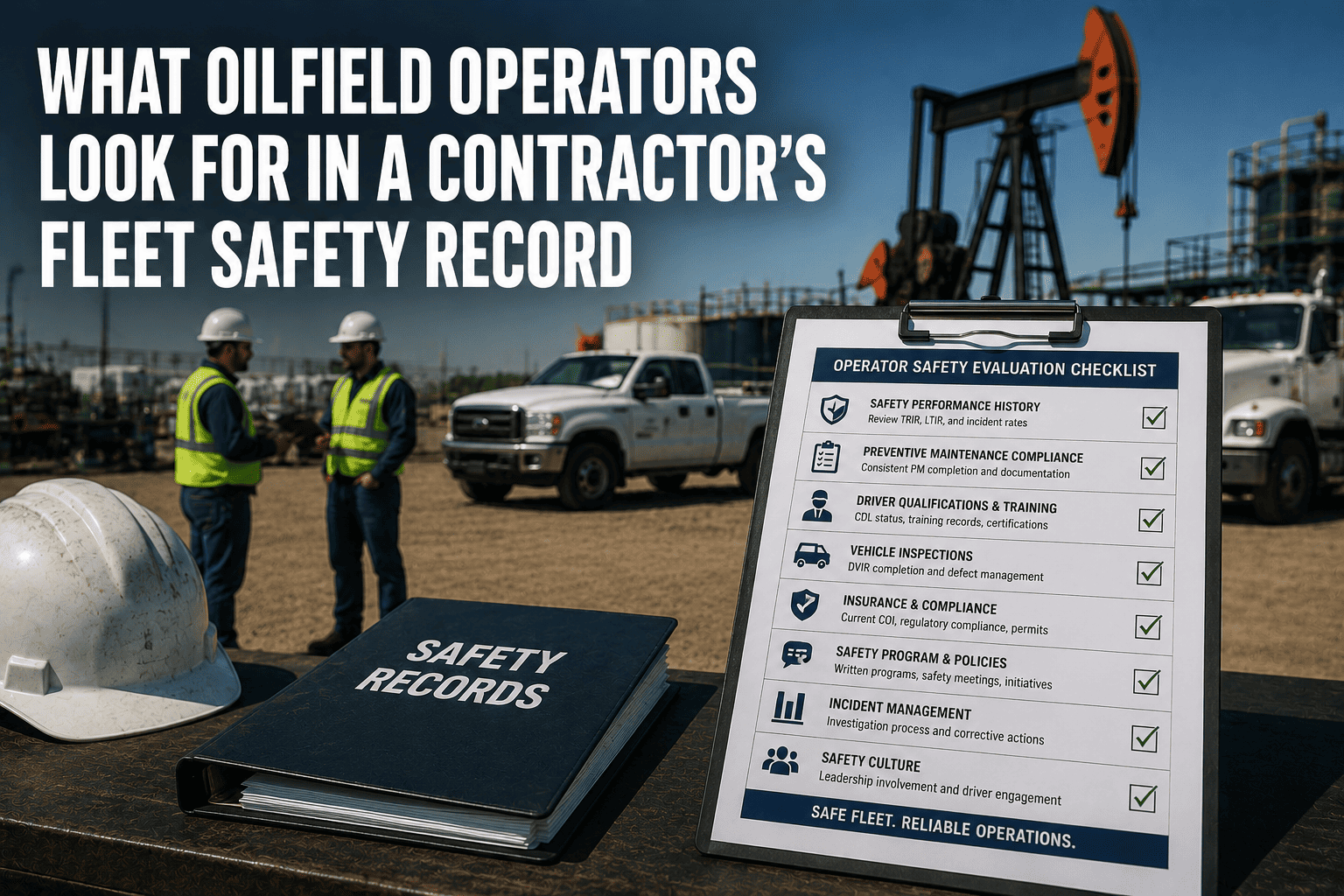
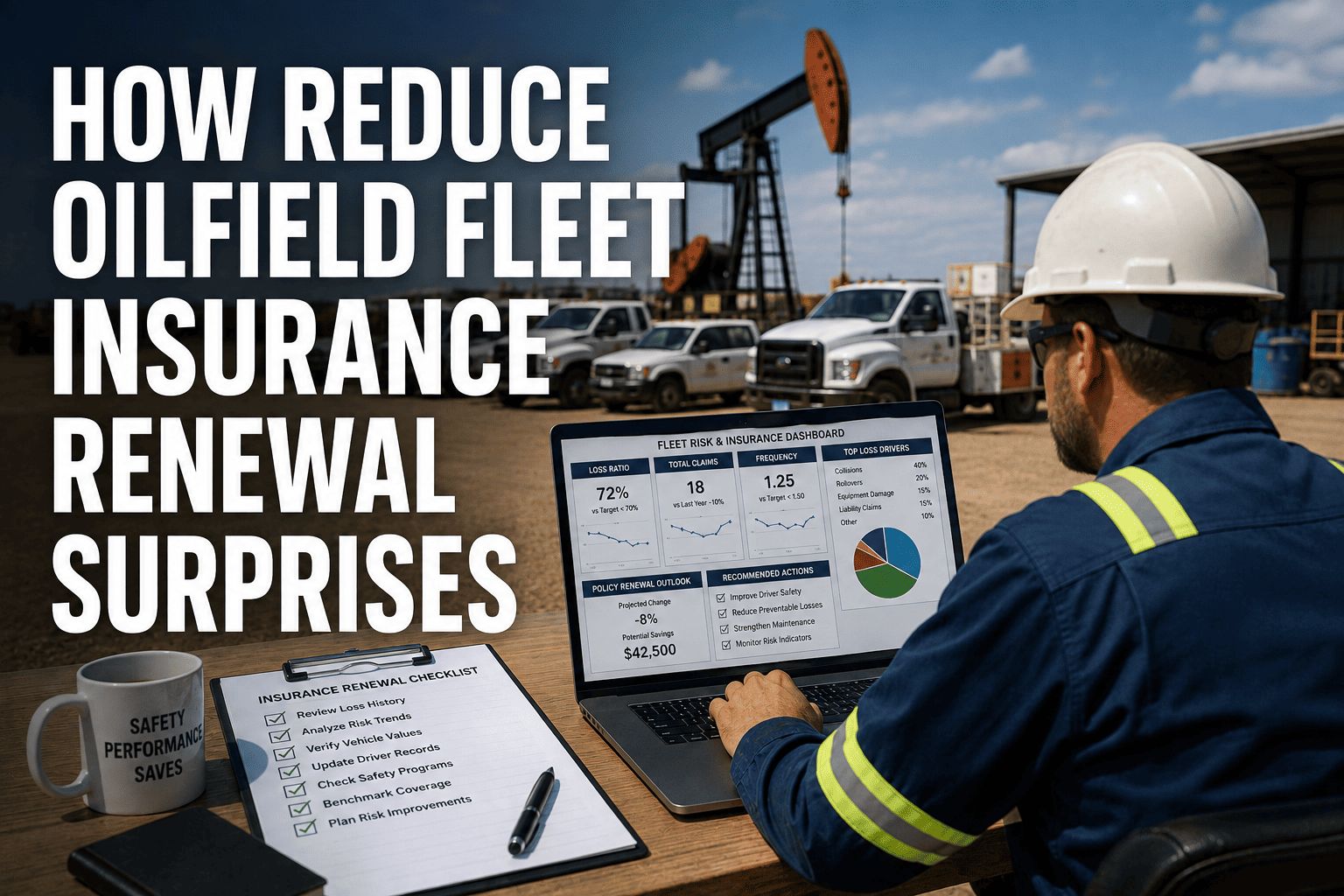
FleetRabbit generates complete maintenance history packages for any vehicle — service records, work order history, inspection findings, OBD-II anomaly logs, and corrective action closure documentation — in audit-ready format within minutes. Clients report insurance carriers offering premium reductions of 15–22% when telematics-backed maintenance records are presented at renewal, converting FleetRabbit cost into a direct balance-sheet saving.
Multi-Region Compliance Record Generation
Predictive maintenance records generated by FleetRabbit satisfy the documentation requirements of FMCSA 49 CFR Part 396 (USA), DVSA operator licence maintenance records (UK/EU), ADNOC contractor maintenance compliance (GCC), and DGMS inspection directives (India) — without post-processing or manual reformatting for each regulatory jurisdiction your fleet operates within.
FleetRabbit Predictive Maintenance ROI: Verified Field Results
We had a transmission failure on a critical haul vehicle that grounded the entire wellsite crew for 11 hours. After FleetRabbit, our maintenance team gets OBD-II anomaly alerts 3–4 weeks before anything reaches that level. We've had zero unplanned remote breakdowns in 14 months.
Your Next Oilfield Breakdown Is Already Showing Warning Signs in Your Vehicle Data
FleetRabbit's predictive maintenance engine is monitoring the OBD-II data, engine hours, and IoT sensor streams that will tell you about it — if you give it the chance. Deploy on your oilfield fleet in 5–7 working days and start converting $500K breakdown events into $2K service appointments.
Frequently Asked Questions
Prevent the Next $500K/Hour Breakdown Before It Happens
FleetRabbit monitors your oilfield fleet 24/7 — detecting fault signatures weeks before breakdown, generating automatic work orders, and giving fleet executives real-time health intelligence across every site and every asset. Deployed in 5–7 working days at $3/vehicle/month.