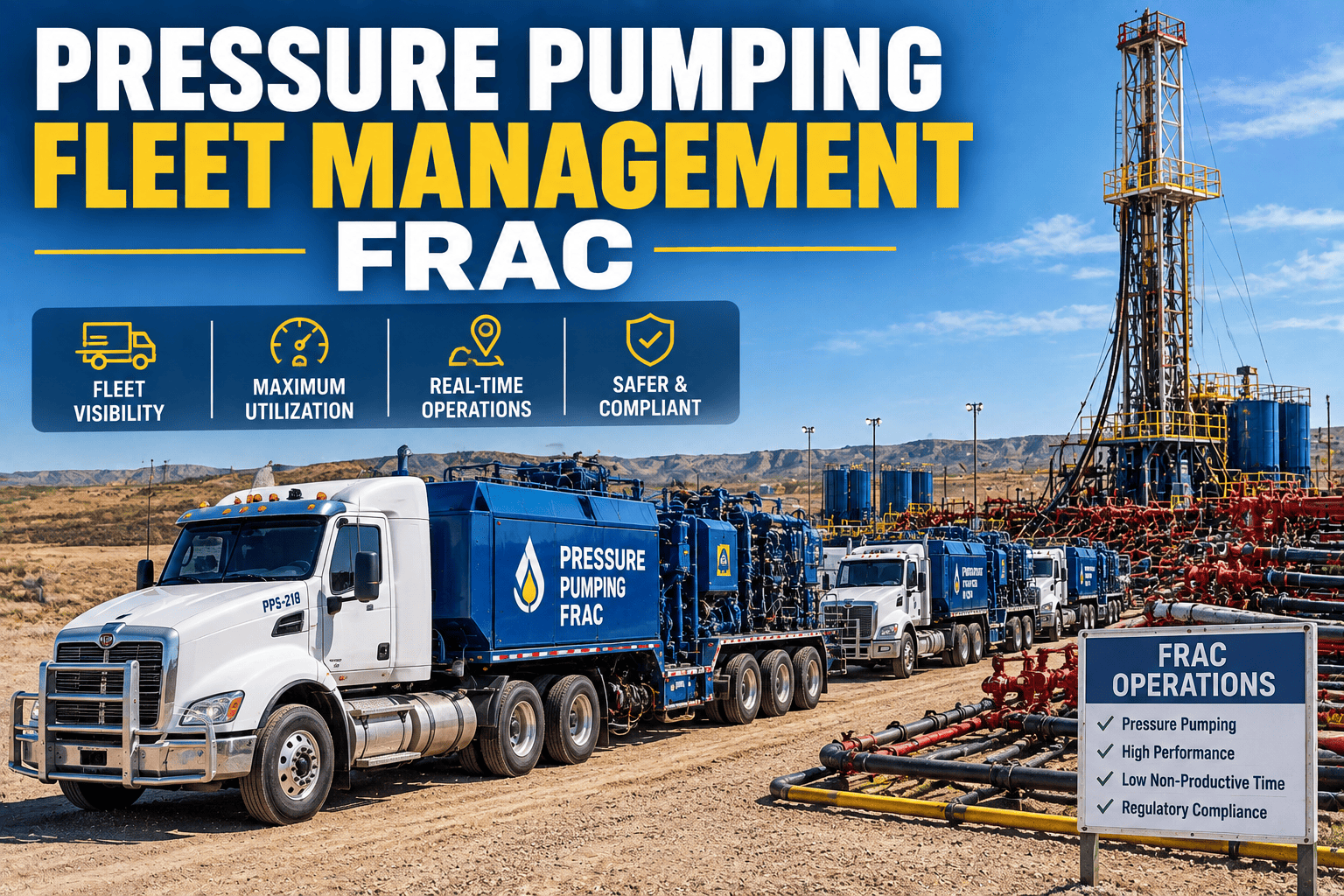
Pressure pumping fleets represent the most capital-intensive segment of hydraulic fracturing operations. A single frac pump truck costs well over a million dollars, and when it sits idle on a well pad, the financial losses accumulate rapidly. Managing these massive assets requires a completely different approach than standard over-the-road trucking. Mileage is irrelevant when a truck sits stationary for days, running its engine at full throttle to push fluid downhole. Fleet managers must track engine hours, monitor extreme equipment wear, and coordinate complex crews in remote environments. FleetRabbit provides the specialized tracking and maintenance protocols necessary to keep frac operations productive and on schedule.
Pressure pumping equipment operates under maximum mechanical stress. Unplanned downtime during a frac stage can cost operators over fifty thousand dollars per hour. Tracking engine hours and implementing predictive maintenance reduces catastrophic failures by forty percent. You can sign up for FleetRabbit to transform how you manage your high-value pumping assets.
The High Cost of Frac Fleet Downtime
In pressure pumping operations, time is measured in minutes and dollars are measured in thousands. When a frac pump goes down unexpectedly, the entire completion operation halts. The E&P operator is losing production time, the service company is losing revenue, and standby costs for supporting equipment accumulate rapidly. A single failed component, such as a cracked fluid end or a burned transmission, can delay a stage by six to twelve hours.
Why Mileage Does Not Work for Pump Trucks
Traditional fleet management relies on odometer readings to schedule maintenance. This model completely fails for pressure pumping fleets. A pump truck might drive only fifty miles to a well pad, but then run its engine at eighteen hundred RPM for forty-eight hours straight. The mechanical wear incurred during those forty-eight hours of severe duty pumping far exceeds the wear of driving five hundred highway miles.
Transitioning to Duty-Cycle Tracking
FleetRabbit captures telematics data directly from the engine control module (ECM), monitoring RPM, load percentage, and operating hours. The system translates this raw data into a maintenance schedule tailored to the specific demands of hydraulic fracturing. By tracking actual duty cycles, fleet managers can predict when a component will fail and schedule rebuilds during planned downtime between stages. To implement duty-cycle tracking for your equipment, you can book a demo with our team.
| Frac Asset | Primary Tracking Metric | FleetRabbit Management Feature |
|---|---|---|
| Pump Trucks | Engine hours and pressure ratings | Automated fluid end rebuild alerts and transmission temperature monitoring |
| Blenders and Hydration | Run-time hours and chemical throughput | Digital pre-stage checklists and real-time utilization reporting |
| Data Vans and Control Units | Network uptime and power cycles | Geofenced arrival logging and equipment status dashboards |
| Sand Delivery Trucks | Mileage, idle time, and load counts | Optimized routing to prevent box starvation at the blender |
Stop losing revenue to preventable equipment failures. FleetRabbit adapts to the severe duty cycles of frac operations, providing the engine-hour tracking and predictive maintenance you need. You can sign up now or book a demo to see the platform in action.
Preventive Maintenance for Pressure Pumping
The extreme environment of hydraulic fracturing demands a rigorous preventive maintenance strategy. Abrasive proppant, corrosive chemicals, and immense vibration destroy components. Reactive maintenance is not an option when a failure means shutting down a twenty-thousand-horsepower frac spread. Maintenance teams must transition from reactive repairs to condition-based interventions.
Predicting Fluid End Failures
Fluid ends are the most frequently replaced components on a pump truck. The constant cycling of high-pressure abrasive fluid causes cracking and fatigue. FleetRabbit tracks the total volume and pressure pumped by each fluid end. When a unit approaches its safe operational limit, the system automatically generates a work order for replacement. This ensures that fluid ends are swapped out during iron moves, rather than failing mid-stage.
Synchronized Maintenance Schedules
Coordinating maintenance across a massive fleet of pump trucks, blenders, and support equipment requires flawless synchronization. FleetRabbit provides a centralized maintenance calendar that aligns with the operator's completion schedule. Mechanics can see exactly when a specific asset will be released from a well pad and have the necessary parts staged in advance. To see how synchronized maintenance can streamline your operations, sign up for FleetRabbit today.
Crew Coordination and Shift Management
Pressure pumping operates around the clock. Managing twenty-four-hour shifts requires strict adherence to hours-of-service regulations and safety protocols. Driver fatigue is a major liability, and ensuring that fresh crews arrive on time is critical to maintaining continuous operations. FleetRabbit tracks driver hours digitally, preventing violations and ensuring compliance.
Furthermore, the movement of specialized personnel, such as frac supervisors and wireline crews, must be tightly coordinated with equipment arrivals. FleetRabbit's dispatch tools provide a unified view of both asset and personnel movement, ensuring that the right people and equipment converge on the well pad simultaneously. If you want to improve your crew coordination, book a demo to explore our dispatch features.
Do not let preventable equipment failures derail your completion schedule. FleetRabbit equips your pressure pumping fleet with the engine-hour tracking, predictive maintenance, and crew coordination tools needed to maximize pump time. Sign up today or book a demo to see how we can transform your frac operations.