Oilfield vehicles operate in conditions that destroy standard preventive maintenance schedules within weeks — organic acid corrosion from produced water exposure, silica dust ingestion from wellsite atmospheres, extreme thermal cycling between desert nights and midday operating temperatures, and duty cycles that accumulate engine hours at 3–6x the rate of equivalent highway vehicles. A frac truck on continuous wellpad operations follows a completely different PM schedule than a wireline unit making multiple daily wellsite visits, which follows a completely different schedule than a water hauler running loaded across gravel lease roads for 12-hour shifts. The preventive maintenance checklists in this guide are built for specific oilfield vehicle types — not generic fleet vehicles. Every checkpoint is calibrated for field conditions, engine-hour accumulation, and the specific mechanical stress profiles that each equipment type experiences in upstream, midstream, and downstream oil and gas operations. Every checklist section includes guidance on deploying each PM workflow digitally in FleetRabbit for automatic work order generation, condition-based maintenance triggering, and audit-ready maintenance history creation. Book a demo to see FleetRabbit's engine-hour PM scheduling for oilfield vehicle types.
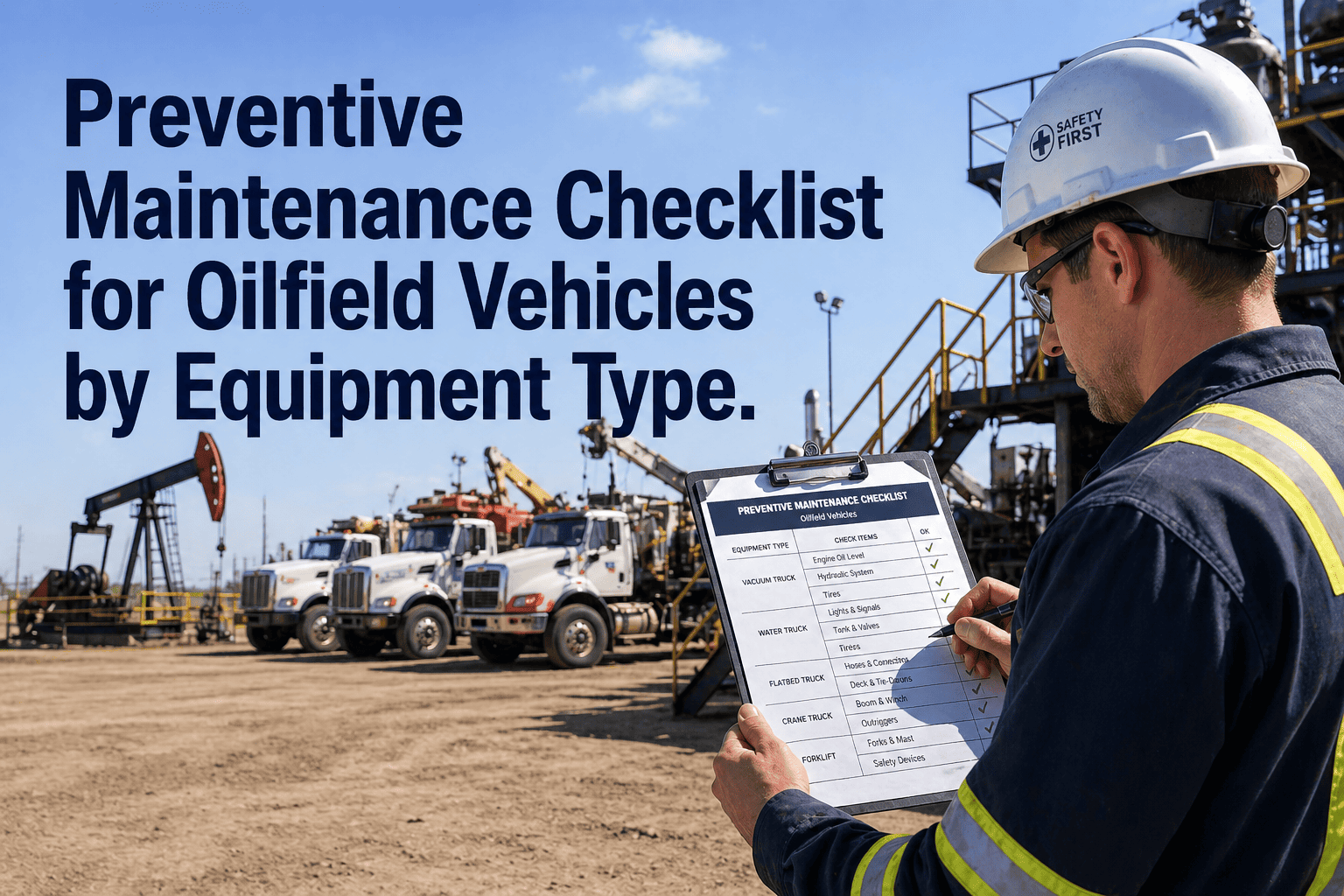
Preventive Maintenance Checklist for Oilfield Vehicles by Equipment Type
Six vehicle-type-specific PM protocols built for field conditions — frac trucks, wireline units, cement mixers, water haulers, hot oilers, and service trucks. Engine-hour calibrated, not mileage-based. Deploy every checklist digitally in FleetRabbit in 5–7 days.
Frac Truck Preventive Maintenance Checklist
Frac trucks operate under the most extreme mechanical stress profile in oilfield fleet operations — continuous high-pressure pumping operations at full engine load for extended shift periods, with thermal cycling between cold startup and sustained high-temperature operation. Standard PM intervals are insufficient: frac truck engine hours accumulate 4–5× faster than highway trucks and high-pressure pump components require inspection at every 250-hour interval without exception.
Stop Using Mileage Schedules for Oilfield Equipment That Never Drives
Frac trucks accumulate 4–5× more engine hours per mile than highway vehicles. FleetRabbit's engine-hour PM engine triggers every service interval at the correct operating hour threshold — not the odometer reading that has barely moved since the last service.
Wireline Unit Preventive Maintenance Checklist
Wireline units make multiple daily wellsite visits with frequent short-duration engine cycles, cable drum operation, and wellhead pressure connection sequences. The PM priority for wireline units centres on electrical and hydraulic systems — with cable drum tension monitoring, sheave wear assessment, and wellhead interface equipment certification forming the compliance backbone that standard vehicle PM schedules never address.
Cement Mixer & Pump Truck Preventive Maintenance Checklist
Oilfield cement trucks operate under cement slurry chemical exposure conditions that accelerate corrosion of mixing systems, pump components, and bulk material handling equipment far beyond standard concrete truck wear profiles. Chemical attack from cement alkalinity, silica flour abrasion, and acid additive exposure creates unique PM priorities not addressed by standard mixer maintenance schedules.
Water Hauler & Produced Water Transport Preventive Maintenance
Water haulers in oilfield operations carry produced water, fresh completion water, and flowback fluid — each with different corrosive properties, regulatory transport obligations, and tank system maintenance requirements. Produced water transport introduces chloride stress corrosion cracking risk in tank structures that fresh water haulers do not face. PM schedules must differentiate by fluid type, not just vehicle operating hours.
Hot Oiler & Steam Truck Preventive Maintenance Checklist
Hot oilers and steam trucks operate at the intersection of combustion equipment, pressurised fluid systems, and classified hazardous area requirements that create a multi-layer PM and certification obligation beyond any other vehicle type in oilfield fleet operations. Burner systems, heat exchangers, pressure relief valves, and ATEX-rated components each carry independent service and certification intervals that must be tracked simultaneously.
Service Truck & Light Fleet Preventive Maintenance Checklist
Service trucks and light fleet vehicles in oilfield operations accumulate damage through lease road operation, wellsite manoeuvring, and frequent loading/unloading cycles that standard manufacturer PM schedules — designed for highway operation — systematically underestimate. Tyre wear, suspension deterioration, and brake wear occur at 2–3× the rate of highway equivalents and require adjusted inspection intervals to prevent remote breakdown events.
FleetRabbit PM Compliance Coverage by Region
Frequently Asked Questions
Deploy All Six Vehicle PM Protocols Digitally in FleetRabbit — Configured to Your Fleet in 5–7 Days
Every PM checklist in this guide deploys as a structured engine-hour-triggered work order in FleetRabbit — calibrated to your vehicle types, your operating basins, and your regulatory jurisdiction. Stop managing oilfield PM on mileage schedules designed for highway trucks. Start preventing the field breakdowns that cost $500,000 per hour.