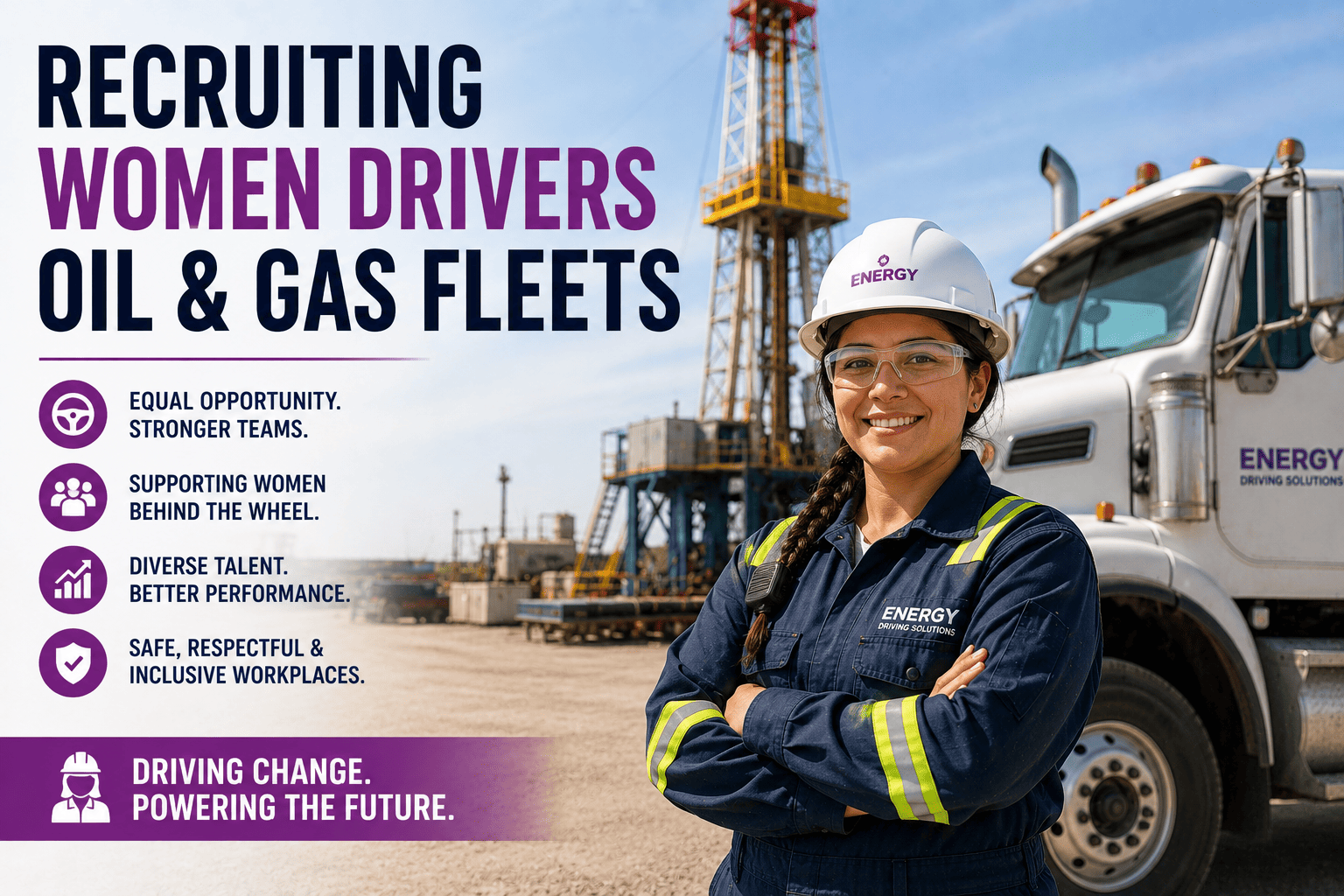
Women now make up roughly 10 to 12.5 percent of drivers on the road, up from under 8 percent less than a decade ago, yet oil and gas fleets still recruit as if that shift never happened. In an industry short tens of thousands of drivers, treating half the population as an afterthought is not just a fairness problem, it is a talent pipeline a fleet cannot afford to ignore. The fleets pulling ahead are not just posting job ads with different photos, they are rebuilding onboarding, mentorship, and day-to-day scheduling around what actually keeps a woman driver on the payroll past her first year. Sign up at https://ai.fleetrabbit.com to see how fleet technology supports that kind of onboarding in practice.
Women make up 10 to 12.5 percent of truck drivers in 2026, growing steadily but still facing a culture 58 percent describe as male dominated. Oil and gas fleets recruit women successfully by pairing genuine outreach with structural fixes, mentorship, equipment sized for women, transparent pay, and fair scheduling, since recruitment ads alone rarely convert into long-term retention.
Where Women Stand in Today's Trucking and Oilfield Workforce
The growth is real. Women's participation in trucking has climbed from under 8 percent in 2018 to somewhere between 10 and 12.5 percent today, and the rate of women in trucking executive roles has grown even faster year over year. Pay is closer to parity than many assume too, with female drivers earning about 92 cents per male dollar in trucking overall, and median annual wages for female heavy truck drivers sitting near 52800 dollars. Female tanker drivers, a category closely tied to oilfield hauling, report a median closer to 62500 dollars annually.
Oilfield Roles Still Lag Behind the Broader Industry
Oil and gas as a whole is not moving as fast as trucking overall. Nearly half of energy professionals are now 45 or older, and companies are relying on retirees returning as contractors just to bridge the workforce gap, which means the industry cannot afford to keep overlooking an entire recruiting pool. Some major operators have set explicit targets, aiming for women to hold a substantial share of leadership and technical roles by 2030, backed by structural investments like on-site childcare and formal mentorship pipelines rather than recruiting slogans alone.
FleetRabbit helps fleet managers track onboarding progress, mentorship check-ins, and driver satisfaction across every hire, so recruiting investment actually turns into long-term retention. Start your free trial and see the full picture of your driver pipeline.
The Barriers That Keep Recruitment From Converting to Retention
Hiring a woman driver and keeping her on the roster are two different problems, and most fleets only solve the first one. The gap between the two shows up in specific, well-documented friction points, not vague culture talk.
Male-Dominated Culture and Safety Concerns
More than half of women drivers still describe trucking culture as male dominated, and a meaningful share report verbal abuse on the job. These are not abstract complaints, they shape whether a woman driver feels safe walking a dark lot at a fuel stop or comfortable reporting an incident to dispatch without it becoming a bigger problem than the original issue.
Equipment and Facility Gaps
Gear built for an average male frame, from harnesses to PPE to cab ergonomics, creates daily friction that adds up. Six in ten women drivers cite a lack of women-specific equipment as a real barrier, which means a fleet's safety gear budget is itself a recruitment and retention decision, not just a compliance checkbox.
What Gender-Neutral Culture Actually Requires
A gender-neutral culture is not achieved by removing overtly hostile language alone. It requires benefits packages that account for different medical and family needs, facilities that accommodate privacy at remote sites, and recruiting materials that show real women currently on staff rather than stock photography.
| Barrier | What Drivers Report | Practical Fix | Why It Matters |
|---|---|---|---|
| Culture and Safety | 58 percent describe the industry as still male dominated | Clear reporting channels, visible accountability for harassment complaints | Determines whether a new hire feels safe enough to stay past onboarding |
| Equipment Fit | 60 percent cite a lack of women-specific gear and PPE | Stock properly sized harnesses, PPE, and cab accessories as standard inventory | Removes a daily source of friction that has nothing to do with driving skill |
| Training Format | 72 percent want more women-specific training options | Offer women-only training cohorts alongside standard onboarding tracks | Builds early confidence without adding pressure to a mixed-group setting |
| Recruiting Message | Recruiting materials rarely reflect real women already on staff | Feature current employees, not stock photos, in job postings and outreach | Helps prospective hires picture themselves succeeding at the company |
Building a Recruitment and Onboarding Strategy That Works
Converting interest into a long career takes more than an inclusive job posting. The strongest programs treat the first 90 days as the highest-leverage window and build structural support around it.
Mentorship in the First 90 Days
Pairing a new woman driver with an experienced mentor, ideally another woman who has navigated the same early challenges, turns an isolating first few months into a supported one. Weekly check-ins during this window catch frustration before it turns into a resignation letter, and this single practice is repeatedly cited as one of the highest-return retention investments a fleet can make.
Recruiting Materials That Reflect Reality
Something as simple as including real women drivers in recruiting photos and highlighting current employees by name signals a gender-neutral culture more convincingly than any mission statement. Prospective hires need to see themselves succeeding at a company before they will commit to applying.
Structural Support Beyond Hiring Day
Benefits packages that reflect different medical needs, flexible scheduling around family responsibilities, and facilities designed with privacy in mind at remote well sites all matter more than a signing bonus once someone is actually on the job. Booking a demo at https://calendly.com/fleet-rabbit/30min shows how scheduling flexibility and fair dispatch tracking support this kind of structural change.
FleetRabbit tracks onboarding milestones, mentorship touchpoints, and fair dispatch data in one dashboard, so fleet managers can see exactly where a new hire needs support before they consider leaving. Sign up free or book a walkthrough to see it in action.
What Progress Looks Like at Scale
The fleets and operators making the fastest progress are treating this as an infrastructure investment, not a messaging campaign. Major operators have set public targets for women to hold a meaningful share of leadership and field roles by 2030, backed by on-site childcare, parental health coverage, flexible scheduling, and structured mentorship pipelines aimed specifically at technical and field careers. Some national operators have already exceeded their own diversity pledges, showing that these targets are achievable when they are backed by real budget and accountability rather than left as aspirational language in an annual report.
Frequently Asked Questions
Key Takeaways
Women now make up a growing but still small share of the driving workforce, and oilfield fleets that treat this only as a recruiting campaign miss the real opportunity. The barriers that push women out after hiring, culture, equipment fit, and lack of structured support, are well documented and specific enough to fix directly, rather than needing to be solved through vague culture change alone.
Fleets that pair honest recruiting materials with mentorship in the first 90 days, properly sized equipment, and scheduling flexibility see the difference show up in retention numbers, not just hiring numbers. In a labor market this tight, a fleet that treats women drivers as a genuine growth pipeline, not an afterthought, has a real advantage over fleets still competing for the same shrinking pool of traditional hires.
FleetRabbit helps fleet managers track onboarding, mentorship, and fair dispatch data so recruiting investment in women drivers actually turns into long-term retention. Start your free trial today, no credit card required.