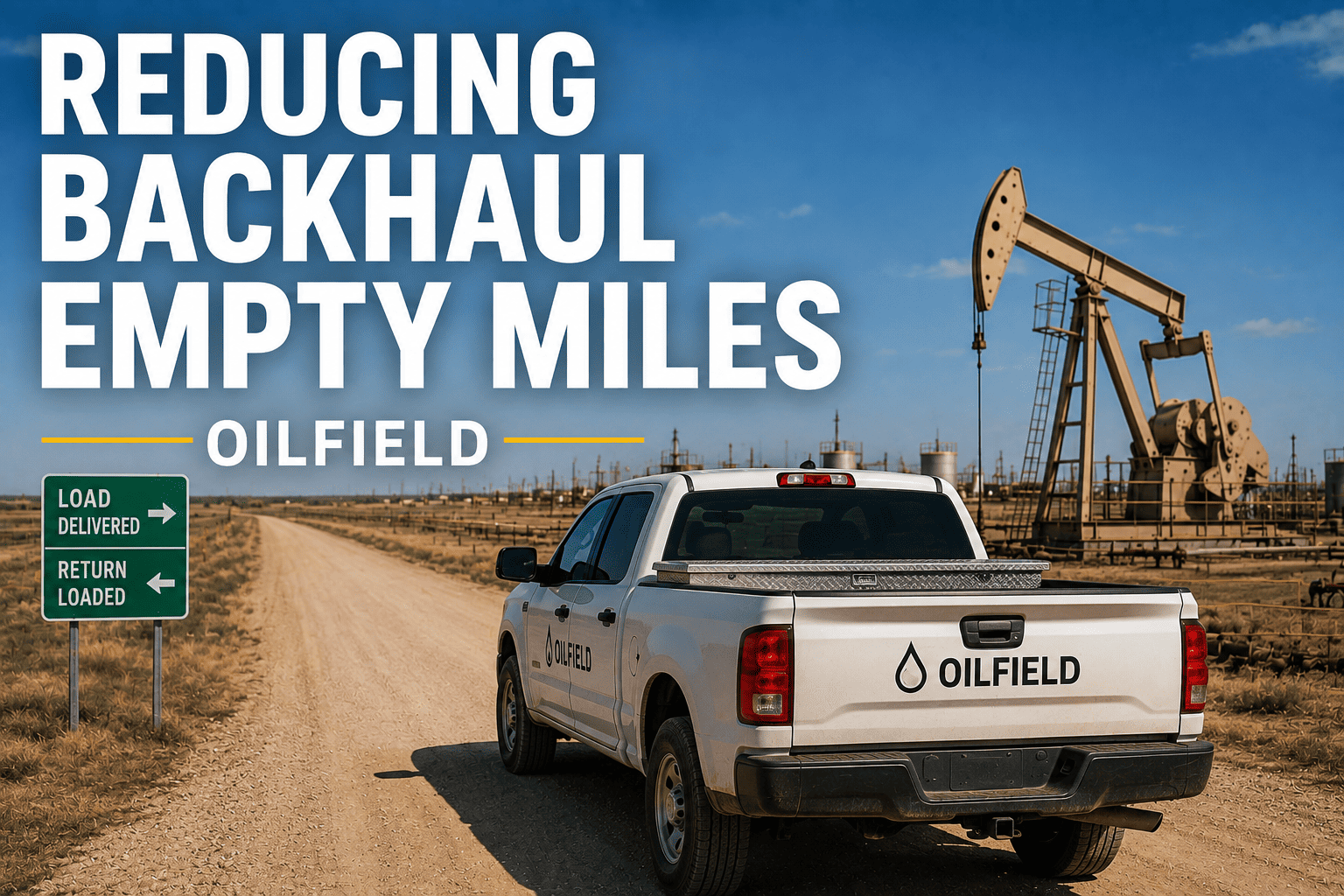
A water truck rolls out to a pad full, does the job, and rolls back empty. A sand hauler drops its load at the wellsite and drives back to the yard with nothing on the bed. Multiply that pattern across dozens of trucks running between pads, disposal sites, and yards every day, and it adds up to thousands of miles a month where the truck is burning fuel, racking up hours, and earning nothing. In oilfield logistics, that empty return leg is called deadhead, and it is one of the quietest, most expensive habits a fleet can fall into.
Oilfield backhaul isn't about scrolling a load board for freight, it's about knowing which truck is closest to which pad, yard, or disposal site at the moment it goes empty. Without real-time visibility into vehicle location and job status, dispatchers coordinate returns from memory and phone calls, and by the time a match gets made, the truck has already driven the miles empty.
What an Empty Mile Actually Costs
Deadhead doesn't just burn fuel. Driver pay accrues whether the bed is loaded or not, tires and brakes wear the same on an empty return as a full one, and every empty mile still counts toward maintenance intervals and depreciation. Industry cost data puts total operating cost per mile, once fuel, driver time, insurance, and wear are included, well above a dollar, meaning an empty 40-mile return from a remote pad can cost more than the value of a small job. Run that pattern across a fleet of thirty or forty trucks moving water, sand, equipment, and fluid across a field every day, and the wasted miles stack into a serious line item most fleets never isolate on their own.
Why Oilfield Backhaul Looks Different From Long-Haul Freight
Most guidance on reducing empty miles is written for over-the-road carriers hunting freight on a load board. Oilfield trucking runs on a different map. Trucks move between a tighter set of points, pads, disposal sites, water stations, sand mines, and equipment yards, often several times in a single shift, and the "backhaul" opportunity is rarely a paying outside load. It's a nearby pad that needs a pickup, an empty tank that should route past a disposal site on the way back, or a piece of equipment sitting at a yard that could ride along instead of triggering its own dedicated trip. The opportunity exists constantly. The problem is that dispatchers usually can't see it in time to act on it.
Common Places Oilfield Fleets Lose Miles
Water hauls returning empty from the pad
A truck delivers fresh or flowback water and heads straight back to the yard instead of routing past a disposal site or another pad that needs a pickup.
Sand and proppant trucks running back light
The bed empties at the wellsite and the truck drives back to the mine or yard with nothing, even when a nearby location needed the same route.
Equipment repositioning trips
A dedicated move for one piece of equipment goes out and back without checking whether another yard or pad along the same route needed something moved.
Idle waiting instead of active matching
A truck finishes early and sits at the pad while dispatch works the phones to find its next job, instead of the next job already being queued.
FleetRabbit gives dispatchers live vehicle location and job completion timing across every pad, yard, and disposal site, so the next job gets queued before a truck ever goes empty. Sign up for FleetRabbit and start closing the gap between delivery and dispatch.
Four Ways to Cut Empty Miles in the Field
Reducing deadhead in an oilfield fleet doesn't require restructuring the whole operation. It starts with giving dispatch the visibility to plan the return leg before the truck ever leaves the pad.
Track live location and job status for every truck
Dispatchers can only match the closest available truck to the next job if they can see every vehicle's position and status at once, rather than piecing it together from radio calls.
Flag jobs nearing completion before they finish
An alert an hour before a delivery wraps up gives dispatch time to line up the next stop instead of scrambling once the truck is already empty and idle.
Route disposal and yard stops along the return path
A water truck heading back doesn't need a dedicated disposal trip if the site sits along its normal return route and dispatch knows to route it there.
Track empty miles by truck and by route every week
A deadhead number nobody reviews quietly grows. A number checked weekly, broken down by vehicle and route, gets managed and steadily improved.
What Closing the Gap Actually Delivers
More Loaded Miles Per Truck
Turning empty return legs into productive stops increases the revenue-generating share of every shift without adding a single vehicle.
Lower Fuel Spend Per Job
Fewer wasted miles means less diesel burned for the same amount of completed work across the fleet.
Reduced Wear on Trucks and Equipment
Tires, brakes, and drivetrains wear the same whether a truck is loaded or empty, so cutting deadhead directly slows maintenance intervals.
Faster Dispatch Decisions
Live visibility replaces phone-call coordination, so the next assignment happens in seconds instead of the truck sitting idle at the pad.
Turning Visibility Into Fewer Empty Miles
FleetRabbit gives dispatchers a live map of every truck's location, job status, and estimated completion time across the field, so backhaul matching can start before a vehicle ever finishes its current job. Instead of discovering an empty truck after the fact, dispatch sees it coming and already has the next stop lined up. You can sign up and see your fleet's current deadhead exposure right away, or book a demo to walk through how live backhaul matching would work across your specific pads and routes.
Frequently Asked Questions
Every empty return trip is fuel, wear, and driver time with zero revenue behind it. FleetRabbit gives dispatchers the live visibility to line up the next job before a truck ever goes empty, turning wasted miles into productive ones across your entire fleet.