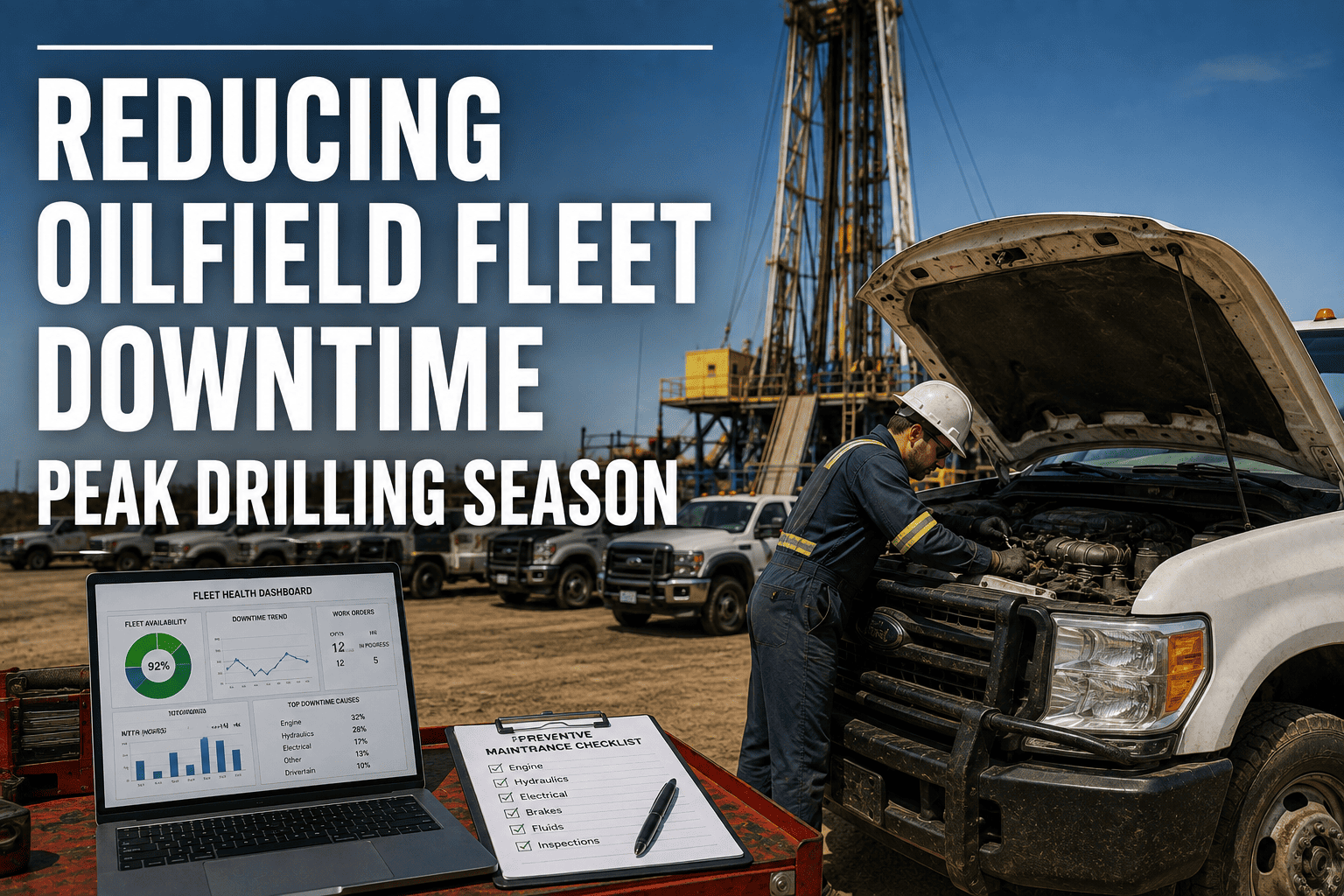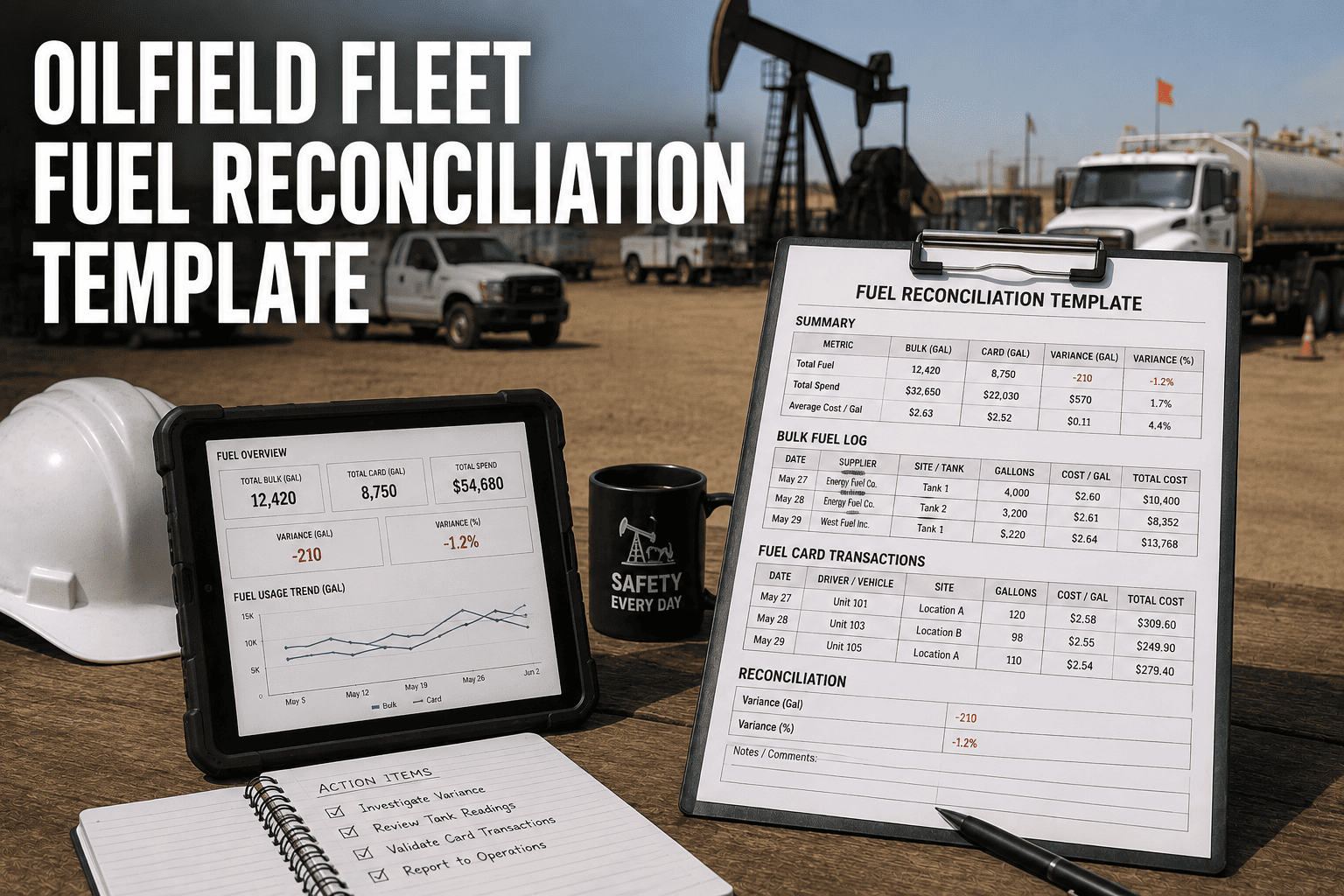
A truck parked at the rig floor with its engine running is not doing any work, but it is still burning diesel every single minute. Multiply that across a fleet waiting on crews, permits, and weather delays throughout the day, and idle time quietly becomes one of the largest fuel expenses an oilfield operation carries, even though not a single mile was driven or a single job completed. Most fleet managers know idling wastes fuel. Few know exactly which vehicles, which drivers, and which well sites are responsible for the bulk of it, which is exactly why the waste keeps compounding month after month.
Excessive idling during field wait times, crew breaks, and unnecessary engine operation consumes 15 to 25 percent of total fuel expenditure without any productive output. A diesel engine burns 0.8 to 1 gallon per hour at idle, and a typical 100-vehicle oilfield fleet loses 180,000 to 340,000 dollars annually to fuel waste, idle time being the single largest contributor. FleetRabbit identifies exactly which vehicles, drivers, and locations are driving that number so fleets can fix it directly.
The True Cost of Excessive Idle in Oilfield Fleets
Fuel is the second-largest operating expense after labor for most oilfield service fleets, and idle time is one of the most controllable pieces of it because it produces zero output. A vehicle idling at 0.8 to 1 gallon per hour for three hours a day burns 2.4 to 3 gallons of pure waste before it ever moves. Across a full year of field operations, that pattern per vehicle turns into thousands of dollars, and across a fleet of dozens or hundreds of vehicles, the number becomes impossible to ignore.
Idle Waste Scales With Fleet Size
A 50-vehicle oilfield operation wastes between 80,000 and 250,000 dollars annually on fuel inefficiencies that traditional management systems simply cannot see, much of it concentrated in idle time at well sites and during crew wait periods. A 100-vehicle fleet sees that number climb to 180,000 to 340,000 dollars, and a 200-vehicle fleet implementing full idle monitoring and coaching has recovered 520,000 to 840,000 dollars annually once the pattern was corrected.
The Gap Between Awareness and Action
Most drivers are not intentionally wasting fuel, they simply have no visibility into how much a routine wait at the rig floor is costing. Once idle data reaches dispatch and drivers directly, correction happens fast. Fleets ready to see their own idle number can book a demo and get a direct look at where the waste is concentrated.
FleetRabbit tracks idle time against engine run time for every vehicle, flags violations against custom thresholds, and delivers driver-specific reports so coaching targets the right people instead of the whole fleet. Start seeing your idle numbers today.
Where Excessive Idle Actually Comes From
Not all idle time looks the same, and treating it as a single number is exactly why so much of it goes unmanaged. Each source below has its own pattern, its own fuel burn rate, and its own fix.
Rig Floor and Site Wait Time
Vehicles queued at a well site waiting on crews, permits, or equipment often sit with engines running for hours. This is the largest single source of excessive idle in oilfield fleets and the easiest to correct once a threshold policy is in place.
Auxiliary Equipment and Cab Climate
Powering onboard equipment or keeping a cab heated or cooled during breaks is a legitimate need, but it still burns 1 to 2 gallons an hour. Separating this necessary idle from avoidable idle is critical so coaching targets the right behavior instead of penalizing valid use.
Habitual Idle Without a Threshold
Some drivers simply leave the engine running out of habit, unaware of a company idle policy or unaware anyone is tracking it. A defined threshold, typically around 15 minutes, paired with in-cab alerts closes this gap almost immediately.
| Idle Source | Typical Fuel Burn | Root Cause | FleetRabbit Fix |
|---|---|---|---|
| Rig Floor Wait Time | 0.8 to 1 gallon per hour, often 2 to 3 hours daily | Vehicles wait with engine on for crews, permits, or equipment | Geofenced idle tracking with automatic threshold alerts |
| Cab Climate and Auxiliary Power | 1 to 2 gallons per hour | Necessary comfort or equipment power during breaks | Contextual idle classification separating necessary from excessive |
| Habitual Unmanaged Idle | Varies, compounds daily without correction | No defined threshold or driver awareness of tracking | In-cab text-to-speech alerts at configurable thresholds |
| Reconciliation Lag | Fuel consumption anomalies discovered 20 to 30 days late | End-of-month reporting instead of real-time visibility | Real-time fuel efficiency calculation by vehicle and driver |
From Idle Data to Fuel Savings
Seeing the number is only the first step. Turning it into savings comes down to comparing where a fleet starts and where consistent monitoring and coaching take it.
That 1.7-hour daily reduction, at 4 liters an hour and 1.40 dollars a liter across 240 operating days, saves roughly 2,280 dollars per vehicle annually. Across a 280-vehicle fleet, the same correction recovered 638,000 dollars in a single year. The pattern is consistent across fleet sizes: once idle time becomes visible and measurable, it drops, because awareness and accountability change behavior faster than any policy memo ever could.
FleetRabbit's fuel management engine monitors tank telemetry, GPS position, and engine ignition status together, giving fleet managers a single number for every vehicle and driver instead of a black box expense. Sign up now and start monitoring within 72 hours.
Idle Metrics Fleet Managers Should Track
Reducing idle waste depends on tracking a few specific numbers consistently, not on generic fuel spending reports that surface problems weeks after they happen.
Idle Time Percentage by Vehicle and Driver
Ranking every vehicle and driver by idle percentage instantly surfaces outliers. A vehicle running 32 percent above the fleet average on cost per mile is usually a sign of excessive idle time or routing inefficiency worth investigating directly.
Idle-to-Drive Ratio
Comparing total idle hours to total drive hours reveals whether a vehicle's engine time is actually being converted into productive movement. A high ratio signals wait-time idle that dispatch or scheduling changes can directly reduce.
Fuel Consumption Trend
Real-time fuel efficiency calculation by vehicle, driver, and operational area lets managers catch anomalies as they happen rather than discovering fuel consumption anomalies 20 to 30 days after the waste occurred.
Technology Behind Idle Reduction
FleetRabbit's platform continuously aggregates fuel volume, engine ignition status, RPM correlation, idling duration thresholds, GPS coordinates, and geofence validation into a single operational view. Contextual idle analysis distinguishes a truck legitimately waiting inside a well-site geofence from one idling unnecessarily on open road, so coaching and alerts stay accurate instead of generic.
In-cab alerts notify drivers the moment idling crosses a configurable threshold, while supervisor reports roll individual events into driver scorecards that make coaching conversations specific and data-backed instead of anecdotal. Fleets that implement this level of visibility typically see idle-related fuel consumption fall 12 to 18 percent within 60 to 90 days. Ready to see your own fleet's idle breakdown? Sign up and connect your existing telematics in as little as 72 hours.
Key Takeaways on Reducing Fuel Burn From Excessive Idle
Excessive idle is one of the largest, most controllable fuel expenses in oilfield fleet operations, consuming 15 to 25 percent of total fuel spend while producing zero output. A single vehicle can waste thousands of dollars a year on wait-time and habitual idling, and across a 100-vehicle fleet that number climbs to 180,000 to 340,000 dollars annually. Larger fleets implementing full monitoring programs have recovered 520,000 to 840,000 dollars a year once the pattern was corrected.
The fix is not driver lectures, it is visibility. Real-time idle tracking, contextual classification between necessary and wasteful idle, in-cab alerts at configurable thresholds, and driver-specific reporting consistently cut idle-related fuel consumption by 12 to 18 percent within 60 to 90 days, with deeper 30 to 42 percent reductions achievable within 9 months. A fleet moving from 3.1 hours to 1.4 hours of daily idle per vehicle recovers real money fast, and the data infrastructure to get there deploys in days, not months.
The gap between what your fleet is spending on idle fuel today and what is achievable with real-time monitoring is measurable right now. Closing it is one of the fastest wins available to any oilfield fleet manager looking to cut costs without touching routes, headcount, or equipment.
Every hour of unmanaged idle time is diesel burned with zero return. FleetRabbit gives you a clear idle number for every vehicle and driver, flags excessive events in real time, and turns that data into fuel savings within weeks. Sign up for a free trial today, no credit card required.