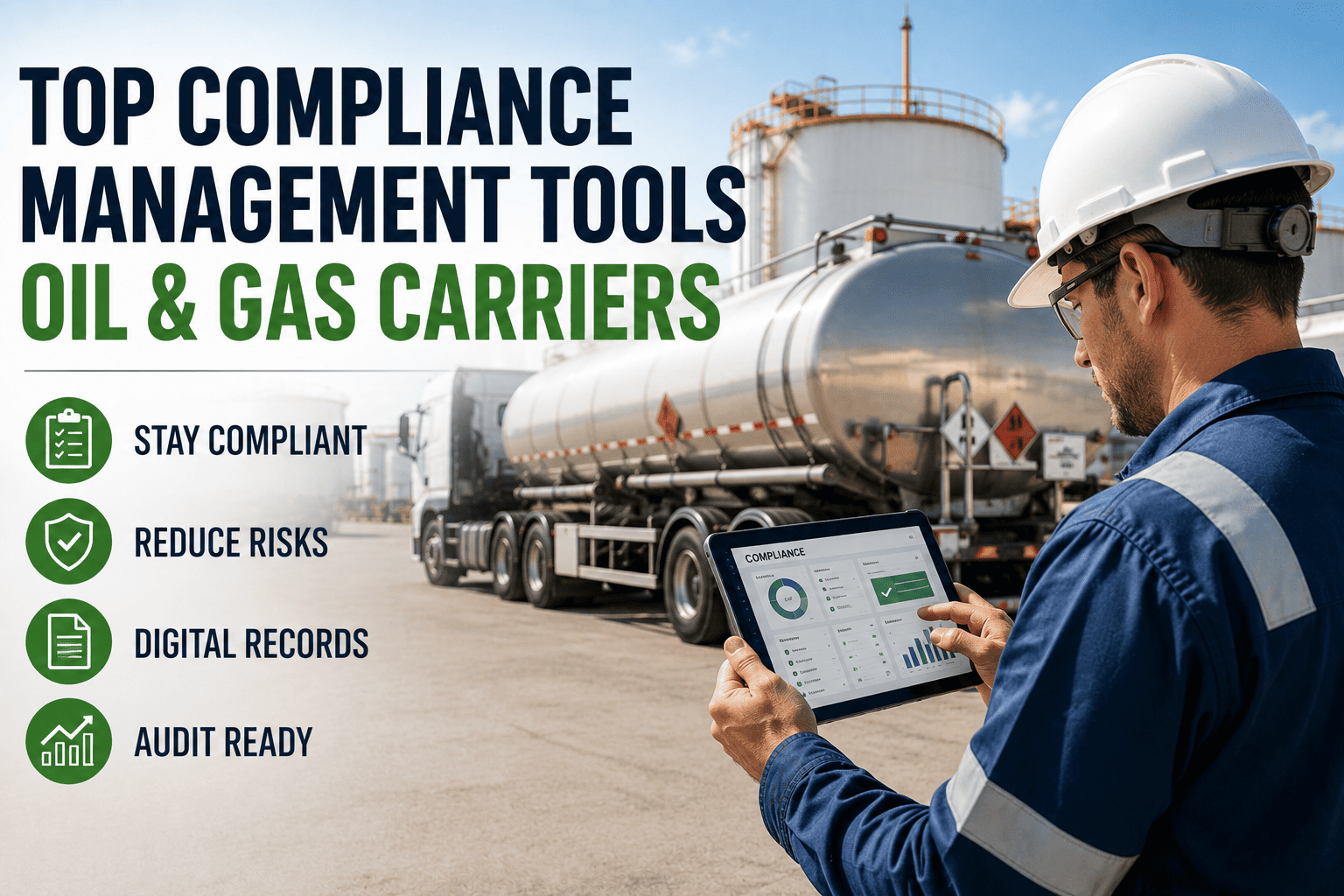
Oil and gas motor carriers operate under some of the toughest regulatory scrutiny in transportation. Between DOT driver qualification rules, hours-of-service tracking, hazmat documentation, and CSA scoring, a single missed record can trigger fines, an out-of-service order, or a failed audit that stalls an entire fleet at the wellsite gate. Choosing the right compliance management tool is no longer a back-office decision. It is the difference between a fleet that passes inspections without a second thought and one that scrambles every time an auditor calls.
The best compliance management tools for oil and gas carriers combine driver qualification file tracking, hours-of-service and ELD monitoring, DOT inspection management, and CSA score visibility in one platform. Carriers using automated compliance software cut audit prep time by 60 to 80 percent and reduce roadside violation rates significantly compared to paper-based tracking. Sign up free or book a demo to see how FleetRabbit brings all four together.
Why Compliance Is Harder for Oil and Gas Fleets
Oilfield carriers do not just follow standard FMCSA rules. They operate under an overlapping stack of DOT, PHMSA, and often state-level oilfield regulations, while running drivers through remote wellsites, short-haul routes, and waiting-time provisions that ordinary trucking software rarely accounts for. A compliance tool built for general freight often misses the nuances that oil and gas dispatchers deal with every day.
What a Compliance Management Tool Should Actually Do
Not every fleet software claiming to handle "compliance" covers what an oil and gas carrier actually needs. Before comparing tools, it helps to know the core functions that separate a genuinely useful platform from a glorified filing cabinet.
Driver Qualification File Automation
A strong tool tracks CDL expirations, medical examiner certificates, MVR pulls, and Clearinghouse queries automatically, flagging any driver whose file is about to lapse before it becomes a violation. Manually managing driver qualification files across dozens of drivers is one of the most common points of audit failure for oilfield fleets.
Hours of Service and ELD Oversight
Because oilfield routes often involve wellsite waiting time, a compliance platform needs to surface HOS exceptions clearly, not bury them in raw ELD logs. Dispatchers should be able to see violations forming in real time, not after a driver is already out of hours on a remote pad.
DOT Inspection and DVIR Tracking
Pre-trip and post-trip inspection reports need to be captured digitally, timestamped, and instantly retrievable. A tool that turns paper DVIRs into searchable digital records removes one of the biggest friction points during a roadside or compliance review.
CSA Score Monitoring
The best platforms translate raw violation data into a clear CSA BASIC score trend, so fleet managers can see which category — vehicle maintenance, driver fitness, or hours of service — is quietly pulling the fleet's safety rating down.
Centralized Document Retention
Retention rules vary by record type, from three years for driver qualification files to longer windows for certain drug and alcohol test results. A tool that automates retention schedules removes the guesswork of what to keep and for how long.
FleetRabbit brings driver qualification files, ELD data, DVIRs, and CSA monitoring into a single dashboard built for oil and gas fleet managers. Sign up free and see your fleet's compliance status in minutes, or book a demo to walk through it with our team.
Comparing Compliance Tool Capabilities
Use this comparison to evaluate any compliance platform you are considering. The categories below reflect what oil and gas carriers should prioritize, based on where oilfield audits and roadside inspections tend to find gaps.
| Capability | Why It Matters for Oil & Gas | What Weak Tools Miss | What FleetRabbit Delivers |
|---|---|---|---|
| Driver Qualification Files | Prevents the single most common audit failure point for oilfield carriers | Manual expiration tracking, scattered paper files | Automated alerts before CDL, medical cert, or MVR renewal deadlines |
| Hours of Service | Wellsite waiting time complicates standard HOS accounting | Raw log exports with no exception visibility | Real-time HOS dashboards with violation flags before they happen |
| DVIR and Maintenance | Heavy oilfield equipment faces more frequent roadside checks | Paper inspection sheets that are hard to retrieve on demand | Digital DVIRs searchable instantly during any review |
| CSA Score Tracking | Determines audit frequency and insurance premium exposure | Static reports updated monthly or less | Live BASIC score trends by category |
| Record Retention | Retention periods vary by document type and can trigger fines if missed | No automated retention scheduling | Built-in retention timelines for every document type |
Choosing the Right Tool for Your Fleet
Fleet size, route type, and hazmat exposure all shape which compliance features matter most. A small oilfield hauler running a handful of trucks between a few wellsites has different priorities than a regional carrier managing hundreds of drivers across multiple basins.
Small and Growing Fleets
Carriers running under 15 vehicles benefit most from automated driver qualification tracking and DVIR digitization, since these fleets often lack a dedicated compliance staff member and need the software to do the flagging for them.
Mid-Size Regional Carriers
Fleets in the 15 to 75 vehicle range typically need stronger CSA score analytics and HOS exception reporting, because a single compliance manager is usually overseeing multiple terminals and cannot review every log manually.
Large Multi-Basin Operations
Larger oilfield carriers need integration across telematics, fuel systems, and compliance data so that safety, maintenance, and dispatch teams are working from the same records rather than three disconnected systems.
The Bottom Line for Fleet Managers
Oil and gas motor carriers cannot afford to treat compliance as a monthly paperwork chore. Between hazmat documentation, wellsite hours-of-service nuances, and frequent roadside inspections, the fleets that stay ahead are the ones running on a single platform that automates driver files, tracks HOS in real time, digitizes inspections, and surfaces CSA trends before they become a problem. The right tool turns compliance from a source of stress into a quiet, background process that just works.
If your team is still tracking driver qualification files in spreadsheets or chasing paper DVIRs after every trip, it may be time for a change. Sign up free to see your compliance status organized in one place, or book a demo to talk through your fleet's specific challenges with our team.
FleetRabbit centralizes driver qualification files, hours-of-service data, DVIRs, and CSA score tracking so oil and gas carriers can stop chasing paperwork and start operating with confidence. Start your free trial today with no credit card required.