In the heavily regulated oilfield industry, DOT penalties are a massive threat to profitability and operational continuity. Compliance pitfalls like outdated driver files, missed vehicle inspections, and HOS violations can trigger massive fines and out-of-service orders. Identifying these compliance gaps before an audit occurs is critical for survival. FleetRabbit provides the digital tools to automate your compliance management and keep your operation audit-ready. You can sign up for FleetRabbit to secure your operations, or book a demo to see our compliance platform.
Oilfield fleets face an average of 5,000 to 15,000 dollars in DOT penalties per audit due to easily preventable compliance mistakes. Outdated DQ files, missed DVIRs, and HOS log violations are the top triggers. Implementing automated compliance tracking reduces DOT fines by up to 90 percent and prevents costly out-of-service orders.
The True Cost of DOT Penalties in the Oilfield
The true cost of DOT penalties extends far beyond the initial fine printed on the citation. When an oilfield fleet fails a compliance audit, the financial damage ripples across the entire operation. The immediate fine, often ranging from 5,000 to 15,000 dollars, is just the tip of the iceberg. If the violation results in an out-of-service (OOS) order, the truck is parked, sometimes for days, leading to massive lost revenue. Furthermore, repeat violations degrade your CSA (Compliance, Safety, Accountability) scores, triggering more frequent roadside inspections and alienating oilfield operators who require high safety ratings from their contractors.
Why Oilfield Fleets Fail Compliance Audits
Oilfield fleets fail compliance audits because they rely on manual, paper-based processes to manage complex regulatory requirements. A safety manager trying to track 50 drivers' medical cards, licenses, and training records on a spreadsheet is destined to miss expiration dates. Furthermore, the remote nature of oilfield work means drivers are often miles away from the terminal, making it difficult to collect and file paper DVIRs and accident reports. When the DOT arrives for an audit, these paper records are often incomplete, disorganized, or missing entirely, leading to automatic, severe penalties.
The Danger of Incomplete Records
The danger of incomplete records cannot be overstated. If you cannot produce a document during a DOT audit, it is assumed you never had it. If a truck is involved in an accident and you cannot produce a valid, signed pre-trip DVIR for that day, your fleet is automatically exposed to gross negligence liability. Incomplete maintenance records also prevent you from proving that a defect was repaired, leading to repeat violation penalties. To digitize your records, you can sign up for FleetRabbit to secure your operations, or book a demo to see our compliance platform.
FleetRabbit digitizes DQ files, enforces digital DVIRs, and tracks HOS in real-time. Stop risking massive DOT penalties and out-of-service orders due to paper errors. Start your free trial today to achieve true audit readiness.
Top Compliance Pitfalls to Avoid
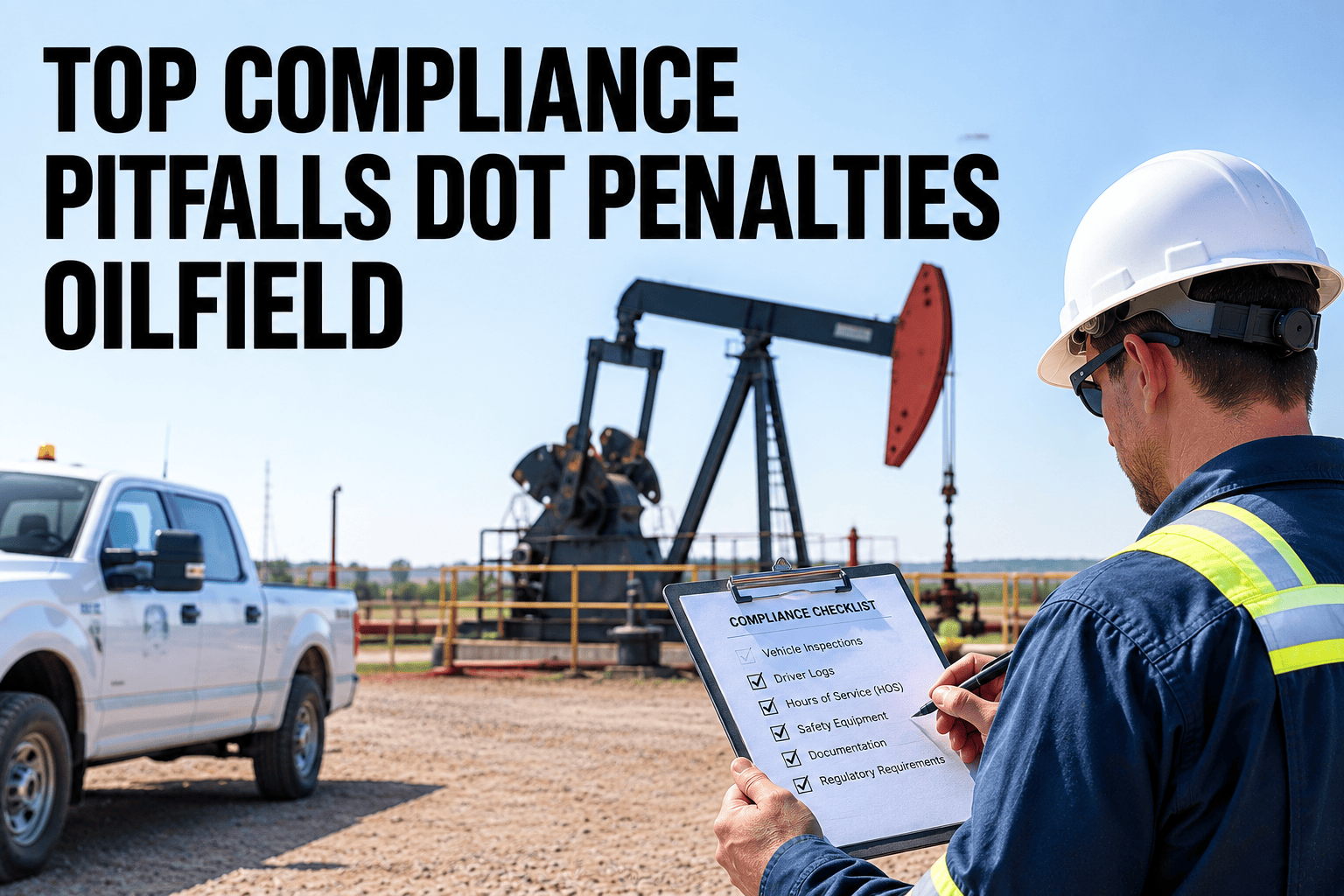
To build a defensible and profitable oilfield fleet, managers must identify and eliminate the most common compliance pitfalls. These specific mistakes are responsible for the vast majority of DOT penalties and CSA score degradations. By addressing these gaps with digital tools and proactive workflows, fleets can transform their safety program from a liability into an asset.
| Compliance Pitfall | Description & Impact | DOT Penalty Risk | FleetRabbit Solution |
|---|---|---|---|
| Expired DQ Files | Missing medical cards, expired licenses, or missing MVRs | 1,000 to 5,000 dollars per driver | Automated DQ file tracking with 30-day expiration alerts |
| Missed DVIRs | Drivers skipping pre-trip inspections to save time | OOS orders and CSA score degradation | Forced mobile app DVIR completion before ignition |
| HOS Violations | Drivers running past their 11 or 14-hour limits | 1,500 to 5,000 dollars per violation | Real-time ELD integration and automated dispatch alerts |
| Incomplete Maintenance | Missing repair records for cited roadside defects | Repeat violation penalties and audits | Digital work orders linked to inspection citations |
| HAZMAT Errors | Improper placarding or missing shipping papers | 5,000 to 15,000 dollars per incident | Digital HAZMAT checklists and document storage |
| Driver Coaching | No documentation of corrective action for speeding | Negligence liability in accidents | Telematics-triggered coaching logs with signatures |
Strategies to Close the Compliance Gap
Closing the compliance gap requires a fundamental shift from manual paper chasing to proactive, data-driven workflows. The first strategy is digitizing all Driver Qualification (DQ) files to ensure no expiration dates are missed. The second strategy is enforcing digital DVIRs that require GPS and time verification to prevent pencil-whipping. The third strategy is connecting HOS tracking directly to dispatch, so no driver is assigned a load they do not have the legal hours to complete. By executing these strategies, fleets eliminate the blind spots that lead to massive DOT penalties.
Digitizing Driver Qualification Files
Digitizing Driver Qualification files is the most critical step for passing a DOT audit. A driver's medical card, CDL, and MVR must be valid at all times. FleetRabbit's system stores these documents digitally and automatically sends alerts 30, 15, and 5 days before an expiration date. If a driver fails to upload a renewed medical card before the deadline, the system flags them as ineligible to drive, preventing the fleet from accidentally dispatching an unqualified driver. This automation completely eliminates the most common audit failure.
Enforcing Real-Time HOS Tracking
Enforcing real-time HOS tracking means dispatch and safety teams know exactly how many hours a driver has left to work at any given moment. During an oilfield surge, dispatchers are tempted to push drivers past their limits. FleetRabbit's dashboard displays a live grid of all drivers, showing their current status and exact remaining hours. The system alerts dispatch when a driver is approaching their limit, preventing the assignment of loads that will result in an HOS violation. To enforce real-time tracking, you can sign up for FleetRabbit to secure your operations, or book a demo to see our compliance platform.
How FleetRabbit Ensures Audit Readiness
Modern compliance management requires technology that connects the field directly to the safety team instantly. FleetRabbit's integrated platform combines digital DVIRs, ELD data, and document management into a single dashboard. When the DOT arrives for an audit, you can generate comprehensive safety reports in seconds. Digital logs show exactly when an inspection was completed, who signed off on a repair, and when a driver received coaching. This rapid response capability demonstrates operational control and significantly deters deep-dive penalties during audits.
Automated DVIR Compliance
Automated DVIR compliance removes the human error from inspection tracking. The FleetRabbit mobile app requires the driver to physically interact with the device at the exact time of inspection, capturing GPS coordinates and timestamps. If a defect is found, the system automatically locks the vehicle out of service until a mechanic signs off on the repair. This creates an unbreakable digital trail proving the fleet prioritized safety over schedule, defending the company during accident investigations.
Centralized Document Management
Centralized document management ensures that every critical compliance record is stored in the cloud, accessible from anywhere. Accident reports, drug testing results, and HAZMAT shipping papers are attached directly to the driver or vehicle profile. When a DOT auditor asks to see a specific record, your safety team can pull it up in seconds, rather than digging through filing cabinets. This level of organization prevents the "incomplete records" penalty that plagues so many oilfield fleets.
Key Takeaways for Fleet Compliance
Avoiding top compliance pitfalls is the most critical step in protecting an oilfield fleet's profitability and operational continuity. Relying on paper logs and manual tracking is a recipe for DOT penalties and out-of-service orders. A data-driven, proactive approach to compliance ensures that every DQ file is valid, every inspection is completed, and every hour is tracked accurately. Fleets that fix these mistakes see a 90 percent reduction in DOT fines and a significantly improved CSA score.
Implementing a comprehensive platform like FleetRabbit automates DQ file tracking, digitizes DVIRs, and connects HOS to dispatch. The return on investment is immediate, not just in prevented fines, but in protected contract SLAs, reduced accident liability, and eliminated administrative overhead. Oilfield operators demand safe, compliant contractors, and FleetRabbit provides the exact digital documentation needed to prove it.
The path forward is clear. Evaluate your current compliance program and ask if you are ready for a surprise DOT audit tomorrow. If you are relying on paper, you are at risk. Fleet managers who address compliance systematically protect their profitability and operational reliability. You can sign up for FleetRabbit to secure your operations, or book a demo to see our compliance platform.
Frequently Asked Questions About DOT Penalties
Every day you rely on paper logs and manual tracking is a day you risk massive fines and out-of-service orders. FleetRabbit automates your DQ files, digitizes your DVIRs, and tracks HOS in real-time. See a 90 percent reduction in compliance fines within weeks. Start your free trial today with no credit card required.