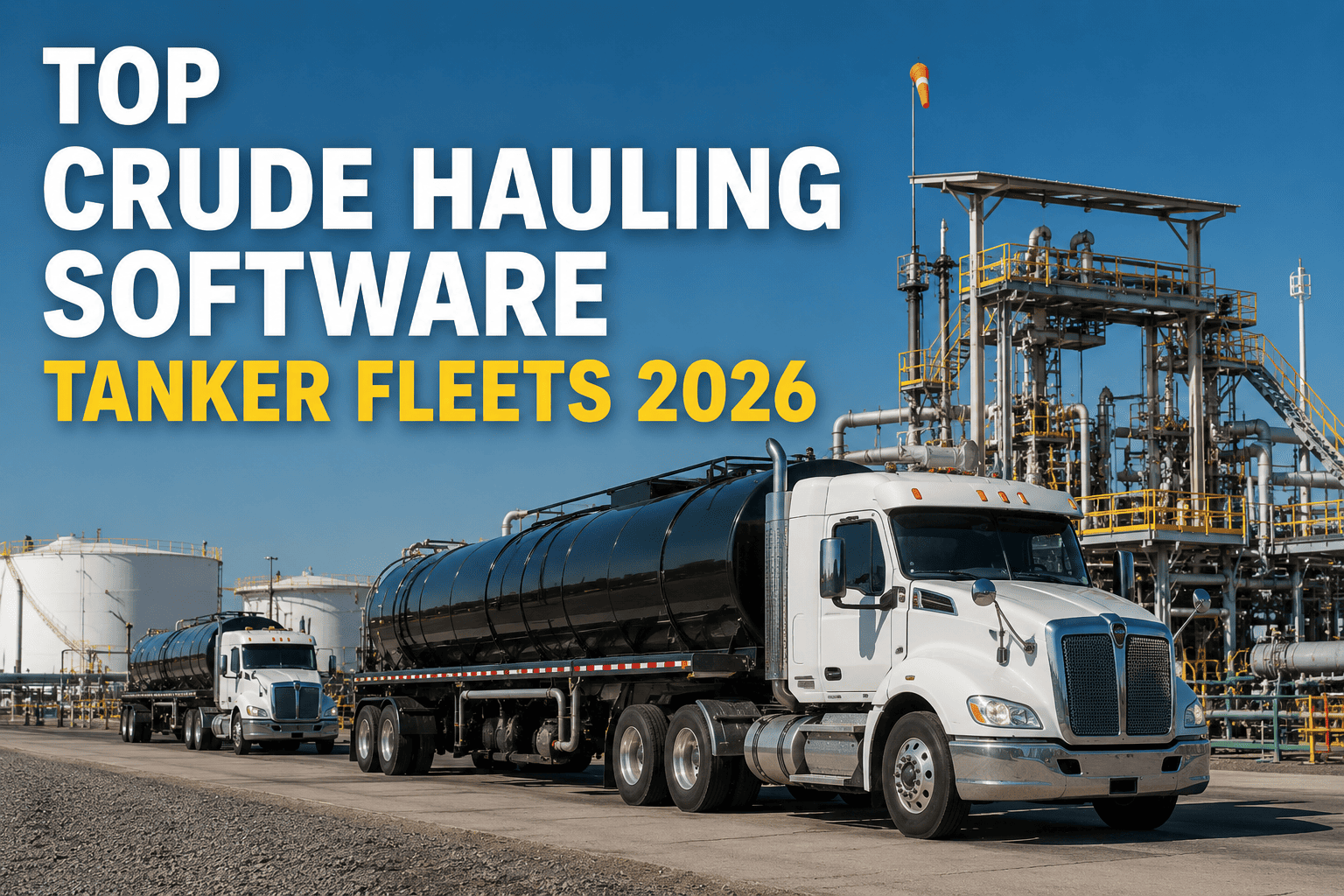
Crude oil never sits still, and neither can the trucks that haul it. Every load carries a ticket, a BOL, a detention clock, and a compliance requirement that has to be captured correctly the first time. When that process still runs on paper or scattered spreadsheets, oilfield tanker fleets lose barrels, lose hours, and lose money before the invoice is ever cut. Choosing the right crude hauling software in 2026 is no longer a back-office decision. It is the difference between a fleet that gets paid fast and one that chases missing tickets for weeks.
What Crude Hauling Software Actually Needs To Handle
Hauling crude oil is not the same job as hauling general freight, and software built for dry van trucking rarely survives contact with a lease site. A tanker fleet moving crude needs a platform that understands gauger tickets, run tickets, net BBL calculations, temperature and gravity corrections, and the compliance paperwork that follows every barrel from wellhead to pipeline or terminal. It also needs to talk to dispatch in real time, because a truck idling at a lease waiting on a signature is a truck that is not making its next load.
Core Capabilities That Separate Real Crude Software From General TMS Tools
Electronic ticketing sits at the center of everything. A driver capturing a run ticket on a mobile device, with GPS and timestamp attached, removes the guesswork that paper tickets always introduce. From there, automated BOL generation, detention tracking, and volume reconciliation need to flow into billing without a second round of manual entry. Fleets that still re-key ticket data into their accounting system are paying for the same work twice.
Electronic Field Ticketing
Captures gross and net barrels, gravity, and temperature at the point of pickup, replacing handwritten tickets that get lost, smudged, or disputed later.
Automated BOL & E-Invoicing
Generates bills of lading and invoices directly from completed ticket data, cutting the days-long gap between a delivered load and a paid invoice.
Detention & Demurrage Tracking
Flags wait time at lease sites and terminals automatically, so detention charges are backed by data instead of a driver's memory.
Live Dispatch & Routing
Assigns the closest available tanker to the next lease pickup, cutting deadhead miles and keeping trucks moving instead of idling.
If you want to see how these capabilities work together on a live fleet before committing to a platform, you can sign up for a free trial and run it against your own routes and tickets.
Comparing The Top Crude Hauling Software Categories In 2026
Most crude hauling platforms fall into a few recognizable categories, and knowing which one you are evaluating helps you ask the right questions during a demo. Some tools are built around field ticketing and compliance, others around dispatch and driver management, and a smaller group tries to unify both into one system. That last category is where fleet-wide efficiency actually shows up, because ticket data, dispatch decisions, and billing all pull from the same source of truth.
| Software Category | Best Suited For | Primary Strength | Common Gap |
|---|---|---|---|
| Field Ticketing & E-Invoicing Platforms | Operators who need clean, auditable barrel data | Accurate net BBL capture and fast invoicing | Limited live dispatch and route optimization |
| Dispatch-First TMS Platforms | Fleets prioritizing truck utilization and scheduling | Real-time load assignment and driver communication | Weaker compliance and detention documentation |
| Unified Crude Hauling Platforms | Fleets that want one system for tickets, dispatch, and billing | Single data source across field, office, and accounting | Longer initial setup and data migration |
| Legacy Petroleum Dispatch Tools | Fleets running fixed rack-to-station routes | Simple, familiar compartment planning | Little flexibility for spot hauls or brokerage work |
FleetRabbit combines electronic ticketing, automated BOLs, detention tracking, and live dispatch in a single platform designed for oilfield tanker operations. Sign up free and load your own lease and terminal data, or book a walkthrough with our team.
How To Choose The Right Platform For Your Fleet
Picking crude hauling software is less about finding the tool with the longest feature list and more about matching a platform to how your fleet actually operates. A five-truck hauler running produced water and a fifty-truck fleet moving crude to three terminals need different levels of complexity, and the wrong fit shows up fast in the form of workarounds and spreadsheets that creep back in within a few months.
Map Your Current Ticket-To-Cash Timeline
Track how long it actually takes a load to go from pickup to paid invoice today. This becomes your baseline for measuring improvement after implementation.
Confirm Mobile Ticketing Works Offline
Lease sites often have poor signal. Make sure drivers can capture tickets offline and have them sync automatically once connectivity returns.
Check Detention And Compliance Reporting
Ask to see an actual detention report and a compliance export, not just a feature slide. This is where most platforms either shine or fall short.
Test Dispatch Under A Busy Day
Run a simulated high-volume day during your demo to see how the dispatch board holds up when several trucks and leases are active at once.
Verify Integration With Accounting And ELDs
A platform that does not connect to your existing accounting system or ELD provider just creates a second set of records to reconcile manually.
Why Fleets Are Standardizing On Unified Platforms This Year
The trend across oilfield trucking in 2026 is consolidation. Fleets that used to run separate tools for ticketing, dispatch, and accounting are moving toward one connected system, mainly because every handoff between disconnected tools is where errors and delays get introduced. A ticket entered once should update dispatch, billing, and compliance records automatically, without a second data entry pass.
What Unified Systems Change In Practice
When ticketing, dispatch, and invoicing share the same data, disputes over volumes drop sharply because everyone is looking at the same net BBL number. Detention claims get backed by GPS-stamped timestamps instead of a driver's recollection. And office staff stop re-typing numbers between systems, which frees up time for actually managing exceptions instead of chasing paperwork. FleetRabbit was built around this exact idea, and you can book a demo to see how it applies to your specific lease and terminal network.
Frequently Asked Questions
FleetRabbit brings electronic ticketing, automated BOLs, detention tracking, and live dispatch into one platform built specifically for crude hauling operations. Sign up free and connect your first lease route today, or book a demo to see it running against your own terminal network.