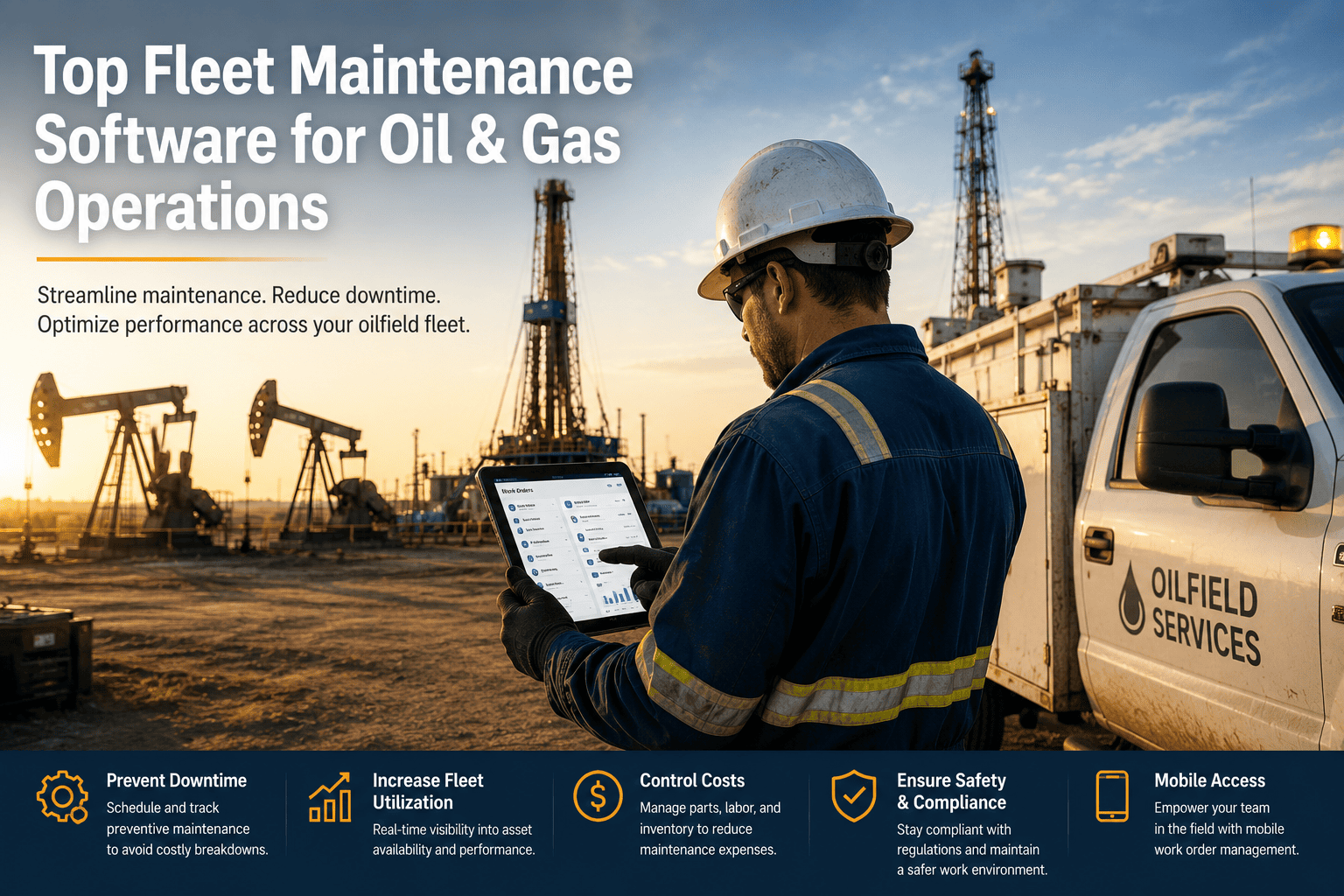
Oil and gas fleet operations across remote basins, lease roads, and wellsite locations demand maintenance software built for harsh conditions: extreme temperatures accelerate component wear, disconnected workflows delay repairs, and compliance requirements create administrative burden. This guide compares top fleet maintenance platforms that help operations teams reduce downtime, maintain audit-ready records, and address issues before they impact safety—using mobile-first tools that work offline in low-connectivity areas.
30–50%
Average reduction in unplanned downtime with predictive maintenance tools
95%+
Work order completion rate with automated scheduling and reminders
15–25 hrs
Monthly admin time saved through digital maintenance workflows
$4–$45
Typical per-vehicle/month pricing range across leading platforms
Manual Maintenance Tracking Creates Costly Downtime. Digital Platforms Streamline Oilfield Fleet Reliability.
Leading fleet maintenance software connects inspection data, telematics, and repair workflows to automate preventive maintenance, flag critical defects, and generate compliance reports—enabling consistent uptime without disrupting field operations or requiring new hardware.
Maintenance Workflow Challenges in Oil and Gas Fleet Operations
Before selecting maintenance software, it is important to understand where manual or disconnected processes create friction in oilfield fleets. Paper logs, siloed systems, and variable connectivity leave maintenance teams without real-time visibility—gaps that structured digital platforms can help address.
Reactive Repairs Increase Downtime Costs
Without predictive alerts or scheduled maintenance triggers, fleets address issues only after failure. Unplanned repairs on remote lease roads incur higher labor, towing, and production delay costs.
Disconnected Inspection and Repair Workflows
When DVIR findings, telematics alerts, and maintenance systems operate separately, defect resolution depends on manual coordination. Critical issues may be delayed without automated work order creation.
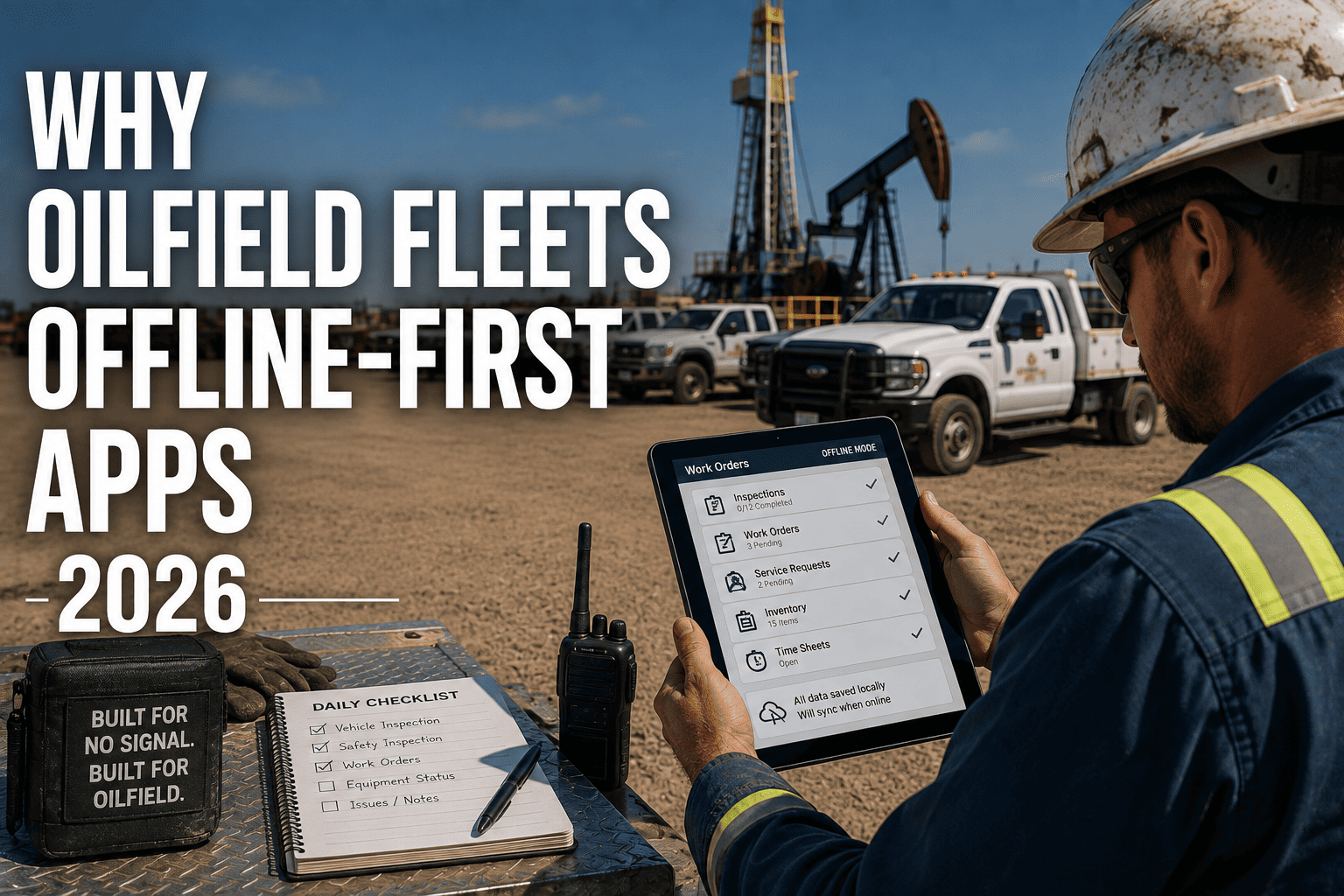
Limited Offline Capability in Remote Basins
Cellular coverage gaps on lease roads and basin locations can interrupt cloud-based maintenance apps. Without offline support, technicians may skip documentation or submit incomplete repair records.
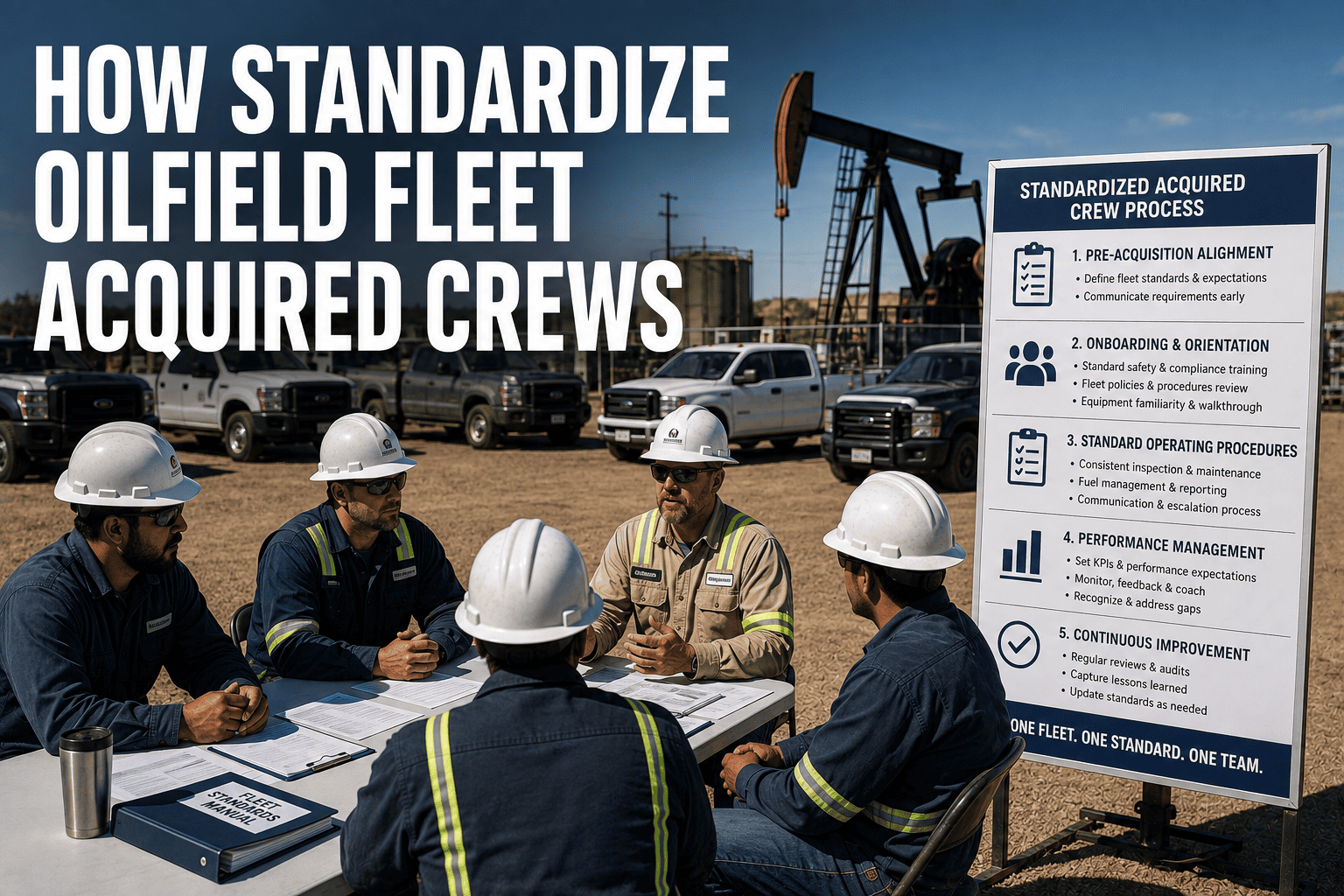
Inconsistent Maintenance Standards Across Teams
Without standardized digital checklists and procedures, maintenance quality varies by location or technician. Critical safety items may be overlooked without structured guidance and validation.
Key Features to Evaluate in Oil & Gas Fleet Maintenance Software
Effective maintenance platforms for oilfield operations combine mobile accessibility, offline functionality, regulatory support, and integration flexibility. Prioritize solutions that align with your fleet's vehicle mix, operating geography, and compliance requirements.
01
Preventive & Predictive Maintenance Scheduling
Automate service intervals based on mileage, engine hours, or calendar triggers. Advanced platforms use telematics data to predict component failures before they occur.
02
Offline-Capable Mobile Work Orders
Technicians create, update, and close work orders via mobile app. Data caches locally when signal is unavailable and syncs automatically when connectivity resumes.
03
Defect-to-Repair Automation
Critical inspection findings automatically generate prioritized work orders. Technicians receive alerts with vehicle history, parts lists, and recommended repair actions.
04
Regulatory Compliance Documentation
All maintenance records are timestamped, user-attributed, and stored with version control. Export FMCSA, OSHA, or state-specific compliance reports in standard formats.
05
Parts & Inventory Management
Track parts usage, set reorder thresholds, and link inventory to work orders. Reduce stockouts on critical components and minimize carrying costs for slow-moving items.
06
Fleet Health Analytics & Reporting
Monitor MTBF, repair costs by vehicle type, and technician productivity. Identify patterns that inform capital planning, driver coaching, or preventive maintenance optimization.
Ready to Reduce Downtime and Streamline Maintenance Workflows?
Get a personalized walkthrough of how digital maintenance software can address your fleet's unique challenges—from remote basin operations to compliance reporting.
Regulatory Framework Support for Maintenance Compliance
Leading maintenance platforms support documentation requirements for safety and environmental regulations commonly faced by oil and gas fleet operators.
FMCSA Maintenance Records
Digital repair logs, preventive maintenance schedules, and defect resolution tracking formatted for FMCSA audit requests with timestamped, technician-attributed records.
OSHA Equipment Certification
Track inspection and maintenance history for cranes, lifts, pressure vessels, and HAZMAT vehicles. Certification renewal alerts support ongoing compliance.
State Inspection Programs
Configure maintenance intervals and documentation requirements per operating jurisdiction. Automated reminders help prevent missed renewals that could restrict vehicle use.
Environmental & Spill Response
Document maintenance of spill containment systems, emissions controls, and fluid handling components. Support environmental audit requests with structured, exportable records.
Top Fleet Maintenance Software Platforms Compared
A feature-level comparison across capabilities relevant to oil and gas maintenance workflows. Competitor data sourced from publicly available documentation and third-party reviews as of 2024.
Implementation Approach for Maintenance Software Deployment
Successful maintenance software adoption follows a structured onboarding process designed for dispersed fleet operations—delivering initial workflow capability within the first week and full activation within two weeks. No hardware installation required for mobile-first platforms.
01
Maintenance Workflow Audit
Map current repair processes, PM schedules, and compliance requirements
02
Configuration & Integration
Build vehicle-type-specific PM templates; connect telematics and ERP systems
03
Pilot Deployment
Deploy mobile work orders to pilot technician group; refine based on feedback
04
Team Training
Onboard field technicians and maintenance planners on digital workflow
05
Go-Live and Review
Activate full maintenance workflow and schedule 30-day effectiveness review
Typical Timeline and Expected Outcomes
Every maintenance software engagement follows a defined onboarding sequence with measurable milestones. Results vary by fleet size, vehicle mix, operating geography, and process maturity.
Days 1–3
Workflow Design and Setup
Audit current maintenance processes and compliance requirements
Configure PM templates per vehicle type and duty cycle
Set defect severity thresholds and work order automation rules
Days 4–10
Pilot Deployment
Deploy mobile work order app to pilot technician group
Review initial completion rates and repair turnaround times
Refine PM templates and workflow triggers based on feedback
Days 11–14
Full Activation
Expand digital maintenance workflows to full fleet
Enable automated compliance reporting and audit exports
Schedule 30-day review to assess adoption and downtime metrics
REALISTIC EXPECTATIONS: MEASURABLE IMPROVEMENTS WITH CONSISTENT ADOPTION
Fleets that systematically adopt digital maintenance workflows—such as completing PMs consistently, acting on predictive alerts promptly, and reviewing trend reports regularly—typically see downtime and cost improvements within the first 30–60 days. Results depend on technician adoption and leadership follow-through.
15–25 hrs
Admin time saved monthly
25–40%
Reduction in unplanned downtime
See How Fast Your Fleet Can Achieve These Results
Schedule a 30-minute consultation to review your current maintenance workflows and receive a customized implementation roadmap—no obligation, just actionable insights.
Use Cases from Oil and Gas Fleet Deployments
These examples reflect common scenarios where digital maintenance software has supported oilfield fleet reliability. Outcomes depend on fleet size, vehicle mix, operating geography, and process maturity.
A regional service fleet supporting wellsite operations relied on paper PM checklists that were frequently missed or submitted late. Digital maintenance software enabled automated scheduling based on engine hours, with mobile work orders for technicians. PM compliance increased significantly, reducing breakdowns on remote lease roads.
A water hauling operation sought to reduce unplanned repairs on critical drivetrain components. Maintenance software integrated with telematics to monitor engine diagnostics and predict failures. Technicians received advance alerts to schedule repairs during planned downtime.
42%
Reduction in unplanned repairs
$18K
Annual repair cost savings
An operator managing cranes and lifts needed to maintain OSHA-compliant maintenance records across multiple jurisdictions. Digital maintenance software ensured required inspections and certifications were documented consistently, with automated renewal alerts and audit-ready exports.
100%
Certification compliance
10 hrs/wk
Documentation time saved
What Fleet Teams Say About Digital Maintenance Platforms
Switching to digital maintenance workflows cut our unplanned downtime by over 30%. Technicians love the mobile app that works offline on the lease road, and our compliance team can export audit-ready reports in minutes instead of days.
Fleet Maintenance Manager
Permian Basin Oilfield Services Provider
Frequently Asked Questions
Does fleet maintenance software require new hardware for oilfield operations?
Most modern platforms run on existing iOS or Android devices. Technicians can use company-issued or personal devices with no additional hardware required. Platforms integrated with telematics may require gateway devices for predictive features.
Can maintenance checklists be customized per vehicle type?
Yes. Leading platforms support custom PM templates for service trucks, haul units, cranes, specialized equipment, and more. Required fields, photo capture, and conditional logic can be configured per template.
How does offline maintenance data sync when connectivity resumes?
Work order data caches locally on the device when cellular signal is unavailable. When connectivity resumes, data syncs automatically to the central platform with conflict resolution for duplicate submissions.
What compliance reports can maintenance software generate?
Automated FMCSA maintenance records, OSHA equipment inspection logs, state-specific certification documentation, and custom audit exports. All reports include timestamped, user-attributed records with version control.
How quickly can digital maintenance workflows be deployed?
Baseline PM template configuration and app deployment typically takes 3–5 days. Full workflow activation with telematics integration and compliance reporting is usually complete within 10–14 days.
What is typical pricing for fleet maintenance software?
Pricing ranges from $4–$45 per vehicle per month depending on features. Entry-level platforms start around $4–$7/vehicle/month; enterprise platforms with predictive analytics and hardware integration range $20–$45/vehicle/month. Many offer free tiers or trials for evaluation.
Reduce Downtime. Strengthen Compliance. Streamline Maintenance in Two Weeks.
Leading fleet maintenance software provides oil and gas teams with preventive scheduling, predictive alerts, mobile work orders, and audit-ready compliance documentation—deployed to existing devices in 5–7 working days, with flexible pricing and no mandatory hardware.
Offline-capable mobile work order app
Custom PM templates per vehicle type and regulation
Automated defect-to-work-order workflows
FMCSA, OSHA, and state-compliant report exports
May 25, 2026
By Jason
All Posts