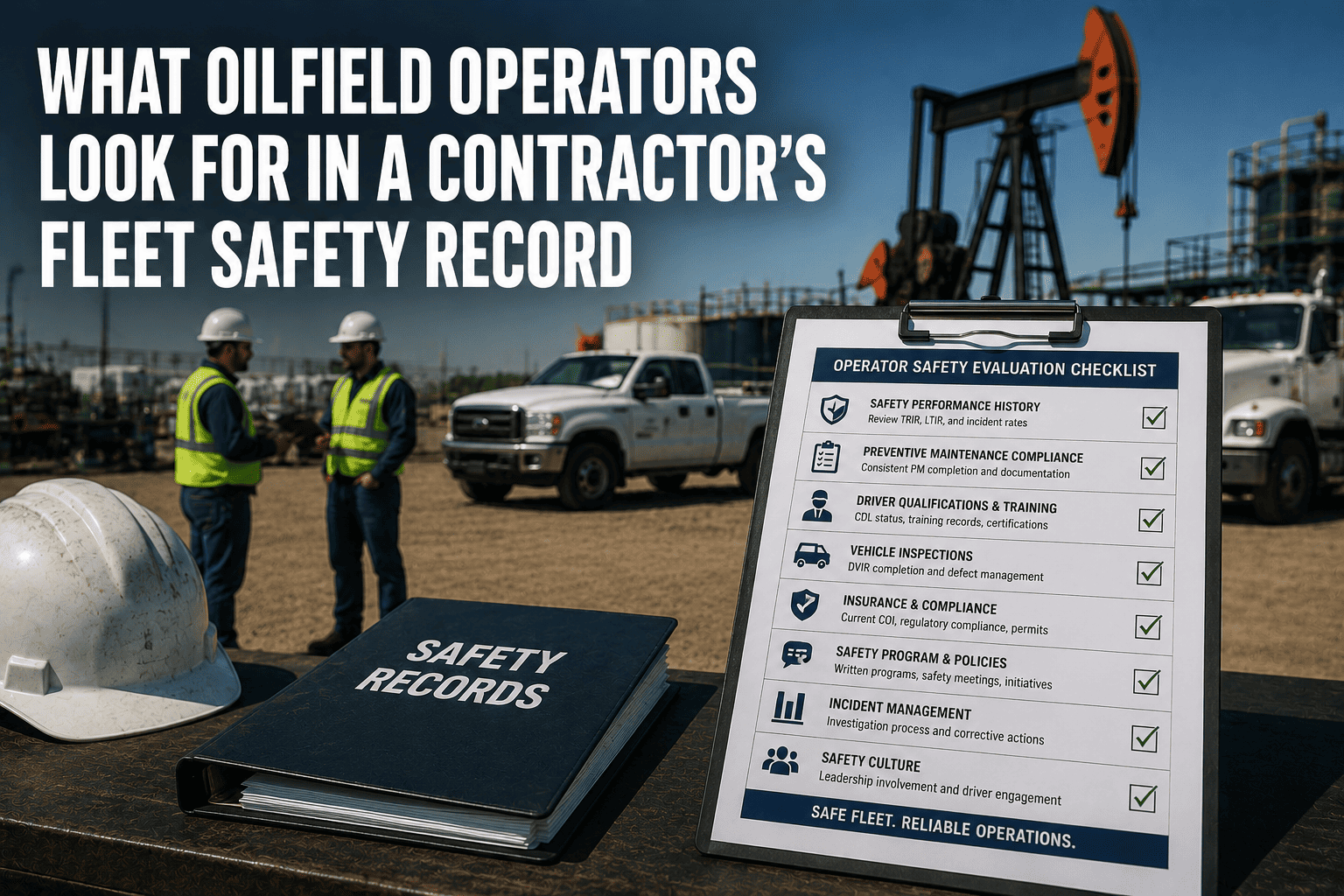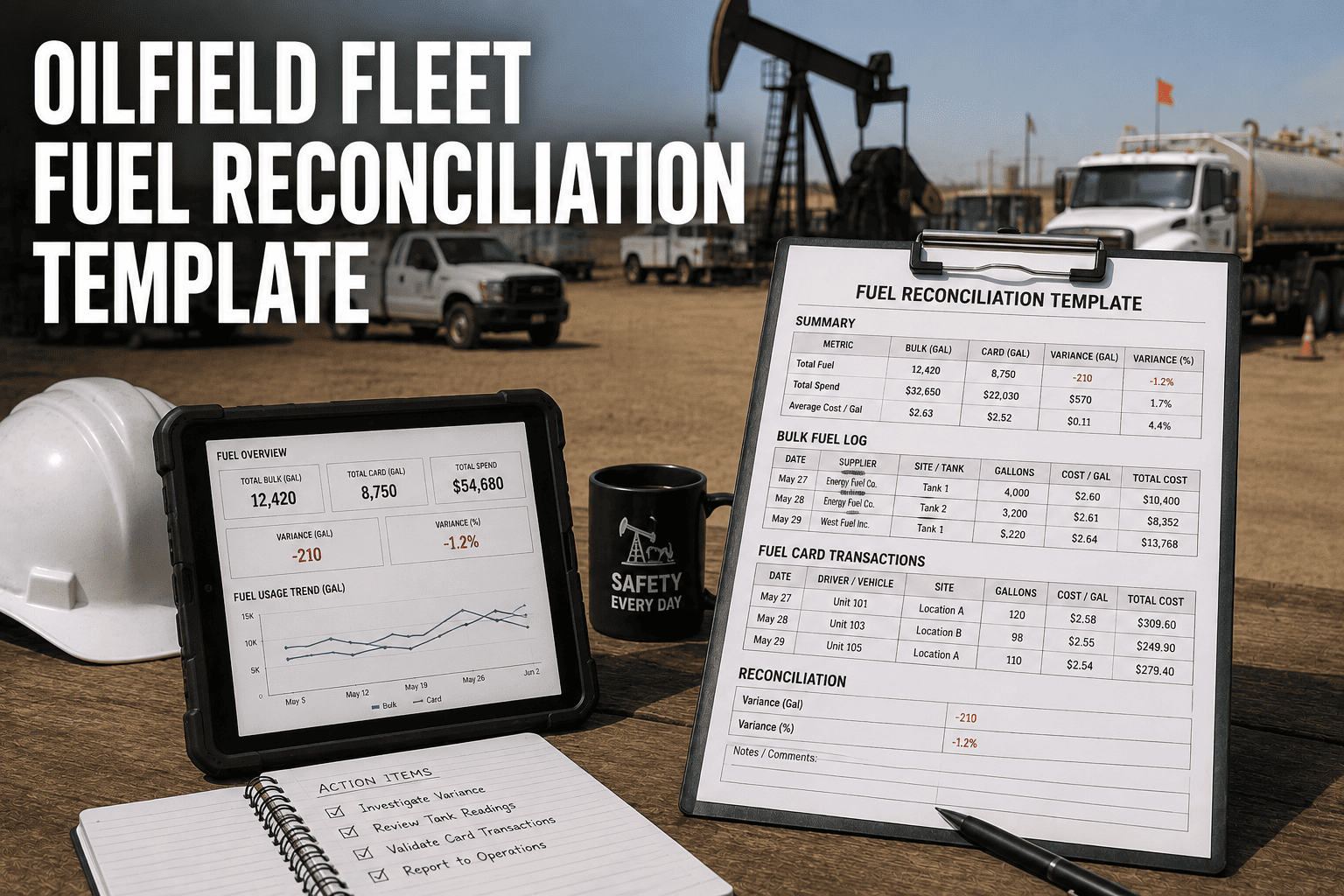
Every oilfield fleet starts the same way: a shared spreadsheet, a few tabs for vehicles and drivers, and a manager who knows most of the details by memory. It works fine at ten trucks. By fifty, the same spreadsheet is quietly costing missed maintenance windows, lost field tickets, and audit prep that eats entire work weeks. Nobody decides to outgrow spreadsheets on a specific day. It happens gradually, one overdue PM and one misplaced compliance record at a time, until the manual system is the actual bottleneck holding the fleet back.
30.8 percent of fleets still rely on spreadsheets for tracking in 2026, and paper-based compliance completion rates run only 65 to 75 percent. Manual audit prep across dispersed well sites consumes 40 to 60 hours per event, while centralized fleet software cuts that to under 2 hours and recovers 10 to 15 percent in fuel costs alone.
Six Signs Your Oilfield Fleet Has Hit The Spreadsheet Ceiling
These signs rarely arrive one at a time. Most fleet managers recognize three or four of them the moment they see the list, because the spreadsheet has already been quietly failing in these areas for months.
Preventive Maintenance Gets Missed
Overdue PM records are one of the clearest indicators of a fleet management program breaking down, and spreadsheets have no way to force a reminder before a service window closes.
Field Tickets Go Missing Or Illegible
Paper DVIRs and maintenance logs stored across dispersed well pads create retrieval delays, and illegible or lost documents turn into regulatory violations during an audit.
Certifications Expire Without Warning
Multi-state CDLs, hazmat endorsements, medical certificates, and annual MVR checks add up to thousands of expiration dates. A spreadsheet tracks none of them automatically, and a single missed renewal can trigger an operator audit failure.
Audit Prep Takes Days, Not Hours
Compiling DOT, OSHA, and EPA compliance reports from scattered tabs and paper files routinely consumes 20 to 40 hours of staff time per quarter, time that never shows up as billable or productive work.
Cost Visibility Requires Manual Math
If answering what your most expensive vehicle actually cost last year means pulling numbers from three different sources, your fleet has lost the cost visibility needed for repair-versus-replace decisions.
Growth Isn't Translating Into Efficiency
More vehicles but the same availability complaints, flat utilization despite fleet expansion, and rising operational costs all signal that growth is outrunning the tools managing it.
FleetRabbit centralizes maintenance, compliance, and cost tracking into one dashboard built specifically for dispersed oilfield operations. Sign up free and see your entire fleet's real status in one place, not five different tabs.
What Staying On Spreadsheets Actually Costs
The spreadsheet itself is free, which is exactly why the real cost is so easy to overlook. It shows up in staff hours, missed renewals, and audit findings rather than a line item anyone budgets for.
The Audit Preparation Gap
Manual compliance management depends on spreadsheet tracking that is vulnerable to oversight errors, and generating a single regulatory report from disconnected sources consumes 20 to 40 hours of staff time every quarter. Multiply that across DOT, OSHA, EPA, and client HSE requirements, and a fleet running 100 plus vehicles can lose entire work weeks to audit prep alone.
Why Paper And Spreadsheets Fall Short In The Field
Paper-based inspection systems see completion rates of only 65 to 75 percent due to process friction and lack of accountability. Expired driver certifications are often discovered reactively, when a wellsite gate refuses vehicle access, rather than proactively through an automated alert.
| Task | Spreadsheets And Paper | Centralized Fleet Software |
|---|---|---|
| Audit Package Preparation | 40 to 60 hours per event | Under 2 hours |
| Inspection Completion Rate | 65 to 75 percent | Near 100 percent, tamper-evident |
| Certification Expiration Tracking | Manual, reactive discovery | Automated alerts before expiry |
| Quarterly Compliance Reporting | 20 to 40 staff hours | One-click generation |
| Fuel Cost Visibility | Month-end totals only | Real-time, per-vehicle tracking |
The Risk That Compounds Quietly In The Background
Missed maintenance and compliance gaps rarely cause a problem the same day they happen. The risk builds silently until an inspection, an audit, or a breakdown forces it into the open, usually at the worst possible moment.
Equipment And Safety Costs Add Up Fast
Equipment failures linked to missed inspections average 12000 to 28000 dollars per incident. OSHA violations reach up to 70000 dollars per citation, and EPA enforcement can carry daily fines as high as 50000 dollars. A single overlooked spreadsheet row can be the difference between a routine inspection and a six-figure penalty.
Your Compliance Record Is Your Reputation
In oilfield services, one failed audit can remove a contractor from an operator's approved vendor list entirely, putting millions in annual contract revenue at risk. Fleets that move to centralized, automated compliance tracking routinely report zero DOT violations and a 100 percent first-pass audit rate within twelve months.
FleetRabbit gives fleet managers a real-time view of compliance status across every vehicle and driver file, replacing scattered spreadsheets with one audit-ready dashboard. Book a free demo and see exactly how much prep time your team could get back.
Making The Move Without Disrupting Field Operations
The biggest hesitation fleet managers have about leaving spreadsheets behind is disruption. In practice, moving to a centralized system is far less painful than the ongoing cost of staying manual, and most oilfield deployments are live within weeks rather than months.
A Realistic Transition Timeline
Compliance and inspection modules typically go live within 5 to 7 days of onboarding, with full digital audit package generation deployable across 50 to 200 vehicle fleets in 3 to 4 weeks. Drivers keep working the field the entire time, since mobile-first inspection workflows function offline and sync automatically once connectivity returns at the well pad.
A spreadsheet was never built to manage a growing oilfield fleet across multiple well sites, dozens of drivers, and constant regulatory scrutiny. It was built to organize a short list, and most fleets keep asking it to do far more than that long after the cracks have started showing. Recognizing the signs early means the switch happens on your timeline, not during a failed audit or a missed PM that turns into a breakdown.
Missed maintenance, lost field tickets, and last-minute audit scrambles are signs your fleet has outgrown manual tracking. FleetRabbit gives you one centralized, audit-ready system built for oilfield operations. Start your free trial today, no credit card required.