Oil and gas fleet management is the systematic coordination of vehicles, equipment, drivers, and regulatory compliance across upstream, midstream, and downstream operations — ensuring that every asset moves efficiently, safely, and in full regulatory compliance from wellsite to terminal. Without it, oilfield fleets lose an average of $38–88 million annually per 500-vehicle operation through unplanned downtime, compliance failures, remote site visibility gaps, and preventable incidents. This guide explains what oil and gas fleet management actually is, why it matters uniquely to energy sector operations, and how modern platforms like FleetRabbit eliminate the $38M+ risk exposure that legacy systems and manual processes leave unaddressed.
Oil and Gas Fleet Management? (And Why It Costs $38M Without It)
Oil and gas fleet management is the discipline that prevents $38–88M annual losses across upstream, midstream, and downstream operations by coordinating vehicles, drivers, compliance, and maintenance across remote sites. Learn what it is, why it matters, and how FleetRabbit solves the problems legacy systems can't.
What Is Oil and Gas Fleet Management?
Oil and gas fleet management is the coordinated control of all mobile assets, drivers, compliance records, and maintenance schedules across energy sector operations — from wellsite service vehicles and HAZMAT transport to heavy equipment and executive transport. It encompasses GPS tracking, driver behaviour monitoring, regulatory compliance automation, predictive maintenance, inspection workflows, and executive reporting across upstream exploration, midstream logistics, and downstream distribution networks.
Why Oil and Gas Fleet Management Matters (And What It Costs Without It)
Oilfield fleets without proper management systems lose $38–88 million annually per 500 vehicles through six primary failure modes. Each failure mode represents a risk category that generic commercial fleet software cannot address — and that manual paper-based processes make inevitable.
Oilfield vehicles operating without predictive maintenance systems experience breakdown rates 3–5× higher than managed fleets. When a vehicle fails at a remote wellsite 80 km from the nearest service depot, the cost is not just the repair — it is the stranded crew, the halted operation, the emergency callout, and the cascade delay across dependent activities. Mileage-based service schedules fail systematically in oilfield environments where vehicles accumulate engine hours at idle and experience accelerated wear from temperature extremes and corrosive exposure.
A driver who arrives at a wellsite gate with a lapsed H₂S certificate, expired ADR qualification, or vehicle with overdue LOLER inspection represents a compliance failure that costs the operation 4–8 hours minimum — and in jurisdictions with strict enforcement, results in regulatory penalties ranging from $5,000 to $250,000 per incident. Manual spreadsheet tracking of certifications across drivers and vehicles cannot prevent these failures at scale. Generic fleet platforms designed for urban delivery do not track ATEX, ADR, or H₂S qualifications at all.
When a vehicle enters a basin with no cellular coverage, cellular-only GPS tracking systems lose it entirely. Fleet managers cannot see the vehicle's location, cannot contact the driver, and have no incident awareness if an emergency occurs. The operational consequence is not theoretical — search and rescue operations for vehicles that "went dark" in remote fields cost oilfield operators $180,000–$420,000 per incident. Insurance liability exposure for untracked vehicles in hazardous zones is contractually unacceptable to most tier-1 operators and their insurers.
HAZMAT transport without route compliance enforcement results in tunnel violations, population-centre breaches, and restricted-zone entries that carry penalties from $10,000 to $500,000 per incident depending on jurisdiction and cargo class. Beyond regulatory fines, a single HAZMAT incident in a non-compliant zone can result in operational shutdown, criminal prosecution of responsible officers, and insurance coverage denial. Generic fleet platforms do not integrate HAZMAT routing restrictions or ADR consignment documentation into dispatch workflows.
Without real-time GPS and automated incident alerting, emergency response to remote field incidents averages 47 minutes from event to dispatch coordination. For medical emergencies, vehicle fires, or HAZMAT spills in remote locations, this delay is the difference between a managed incident and a catastrophic outcome. The liability, insurance, and reputational cost of delayed response in a single serious incident can exceed $5M — and the human cost is incalculable.
Operations directors and VPs at oilfield companies consistently receive safety and compliance reports that are 5–7 days out of date by the time field supervisors consolidate and submit them. This lag creates executive blind spots to emerging risk patterns, prevents proactive intervention, and results in audit preparation processes that require 3+ days of manual data retrieval. Regulatory audits that find incomplete or inaccessible records result in operational restrictions, license suspensions, and penalty assessments that can reach $2M+ per major finding.
How FleetRabbit Delivers Oil and Gas Fleet Management That Actually Works in the Field
Every other platform in the market was built for general commercial fleet management and adapted for energy use. FleetRabbit was designed from the ground up for the specific operational, compliance, and safety demands of oil and gas — which is why it is the only platform that solves all six failure modes simultaneously.
Satellite + Cellular Dual-Mode Connectivity
FleetRabbit's hardware switches to satellite automatically when a vehicle moves beyond cellular range — maintaining continuous GPS tracking, two-way driver messaging, and emergency SOS capability. Fleet managers never see a vehicle disappear from the dashboard. No other Tier 1 platform in the market provides this capability natively without costly hardware add-ons.
Full Offline DVIR & Inspection Capability
Drivers complete pre-trip and post-trip inspections on mobile devices without a data connection. All inspection records sync automatically when connectivity is restored. This eliminates the paper DVIR fallback that creates compliance gaps and makes audit preparation impossible. Generic platforms that require connectivity for inspection submission force drivers back to paper forms — defeating the entire purpose of digital inspection workflows.
Automated HSE Certification Tracking
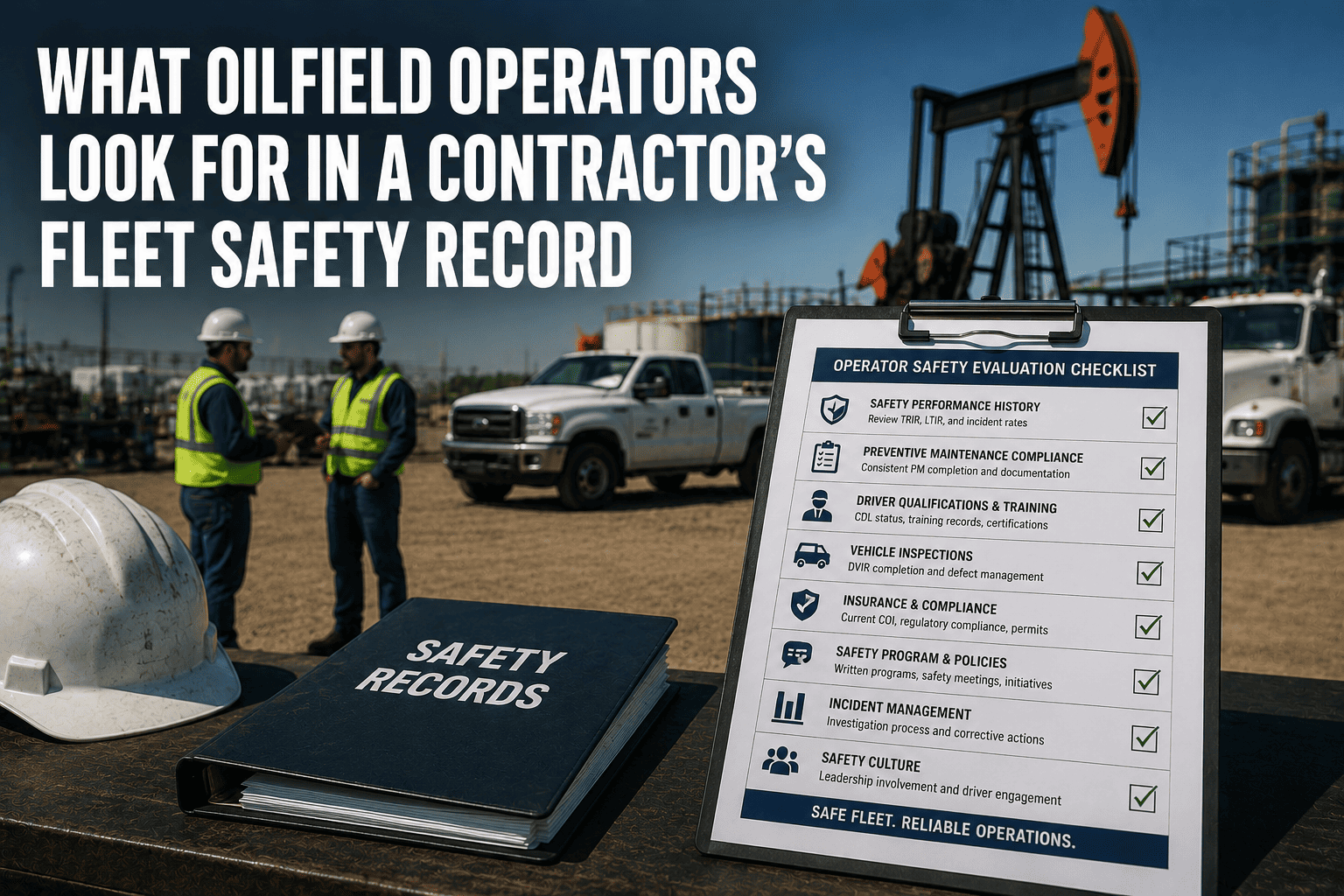
FleetRabbit tracks every certificate, qualification, and inspection date across every driver and vehicle — ADR, H₂S, ATEX, medical, site-specific qualifications, LOLER, and PUWER inspections — with 60/30/7-day automated escalation alerts. The system blocks dispatch for non-compliant assignments before the journey plan is approved. No other platform in the market covers international HSE frameworks natively without custom development.
HAZMAT-Aware Routing & Documentation
FleetRabbit integrates HAZMAT routing restrictions for tunnels, bridges, and population centres per cargo classification — with ADR and DOT consignment document management built directly into dispatch workflows. The platform prevents dispatch of uncertified drivers to HAZMAT loads and flags route violations before they occur. Competing platforms either require third-party add-ons or do not support HAZMAT compliance at all.
Engine-Hour Predictive Maintenance
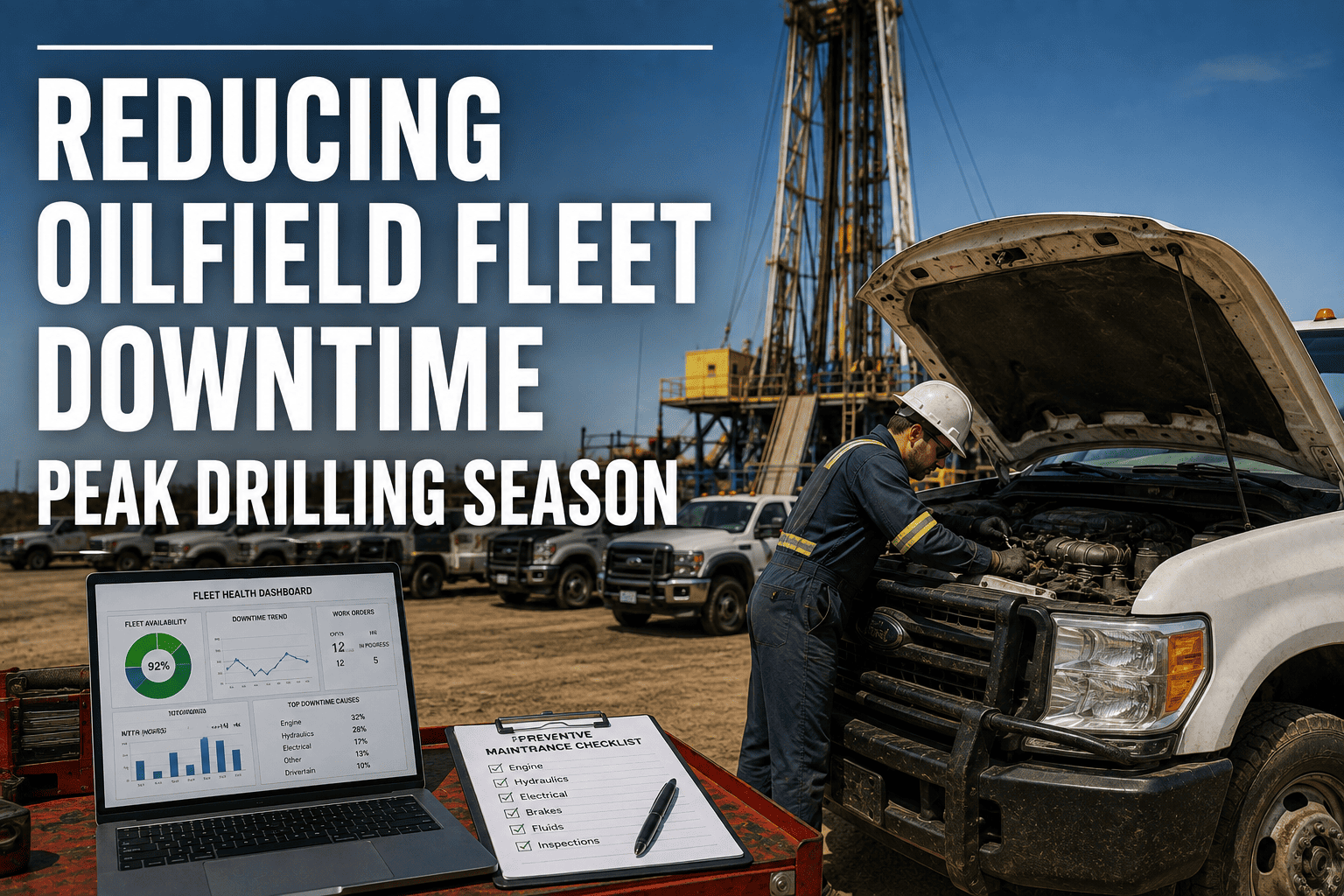
FleetRabbit's maintenance engine uses engine hours, OBD-II fault trending, and oilfield-specific condition triggers — not mileage intervals designed for highway fleets. Service schedules adjust for temperature extremes, idle time, and corrosive exposure patterns unique to wellsite operations. Automatic work order generation routes maintenance requests before failure occurs in remote field locations.
Live Executive Dashboard — Zero Manual Assembly
FleetRabbit delivers real-time fleet-wide risk status, certification health, open defect counts, and maintenance cost trending across every site — with automated weekly and monthly digest reports to C-suite stakeholders. VPs and operations directors see live compliance status without waiting for field supervisors to consolidate data. Full regulatory audit packs generate in under 2 hours versus 3-day paper retrieval processes.
Multi-Region Regulatory Compliance: FMCSA, DVSA, ADNOC, and DGMS Simultaneously
Oil and gas operators with fleets across North America, Europe, the Middle East, and India cannot manage four different compliance frameworks with four different systems. FleetRabbit generates compliant records for all major regulatory frameworks simultaneously — from a single unified platform.
Why 5–7 Day Deployment Matters for Oilfield Operations
Enterprise fleet platforms from Verizon Connect, Geotab, and legacy providers require 3–6 month implementation timelines. Oilfield operations cannot wait 6 months to gain visibility over assets, compliance, and safety — which is why FleetRabbit's 5–7 working day deployment is a primary operational advantage for operators with active field commitments.
Need Fleet Management Live This Week?
FleetRabbit deploys on active oilfield fleets in 5–7 working days — hardware, configuration, training, and go-live. No 6-month wait for visibility you need today.
Who Needs Oil and Gas Fleet Management (And What They Get From It)
Different stakeholders across oilfield operations use fleet management platforms to solve different problems. FleetRabbit delivers role-specific value to each stakeholder group — from field supervisors to C-suite executives.
- Live GPS tracking across all sites with satellite fallback
- Automated certification expiry alerts preventing gate refusals
- Predictive maintenance work orders before breakdowns occur
- Digital inspection workflows with offline capability
- One-click audit pack generation for regulatory reviews
- Automated HSE certification tracking with escalation alerts
- HAZMAT route compliance and documentation management
- Real-time incident detection with 8-minute response coordination
- Driver safety scoring and behaviour trend analysis
- Regulatory audit trails with full documentation history
- Live dashboard showing fleet status across all regions
- Automated cost reporting and budget variance tracking
- Utilisation metrics identifying underused assets
- Downtime analysis and reliability trending
- Cross-site performance benchmarking
- Scheduled weekly and monthly digest reports to inbox
- Real-time compliance health across all regulatory frameworks
- Fleet-wide safety KPIs and incident trending
- Capital expenditure forecasting based on asset lifecycle
- Insurance risk scoring and premium reduction validation
What Oil and Gas Fleet Management Costs (And What It Saves)
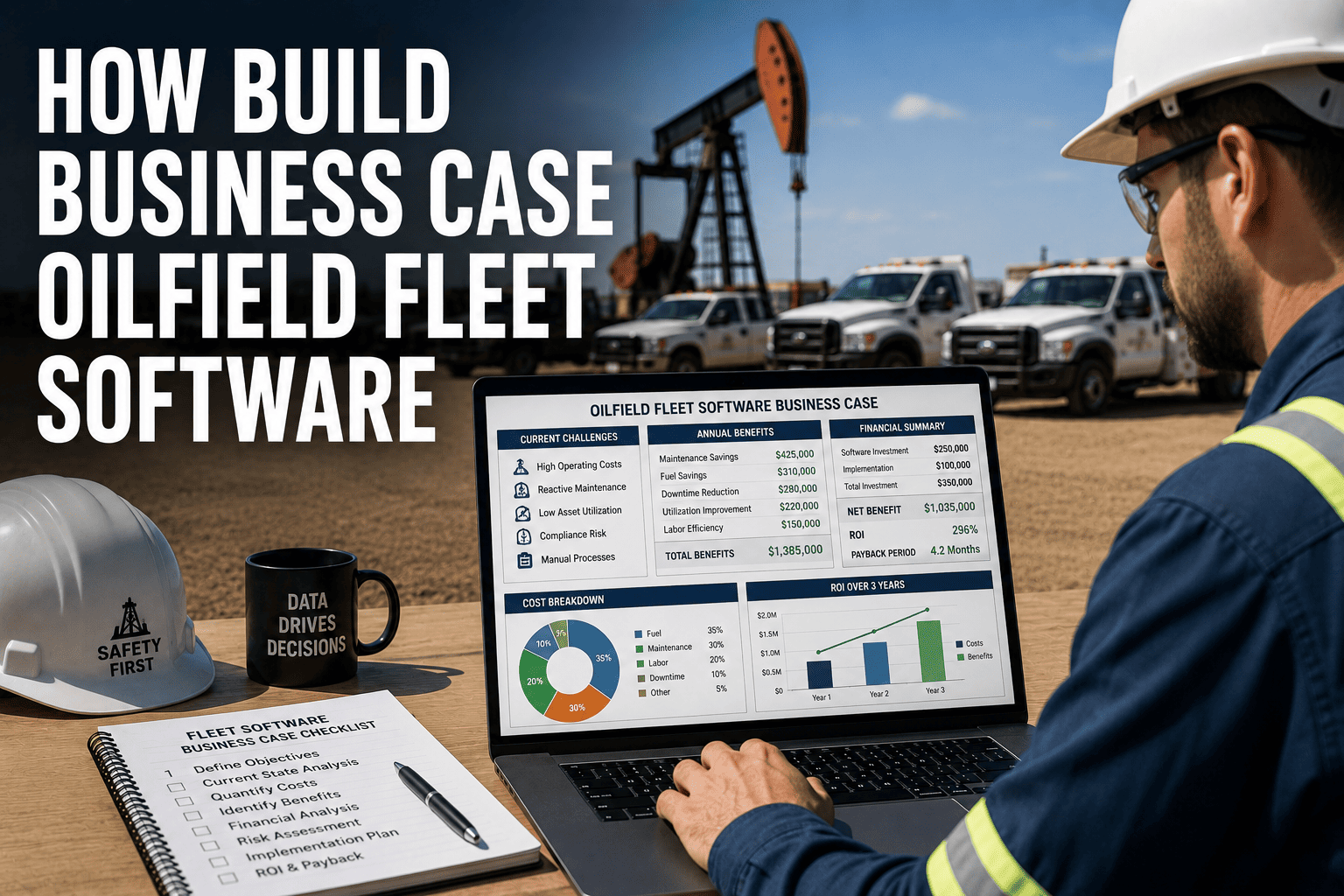
FleetRabbit costs $3 per vehicle per month — including satellite connectivity, offline DVIR, HSE tracking, predictive maintenance, and executive reporting. Enterprise platforms charge $15–35 per vehicle per month for equivalent capability — and still require 3–6 month implementation timelines.
Frequently Asked Questions About Oil and Gas Fleet Management
Ready to Eliminate the $38M Risk Exposure in Your Oilfield Fleet?
FleetRabbit gives fleet managers, HSE directors, and operations executives the satellite tracking, compliance automation, predictive maintenance, and live executive intelligence they need — deployed on your fleet in 5–7 days at $3/vehicle/month.