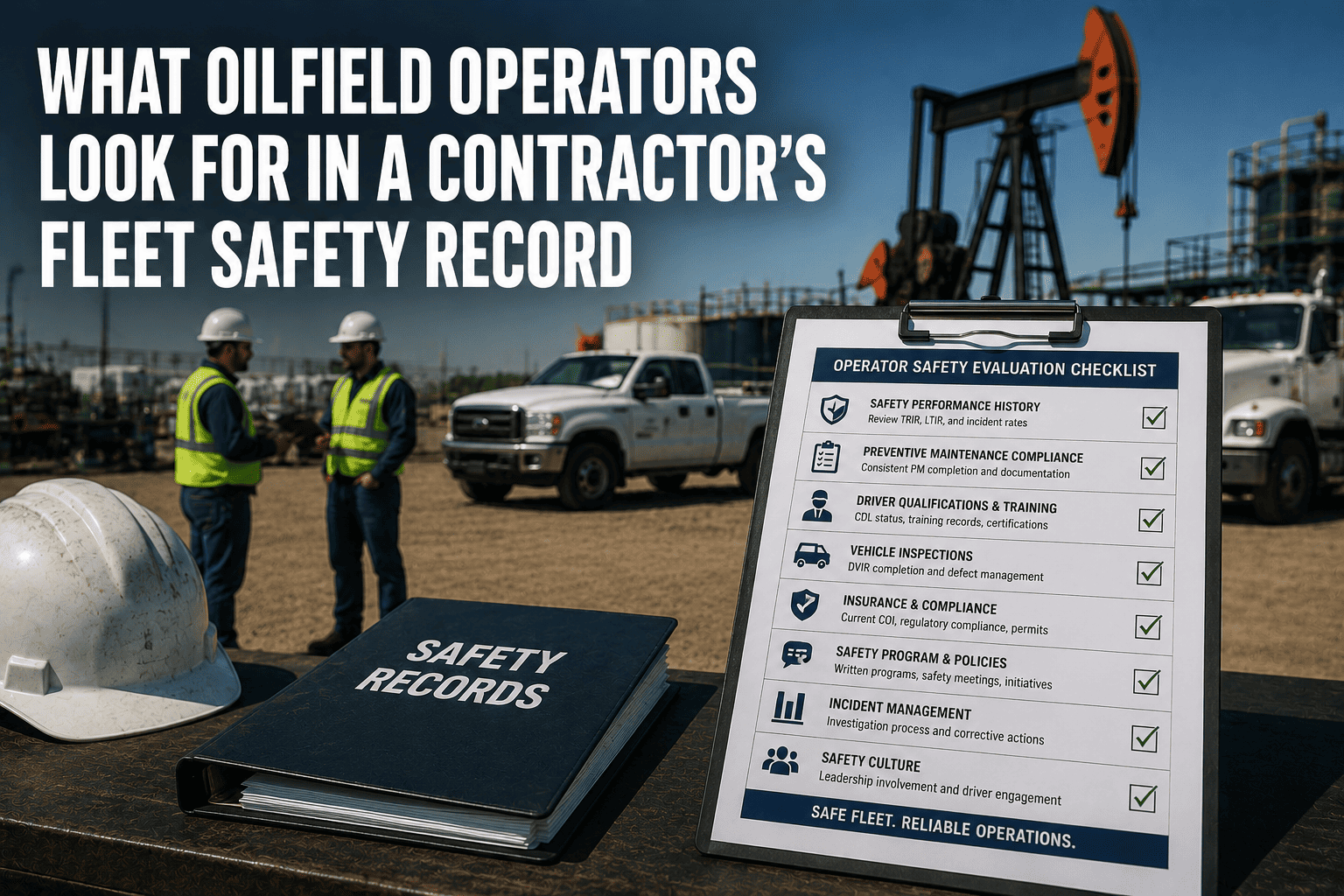
Two oilfield carriers can run the same routes, haul the same loads, and quote the same rate, yet only one of them gets the contract. The difference often isn't price or equipment. It's a number most drivers have never seen and most operators check before the first email back. Your CSA score sits quietly in FMCSA's Safety Measurement System, and it's increasingly the first filter operators run before they'll even talk terms. Lose that filter and the best bid in the room never gets read.
CSA scores are percentile safety rankings FMCSA calculates across seven BASIC categories, and lower is better. Operators and their insurers pull these numbers before awarding hauling contracts, especially for HAZMAT loads where intervention thresholds sit as low as 50 percent instead of the standard 65 to 80 percent. A carrier flagged in even one or two BASICs can lose bids to a cleaner competitor before price ever enters the conversation.
How CSA Scores Actually Work
The Percentile Flip: Lower Is Better
A CSA score isn't a grade out of 100 the way a test score works. It's a percentile compared against similar carriers, and a lower number means better safety performance. A score of 15 means a carrier is outperforming 85 percent of its peer group. A score of 80 means 80 percent of comparable carriers are doing better, and FMCSA is almost certainly watching. That inversion trips up a lot of fleet managers the first time they check their own numbers.
Seven BASIC Categories, One Reputation
FMCSA rolls every roadside inspection, crash report, and violation into seven Behavior Analysis and Safety Improvement Categories. Each one is scored separately, and any single BASIC crossing its intervention threshold can trigger warning letters, targeted roadside inspections, or a full compliance review.
FleetRabbit flags the violations pulling your BASICs toward intervention thresholds and helps you fix them before a warning letter or a lost bid ever shows up.
Why Oilfield Operators Check This Before They Sign
CSA Scores Are Part Of The Bid, Not An Afterthought
Operators, brokers, and shippers routinely pull SMS data during carrier vetting, and many have hard policies against contracting above certain BASIC thresholds. For crude, frac chemical, or produced water haulers, that check happens before a single truck ever shows up on location, which means a rising score can quietly close a bid before it's even reviewed.
HAZMAT Loads Get Judged On A Tighter Curve
Standard intervention thresholds run 65 to 80 percent depending on the BASIC, but HAZMAT and newer carriers face a stricter 50 percent threshold in Unsafe Driving and Crash Indicator. For carriers hauling frac chemicals or H2S-exposed cargo, that leaves far less room for error before FMCSA, and the operator awarding the contract, starts paying attention.
Insurance Follows The Same Number
Underwriters pull SMS data directly into pricing models. Carriers approaching intervention thresholds in Unsafe Driving, Crash Indicator, or Vehicle Maintenance commonly see premium increases in the 10 to 30 percent range, which raises the bid price on every contract a carrier tries to win afterward.
One multi-truck carrier running heavy equipment routes cut its CSA percentile from 76 to 12 within months simply by standardizing inspection workflows and connecting defect reports directly into maintenance follow-up, dropping the time from a reported defect to mechanic review to just minutes instead of days.
BASIC Category Snapshot
| BASIC Category | Standard Threshold | Oilfield Relevance |
|---|---|---|
| Unsafe Driving | 65%, 50% for HAZMAT/new carriers | Lease road speeds and heavy loads raise exposure |
| Vehicle Maintenance | 80% | Harsh terrain accelerates brake and tire wear |
| HAZMAT Compliance | 80% | Direct relevance for crude, frac chemical haulers |
| Hours-of-Service | 65% | 24/7 drilling schedules pressure driver hours |
| Crash Indicator | 65%, 50% for HAZMAT/new carriers | Weighs heavily on multi-year contract renewals |
| Driver Fitness | 80% | Certification gaps block dispatch on HAZMAT loads |
Steps To Get Ahead Of A Falling Score
Frequently Asked Questions
FleetRabbit connects inspections, maintenance, and driver compliance in one place, so violations get caught and fixed before they ever touch your CSA percentile.