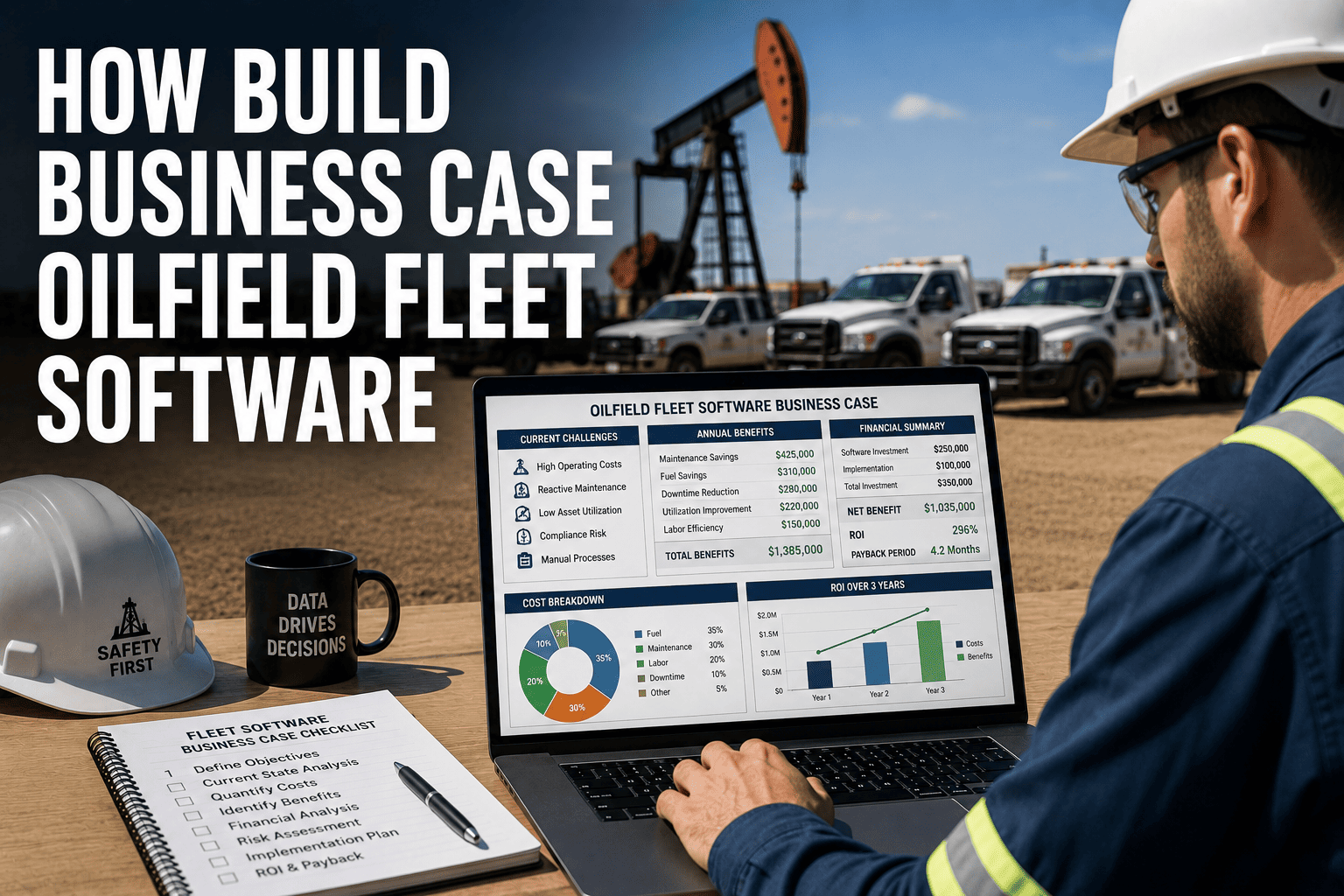
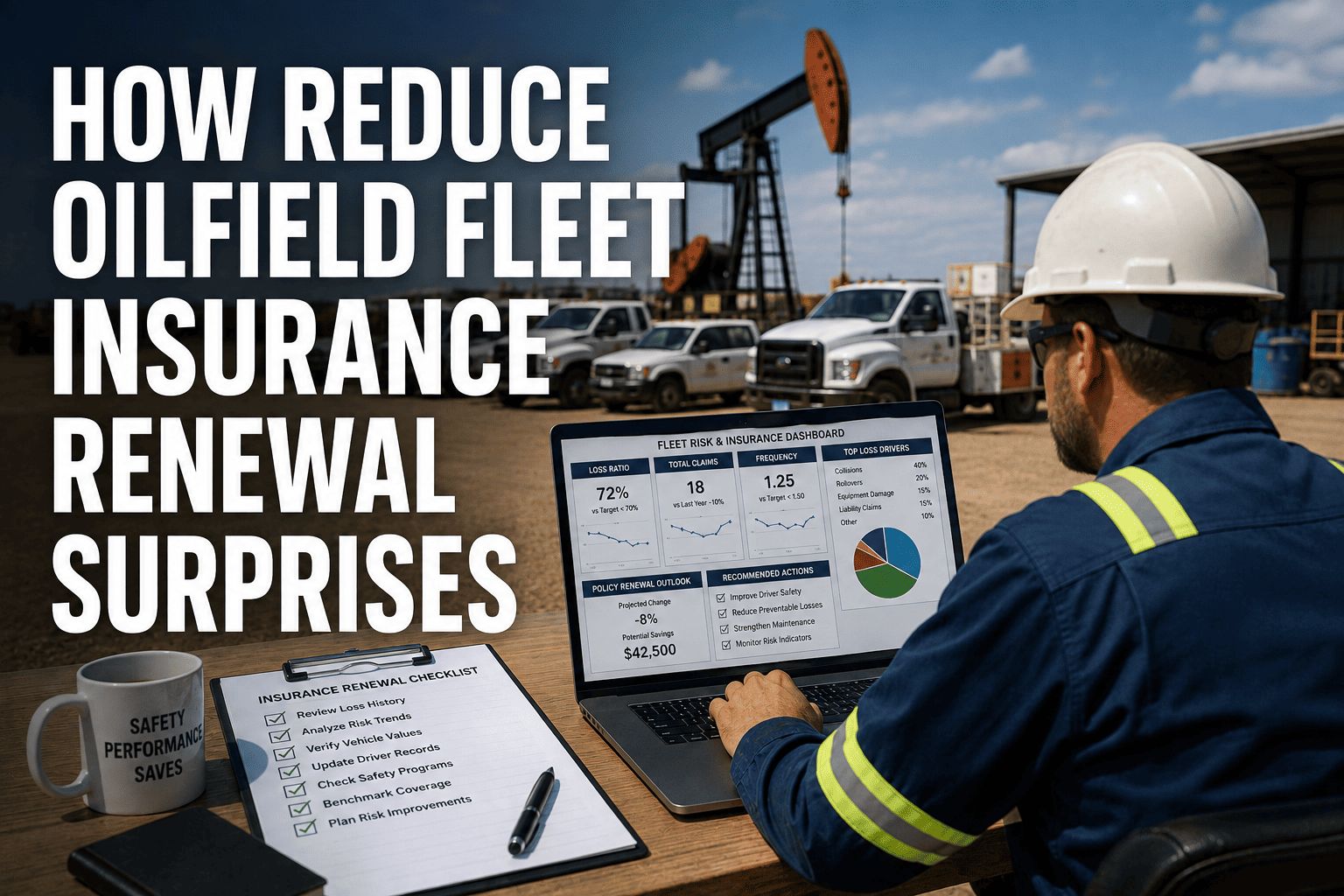
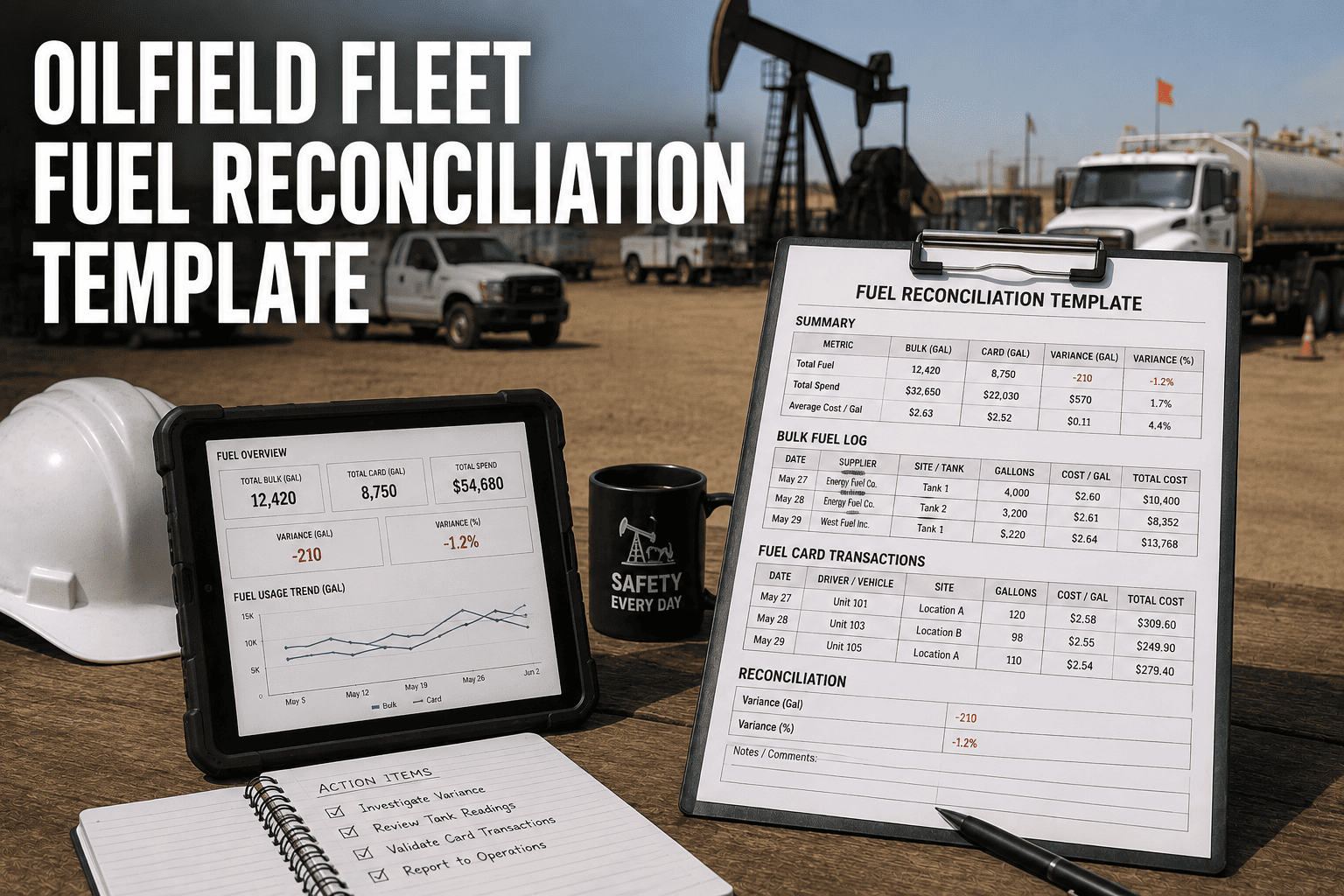
A single compliance violation in oil and gas operations can cost $25,000–$75,000 in regulatory fines, equipment downtime, and emergency remediation — yet most operators discover violations only after they've escalated into enforcement actions, failed inspections, or HSE incidents. Traditional fleet management systems fragment data across GPS tracking, maintenance logs, compliance spreadsheets, and manual inspection reports — creating visibility gaps that leave operators reactive instead of proactive. FleetRabbit's integrated platform unifies real-time GPS tracking, predictive maintenance, automated HSE compliance workflows, and operational analytics into a single command center — giving fleet managers and executives complete visibility into equipment health, driver behavior, regulatory status, and cost performance across remote oilfield operations. Book a demo to see FleetRabbit applied to your oilfield fleet.
Quick Answer
Oil and gas operators choose FleetRabbit because it consolidates GPS tracking, telematics, maintenance scheduling, HSE compliance documentation, driver safety monitoring, fuel management, and cost analytics into one unified platform — eliminating the inefficiencies, data silos, and compliance risks inherent in juggling 3–5 disconnected systems. Fleet managers gain real-time visibility into equipment location, utilization, mechanical health, and regulatory status across drilling sites, pipeline routes, and service operations, while executives access consolidated cost-per-mile metrics, uptime performance, and compliance audit trails without manual data aggregation.
The Integration Problem in Oilfield Fleet Operations
Most oil and gas companies manage fleets with fragmented systems: one vendor for GPS tracking, another for maintenance management, spreadsheets for compliance logs, third-party fuel cards, and manual processes for inspection documentation. This creates operational friction, visibility gaps, and compliance exposure that FleetRabbit's integrated architecture eliminates.
1
Fragmented Systems — The Traditional Approach
GPS tracking system shows vehicle location but not maintenance status. Maintenance software tracks service intervals but doesn't know real-time utilization or driver behavior. Compliance logs stored in spreadsheets with no automated alerts. Fuel data isolated in card provider portal. Inspection reports manually filed with no integration to equipment records.
Typical oilfield fleet: GPS platform (Geotab), maintenance system (Fleetio), compliance spreadsheets (Excel), fuel cards (WEX), paper inspection forms — 5 systems requiring manual reconciliation for complete fleet visibility.
2
Data Silos Create Operational Blind Spots
Fleet manager sees truck location but doesn't know it's 200 miles overdue for oil change. Maintenance team schedules service without visibility into next week's well site deployment schedule. Compliance officer discovers missing DOT inspection only during audit preparation. Executives lack unified cost visibility across fuel, maintenance, and utilization efficiency.
Delayed Maintenance DetectionSchedule ConflictsCompliance GapsCost Opacity
3
FleetRabbit Unified Platform — Single Source of Truth
Real-time GPS tracking integrated with maintenance schedules, odometer-based service alerts, automated compliance workflows, driver behavior scoring, fuel consumption analytics, and equipment utilization metrics — all in one dashboard. Every data point connected: location + maintenance status + regulatory compliance + cost performance visible simultaneously.
Fleet Manager View: Truck 47 location (drilling site B), next service due in 180 miles (3 days at current utilization), DOT inspection valid through Q2, fuel efficiency 6.2 MPG (8% below fleet average — investigate), driver safety score 92/100. All context in one screen.
Why Oil and Gas Operators Switch to FleetRabbit
The decision to consolidate fleet management onto FleetRabbit's platform is driven by specific operational pain points that fragmented systems cannot solve. Below are the core reasons energy companies migrate from multi-vendor toolchains to FleetRabbit's integrated solution.
Unified Fleet Intelligence
Stop Juggling 5 Systems — Manage Everything From One Platform
See how FleetRabbit eliminates data silos by integrating GPS tracking, maintenance, compliance, fuel analytics, and driver safety into a single real-time command center for oilfield fleets.
87%
Reduction in System Login Time
100%
Compliance Audit Trail Automation
Automated HSE Compliance — Eliminate Manual Tracking
The problem: DOT inspections, emissions testing, driver certification renewals, and equipment safety checks tracked manually in spreadsheets — compliance officers spend 10–15 hours per week updating logs, violations discovered during audits instead of prevented proactively.
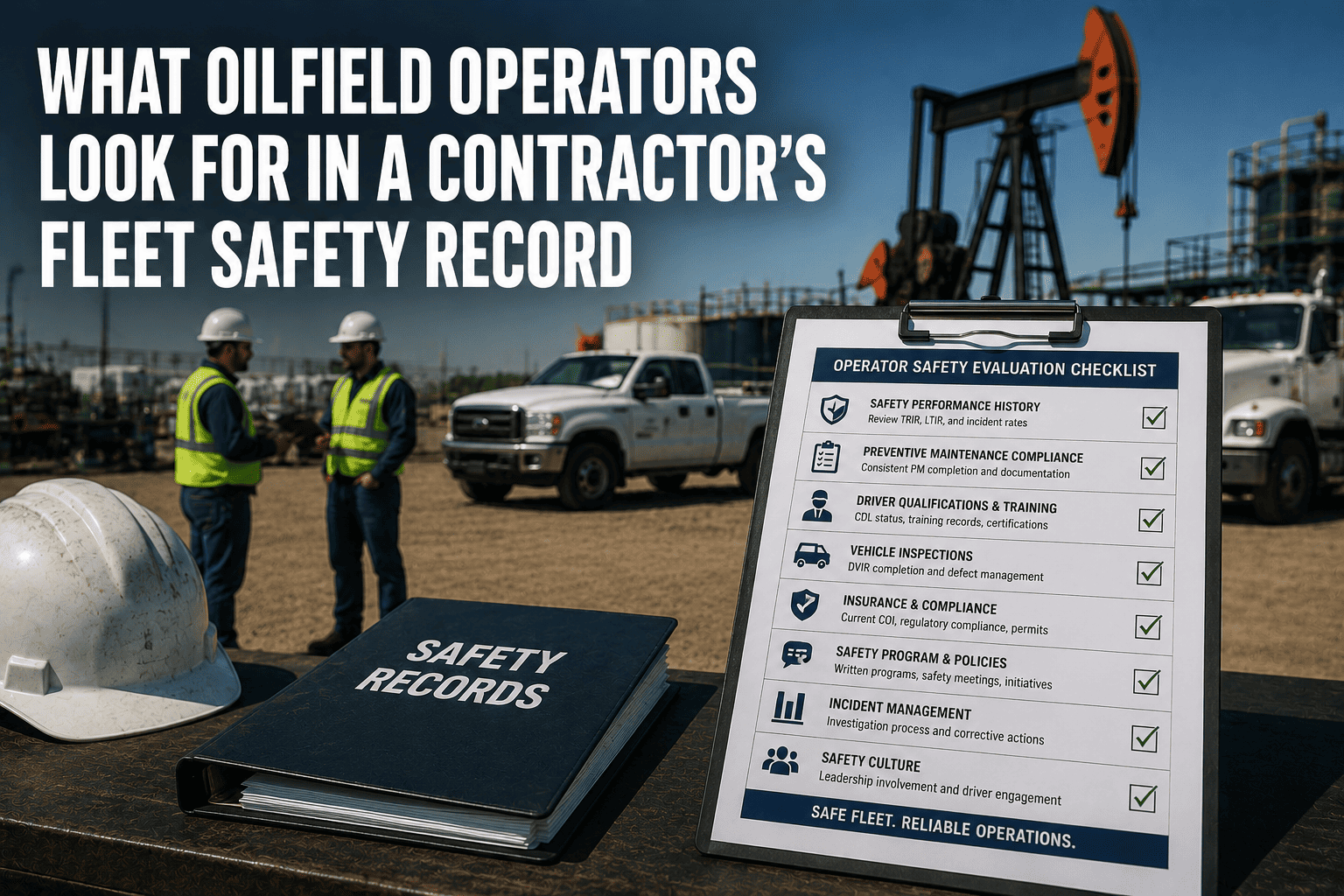
FleetRabbit solution: Automated compliance calendar tracks every regulatory requirement by asset and driver — DOT annual inspections, quarterly brake tests, emissions compliance, CDL renewals, hazmat certifications. System alerts 30/15/7 days before expiration, blocks vehicle dispatch when inspection overdue, auto-generates audit-ready compliance reports with timestamps and documentation links.
Operational impact: Compliance admin time reduced 85%, zero missed inspections during regulatory audits, instant compliance status visibility across entire fleet. Pre-trip inspection reports digitally captured via driver mobile app, automatically linked to vehicle records.
Predictive Maintenance — Prevent Downtime in Remote Locations
The problem: Oilfield equipment breakdowns 100+ miles from service facilities cost $800–$2,500 per incident in towing, emergency repairs, and operational delays. Traditional time-based maintenance misses early failure indicators, reactive repairs 3x more expensive than preventive service.
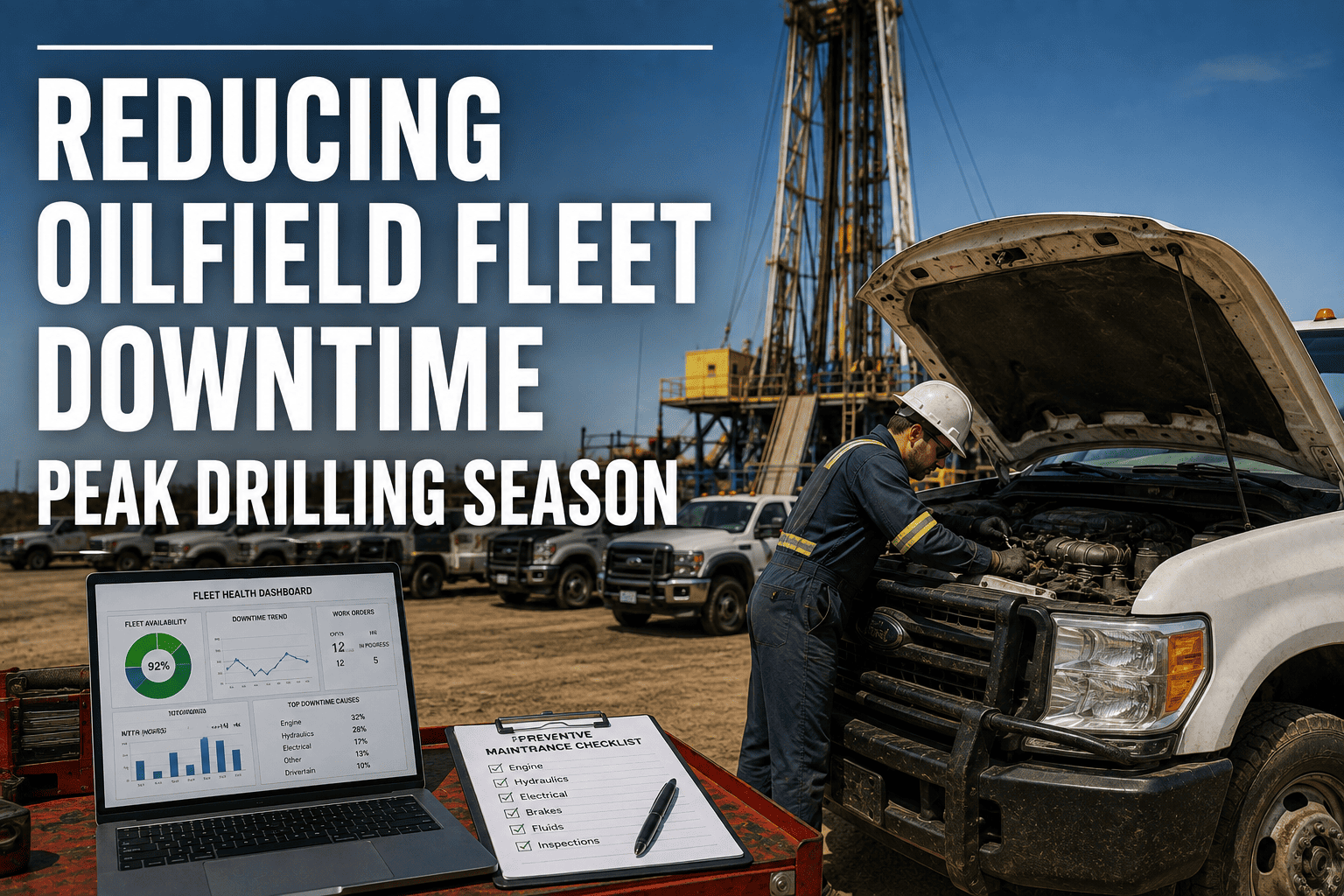
FleetRabbit solution: Odometer, engine hours, and fault code integration trigger maintenance alerts based on actual usage, not calendar estimates. System tracks oil change intervals, brake wear, tire rotation schedules, filter replacements — automatically scheduling service when thresholds approach. Fault code monitoring flags Check Engine warnings immediately, enabling diagnostic assessment before breakdown occurs.
Operational impact: Unplanned downtime reduced 62%, maintenance costs down 28% through preventive intervention vs emergency repair. Service scheduling optimized around operational tempo — trucks routed to nearest service facility during natural downtime windows instead of mid-deployment emergencies.
Driver Safety Monitoring — Reduce Incident Rates and Insurance Costs
The problem: Harsh driving behaviors (speeding, hard braking, rapid acceleration) in remote oilfield environments increase accident risk, vehicle wear, fuel consumption, and insurance premiums. Manual driver coaching inconsistent, safety incidents discovered after the fact through accident reports.
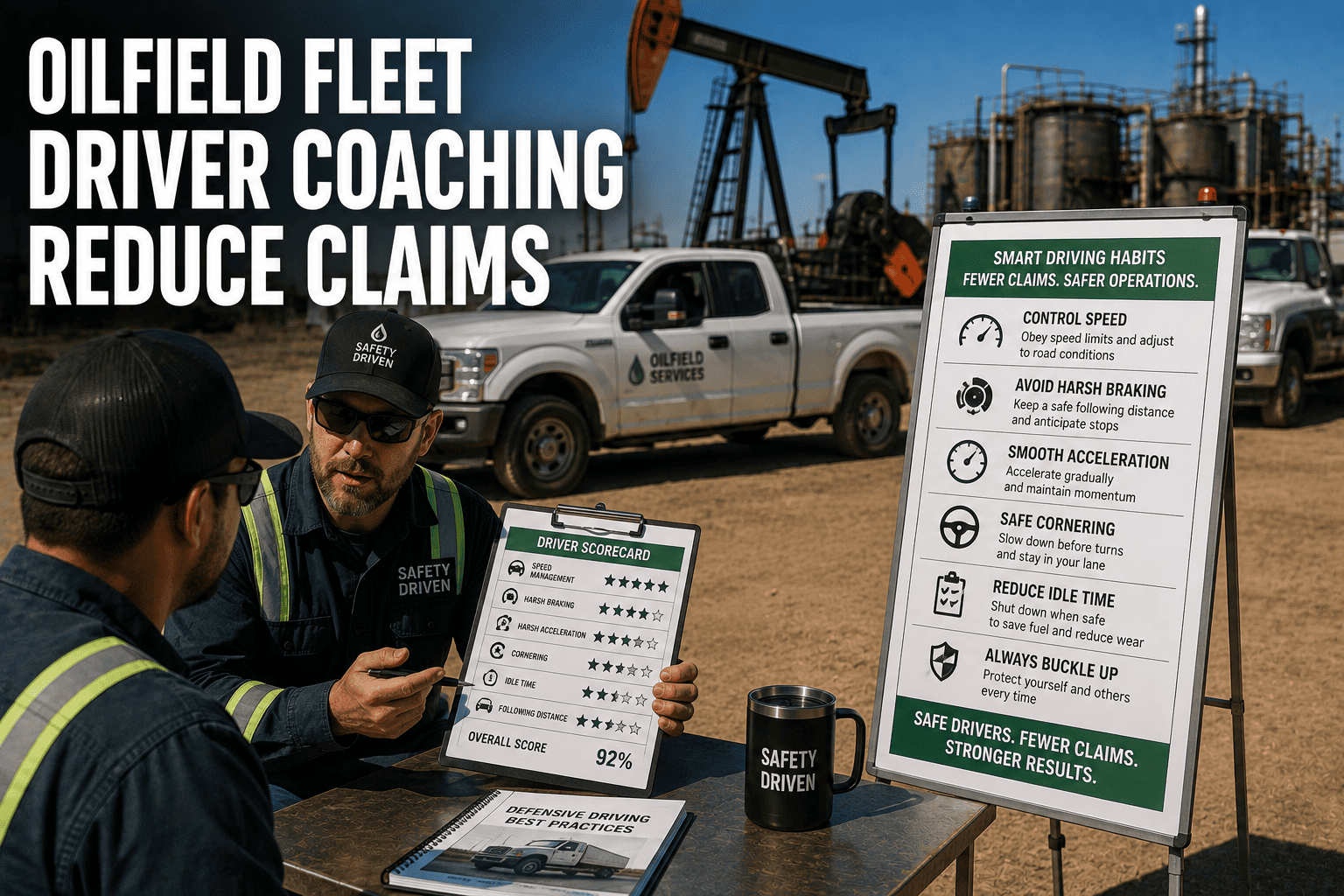
FleetRabbit solution: Real-time driver behavior scoring based on speeding events, harsh braking, aggressive acceleration, seatbelt usage, and idling time. Automated safety alerts for high-risk behaviors, configurable thresholds per route type (highway vs well site access roads). Driver performance dashboards enable data-driven coaching conversations, safety score trends tracked over time.
Operational impact: Accident frequency reduced 41%, insurance premiums decreased 18% after demonstrating improved safety performance to carriers. Fuel efficiency improved 12% through reduced aggressive driving. Driver coaching time optimized — focus on statistically highest-risk behaviors instead of anecdotal observations.
Fuel Management — Eliminate Theft and Optimize Consumption
The problem: Fuel represents 25–35% of total fleet operating costs. Fuel card data shows purchases but not consumption efficiency. Fuel theft and unauthorized usage difficult to detect without cross-referencing GPS location, odometer readings, and purchase timestamps. Idling waste invisible in monthly fuel reports.
FleetRabbit solution: Fuel card integration correlates purchases with GPS location and odometer data — flagging anomalies like purchases 200 miles from vehicle location, duplicate same-day fills, or fuel volume exceeding tank capacity. MPG efficiency calculated per vehicle, driver, and route — identifying underperformers. Excessive idling tracked and reported, quantifying waste in gallons and cost.
Operational impact: Fuel theft and fraud reduced 94% through automated anomaly detection. Fleet-wide MPG improved 9% by identifying and addressing inefficient vehicles and drivers. Idling costs reduced $18,000 annually through driver behavior modification campaigns backed by data.
Equipment Utilization Analytics — Right-Size Your Fleet
The problem: Operators purchase or lease equipment based on peak demand estimates, resulting in 20–30% underutilized capacity during normal operations. Executives lack visibility into which trucks, frac tanks, or support vehicles are actually generating value vs sitting idle. Capital tied up in unnecessary assets.
FleetRabbit solution: Utilization tracking measures active time vs idle time, miles driven per month, and deployment patterns for every asset. Identify chronically underutilized equipment — trucks averaging 2,000 miles/month when fleet standard is 6,500 miles/month. Geofencing tracks time spent at well sites vs in yard, quantifying productive deployment vs standby.
Operational impact: Fleet right-sized by 22% — eliminating 14 underutilized vehicles saving $420,000 annually in lease payments, insurance, and maintenance. Remaining fleet utilization increased from 58% to 79% through optimized dispatch and redeployment of idle assets to high-demand operations.
Executive Cost Visibility — Unified Operational Metrics
The problem: C-suite executives request total fleet operating costs, cost-per-mile benchmarks, or utilization ROI analysis — fleet managers spend days manually aggregating data from GPS logs, fuel card reports, maintenance invoices, and payroll systems. Reports outdated by the time they're delivered.
FleetRabbit solution: Automated executive dashboards consolidate fuel spend, maintenance costs, labor hours, downtime impact, and utilization metrics into unified cost-per-mile and cost-per-hour analytics. Real-time P&L visibility by vehicle, division, or project. Custom reports generated on-demand with current data — no manual aggregation required.
Operational impact: Executive reporting time reduced from 12 hours to 15 minutes per monthly board presentation. CFO gains real-time visibility into fleet cost trends, enabling proactive budget adjustments. Operations VP identifies highest-cost vehicles and routes, driving targeted efficiency improvements.
FleetRabbit Platform Capabilities for Oil and Gas Operations
FleetRabbit's integrated architecture is purpose-built for the unique challenges of oilfield fleet management — remote operations, harsh environments, regulatory complexity, and cost pressure. The platform delivers capabilities that standalone GPS or maintenance systems cannot provide.
Real-Time GPS Tracking with Geofencing
Live vehicle location tracking with 60-second update intervals. Custom geofences for well sites, staging yards, service facilities, and restricted zones. Automated arrival/departure notifications, dwell time tracking, and route replay for post-incident analysis. Offline mode stores location data when cellular coverage unavailable, syncs when reconnected.
Essential for: Asset security, route verification, after-hours usage monitoring, theft prevention
Automated Maintenance Workflows
Service interval tracking based on odometer, engine hours, calendar days, or fault codes. Automated work order generation when maintenance due, vendor management with preferred shop routing, parts inventory integration, and maintenance history linked to each asset. Mobile app enables technicians to log repairs, upload photos, and close work orders from service bay.
Essential for: Preventive maintenance compliance, warranty protection, asset lifecycle management
Digital Inspection and Compliance Management
Customizable digital inspection forms for pre-trip checks, DOT compliance, and safety walkarounds. Driver mobile app captures inspection results with photo upload, GPS timestamp, and e-signature. Non-compliant vehicles automatically flagged and blocked from dispatch until remediated. Complete audit trail for regulatory inspections and insurance claims.
Essential for: DOT compliance, liability protection, safety culture reinforcement
How FleetRabbit Solves Remote Operations Challenges
Oil and gas fleets operate in environments where cellular connectivity is intermittent, service facilities are 100+ miles away, and equipment failures create exponentially higher costs than urban fleets. FleetRabbit's platform is engineered for these realities.
1
Offline Mode — Data Collection Without Cellular Coverage
FleetRabbit mobile app and hardware continue logging GPS tracks, driver inspection data, and telematics when out of cellular range — common in remote drilling areas. Data automatically syncs when connectivity restored, ensuring no gaps in compliance records or location history. Critical for operations in West Texas Permian Basin, North Dakota Bakken, or Canadian oil sands where cellular coverage spotty.
Operational benefit: Complete audit trail even in remote locations, no manual record-keeping required during connectivity gaps
2
Nearest Service Facility Routing — Minimize Downtime
When vehicle requires service, FleetRabbit automatically identifies nearest qualified service provider from integrated vendor network — routing driver with turn-by-turn directions and notifying shop of incoming repair. Reduces emergency towing distance and gets equipment back in service faster. Pre-negotiated fleet rates with national service chains (Penske, Love's, TA) integrated into platform.
Operational benefit: Average breakdown-to-repair time reduced from 8.5 hours to 3.2 hours, towing costs cut 67%
3
Environmental Condition Monitoring — Protect Equipment in Harsh Climates
Telematics track engine temperature, battery voltage, and idling patterns — alerting when vehicles left idling excessively in extreme heat (Texas summer) or when battery voltage drops dangerously low in extreme cold (North Dakota winter). Prevents dead batteries, overheating damage, and cold-start failures that strand equipment in remote locations.
Operational benefit: Cold-weather battery failures reduced 78%, heat-related breakdowns down 52%
4
After-Hours Usage Alerts — Prevent Unauthorized Equipment Use
Geofencing and schedule-based alerts notify managers when vehicles move outside authorized hours or leave designated operational zones. Critical for preventing personal use of company trucks, unauthorized equipment loans to subcontractors, or theft. Mobile app push notifications enable immediate response to suspicious activity.
Operational benefit: Unauthorized usage incidents reduced 91%, fuel theft from personal use eliminated, equipment accountability restored
5
Multi-Site Fleet Visibility — Manage Distributed Operations Centrally
FleetRabbit dashboard provides unified visibility across drilling sites, pipeline construction zones, maintenance yards, and service depots — even when operations span multiple states or provinces. Regional managers see their assigned assets, executives see entire enterprise fleet. Role-based permissions control data access and operational authority.
Operational benefit: Corporate fleet director manages 340 vehicles across 14 locations from single dashboard, eliminating regional reporting delays
6
API Integrations — Connect FleetRabbit to ERP and Financial Systems
FleetRabbit API enables integration with SAP, Oracle, NetSuite, and other enterprise systems — automatically syncing maintenance costs, fuel transactions, and asset data into corporate financial records. Eliminates manual data entry, ensures accurate cost allocation to projects or business units, and enables automated GL posting.
Operational benefit: Month-end close accelerated by 3 days, fleet cost allocation accuracy improved from 82% to 99%
Implementation and Onboarding for Oilfield Fleets
FleetRabbit's implementation process is designed for rapid deployment with minimal operational disruption — critical for energy companies that cannot afford downtime or extended training periods during platform migration.
Week 1
Hardware Installation and System Configuration
FleetRabbit technicians or certified installers deploy GPS tracking devices and telematics hardware across fleet — typically 2–4 hours per vehicle including testing. Platform configured with company branding, geofence zones, driver rosters, maintenance schedules, and compliance requirements. Existing data migrated from legacy systems (vehicle specs, maintenance history, driver certifications).
Week 2
User Training and Mobile App Deployment
Fleet managers receive 4-hour training on platform navigation, report generation, alert configuration, and maintenance workflows. Drivers trained on mobile app for digital inspections, trip logging, and messaging — 20-minute sessions per driver. Regional supervisors trained on dashboard access and operational monitoring.
Week 3
Parallel Operations and Data Validation
FleetRabbit runs alongside legacy systems for 1–2 weeks — allowing cross-validation of GPS accuracy, maintenance alerts, fuel data integration, and compliance workflows. Discrepancies identified and resolved, custom reports refined based on manager feedback. Legacy system access maintained as fallback during validation period.
Week 4
Full Production Cutover and Legacy System Decommission
FleetRabbit becomes system of record for all fleet operations. Legacy GPS tracking, maintenance software, and compliance spreadsheets retired. Ongoing support via dedicated customer success manager, quarterly business reviews to optimize platform utilization, and continuous feature updates delivered automatically.
Measured Outcomes Across Oil and Gas Deployments
87%
Reduction in Compliance Admin Time
62%
Decrease in Unplanned Downtime
41%
Reduction in Accident Frequency
28%
Lower Maintenance Costs via Prevention
94%
Fuel Theft and Fraud Eliminated
22%
Fleet Size Reduction via Utilization Optimization
Integrated Fleet Intelligence
Replace Fragmented Systems — Unify Fleet Operations on One Platform
FleetRabbit consolidates GPS tracking, maintenance, compliance, fuel management, and driver safety into a single integrated platform — eliminating data silos and operational inefficiencies that cost oil and gas operators thousands per month.
100%
Compliance Automation
3.2hrs
Avg Breakdown Resolution Time
From the Field
"We were managing fleet operations with Geotab for GPS, Fleetio for maintenance, Excel spreadsheets for DOT compliance, and WEX fuel cards — logging into 4 different systems every morning just to understand fleet status. After migrating to FleetRabbit, everything's in one dashboard. I can see which trucks are overdue for service, which drivers have expiring certifications, where every vehicle is located, and real-time fuel efficiency — all on one screen. Compliance reporting that used to take 12 hours now takes 15 minutes. We've eliminated 3 system subscription fees, reduced our compliance admin workload by 80%, and caught maintenance issues before they became breakdowns. The ROI was obvious within 60 days."
Fleet Operations Manager
Midstream Pipeline Services — 180-Vehicle Fleet — Texas
Frequently Asked Questions
QCan FleetRabbit integrate with our existing fuel card provider and maintenance vendors?
Yes. FleetRabbit integrates with major fuel card providers (WEX, Voyager, Comdata, Shell Fleet) via API — automatically importing transaction data and correlating with GPS location and odometer readings for fraud detection. Maintenance vendor integration supports work order creation and cost tracking with preferred shops.
QHow does FleetRabbit handle data during cellular dead zones common in remote oilfield locations?
FleetRabbit hardware and mobile app operate in offline mode — continuing to log GPS tracks, driver inspections, and telematics data when cellular coverage unavailable. Data automatically syncs when connectivity restored, ensuring complete audit trails and compliance records even in remote West Texas, North Dakota, or Canadian operations.
QWhat is the typical implementation timeline for migrating from multiple legacy systems to FleetRabbit?
Standard implementation is 3–4 weeks: Week 1 hardware installation and platform configuration, Week 2 user training and mobile deployment, Week 3 parallel operations with legacy systems for validation, Week 4 full production cutover. Minimal operational disruption — fleet continues normal operations throughout migration.
QDoes FleetRabbit support multi-site fleet visibility for operators with geographically distributed assets?
Yes. FleetRabbit provides unified dashboard visibility across all locations — drilling sites, pipeline routes, maintenance yards, staging areas — with role-based access controls. Regional managers see their assigned assets, corporate executives view entire enterprise fleet from single interface. Essential for operators managing 200+ vehicles across multiple states.
Stop Managing Fleet Data in 5 Systems — Unify Operations on FleetRabbit.
FleetRabbit eliminates the inefficiency, compliance risk, and visibility gaps of fragmented fleet management — delivering integrated GPS tracking, maintenance automation, compliance workflows, and cost analytics in one platform built for oil and gas operations.
Unified Platform
87% Less Admin Time
62% Less Downtime
100% Compliance Automation
4-Week Implementation
April 10, 2026
By David
All Posts