Oilfield fleet operations across northern basins experience systematic performance degradation during winter months when ambient temperatures drop below freezing for sustained periods — with maintenance data revealing a 40 percent increase in equipment failures between November and March compared to summer operational baselines, creating cascading operational disruptions where single vehicle breakdowns trigger project delays, crew idle time, and emergency repair costs that compound across fleet-wide winter exposure. The failure modes cluster around predictable cold-weather vulnerabilities that standard fleet management approaches fail to address proactively — diesel fuel gelling in tanks and fuel lines when temperatures fall below cloud point thresholds creating filter blockages and fuel starvation, battery capacity degradation reducing cranking amperage below engine starting requirements despite batteries showing adequate charge at room temperature testing, hydraulic fluid viscosity increases causing sluggish equipment response and elevated pump loads during startup cycles, tire pressure variations from thermal contraction creating handling issues and accelerated tread wear, and DEF system freezing despite heater elements when vehicles sit idle at remote wellsites during extended operational windows. Fleet managers implementing reactive maintenance approaches discover winter failures only after breakdown occurrence when vehicles fail to start at remote locations requiring expensive emergency service calls, hydraulic systems operate erratically during critical completion operations causing safety incidents and operational delays, or DEF system malfunctions trigger engine derate limiting vehicle capability exactly when operational demand peaks during compressed winter drilling windows. FleetRabbit's winter fleet management architecture addresses these seasonal failure modes through three integrated operational capabilities — automated cold-weather inspection protocols that verify winter-readiness across fuel systems, batteries, hydraulic fluid specifications, tire pressures, and DEF heater functionality before vehicles deploy to remote locations, predictive maintenance alerts calibrated for winter failure signatures that detect developing cold-weather issues 2-4 weeks before breakdown occurrence enabling scheduled intervention, and real-time environmental monitoring triggering operational alerts when ambient conditions exceed equipment operating limits requiring immediate action to prevent damage. Book a demo to see FleetRabbit's winter fleet protocols demonstrated across cold-weather failure scenarios.
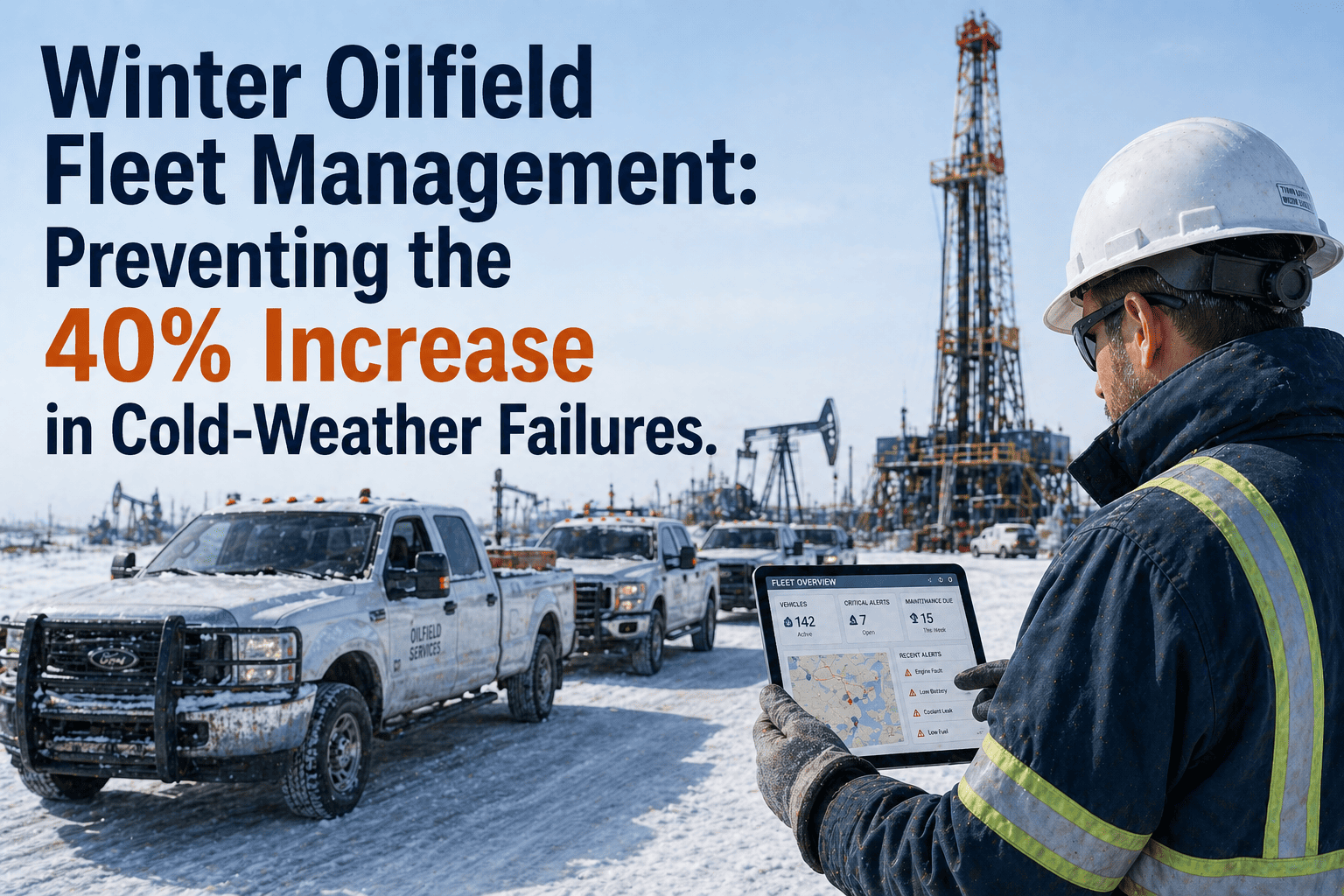
Winter Oilfield Fleet Management: Preventing the 40% Increase in Cold-Weather Failures
Oilfield fleets operating in northern basins experience a 40 percent surge in equipment failures during winter months. FleetRabbit's cold-weather protocols, predictive maintenance alerts calibrated for winter failure signatures, and automated winter-readiness inspection checklists keep operations running safely through harsh conditions.
Why Oilfield Fleets Experience 40% Higher Failure Rates in Winter
Northern basin oilfield operations in regions like Bakken, Montney, Duvernay, and Permian high-elevation areas experience sustained sub-freezing temperatures from November through March where overnight lows routinely reach -20°F to -40°F and daytime highs remain below 10°F for weeks at a time. Equipment designed for ambient temperature operation faces systematic performance degradation in these conditions — diesel fuel formulated for summer operation begins forming wax crystals at temperatures below 10°F that clog fuel filters and starve engines, battery internal resistance increases exponentially as temperatures drop reducing cranking amperage to 50 percent of rated capacity at 0°F and 25 percent at -20°F, hydraulic fluid viscosity doubles or triples creating sluggish system response and elevated pump loads during cold starts, tire pressure drops 1-2 PSI for every 10°F temperature decrease creating handling issues and accelerated wear, and DEF crystallizes at 12°F despite tank heater elements when vehicles sit idle for extended periods at remote wellsites.
Fleet managers implementing standard maintenance approaches discover these winter-specific failure modes only after breakdown occurrence — vehicles fail to start at remote drilling sites on Monday mornings after weekend temperature drops requiring emergency service calls costing $2,000-$5,000 per incident, hydraulic-powered equipment operates erratically during critical frac operations when fluid viscosity prevents proper valve actuation creating safety incidents and operational delays, fuel filter blockages strand vehicles at isolated wellhead locations requiring fuel system purging and filter replacement in sub-zero conditions, tire pressure warnings proliferate across the fleet as thermal contraction triggers TPMS alerts requiring manual inspection to differentiate actual leaks from temperature effects, and DEF system malfunctions trigger engine derate modes limiting vehicle capability to 5 MPH exactly when operational demand peaks during compressed winter drilling schedules.
The operational consequence manifests as a documented 40 percent increase in unplanned downtime events during November-March periods compared to summer baselines, with average repair costs per winter failure running 65-80 percent higher due to emergency service premiums, parts expediting fees for components unavailable locally, and extended labor hours for technicians working in extreme cold field conditions. Single vehicle failures cascade into project-level impacts where completion crews sit idle waiting for fuel trucks stranded by gelled diesel, drilling operations pause when service rigs cannot position due to hydraulic system failures, and pipeline integrity patrols fall behind schedule when inspection vehicles experience repeated cold-start issues.
Three Integrated Capabilities Preventing Winter Fleet Failures
FleetRabbit addresses seasonal cold-weather failure modes through automated inspection protocols, predictive maintenance alerts, and environmental monitoring that prevent breakdowns before they occur.
Automated Cold-Weather Inspection Protocols
FleetRabbit's digital DVIR system automatically activates supplemental winter inspection checklists when ambient temperatures drop below 32°F for 48+ consecutive hours, adding cold-weather verification items to standard pre-trip and post-trip inspection workflows. Drivers receive prompts verifying diesel fuel additive treatment preventing gelling, battery load test results confirming adequate cranking capacity, hydraulic fluid specification compliance for low-temperature operation, tire pressure readings adjusted for thermal contraction, and DEF system heater functionality verification. Inspections flagging deficiencies in any winter-critical system trigger automatic supervisor alerts and vehicle dispatch hold preventing deployment to remote locations until remediation is completed.
Predictive Alerts Calibrated for Winter Failure Signatures
FleetRabbit's AI predictive maintenance engine incorporates temperature-adjusted failure prediction algorithms that account for cold-weather stress on vehicle systems. Standard predictive models trained on summer operational data systematically underestimate winter failure risk — battery degradation patterns change when cold-soak cycles compound with age-related capacity loss, fuel system issues emerge only when diesel approaches gelling temperatures, and hydraulic pump wear accelerates when viscous fluid creates elevated startup loads. FleetRabbit's winter-calibrated algorithms analyze vehicle sensor data against temperature records and historical winter failure patterns to detect developing issues 2-4 weeks before breakdown occurrence, generating maintenance alerts that enable scheduled intervention before vehicles are stranded at remote locations.
Real-Time Environmental Monitoring and Operational Alerts
FleetRabbit integrates ambient temperature data from vehicle telematics sensors and weather service APIs to provide continuous environmental monitoring across fleet operational territory. When temperatures drop below equipment operating limits — diesel fuel cloud point thresholds, battery minimum cranking temperature ratings, hydraulic fluid viscosity specifications — FleetRabbit generates automatic alerts to dispatch coordinators and affected drivers with specific operational guidance. Alerts escalate based on severity and duration: temperatures between 0°F and -20°F trigger advisory notifications recommending extended warm-up periods and reduced idle times between operations, temperatures below -20°F generate warning alerts advising against extended idle periods where DEF freezing risk is elevated, and temperatures below -40°F create critical alerts recommending operational suspension until conditions moderate or supplemental warming equipment is deployed.
Automated Winter Protocols Prevent 73% of Cold-Weather Failures
FleetRabbit's integrated winter management architecture — automated cold-weather inspection checklists, predictive alerts calibrated for winter failure signatures, and real-time temperature monitoring with operational guidance — systematically addresses the five critical failure modes driving 40 percent winter breakdown increases.
FleetRabbit Winter Readiness Deployment Timeline
System Configuration and Baseline Assessment
FleetRabbit winter protocols are activated in system configuration, enabling automated inspection checklist modifications, predictive algorithm temperature calibration, and environmental monitoring alert thresholds. Fleet-wide battery health assessment is conducted using FleetRabbit's diagnostic integration with telematics systems, identifying vehicles with batteries showing degradation patterns requiring replacement before winter stress compounds age-related capacity loss. Fuel system inspection protocols verify diesel storage tank heating capability, fuel filtration systems rated for winter operation, and antigel additive inventory adequate for seasonal demand.
Preventive Maintenance Execution
Vehicles flagged during baseline assessment receive preventive maintenance interventions before winter conditions arrive. Degraded batteries are replaced with units rated for cold-cranking requirements at minimum expected ambient temperatures, hydraulic systems are flushed and filled with synthetic fluid specifications appropriate for -40°F operation, tire pressures are verified and adjusted to account for thermal contraction from ambient calibration temperatures, and DEF system heater elements are tested under load with replacements installed where functionality issues are detected. FleetRabbit tracks completion status across the fleet providing visibility to which vehicles are winter-ready versus requiring additional preparation work.
Driver Training and Equipment Staging
Fleet drivers receive training on FleetRabbit's winter inspection protocols, learning how to complete supplemental cold-weather checklist items including fuel additive verification, battery load testing procedures, and DEF heater operation confirmation. Emergency cold-start equipment including block heater cords, battery warming blankets, and fuel system circulation heaters are staged at primary vehicle parking locations with inventory tracked in FleetRabbit system. Dispatch coordinators are trained on environmental alert interpretation and operational decision protocols for extreme cold conditions.
Continuous Monitoring and Adaptive Response
FleetRabbit's predictive maintenance alerts continue monitoring for developing winter failure signatures throughout the season, generating early warnings when battery performance degrades, fuel system issues emerge, or hydraulic systems show stress patterns from cold operation. Environmental monitoring provides real-time temperature alerts enabling proactive operational adjustments when extreme cold periods approach. Post-winter analysis compares actual failure rates against historical baselines quantifying improvement delivered by systematic winter protocols.
Common Questions About Winter Fleet Management
Prevent the 40% Winter Failure Surge Through Systematic Cold-Weather Protocols
FleetRabbit's integrated winter management architecture delivers automated cold-weather inspection checklists verifying fuel additive treatment, battery cranking capacity, hydraulic fluid specifications, tire pressure adjustments, and DEF heater functionality before vehicle deployment to remote locations — predictive maintenance alerts calibrated for winter failure signatures detecting developing battery degradation, fuel gelling risk, hydraulic pump overload, and DEF heater malfunction 2-4 weeks before breakdown occurrence — and real-time environmental monitoring generating operational guidance when ambient temperatures drop below 0°F advisory threshold, -20°F warning threshold, and -40°F critical threshold requiring suspension consideration. Winter protocols reduce cold-start failures by 73 percent, decrease unplanned winter downtime by 68 percent, and eliminate emergency service calls costing $2,000-$5,000 per incident through systematic readiness verification and early intervention.
Deploy Winter Fleet Protocols Before First Freeze
Oilfield fleets operating in northern basins experience a documented 40 percent increase in equipment failures during November through March winter periods when sustained sub-freezing temperatures create systematic performance degradation across five critical failure modes — diesel fuel gelling below 10°F causing filter blockages and engine fuel starvation, battery capacity loss at 0°F to -20°F reducing cranking amperage below starting requirements, hydraulic fluid viscosity increases at -10°F creating sluggish response and pump overload, tire pressure thermal contraction triggering TPMS alerts and accelerated wear, and DEF system freezing despite heater elements when vehicles idle at remote wellsites. FleetRabbit's winter management architecture prevents these seasonal failures through automated cold-weather inspection protocols activating supplemental verification items when temperatures drop below 32°F for 48+ hours, predictive maintenance alerts calibrated for winter signatures detecting developing battery degradation and fuel gelling risk 2-4 weeks before breakdown, and real-time environmental monitoring generating tiered operational guidance at 0°F advisory, -20°F warning, and -40°F critical temperature thresholds with specific recommendations for extended warm-up requirements, idle time limitations, block heater deployment, and operational suspension consideration.