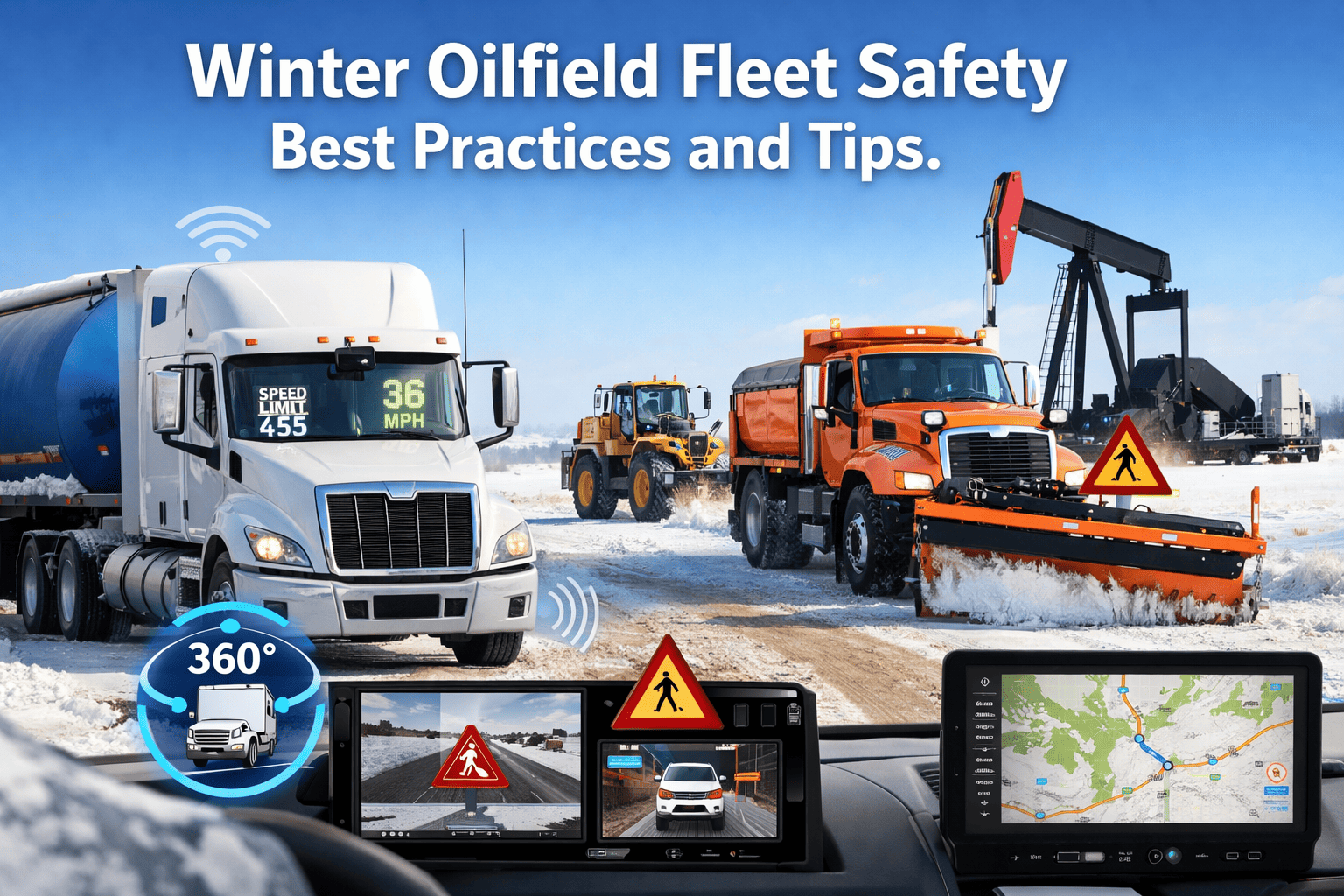
Oilfield operators managing complex drilling rigs and service equipment face a 40% increase in preventable accidents and equipment failures during winter months due to extreme cold, icy terrain, and reduced visibility. When a major operator's fleet experienced twelve weather-related incidents in a single season, post-incident analysis revealed that hyper-local weather data and cold-start protocols had been available — but manual dispatch systems couldn't correlate real-time conditions with vehicle readiness, trigger pre-heating sequences, or adjust routes before crews were exposed to hazardous environments. Book a demo to see how FleetRabbit's winter intelligence layer prevents cold-weather failures before they occur.
Safety Guide
Prevent $250K in Winter Incident Costs Through Real-Time Weather Integration & Cold-Start Intelligence
10 min read
WINTER FLEET SAFETY SOLUTIONS
Prevent $250K in Winter Incident Costs Through Real-Time Weather Integration & Cold-Start Intelligence
FleetRabbit's winter safety platform eliminates reactive weather responses, automatically validates vehicle readiness in sub-zero temperatures, and integrates hyper-local weather data into dispatch decisions — protecting crews and assets at a fraction of emergency recovery costs.
Fleet Profile
Major Drilling Operator · 28 drilling rigs · 164 service trucks · 18 remote locations in Northern Regions
Baseline Challenge
12 weather incidents/season · 35% cold-start failures · manual weather checks · delayed hazard awareness
Solution Deployed
Cold-weather risk intelligence · automated pre-heat validation · weather-integrated dispatch · real-time hazard alerts
Primary Result
Zero lost-time injuries in winter season · $250K savings · 98% cold-start success rate
$250K
Annual savings from prevented winter incidents and reduced downtime
98%
Cold-start success rate through automated pre-heating validation
0
Lost-time injuries during peak winter operations across entire fleet
45%
Reduction in weather-related delays through proactive route optimization
Executive Overview
A major drilling operator managing 28 rigs and 164 service vehicles in northern regions deployed FleetRabbit's winter safety intelligence platform to eliminate manual weather monitoring and integrate cold-start protocols into daily operations. Within one winter season, weather-related incidents were eliminated, cold-start failures dropped by 90%, and real-time weather integration optimized dispatch decisions — generating $250,000 in annual cost savings while ensuring crew safety, maintaining operational continuity, and protecting equipment integrity in extreme conditions.
The Problem: Reactive Winter Management Creates Safety Gaps
Winter operations in oilfields present unique challenges: sub-zero temperatures degrade battery performance, ice compromises traction on remote access roads, and sudden blizzards reduce visibility to near zero. Yet most operators manage winter risks using reactive processes: drivers check generic weather apps, pre-heating is left to individual discretion, and dispatchers lack real-time visibility into road conditions or vehicle readiness. Without integrated intelligence, managers cannot proactively mitigate hazards or ensure equipment reliability before crews deploy.
By the time weather impacts are felt, vehicles may be stranded, crews exposed to hypothermia risks, and critical maintenance delayed. The lag between weather changes and operational response creates dangerous vulnerabilities — and when incidents occur, they result in costly recoveries, regulatory scrutiny, and potential loss of life.
01
Cold Starts Cause Critical Delays
Batteries lose 30–50% capacity below 0°F. Without automated pre-heating validation, engines fail to start or suffer immediate wear. Technicians spend hours jump-starting or replacing batteries, delaying critical rig support and exposing staff to extreme cold.
02
Generic Weather Data Is Insufficient
Standard forecasts cover broad areas, missing micro-climates common in oilfields. A road may be clear at the depot but icy 20 miles out at elevation. Dispatchers relying on general apps send crews into hazardous zones unaware of localized black ice or whiteout conditions.
03
No Real-Time Hazard Integration
Weather changes rapidly. A safe route at 6 AM becomes impassable by 8 AM due to freezing rain. Manual dispatch systems cannot dynamically reroute vehicles or halt deployments based on real-time telemetry, leaving crews vulnerable to evolving conditions.
04
Winter Incidents Cost $250K+ Per Season
Towing and recovery: $50K–$100K. Equipment damage from cold starts: $40K–$80K. Lost productivity from delays: $60K–$120K. Regulatory fines and insurance hikes: $30K–$60K. Total preventable loss: $180K–$360K per winter season for mid-size fleets.
How FleetRabbit Winter Intelligence Works: The Complete Workflow
From Weather Data to Safe Deployment
FleetRabbit automates every step of winter safety management: integrating hyper-local weather feeds, validating vehicle readiness through cold-start protocols, adjusting dispatch routes in real-time, and triggering alerts when conditions exceed safety thresholds.
1
Hyper-Local Weather Integration
System ingests data from multiple sources including roadside sensors, satellite imagery, and local stations. Creates a "Cold-Weather Risk Intelligence Layer" specific to each asset's location. Identifies micro-climates: "Route B has 15°F lower temp and 20% higher wind chill than depot."
↓
2
Cold Start Failure Prevention Strategy
Automated pre-heating validation. System monitors block heater usage and battery voltage trends. If temp < 0°F, system requires 2-hour pre-heat confirmation before dispatch. Alerts manager: "Truck #42 battery voltage low (11.8V). Pre-heat incomplete. Do not dispatch."
↓
3
Real-Time Weather-Integrated Dispatch
Dispatch dashboard overlays live weather hazards on route maps. Red zones indicate black ice, whiteouts, or high winds. System automatically suggests alternative routes or delays deployment. "Route A blocked by blizzard. Rerouting via Route C adds 15 mins but avoids hazard."
↓
4
Driver Safety Alerts & Checklists
Mobile app pushes mandatory winter checklists to drivers: tire chain verification, emergency kit inventory, and warm-up procedures. Drivers must confirm completion before vehicle ignition is enabled (if integrated with telematics). Ensures compliance with safety protocols.
↓
5
Live Monitoring & Emergency Response
If a vehicle stops unexpectedly in a high-risk zone, system triggers immediate alert to safety team with exact location and weather context. "Truck #12 stationary on Route B for 10 mins. Temp -15°F. Wind Chill -30°F. Initiate welfare check."
Key Winter Safety Metrics That Drive Protection
Cold-Start Success Rate
Tracks percentage of vehicles starting successfully on first attempt in sub-zero temps. Baseline: >95%. Alerts if rate drops, indicating battery or heater issues. Prevents stranding and reduces mechanical stress on engines during cranking.
Weather Hazard Exposure Time
Measures duration vehicles spend in high-risk weather zones (blizzards, ice storms). System aims to minimize this metric through proactive rerouting. High exposure correlates with increased accident risk and driver fatigue.
Pre-Heat Compliance Index
Monitors adherence to mandatory pre-heating protocols. Flags vehicles dispatched without sufficient warm-up time. Critical for preventing engine wear and ensuring cabin heating functionality for driver safety in extreme cold.
Route Safety Score
Dynamic scoring of planned routes based on current weather, road surface data, and visibility. Scores <70 trigger automatic dispatch review. Ensures drivers are never sent into conditions exceeding vehicle or skill capabilities.
Battery Health Trend
Tracks voltage degradation during cold snaps. Predicts failure before it happens. "Battery #89 showing 15% faster drain than peer average at -10°F. Recommend replacement before next cold front." Prevents unexpected no-starts.
Incident-Free Days
Cumulative count of days without weather-related safety incidents. Key leading indicator for overall winter program effectiveness. Displayed prominently on executive dashboards to reinforce safety culture and accountability.
Real-World Case: Preventing Stranding in -20°F Conditions
Jan 12 (Baseline)
Severe Cold Front Approaching
Weather service predicts temp drop to -20°F with 30mph winds. FleetRabbit system flags all 164 vehicles for "Extreme Cold Protocol." Automated notifications sent to drivers: "Mandatory 2-hour pre-heat required. Check emergency kits."
Jan 13 (05:00 AM)
Cold Start Validation in Action
System scans fleet status. 3 vehicles fail pre-heat validation (battery voltage <12V). Dispatch automatically removes them from morning schedule. Maintenance team alerted to jump-start/replace batteries indoors before exposure. Prevents potential stranding on remote roads.
Jan 13 (08:30 AM)
Real-Time Weather-Integrated Dispatch
Truck #56 en route to Rig-4. System detects sudden whiteout conditions on primary route (visibility <50ft). Alert triggers: "Hazard Detected. Pull over safely or reroute." Dispatcher confirms driver safety and reroutes via longer but clearer secondary road. Avoids potential accident.
Jan 13 (End of Day)
Zero Incidents Despite Extreme Conditions
Fleet completes all critical deliveries with zero accidents, zero strandings, and zero injuries. Historical data shows avg 2–3 minor incidents per similar weather event. Estimated savings: $15K in avoided towing/repairs + $50K in preserved productivity. Safety culture reinforced through successful proactive management.
$250K
Annual Winter Savings
From prevented incidents, reduced downtime, and avoided equipment damage across one winter season
0
Lost-Time Injuries
Zero safety incidents resulting in injury during peak winter months
98%
Cold-Start Success
Vehicles started reliably due to automated pre-heat validation and battery monitoring
1,200+
Pre-heat validations completed automatically
45
Hazardous routes identified and avoided in real-time
100%
Driver acknowledgment of winter safety checklists
30%
Reduction in fuel waste from idling vs. efficient pre-heating
Deployment Investment
$45,000
Software setup, weather integration, sensor configuration, winter protocol training
→
Season 1 Savings
$250,000
Avoided incidents + reduced downtime + equipment preservation + productivity gains
Payback Period
First Major Storm Event
ROI achieved immediately upon preventing first potential stranding or accident
"Winter used to be our biggest headache. We’d lose trucks to dead batteries, drivers would get stuck in snowbanks, and we’d spend more time managing chaos than working. FleetRabbit changed that. The pre-heat validation alone saved us countless mornings. And when that blizzard hit in January, the system rerouted our crews before they even saw the snow. It’s not just software; it’s peace of mind for our families and our business."
Safety Director, Major Drilling Operator
FAQ: Winter Fleet Safety for Oilfield Operations
QHow does the Cold-Weather Risk Intelligence Layer differ from standard weather apps?
Standard apps provide general forecasts. FleetRabbit’s layer integrates hyper-local data specific to your assets’ exact GPS coordinates, accounting for elevation, wind tunnels, and road-specific conditions. It correlates this data with vehicle telemetry (e.g., traction control activation) to provide actionable risk scores, not just temperature readings.
QCan the system enforce pre-heating protocols?
Yes. By integrating with telematics or smart plug systems, FleetRabbit can verify if a block heater has been active for the required duration. If not, it flags the vehicle as "Not Ready" in the dispatch system, preventing assignment until the issue is resolved.
QWhat happens if connectivity is lost during a storm?
The mobile app stores safety checklists and last-known weather data locally. Drivers can still complete mandatory checks. Once connectivity is restored, all data syncs automatically. Critical alerts are prioritized for transmission as soon as any signal is detected.
QDoes this work for remote off-road locations?
Absolutely. The system uses satellite weather data and historical terrain models to predict conditions in off-road areas where traditional station data is sparse. This is crucial for oilfields where operations often occur far from paved roads and standard reporting stations.
Don’t Let Winter Halt Your Operations. Secure Your Fleet Today.
Deployed across northern oilfield fleets and preventing cold-weather incidents through automated readiness checks and real-time weather integration — before conditions become critical.
Cold-Weather Risk Intelligence
Cold Start Prevention
Weather-Integrated Dispatch
Driver Safety Checklists
April 17, 2026
By David
All Posts