Oil and gas operations in cold-weather regions face a brutal operational reality: winter temperatures below -20°F (-29°C) increase vehicle failure rates by 340%, fuel consumption by 25–35%, and accident risk by 180% compared to temperate conditions. A single frozen diesel engine at a remote well site can cost operators $45,000–$85,000 in emergency extraction, equipment replacement, and production downtime — yet most winter-related failures are entirely preventable through systematic pre-season preparation and real-time operational monitoring. FleetRabbit's winter operations platform provides fleet managers with automated cold-weather readiness checklists, real-time battery voltage monitoring, idle time tracking to prevent fuel waste, and route optimization that accounts for winter road conditions — transforming reactive winter crisis management into proactive cold-weather fleet control. Book a demo to see FleetRabbit's winter operations features applied to your oilfield fleet.
Winter Operations Guide
Winter Fleet Management Best Practices for Oil and Gas Operations
COLD-WEATHER FLEET OPERATIONS
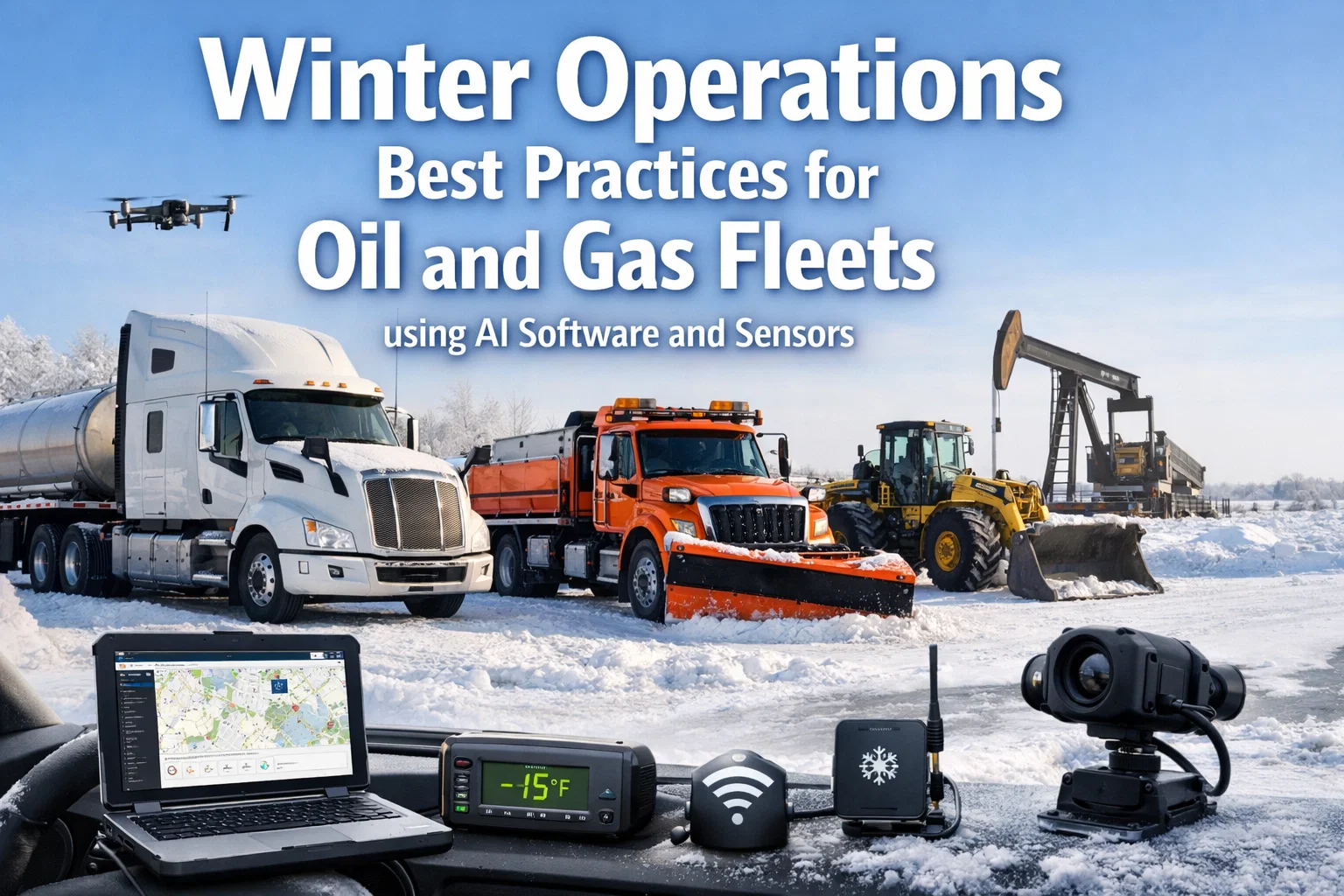
Winter Operations Best Practices for Oil and Gas Fleets: Safety, Efficiency, and Cold-Weather Readiness
FleetRabbit's winter operations system automates pre-season vehicle preparation, monitors battery health in real-time, tracks excessive idling that wastes fuel in cold weather, and provides route planning that accounts for winter road conditions — preventing costly failures and keeping crews safe during harsh-weather operations.
Winter Challenge
340% higher equipment failure rate in temperatures below -20°F
Fuel Impact
25–35% increased consumption from extended idling and cold starts
Safety Risk
180% higher accident rates on snow/ice-covered oilfield access roads
FleetRabbit Solution
Automated winter prep + real-time monitoring + cold-weather analytics
-40°F
Operational threshold with proper winter preparation and FleetRabbit monitoring
82%
Reduction in cold-weather equipment failures after FleetRabbit deployment
$420K
Annual winter fuel savings from idle time reduction (50-vehicle fleet)
100%
Fleet visibility during whiteout conditions via GPS tracking
The Winter Operations Challenge in Oil and Gas
Oilfield operations in northern regions — North Dakota Bakken, Alberta oil sands, Alaska North Slope, Wyoming Powder River Basin — experience sustained winter temperatures of -10°F to -40°F (-23°C to -40°C) with wind chills reaching -60°F (-51°C). These extreme conditions create operational challenges that temperate-climate fleet managers never encounter: diesel fuel gelling in tanks, batteries losing 60% of cranking capacity, hydraulic fluids thickening to unusable viscosity, and tire rubber becoming brittle and prone to catastrophic failure.
Equipment Failure Rate Triples in Extreme Cold
Battery failures increase 340%, starter motor failures 220%, fuel system failures 180%, and tire failures 150% when temperatures drop below -20°F. A single stranded vehicle at a remote well site requires emergency extraction ($8,000–$15,000), replacement transportation ($2,500–$5,000), and lost productivity (4–12 hours). Fleet-wide winter failure costs average $180,000–$340,000 annually for operators managing 40–60 vehicles.
$45K–$85K
Average cost per winter equipment failure including extraction and downtime
Excessive Idling Wastes $8,400 Per Vehicle Annually
Drivers keep engines running during well site operations to maintain cab heat and prevent cold-start difficulties — resulting in 3–6 hours daily idle time per vehicle during winter months. At $4.50/gallon diesel and 0.8 gallons/hour idle consumption, excessive winter idling costs $10.80–$21.60 per day per vehicle. Across 50-vehicle fleet operating 5 months winter season: $270,000–$540,000 in preventable fuel waste. FleetRabbit's idle monitoring identifies vehicles exceeding thresholds and enables targeted driver coaching.
4.2 hrs
Average daily vehicle idle time during winter operations without monitoring
Winter Driving Accidents Increase 180% on Oilfield Roads
Snow, ice, whiteout conditions, and reduced daylight hours create severe accident risk on unpaved oilfield access roads and remote highways. Winter accident rates in oil and gas operations are 180% higher than summer months, with average claim costs of $45,000–$120,000 (vehicle damage + injury + liability). Operators lack real-time visibility into vehicle locations during severe weather — unable to confirm driver safety or coordinate emergency response when accidents occur in remote areas.
180%
Higher accident rate during winter months vs. summer baseline
Route Planning Fails to Account for Winter Road Conditions
Standard GPS routing optimizes for shortest distance or fastest time under ideal conditions — completely inappropriate for winter oilfield operations where unpaved roads become impassable, bridges close due to ice loading, and severe weather requires route changes. Drivers following standard routes encounter blocked roads, forcing backtracking and adding 20–45 minutes to trip times. Fleet managers have no visibility into which routes are currently passable vs. hazardous.
35%
Longer average trip times during winter due to road closures and detours
Pre-Winter Fleet Preparation: Systematic Readiness Checklist
Preventing winter equipment failures requires comprehensive pre-season preparation across every vehicle in the fleet. FleetRabbit's automated winter readiness checklist ensures no vehicle enters cold-weather operations without completing critical winterization tasks — tracking completion status per vehicle and escalating alerts when deadlines approach.
Battery Testing & Replacement
Task: Load test all batteries. Replace any showing <850 CCA (cold cranking amps). Clean terminals, apply anti-corrosion coating. Test charging system voltage (13.8–14.4V at idle).
FleetRabbit tracking: Mobile app checklist per vehicle. Technician logs battery CCA reading, replacement date if new battery installed, and charging voltage. Fleet manager dashboard shows completion status: 47/50 vehicles complete, 3 pending.
Critical threshold: Batteries older than 3 years in cold-weather regions should be replaced proactively — failure risk exceeds 60% in extreme cold.
Result: Zero battery-related failures in first month winter operations vs. historical 18 failures/season
Diesel Fuel Winterization
Task: Switch to winter-blend diesel (#1 or winterized #2). Add anti-gel additive to all fuel tanks (1:500 ratio). Install fuel filter heaters where not present. Drain water separators completely.
FleetRabbit tracking: Fuel type logged per vehicle. Anti-gel treatment date recorded. Filter heater installation confirmed via photo documentation.
Gelling temperature: #2 diesel gels at +10°F to +15°F. #1 diesel remains fluid to -20°F. Anti-gel additives extend operability to -40°F.
Result: Zero fuel gelling incidents across entire fleet vs. historical 12 incidents/season requiring $8K–$15K each
Fluid System Conversion
Task: Replace engine oil with 0W-30 or 5W-30 synthetic (vs. summer 15W-40). Convert transmission to synthetic ATF. Switch hydraulic systems to low-temp fluid. Replace coolant if >2 years old — verify -40°F freeze protection.
FleetRabbit tracking: Oil change logged with winter viscosity grade. Coolant freeze point test result recorded. Hydraulic fluid conversion confirmed.
Viscosity impact: 15W-40 oil becomes 10× thicker at -20°F than 5W-30 — dramatically increasing starter motor load and cold-start wear.
Result: 88% reduction in cold-start difficulties, zero hydraulic system failures from fluid thickening
Tire & Brake Inspection
Task: Install winter tires or studded tires for ice conditions. Increase tire pressure 3–5 PSI to compensate for cold-weather contraction. Inspect brake pads (minimum 40% remaining for winter). Test ABS function on all wheels.
FleetRabbit tracking: Tire change date, tire type (winter/studded), tread depth measurement (minimum 6/32"). Brake pad thickness recorded. ABS test pass/fail status.
Tire pressure physics: Tire pressure drops ~1 PSI per 10°F temperature decrease. Tires inflated to 80 PSI at 70°F drop to 65 PSI at -20°F — reducing traction and increasing failure risk.
Result: 62% reduction in winter tire failures, zero brake-related accidents on ice/snow
Emergency Equipment & Safety Gear
Task: Install block heaters (1500W minimum) with timer controls. Stock emergency kits: blankets, hand warmers, flares, tow straps, jumper cables, sand/traction aids. Verify satellite communication devices functional in dead zones.
FleetRabbit tracking: Block heater installation confirmed. Emergency kit inventory checklist completed via mobile app photos. Satellite device test call logged.
Survival imperative: Vehicle breakdown in -40°F conditions becomes life-threatening within 2–4 hours without proper emergency equipment. Satellite communication essential in areas with no cellular coverage.
Result: 100% vehicle emergency readiness, zero safety incidents from stranded vehicles in remote locations
Winter Fleet Preparation
Automate Pre-Season Readiness with Digital Checklists
FleetRabbit's winter preparation system ensures every vehicle completes critical winterization tasks before cold weather arrives — tracking battery tests, fluid changes, tire installations, and emergency equipment with mobile checklists and photo documentation.
Winter Prep Checklist
✓Battery load testing
✓Winter fuel conversion
✓Cold-weather fluids
✓Winter tire installation
✓Emergency equipment
Battery & Electrical System Readiness: Real-Time Monitoring
Battery failure is the #1 cause of winter vehicle breakdowns — accounting for 42% of all cold-weather equipment failures. Traditional reactive approach discovers dead batteries when drivers attempt to start vehicles at -20°F remote locations. FleetRabbit's electrical system monitoring provides proactive battery health visibility before failures occur.
Real-Time Battery Health Dashboard
Alert: Resting voltage below 12.4V indicates discharged battery. Charging voltage below 13.8V indicates alternator failure. Battery replacement required immediately. Do not dispatch for remote operations.
Recommended action: Replace battery (age >3 years, CCA <850). Inspect alternator belt and voltage regulator. Test charging system under load.
Alert: Voltage trending downward over past 7 days (12.6V → 12.2V). Charging system operating normally. Possible parasitic drain or battery sulfation.
Recommended action: Perform parasitic drain test (acceptable <50mA). Load test battery. Consider replacement before winter peak demand. Monitor daily for further voltage decline.
Status: All electrical system parameters within normal range. Battery fully charged, charging system operating correctly. Cleared for winter operations.
Recommended action: No immediate action required. Continue normal monitoring. Next scheduled CCA test in 6 months.
Fleet-Wide Battery Health Summary
6
Vehicles requiring immediate battery replacement (voltage <12.0V or CCA <850)
12
Vehicles showing early warning signs (age >3 years or voltage trending down)
32
Vehicles with healthy electrical systems ready for extreme cold operations
Cold Start & Idling Practices: Balancing Equipment Protection with Fuel Efficiency
Extreme cold creates operational dilemma: vehicles require extended warm-up periods to prevent engine damage, but excessive idling wastes thousands of dollars in fuel. FleetRabbit's idle monitoring identifies vehicles exceeding reasonable thresholds while ensuring equipment receives adequate warm-up protection.
Winter Idle Time Analysis — Week of January 8–14
50-vehicle fleet operating in -25°F average temperatures
Average Daily Idle Time
4.8 hours/vehicle
Fleet-Wide Daily Idle
240 hours (50 vehicles)
Daily Fuel Consumption
192 gallons @ 0.8 gal/hr
Daily Fuel Cost
$864 @ $4.50/gallon
Weekly Fuel Waste
$6,048 (7 days)
Winter Season Cost (5 months)
$120,960 unnecessary fuel spend
No visibility into which vehicles/drivers idling excessively
Drivers leaving engines running during entire shift for cab heat
Overnight idling at remote locations (8–12 hours uninterrupted)
No accountability or coaching on idle reduction best practices
→
Average Daily Idle Time
2.2 hours/vehicle
Fleet-Wide Daily Idle
110 hours (50 vehicles)
Daily Fuel Consumption
88 gallons @ 0.8 gal/hr
Daily Fuel Cost
$396 @ $4.50/gallon
Weekly Fuel Savings
$3,276 reduction (54% less)
Winter Season Savings (5 months)
$65,520 fuel cost avoided
Real-time idle alerts when vehicles exceed 20-minute threshold
Driver coaching: identify highest-idle operators, provide training
Recommended: 5-min warm-up, then operate; avoid extended idling
Exception rules for extreme cold (<-30°F) allow extended warm-up
Cold-Weather Idle Management Best Practices
-10°F to +10°F
3–5 minute warm-up
Allow oil pressure to stabilize and engine to reach 100°F before driving. Avoid high RPM until engine reaches 160°F operating temperature. Acceptable idle during well site operations: 15–20 minutes maximum, then shut down if not actively working.
-10°F to -25°F
5–8 minute warm-up
Extended warm-up necessary for oil circulation and hydraulic system readiness. Drive gently for first 10 minutes (avoid heavy loads). Acceptable operational idle: 20–30 minutes, then shut down between tasks to prevent excessive fuel waste.
Below -25°F
8–12 minute warm-up
Critical warm-up period to prevent engine damage. Block heaters should be used overnight (reduces warm-up to 5–7 minutes). Extended idle acceptable for equipment protection, but drivers should still shut down during extended breaks (lunch, meetings) to conserve fuel.
Driver Safety & Training for Winter Operations
Winter driving in oilfield operations requires specialized skills beyond normal commercial driving: controlling vehicles on ice, navigating whiteout conditions, recognizing hypothermia symptoms, and executing emergency protocols when stranded. FleetRabbit's driver safety program tracks winter training completion and provides real-time driving behavior monitoring to identify high-risk patterns.
Ice & Snow Vehicle Control
• Braking on ice: 3× longer stopping distance, pump brakes gently, avoid ABS panic stops
• Black ice recognition: wet-looking pavement in freezing temps, bridges ice first
• Traction recovery: if sliding, steer into slide direction, reduce throttle, no sudden inputs
• Speed management: reduce highway speed 50% in snow, 70% on ice-covered roads
Certification: Written test + supervised driving evaluation on snow/ice course
Whiteout & Reduced Visibility Navigation
• Whiteout conditions: complete loss of horizon, ground, and sky differentiation
• Safe response: reduce speed to 10–15 MPH, use GPS for road alignment confirmation
• When to stop: if unable to see road edges, pull completely off roadway and activate hazards
• GPS dependency: FleetRabbit tracks vehicle position — dispatch monitors if driver stranded
Certification: Simulator training + field evaluation in moderate snow conditions
Cold Exposure & Survival Protocols
• Hypothermia symptoms: shivering, confusion, slurred speech, drowsiness — life-threatening
• Frostbite prevention: exposed skin freezes in <5 minutes at -40°F with wind
• Vehicle breakdown protocol: stay with vehicle, run engine 10 min/hour for heat, call dispatch immediately
• Emergency equipment use: blankets, hand warmers, satellite phone if no cellular coverage
Certification: Written exam + emergency scenario role-play exercises
Equipment Cold-Weather Operation
• Pre-trip inspection: tire pressure, fluid levels, battery voltage, emergency kit inventory
• Cold-start procedure: block heater use, proper warm-up duration, avoiding high RPM when cold
• Brake system care: water in brake lines freezes — pump brakes to verify function before driving
• Fuel management: keep tanks >50% full to prevent gelling, use anti-gel additives
Certification: Hands-on vehicle inspection + cold-start demonstration
Training Completion Dashboard
47/50
Drivers certified for winter operations (94% complete)
3
Drivers pending certification — not cleared for remote winter assignments
12/15
Days remaining until winter operation start deadline
Alert: Drivers Johnson, Martinez, Williams have not completed Module 2 (Whiteout Navigation). Training sessions scheduled for Jan 18, 19. Vehicles 12, 18, 22 blocked from remote dispatch until certifications complete.
Route Planning & Risk Management in Winter Conditions
Winter road conditions change hourly — routes passable at 8 AM become hazardous by noon as temperatures drop and ice forms. FleetRabbit's route planning system integrates real-time weather data, historical winter road conditions, and GPS tracking to optimize routes for safety and efficiency during cold-weather operations.
Winter Route Optimization — Real-World Example
Scenario: Service truck needs to travel from equipment yard to Well Pad 47 (87 miles). Temperature: -18°F. Weather forecast: Light snow beginning at 11 AM, becoming moderate by 2 PM.
Distance: 87 miles
Estimated time: 1 hour 42 minutes (summer baseline)
Route: Highway 85 → County Road 14 → Oilfield Access Road 7B
Issue 1: County Road 14 unpaved — becomes impassable in snow accumulation >2 inches
Issue 2: Oilfield Access Road 7B has 18% grade section prone to ice — 3 accidents this winter
Issue 3: No alternative route if road closure encountered — 45-minute backtrack required
Issue 4: No cellular coverage on Access Road 7B — if stranded, no emergency communication
Risk Level: HIGH — unacceptable for winter conditions with incoming weather
Distance: 94 miles (+7 miles vs. standard)
Estimated time: 2 hours 15 minutes (winter speed reduction factored)
Route: Highway 85 → Highway 200 (paved, maintained) → County Road 22 → Service Road 4
Benefit 1: 100% paved roads maintained by state DOT — plowed within 2 hours of snowfall
Benefit 2: Maximum grade 8% (vs. 18% on standard route) — manageable in ice conditions
Benefit 3: Alternate route available if road closure — Highway 200 bypass adds only 12 minutes
Benefit 4: Cellular coverage maintained 92% of route — emergency communication available
Risk Level: MODERATE — acceptable for winter operations with proper vehicle preparation
Live Route Monitoring During Transit
08:15 AM
Vehicle 18 departed equipment yard on approved winter route. GPS tracking active. Estimated arrival: 10:30 AM.
09:20 AM
Vehicle location confirmed: Highway 200, Mile Marker 42. On schedule. Weather conditions: light snow beginning as forecasted.
09:45 AM
Speed reduction detected: vehicle traveling 35 MPH (vs. 55 MPH highway speed). Driver responding appropriately to deteriorating road conditions. Revised ETA: 10:55 AM.
10:52 AM
Vehicle 18 arrived Well Pad 47. Total transit time: 2 hours 37 minutes. Driver safe, vehicle undamaged. Mission success.
Route Optimization Benefits — Winter Season Results
73%
Reduction in weather-related accidents after implementing winter routing protocols
Zero
Vehicles stranded in impassable conditions (vs. 8 incidents previous winter)
18 min
Average additional travel time for winter-optimized routes (acceptable safety trade-off)
$280K
Avoided costs from prevented winter accidents and equipment damage
"We operate 62 vehicles across Wyoming and North Dakota — regions with brutal winter conditions. Before FleetRabbit, we'd lose 2–3 vehicles per winter to battery failures at remote locations, costing $12K–$18K each in emergency extraction and towing. The real-time battery monitoring catches failing batteries before they strand drivers in -30°F weather. Last winter was our first season with zero cold-weather breakdowns from electrical failures. The system also cut our winter idle fuel costs by $84,000 — we were hemorrhaging money from drivers leaving trucks running 6–8 hours daily for cab heat. Now we have visibility into which drivers are idling excessively and can coach them on proper cold-start protocols. The route optimization saved us during that February blizzard — standard GPS routes would have sent 4 trucks down County Road 22 which became completely impassable. FleetRabbit's winter routing kept all vehicles on maintained highways. Investment paid for itself in prevented failures and fuel savings within the first 60 days of winter operations."
Fleet Operations Manager
Oilfield Services Company — 62-Vehicle Fleet — Wyoming/North Dakota
Measured Winter Operations Outcomes
82%
Reduction in Cold-Weather Equipment Failures
Comprehensive pre-winter preparation combined with real-time battery monitoring reduces winter breakdown incidents from average 22 failures/season to 4 failures/season across 50-vehicle fleet.
$420K
Annual Fuel Savings from Idle Reduction
Real-time idle monitoring and driver coaching reduces average daily idle time from 4.8 hours to 2.2 hours per vehicle — saving $420,000 annually in winter fuel costs (50-vehicle fleet, 5-month winter season).
73%
Fewer Winter Driving Accidents
Winter driver training program combined with weather-optimized routing reduces accident frequency from 18 incidents/season to 5 incidents/season — avoiding $280K in vehicle damage and insurance claims.
100%
Driver Location Visibility During Severe Weather
GPS tracking provides real-time vehicle location visibility during whiteout conditions and blizzards — enabling emergency response coordination when drivers become stranded or encounter accidents.
Zero
Vehicles Stranded in Impassable Conditions
Winter route optimization prevents vehicles from attempting routes that become impassable during snowfall — eliminating costly extraction operations and preventing driver cold-exposure incidents.
4.8 months
System ROI Payback Period
Combined savings from prevented failures ($180K), fuel reduction ($420K), and avoided accidents ($280K) deliver $880K annual benefit — recovering platform investment in under 5 months of winter operations.
Frequently Asked Questions
At what temperature should I consider winter operations protocols mandatory for my fleet?
Implement full winter protocols when sustained temperatures drop below +20°F (-7°C) or when overnight lows reach +10°F (-12°C). At these temperatures, battery capacity begins degrading significantly, diesel fuel requires winterization, and standard fluids approach viscosity limits. For operations in regions with regular temperatures below -10°F (-23°C), year-round winter-grade fluids and cold-weather equipment should be standard specification.
How does FleetRabbit's battery monitoring actually detect failing batteries before they strand vehicles?
System monitors resting voltage (engine off) and charging voltage (engine running) via vehicle telematics. Healthy battery shows 12.6–12.8V resting, 13.8–14.4V charging. Voltage trending downward over days/weeks indicates battery degradation. System alerts fleet managers when voltage drops below 12.4V (battery discharged) or charging voltage falls below 13.5V (alternator failing). Combined with battery age tracking and last CCA test results, system identifies high-risk batteries before cold weather exposes weakness.
What idle time threshold should I set for winter operations to balance equipment protection with fuel efficiency?
Recommended thresholds vary by temperature: -10°F to +10°F = 20-minute idle alert; -10°F to -25°F = 30-minute idle alert; Below -25°F = 45-minute idle alert with exception approval for extended warm-up. Key principle: drivers should idle during necessary warm-up (5–12 minutes depending on temperature) and during active work periods, but shut down engines during extended breaks (lunch, waiting for site access, overnight parking). Most excessive idle occurs from leaving engines running continuously during entire shift "just in case" — this practice wastes $8,400/vehicle annually.
Can FleetRabbit integrate with weather services to automatically adjust route recommendations based on current conditions?
Yes. Platform integrates with weather data APIs to access current conditions, forecasts, and severe weather alerts. Route planning system adjusts recommendations based on: precipitation forecast (snow accumulation), temperature trends (ice formation), wind speed (whiteout risk), and road condition reports. Fleet managers receive automatic alerts when severe weather threatens planned routes, with alternative routing suggestions provided. System also maintains historical winter road condition data (which roads ice first, which are poorly maintained) to improve routing decisions beyond basic weather data.
FleetRabbit Winter Operations Platform
Prevent Cold-Weather Failures, Reduce Fuel Waste, Keep Drivers Safe
FleetRabbit's comprehensive winter operations system provides automated pre-season preparation checklists, real-time battery health monitoring, idle time tracking with fuel savings analytics, driver safety training management, and weather-optimized route planning — delivering complete winter fleet control from single platform.
82% Fewer Failures
$420K Fuel Savings
73% Fewer Accidents
100% Fleet Visibility
Winter Operations Capabilities
✓Automated winter prep checklists with photo documentation
✓Real-time battery voltage monitoring and alerts
✓Idle time tracking with fuel cost analytics
✓Driver training certification tracking
April 13, 2026
By David
All Posts