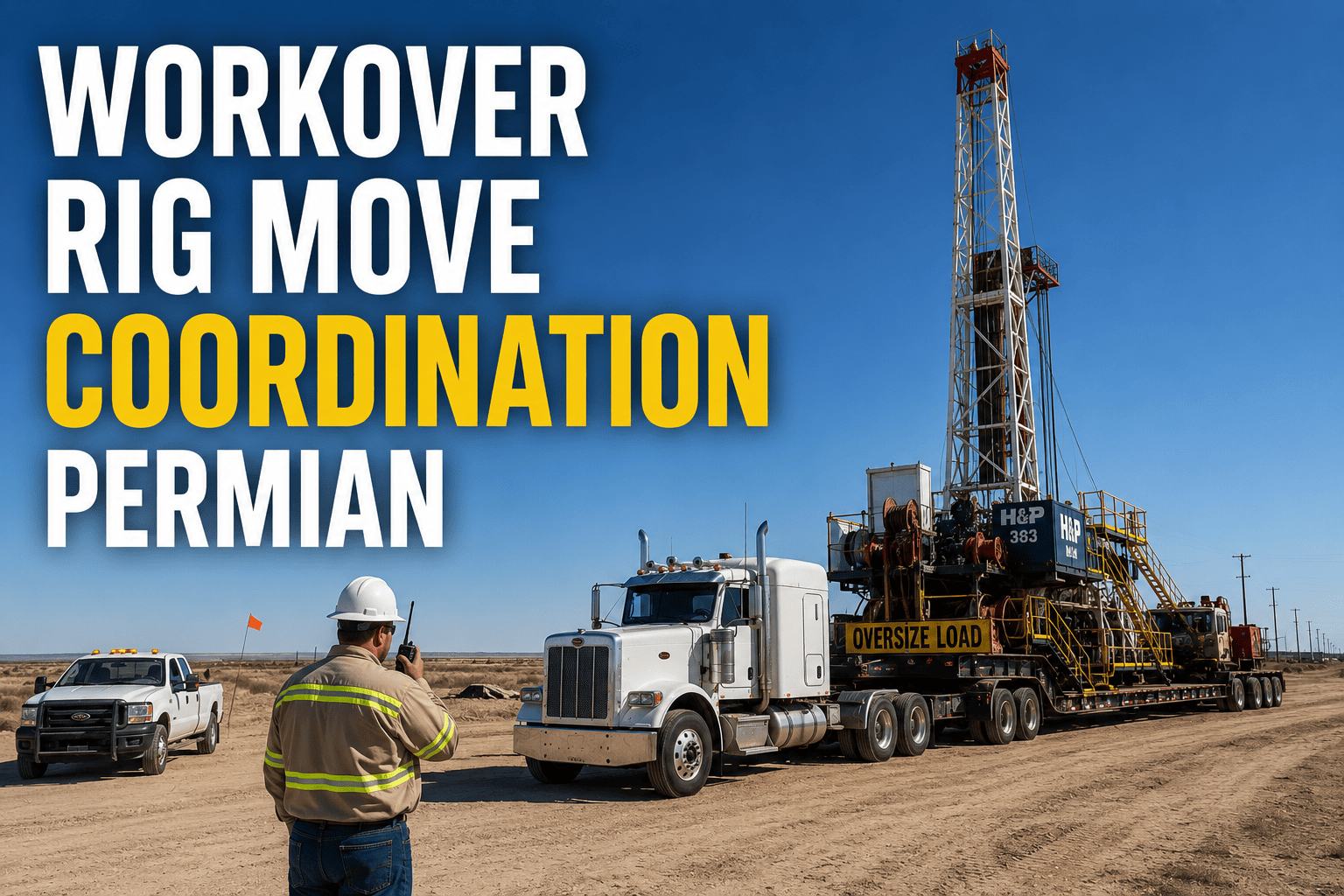
A workover rig move sounds simple on paper: pick up the rig, drive it to the next well, rig up, get back to work. In the Permian Basin, it rarely works that way. A single move pulls together a heavy-haul crew, a crane operator, a pump truck, a crew van, and a location that may not even be ready yet. When even one of those pieces arrives late, the entire crew sits on the clock doing nothing, and that standby time is quietly eating into every workover budget in the basin.
A poorly coordinated workover rig move can cost 8,000 to 20,000 dollars in crew and equipment standby per move, on top of the move itself. With most Permian operators running 3 to 6 rig moves monthly per rig, uncoordinated dispatch quietly drains 100,000 dollars or more a year. Centralized move coordination cuts standby hours by 30 to 45 percent and gets rigs back to earning revenue faster.
Why Rig Moves Turn Into Standby Bills
A workover rig move in the Permian is really four or five separate operations happening on the same timeline: permitting and location prep, heavy-haul transport, crane rig-up, and crew mobilization. Each one is usually run by a different vendor or a different dispatcher, often communicating through phone calls and text threads instead of a shared schedule. That works fine until one link in the chain slips. A rig that was supposed to move Tuesday afternoon gets delayed to Wednesday morning because the previous well ran long, but nobody tells the crane company, so the crane shows up on Tuesday and sits idle. The crew, already staged for a morning rig-up, ends up on paid standby waiting for a location that isn't ready.
The Hidden Cost of Disconnected Dispatch
Fleet and logistics teams that track this closely usually find the direct move cost, the trucking and crane invoice, is only part of the picture. Standby pay for crews, idle crane hours, detention charges on heavy-haul trucks, and the ripple effect on the next well's schedule often add 25 to 40 percent on top of the planned move budget. Multiply that across dozens of moves a month across a multi-rig program, and it becomes one of the largest controllable costs in a well servicing operation.
A Typical Uncoordinated Move
Picture a rig finishing a job at Location A on a Tuesday morning. The heavy-haul trucks are booked for Wednesday, the crane is booked for Wednesday afternoon, and the workover crew is scheduled to start Thursday at Location B. But Location A's job runs eight hours over. Nobody updates the crane company. The crane arrives Wednesday afternoon to an empty pad, waits four hours, then leaves. The crew still shows up Thursday morning as planned, but rig-up hasn't happened, so they sit on standby until midday. That single scheduling gap can cost more in wasted hours than the entire move would have cost if it ran on time.
FleetRabbit gives dispatchers one live view of heavy-haul trucks, cranes, and crew vehicles across every rig move in the Permian. See exactly where each asset is, catch delays before they cascade, and keep crews off standby. Sign up free and coordinate your next move today.
The Real Cost Breakdown Of A Rig Move
Understanding where the money actually goes during a rig move makes it much easier to see where coordination pays off. The table below breaks down typical cost components for a standard Permian workover rig move and where the biggest standby risk usually shows up.
| Move Component | Typical Cost Range | Standby Risk | Coordination Fix |
|---|---|---|---|
| Heavy-Haul Transport | 1,500 to 3,500 dollars per load | Detention charges when location or crane isn't ready on arrival | Share live location-ready status before dispatching trucks |
| Crane Rig-Up | 150 to 300 dollars per hour | Idle crane hours billed while waiting on substructure or permits | Sequence crane arrival against confirmed heavy-haul delivery times |
| Crew Mobilization | 3,000 to 6,000 dollars per crew | Standby pay when rig-up runs behind the crew's arrival | Delay crew dispatch until rig-up is confirmed on track |
| Location Prep | 2,000 to 5,000 dollars | Grading or permitting delays that push back the entire move window | Flag location readiness milestones before booking transport |
| Schedule Ripple Effect | Varies by rig count | A delayed move pushes back every following well on the schedule | Maintain one shared move calendar across all vendors and crews |
Building A Rig Move Schedule That Actually Holds
The fleets and well servicing companies that keep standby costs down aren't necessarily using different vendors, they're using a different process. The move sequence gets planned backward from the crane appointment, since the crane is usually the least flexible resource. Heavy-haul dispatch times are built around confirmed crane and location-ready windows rather than a fixed calendar date. Crew mobilization is the last piece to launch, triggered only once rig-up is tracking on schedule, not the moment the previous job wraps up.
Real-Time Visibility Changes The Math
The biggest shift for Permian well servicing operations has been moving away from phone-call coordination toward shared, real-time visibility. When a dispatcher can see that the previous job is running four hours over, they can hold the crane booking and delay the crew call before either vendor rolls a truck. That single decision, made two hours earlier than a phone call would have caught it, is often the difference between an on-time rig-up and a full day of standby pay.
What Good Coordination Looks Like Day-To-Day
In practice, good coordination means every stakeholder, the operator, the heavy-haul provider, the crane company, and the crew supervisor, is working off the same live schedule instead of five separate ones. Delays get flagged the moment they happen instead of being discovered when a truck already on the road calls in confused. Rig moves that used to average 10 to 14 hours of combined standby across all vendors often drop to 4 to 6 hours once everyone is working from a single, updated schedule.
FleetRabbit connects heavy-haul, crane, and crew scheduling into a single live dashboard built for Permian rig moves. Dispatchers catch delays before trucks roll and crews get called at the right moment, not too early and not too late. Book a demo to see it running on your own rig schedule.
Frequently Asked Questions
Turning Rig Moves From A Cost Center Into A Controlled Process
Rig moves will always involve multiple vendors and moving parts, that's the nature of well servicing work in the Permian. But the standby costs that come with disconnected scheduling are not a fixed cost of doing business, they're a coordination problem with a clear fix. Operators who bring heavy-haul, crane, and crew scheduling onto one shared timeline consistently see standby hours drop within weeks, not months, and that saved time goes straight back into billable rig hours.
FleetRabbit brings heavy-haul, crane, and crew dispatch into one live schedule built for Permian rig moves. Catch delays before trucks roll, keep crews working instead of waiting, and protect your rig move budget on every job.