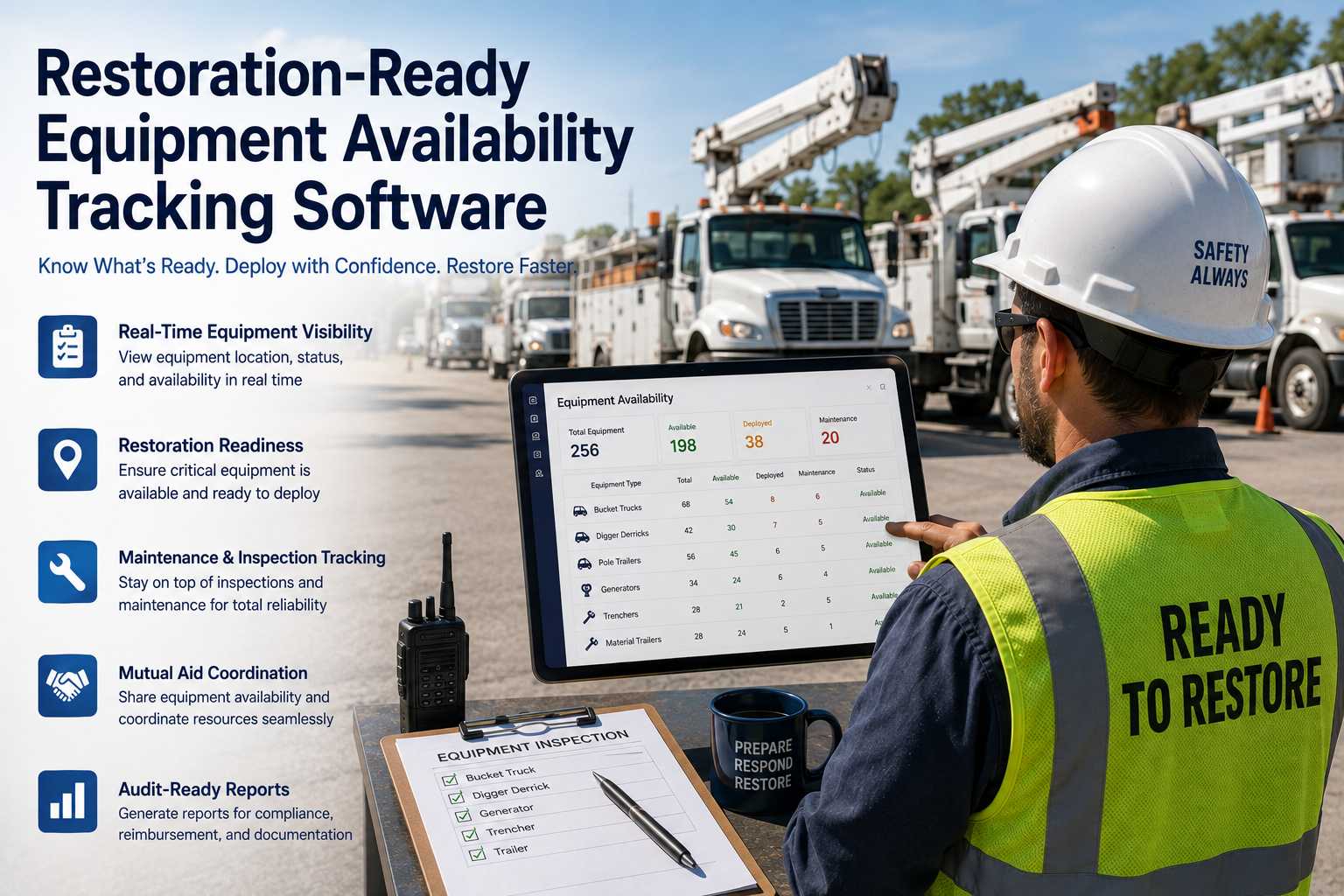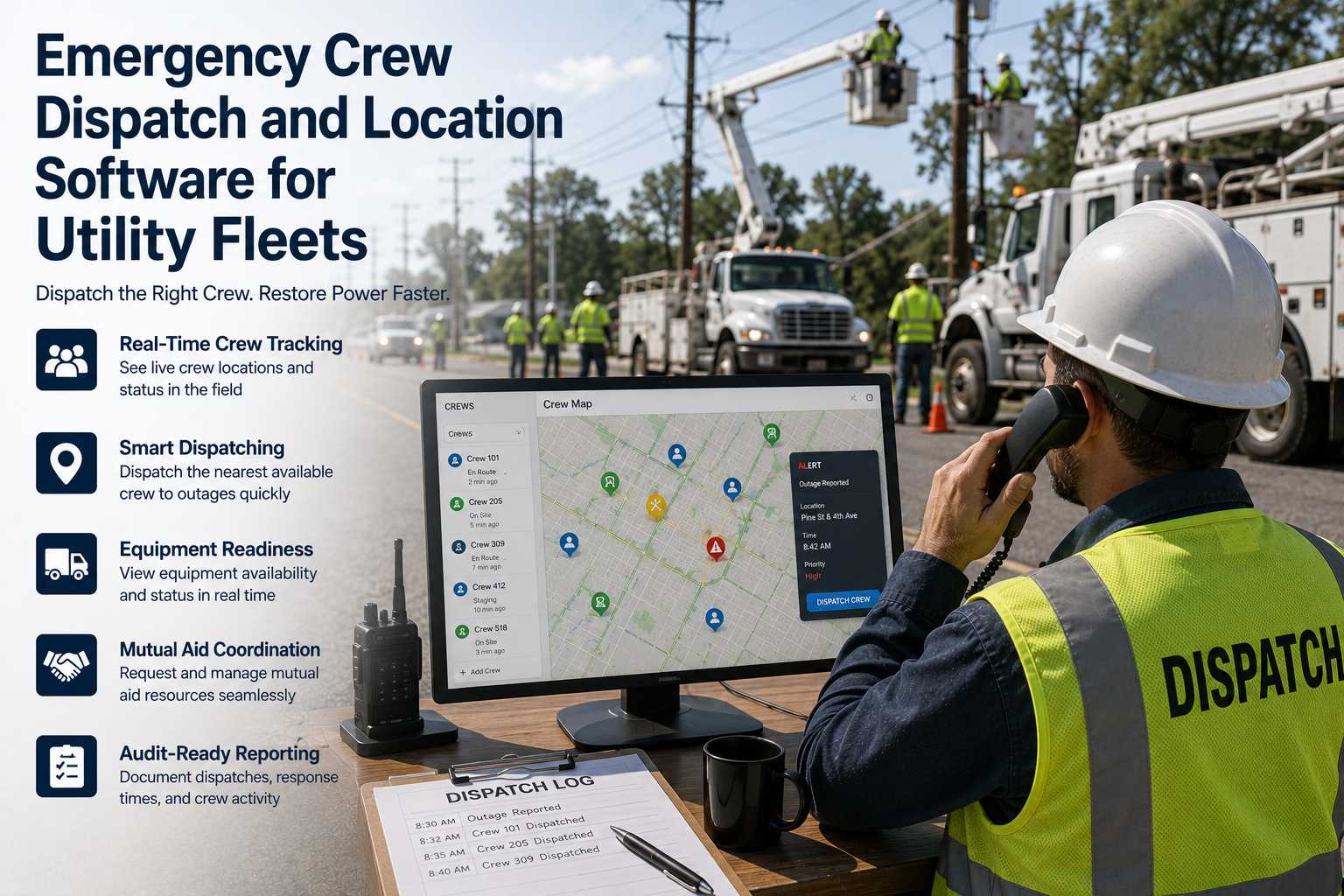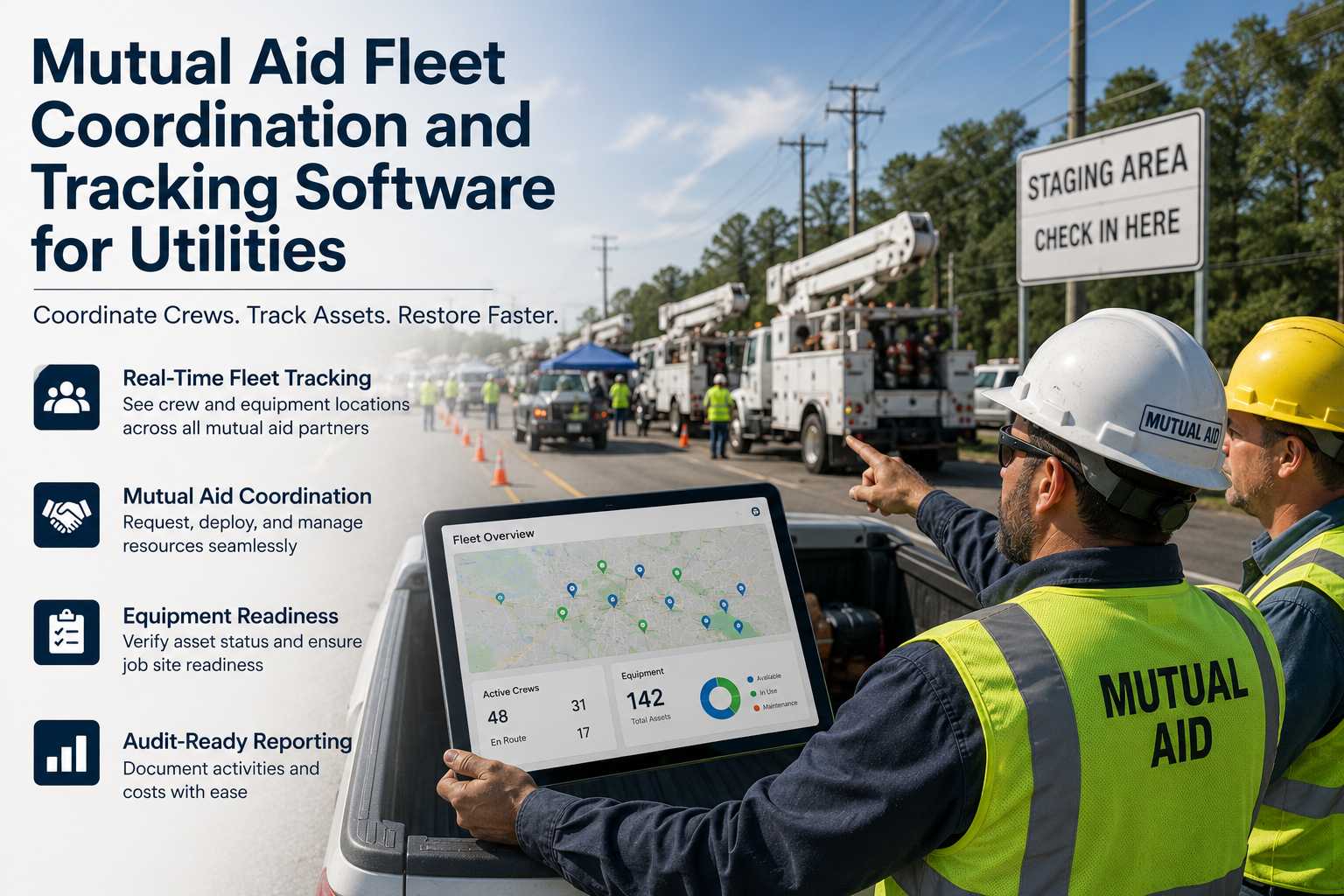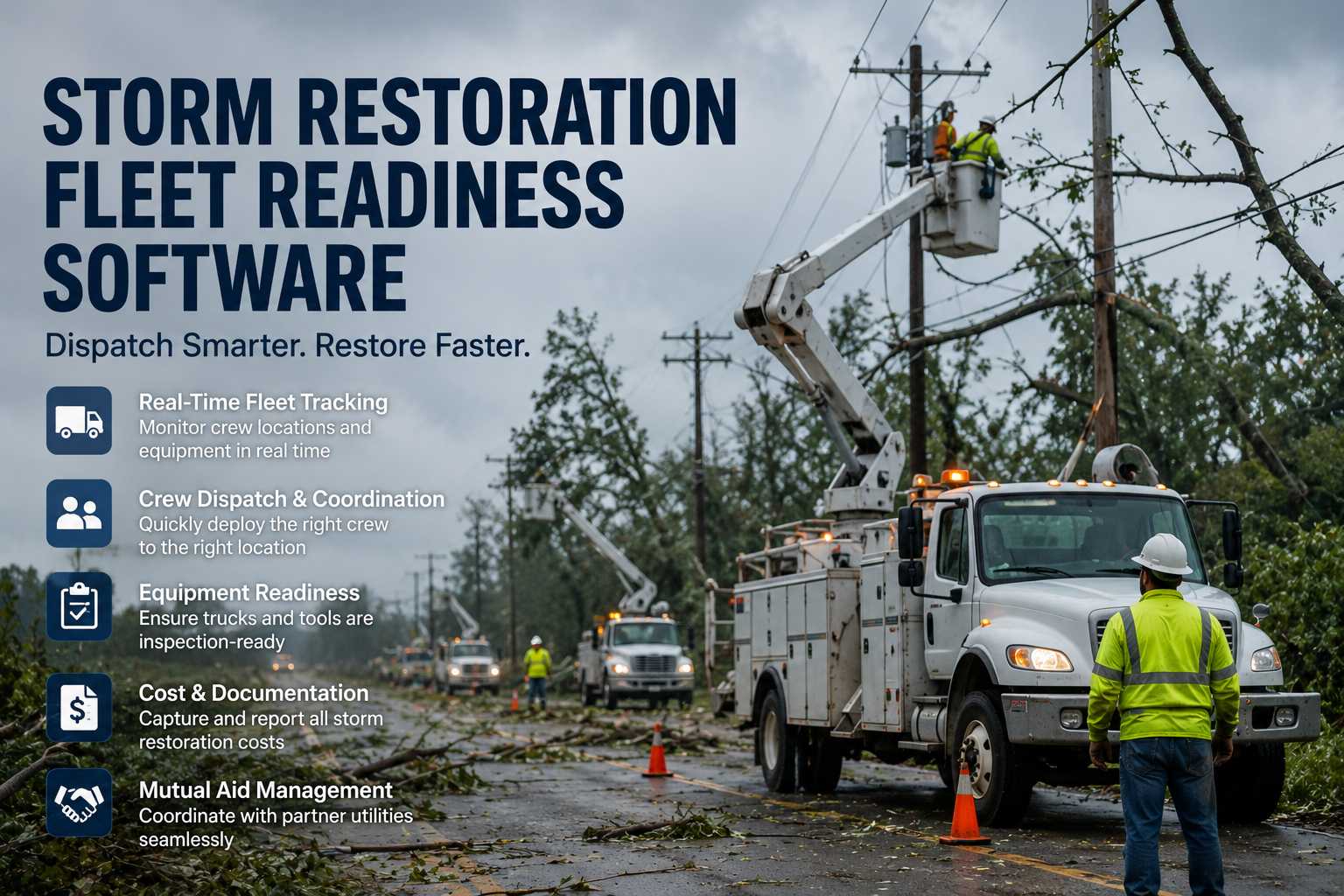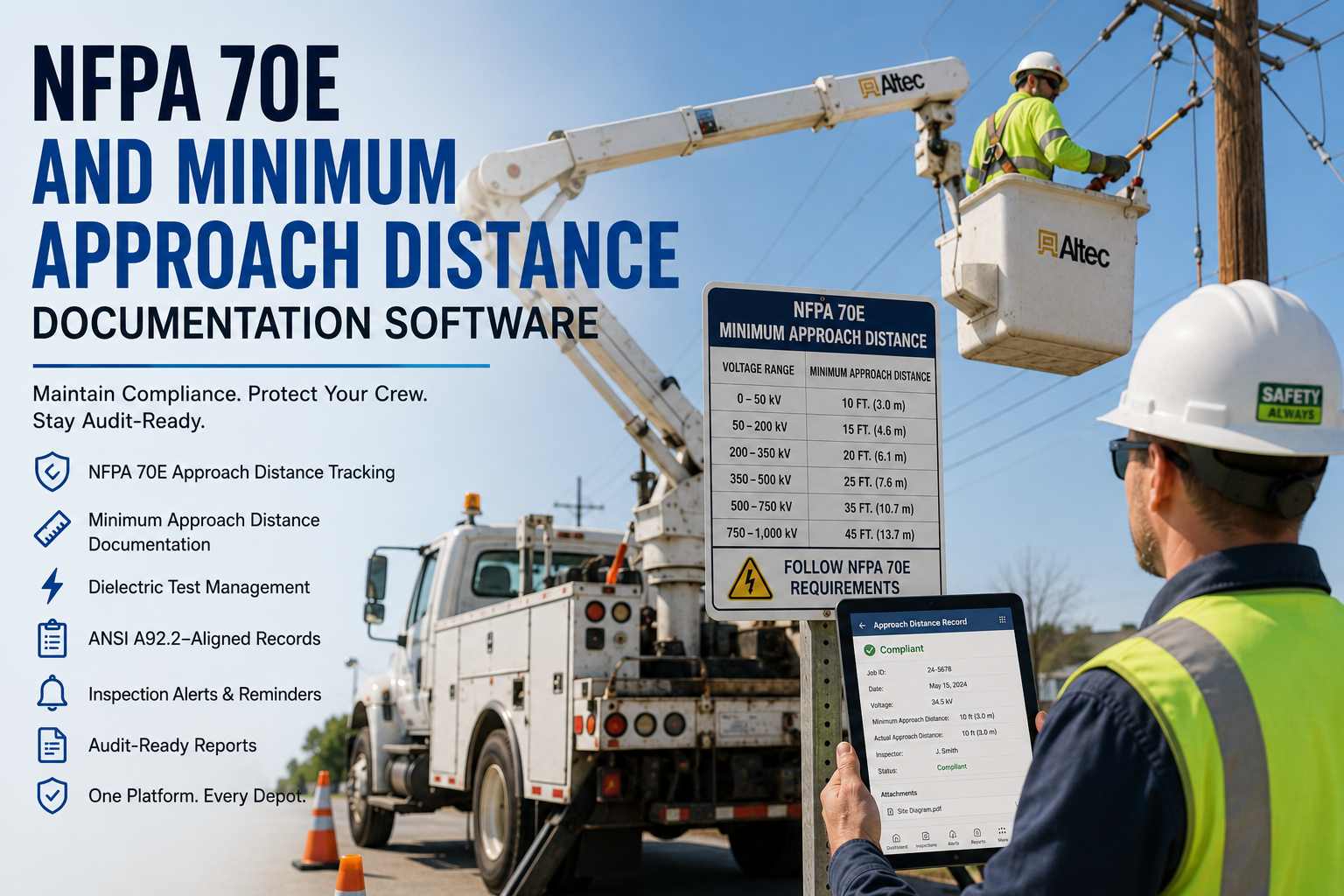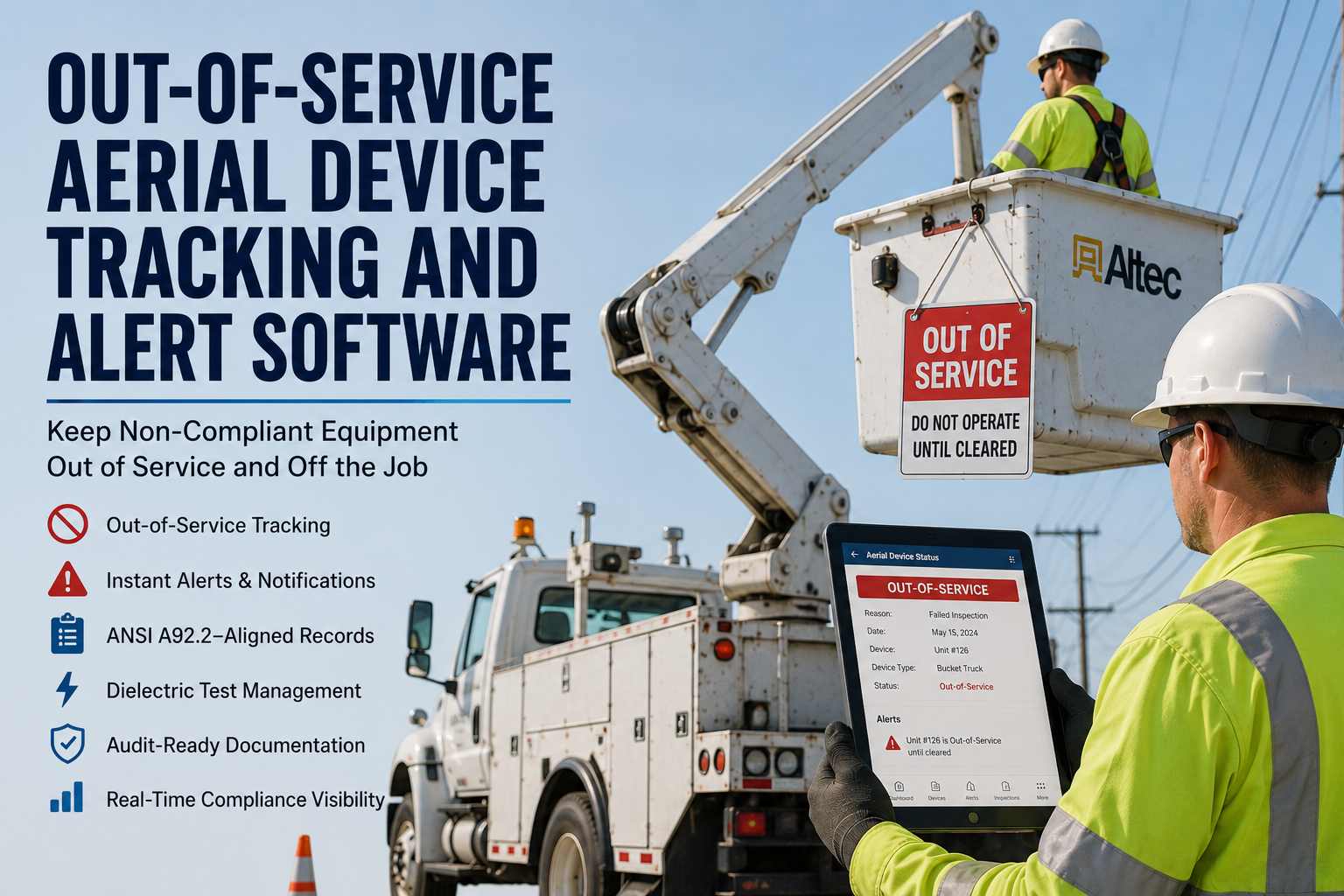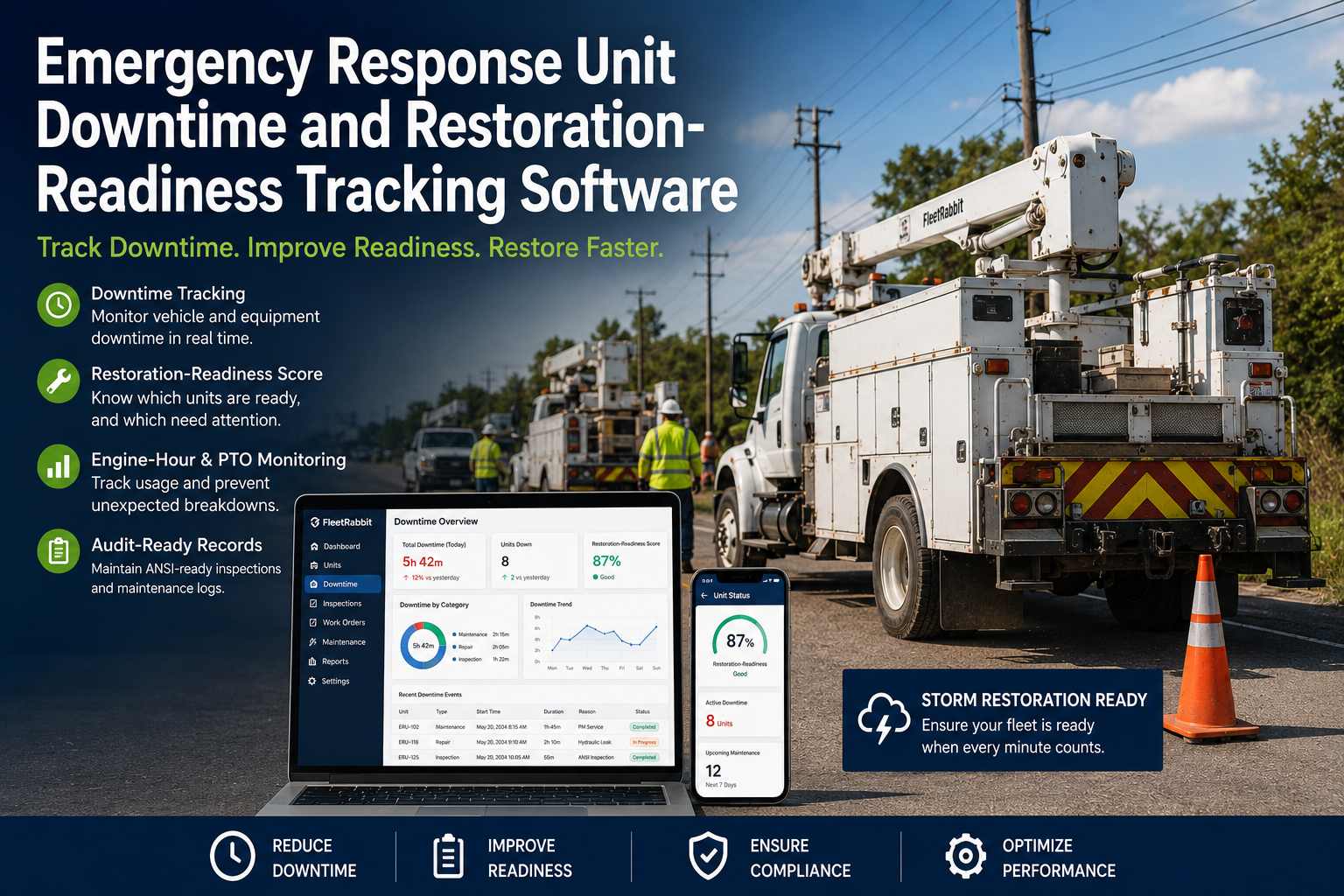
Electric power utilities, regional cooperatives, and emergency disaster recovery contractors operate under extreme outage restoration deadlines: deploying mobile command rigs, storm response trucks, and emergency support units across devastated grid infrastructure. When in-field equipment failures, dead auxiliary batteries, blown inverter circuits, and unverified dielectric test records are tracked casually on paper cab sheets and phone logs, restoration dispatchers lose visibility into true root-cause bottlenecks, risking prolonged customer outages and dangerous dispatch delays during severe weather events. Fleet Rabbit delivers dedicated emergency response unit downtime and restoration-readiness tracking software, combining real-time equipment telemetry, auxiliary generator runtime triggers, and digital inspection workflows into one streamlined platform. Pinpoint staging and mechanical delay causes, maximize storm recovery uptime, and log downtime events offline in remote right-of-way storm damage corridors with zero cellular coverage. Book a Demo to see Fleet Rabbit emergency response downtime tracking in action.
APEX MODERN GLASS-SLATE HEROAutomated Downtime & Restoration-Readiness Software
Track storm call-out bottlenecks, differentiate mechanical failures from staging wait times, automate auxiliary generator PM triggers, and manage offline field DVIRs across emergency utility fleets.
Why Generic Tools Fail Emergency Response Fleets
Standard fleet telematics apps track highway road mileage and simple ignition timestamps, failing to distinguish between active storm restoration work, mutual-aid staging wait times, and critical onboard equipment failures.
Active Restoration vs. Staging Idle Blindspots
Emergency response units spend days idling at substations or mutual-aid staging areas; generic GPS trackers misclassify waiting idle time as productive operation, masking supply-chain and staging bottlenecks.
Unrecorded Auxiliary System Failures
Repeated downtime caused by tripped inverters, dead auxiliary battery banks, or overheated scene lighting generators get noted verbally on phone calls, leaving managers without data to overhaul mobile command systems.
Lapsed Dielectric Certifications at Staging
Units arriving at emergency storm yards with unverified or expired ANSI A92.2 high-pot dielectric test certificates get turned away by safety directors, stranding utility crews and delaying storm restoration.
Remote Outage Signal Dead Zones
Severe weather frequently destroys regional cellular infrastructure in remote rights-of-way. Cloud-only apps crash, preventing operators from logging downtime reasons, daily walkarounds, or emergency repair tickets.
How Fleet Rabbit Tracks Downtime & Ensures Storm Readiness
Fleet Rabbit integrates telemetry, digital safety inspections, and offline downtime logging into one unified storm restoration management hub. Request a 1-on-1 walkthrough.
Real-Time Downtime Categorization
Classify storm recovery stoppages instantly—separating mechanical breakdowns, mutual-aid staging delays, and generator faults from active power restoration work.
Engine & Generator-Hour PM Alerts
Automatically schedule engine oil flushes, generator filter replacements, and auxiliary battery load tests based on actual engine run-hours and generator workload.
Storm Readiness Dispatch Lockouts
Units with overdue mechanical PMs, expired dielectric test certificates, or defective grounding sets are automatically locked from storm dispatch clearance until signed off.
Full Offline Mobile Mode
Lineworkers log stoppage reasons, complete photo-verified DVIRs, and record auxiliary generator meters offline; data auto-syncs securely once connectivity is restored.
Closed-Loop Defect Routing
Failed checklist items instantly generate prioritized repair tickets with attached photos routed directly to utility yard mechanics and mobile service trucks.
Substation & Staging Geofences
Set up automated geofence perimeters for substations, mutual-aid staging yards, and disaster zones to track exact crew arrivals, transit times, and staging duration.
Safety, OSHA & Utility Standards
Fleet Rabbit’s emergency response unit downtime and inspection workflows are structured to meet statutory utility safety standards across major operating regions.
Supports OSHA 1910.269 electric power generation rules, OSHA 1926 Subpart V transmission standards, ANSI/SAIA A92.2 aerial device mandates, and DOT FMCSA Part 396 DVIRs.
Meets CSA C225 vehicle-mounted aerial device safety rules, provincial Occupational Health and Safety power utility mandates, and NSC Standard 13 pre-trip inspection standards.
Aligns emergency service fleet and access equipment maintenance with LOLER 1998 lifting operation rules, PUWER 1998 work equipment directives, and high-voltage utility safety regulations.
Supports AS/NZS 1418 elevating work platform and vehicle standards, Safe Work Australia electrical utility codes, and National Heavy Vehicle Regulator (NHVR) roadworthiness compliance.
Emergency Response Unit Downtime Software Comparison
A feature-level comparison focused on utility emergency downtime tracking, auxiliary generator telemetry, dielectric test compliance, and offline storm capabilities. Competitor data sourced from public records as of 2026. Request a technical comparison.
| Capability | Fleet Rabbit | Fleetio | Samsara | Generic Tools |
|---|---|---|---|---|
| Pricing (per asset) | $5/month | $4–10/month | $27–60/month | Variable ($$$) |
| Restoration vs. Staging Downtime Tracking | Native & automated | Not available | Not available | Manual entry only |
| Engine & Auxiliary Generator PM Alerts | Native & automated | Requires custom setup | Requires custom setup | Manual entry only |
| ANSI Dielectric Tracking & Lockouts | Native & automated | Manual file upload only | Manual file upload only | Not available |
| Full Offline Mobile Sync | Full offline mode | Limited | Limited | Limited |
| Free Trial | 14 days, up to 3 assets | 14 days | Demo only | Demo only |
| Contract Terms | Monthly or annual | Annual billing discount | 3-year minimum | Annual / Multi-year |
5-Step Implementation Roadmap
Fleet Rabbit provides an accelerated deployment program engineered for electric utilities, taking your emergency response units from initial mapping to live downtime tracking in two weeks.
Chassis & Auxiliary Import
Import emergency response units, command bodies, onboard generators, power inverters, and active dielectric test certificates.
Downtime Reason & Staging Setup
Configure customized storm restoration downtime codes (generator fault, inverter trip, mutual-aid wait, parts delay, weather stop).
Dielectric & Safety Lockout Rules
Set up 90/60/30-day renewal warnings for dielectric test certificates and automated dispatch locks on uncertified units.
Crew & Dispatcher Rollout
Equip lineworkers, field mechanics, and storm restoration dispatchers with the intuitive offline-first mobile maintenance app.
Live Operations Board Go-Live
Activate real-time storm staging readiness indicators, defect triage queues, and historical downtime analytics.
2-Week Deployment Plan & Results
Modernize emergency response unit downtime tracking, staging readiness, and safety compliance with zero disruption to active utility operations. Request an onboarding plan.
Week 1: Setup & Configuration
- Audit historical maintenance logs, auxiliary generator run-hours, and past dielectric test reports
- Set up automated 90/60/30-day renewal warnings for ANSI hot-stick tool and boom tests
- Assign user permission levels for storm crew operators, shop mechanics, and dispatchers
Week 2: Field Pilot & Go-Live
- Conduct quick 15-minute technician training on logging field downtime and offline pre-trip DVIRs
- Validate automated work order creation on simulated electrical and auxiliary generator faults
- Activate central operations dashboard with live storm dispatch readiness indicators and audit reports
Eliminate Restoration Bottlenecks and Protect Line Crews
Track mechanical and staging downtime root causes, prevent uncertified equipment dispatches, and keep emergency fleets operating safely. Start today at $5/asset/month with a 14-day free trial.
Real-World Operational Results
Proven operational outcomes reported by electric utility contractors and regional power cooperatives. Request the full utility case study.
Downtime Reduction & Storm Staging — 45-Unit Emergency Fleet
An electrical contractor managing 45 emergency response and trouble trucks faced severe staging delays during hurricane call-outs due to unrecorded battery failures and unverified dielectric test dates. Fleet Rabbit centralized test records and introduced 1-touch downtime tracking, reducing storm recovery delays by 38% and saving over $64,000 in prevented downtime.
Auxiliary Generator PM Maintenance — 30-Unit Emergency Operation
A regional electric cooperative experienced repeated onboard generator breakdowns and dead battery banks during multi-day ice storm recovery due to calendar servicing that ignored heavy storm idle hours. Fleet Rabbit aligned PM schedules with real auxiliary run-hours, cutting unscheduled electrical breakdowns by 45% and keeping response units 100% field-ready.
Frequently Asked Questions
Upgrade Your Emergency Response Fleet in Less Than 2 Weeks
Automate downtime root-cause tracking, auxiliary generator PM alerts, and ANSI dielectric compliance at $5/asset/month with a 14-day free trial.