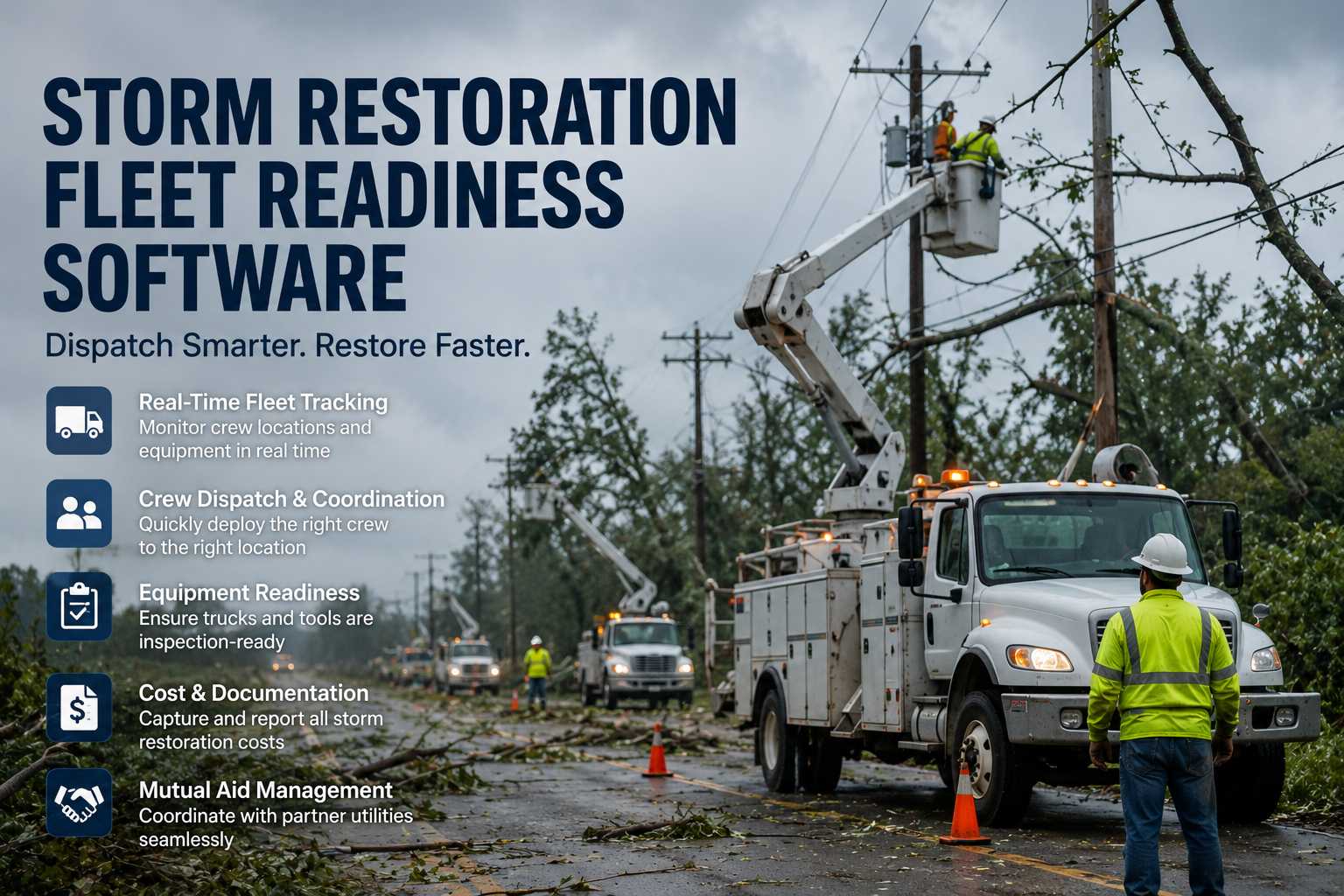
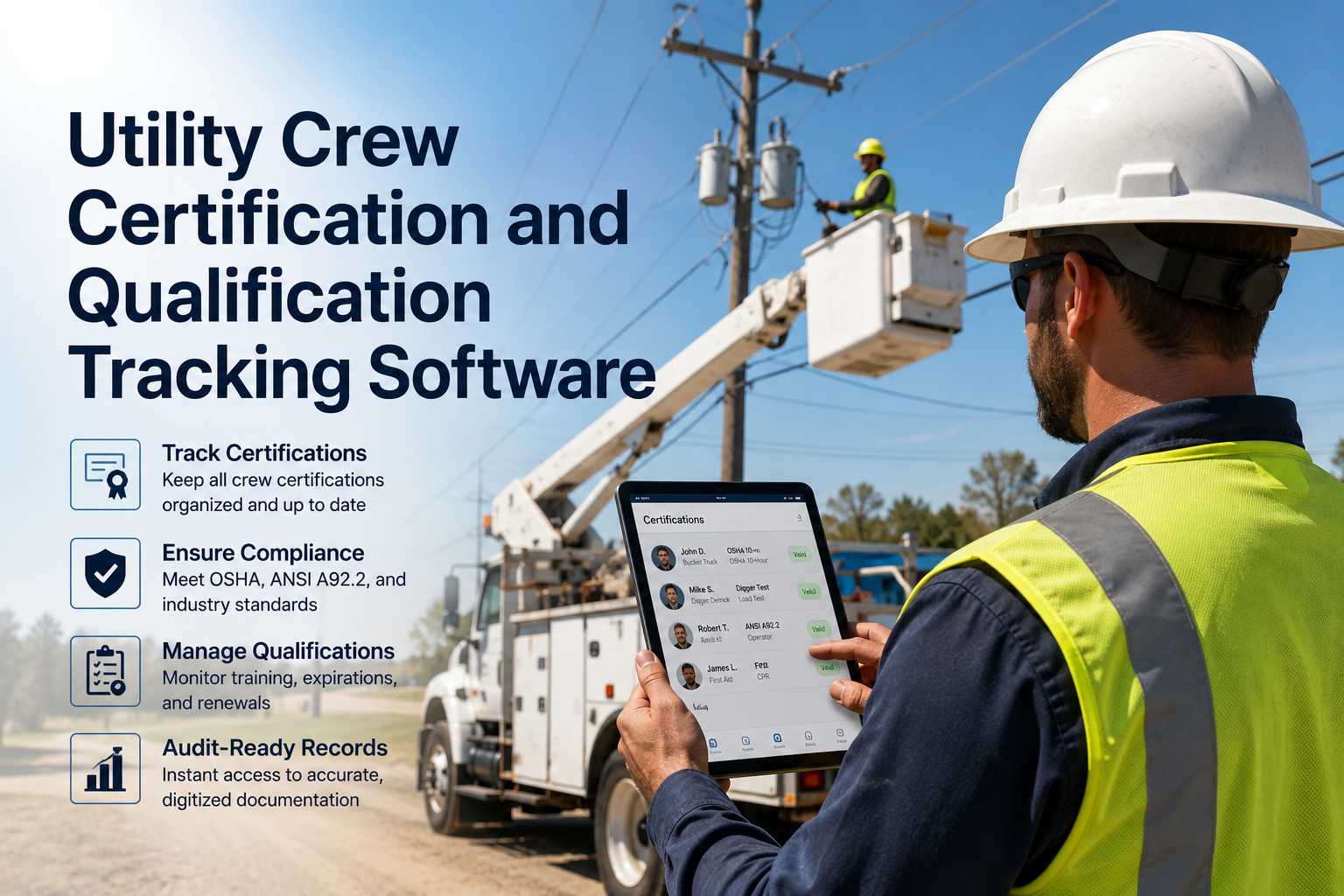
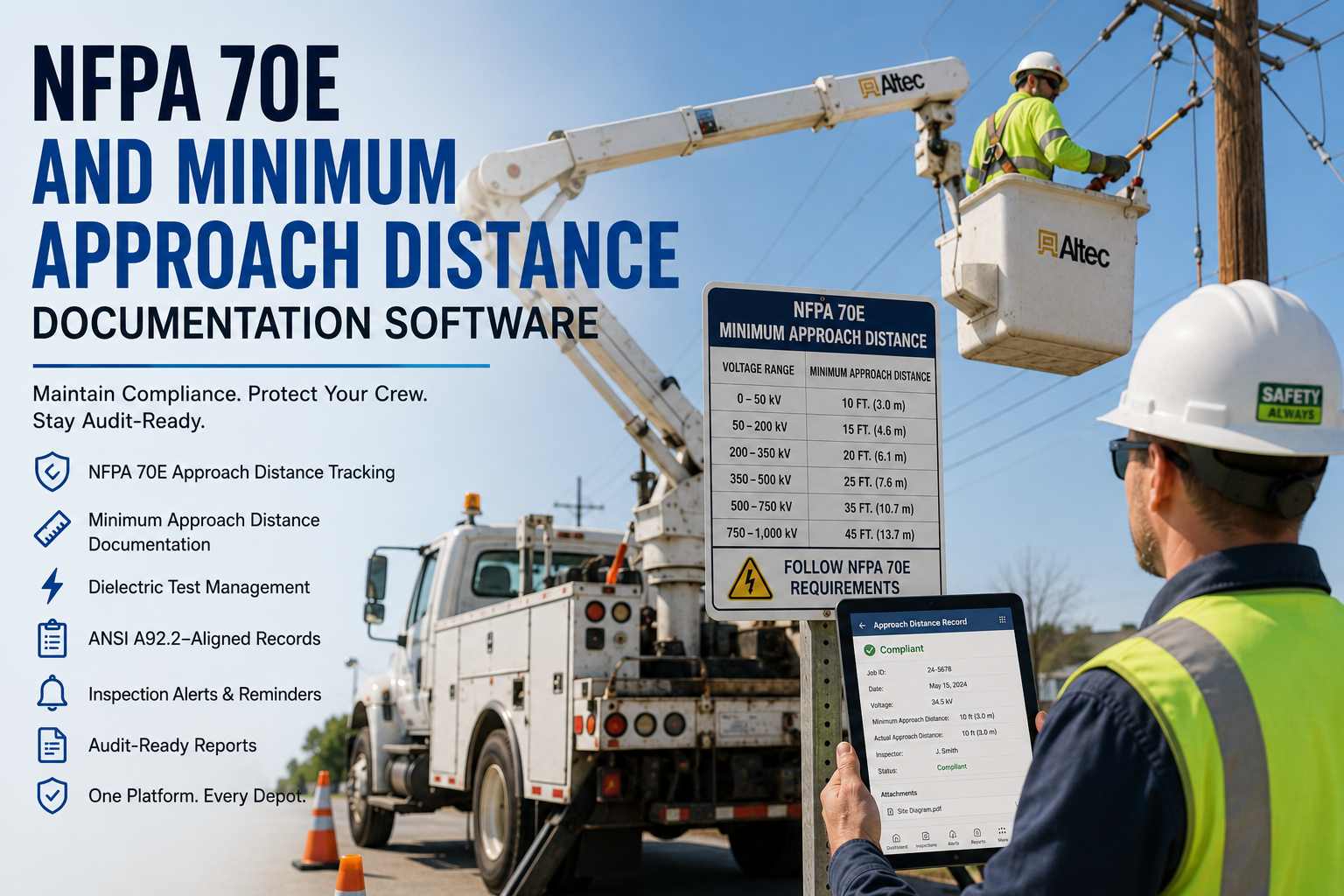
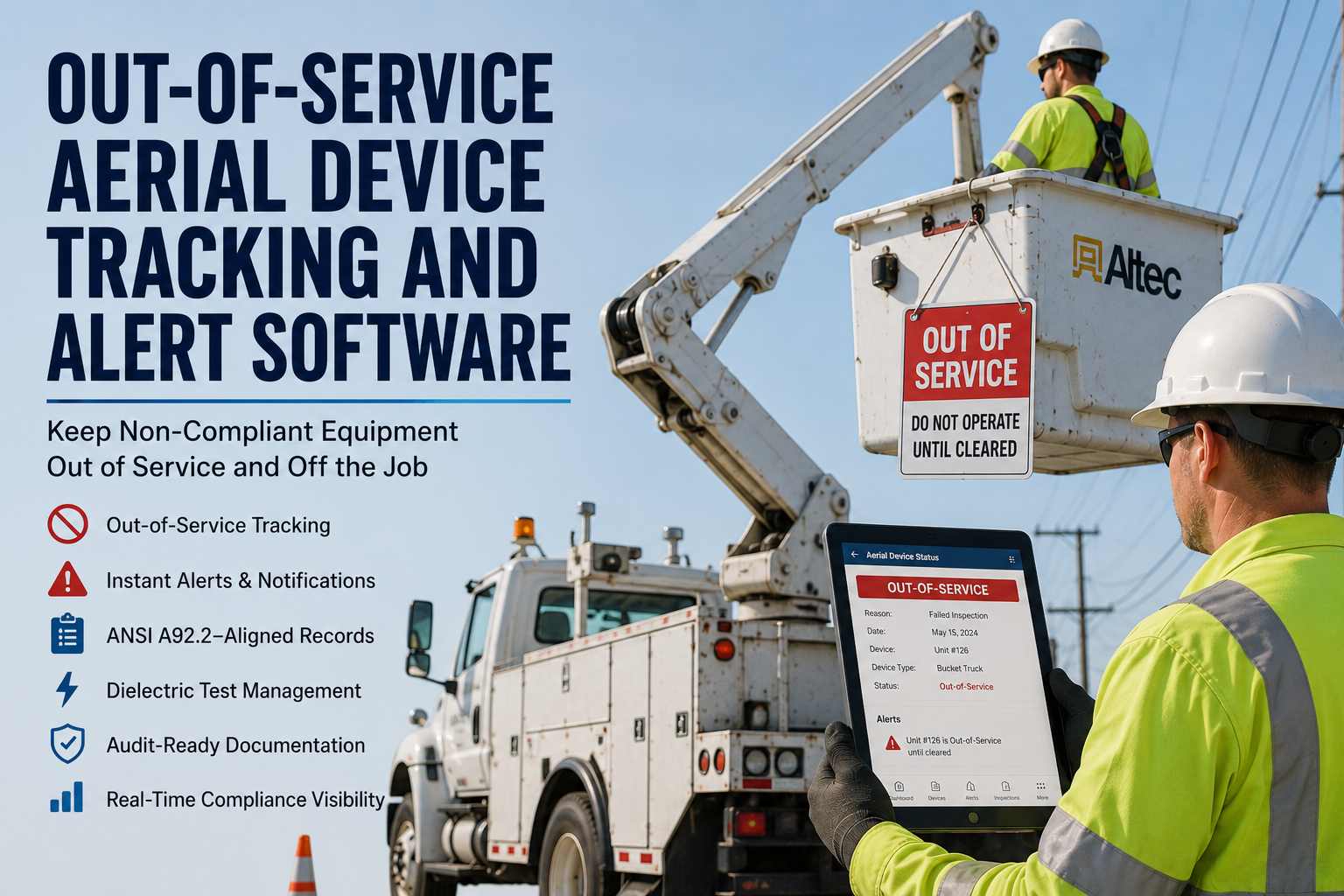
Utility fleet operations across electric, water, gas, and telecom service territories face unique inspection demands: aerial device testing requires specialized checklists, NERC and OSHA regulations create complex compliance obligations, and field crews working in remote locations need reliable offline tools. Fleet Rabbit provides digital DVIR, bucket truck inspection workflows, and integrated maintenance tracking that help utility operations teams complete inspections faster, maintain audit-ready documentation, and address equipment issues before they impact service reliability—using mobile apps that work offline in low-connectivity areas.
3–5 min
Average time to complete digital utility vehicle inspection vs. paper checklists
98%+
NERC/OSHA compliance documentation completeness with automated digital records
12–18 hrs
Monthly administrative time saved through automated inspection reporting
$5
Per vehicle per month pricing with monthly billing and no minimums
CTA Section 1: Top of Page
Paper Inspection Logs Create Compliance Risk for Utilities. Fleet Rabbit Digitizes Workflows Without Hardware Changes.
Fleet Rabbit connects to existing utility fleet systems to capture inspection data for bucket trucks, digger derricks, and service vehicles, flag defects automatically, and generate NERC/OSHA-ready reports—enabling consistent safety documentation without disrupting field crews or requiring new devices.
Inspection Workflow Challenges in Utilities Fleet Operations
Before implementing digital inspection solutions, it is important to understand where manual processes typically create friction in utility fleets. Paper logs, disconnected systems, and variable signal coverage leave safety teams without timely defect visibility—gaps that structured digital workflows can help address.
Paper Logs Create Documentation Gaps for NERC Audits
Manual DVIR forms for bucket trucks and aerial devices are prone to loss, incomplete entries, or delayed submission. Without centralized digital records, NERC or OSHA audit requests require time-consuming compilation across multiple sources.
Disconnected Inspection and Maintenance Workflows
When aerial device inspection findings live separately from maintenance systems, defect resolution depends on manual handoffs. Critical hydraulic or boom issues may be delayed without automated work order creation.
Limited Offline Capability in Remote Service Areas
Cellular coverage gaps on rural service routes and storm response locations can interrupt cloud-based inspection apps. Without offline support, linemen may skip documentation or submit incomplete reports.
Inconsistent Inspection Standards Across Crews
Without standardized digital checklists for utility equipment, inspection quality varies by crew or location. Critical safety items like outrigger testing or hydraulic pressure checks may be overlooked without structured guidance.
How Fleet Rabbit Supports Digital Inspections for Utilities Fleets
Fleet Rabbit provides mobile inspection tools integrated with existing utility maintenance and compliance workflows. Data is captured at source and presented in actionable formats for safety, maintenance, and operations teams. See a live demo focused on utility DVIR workflows, aerial device tracking, and NERC compliance reporting.
01
Mobile DVIR with Offline Support for Field Crews
Linemen and technicians complete pre-shift and post-shift inspections via mobile app. Data caches locally when signal is unavailable and syncs automatically when connectivity resumes—critical for remote service territories.
02
Utility-Specific Inspection Checklists
Create equipment-type-specific checklists for bucket trucks, digger derricks, service vans, or aerial lifts. Required fields for boom testing, hydraulic checks, and photo capture ensure consistent NERC/OSHA documentation.
03
Automated Defect-to-Work Order Flow
Critical defects like hydraulic leaks or boom wear automatically generate maintenance work orders with priority flags. Technicians receive alerts with inspection details and recommended repair actions.
04
NERC/OSHA Compliance Documentation
All inspections are timestamped, user-attributed, and stored with version control. Export NERC-ready inspection reports, OSHA equipment logs, or state-specific documentation in standard audit formats.
05
Operating Hours Tracking & PM Scheduling
Automate preventive maintenance based on engine hours, PTO usage, or calendar intervals for aerial devices. Proactive reminders help ensure critical safety inspections are completed on schedule.
06
Utility Equipment Trend Analytics
Track recurring issues by vehicle type, service territory, or component category. Identify patterns that inform preventive maintenance planning, crew training, or capital replacement decisions.
CTA Section 2: After Features
Ready to Digitize Utility Fleet Inspections and Strengthen Compliance?
Get a personalized walkthrough of how Fleet Rabbit's utility-focused inspection tools can address your fleet's unique challenges—from aerial device testing to storm response documentation.
Regulatory Framework Support for Utilities Inspection Compliance
Fleet Rabbit supports documentation requirements for safety and environmental regulations commonly faced by electric, water, gas, and telecom utility fleet operators.
NERC Facility Requirements
Digital pre-shift and post-shift inspections for bucket trucks and aerial devices formatted for NERC audit requests with timestamped, technician-attributed records and defect resolution tracking.
OSHA Equipment Inspections
Custom checklists for cranes, lifts, pressure equipment, and HAZMAT vehicles. Certification tracking and renewal alerts support ongoing OSHA compliance for utility operations.
State Utility Inspection Programs
Configure inspection intervals and requirements per operating jurisdiction. Automated reminders help prevent missed renewals that could restrict vehicle use in regulated territories.
Environmental Safety Checks
Document fluid leaks, spill containment status, and emissions-related components on utility vehicles. Support environmental audit requests with structured, exportable records.
Deployment Approach for Utilities Inspection Implementation
Fleet Rabbit follows a structured onboarding process designed for dispersed utility fleet operations—delivering initial inspection capability within the first week and full workflow activation within two weeks. No hardware installation required.
01
Utility Workflow Audit
Map current DVIR processes, aerial device requirements, and NERC/OSHA compliance obligations
02
Checklist Configuration
Build equipment-type-specific digital inspection forms for bucket trucks, digger derricks, service vans
03
Integration Setup
Connect maintenance systems, GIS, or utility ERP via API for seamless data flow
04
Field Crew Training
Onboard linemen and technicians on mobile inspection workflow with offline capability
05
Go-Live and Review
Activate digital DVIR across utility fleet and schedule effectiveness review
Typical Timeline and Expected Outcomes
Every Fleet Rabbit engagement follows a defined onboarding sequence with measurable milestones. Results vary by fleet size, equipment mix, service territory geography, and process maturity. Request the full onboarding scope document tailored to your utility fleet profile.
Days 1–3
Workflow Design and Setup
Audit current inspection processes and NERC/OSHA compliance requirements
Configure digital checklists per equipment type and duty cycle
Set defect severity thresholds and work order automation rules
Days 4–10
Pilot Deployment
Deploy mobile DVIR app to pilot crew group
Review initial inspection completion rates and aerial device defect patterns
Refine checklist items and workflow triggers based on field feedback
Days 11–14
Full Activation
Expand digital inspections to full utility fleet
Enable automated NERC/OSHA compliance reporting and audit exports
Schedule 30-day review to assess workflow adoption and defect resolution
REALISTIC EXPECTATIONS: MEASURABLE IMPROVEMENTS WITH CONSISTENT ADOPTION
Utility fleets that systematically adopt digital inspection workflows—such as completing DVIRs consistently, acting on aerial device alerts promptly, and reviewing trend reports regularly—typically see documentation and resolution improvements within the first 30–60 days. Results depend on crew adoption and maintenance team follow-through.
98%+
Inspection completion rate
12–18 hrs
Admin time saved monthly
30–45%
Faster aerial device defect resolution
See How Fast Your Utility Fleet Can Achieve These Results
Schedule a 30-minute consultation to review your current inspection workflows and receive a customized implementation roadmap for bucket trucks, digger derricks, and service vehicles—no obligation, just actionable insights.
Use Cases from Utilities Fleet Deployments
These examples reflect common scenarios where Fleet Rabbit has supported digital inspection efforts for electric, water, gas, and telecom utility operations. Outcomes depend on fleet size, equipment mix, service territory geography, and process maturity. Request additional details for the use case most relevant to your operations.
A regional electric utility supporting line maintenance relied on paper DVIR forms for bucket trucks that were frequently lost or submitted late. Fleet Rabbit's mobile app enabled linemen to complete inspections offline, with automatic sync when signal resumed. Aerial device defects triggered maintenance alerts, reducing resolution time and improving NERC audit readiness.
A gas utility managing digger derricks and trenching equipment needed to maintain OSHA-compliant inspection records across multiple service territories. Fleet Rabbit's customizable checklists ensured required items were documented consistently, with photo capture for hydraulic system verification and automated renewal alerts.
100%
Checklist compliance
10 hrs/wk
Documentation time saved
A water utility sought to reduce delays between defect identification and repair scheduling during storm response operations. Fleet Rabbit's automated work order creation linked inspection findings directly to maintenance workflows, with priority flags for safety-critical issues affecting outage restoration.
20%
Reduced repeat defects
What Utility Fleet Teams Say About Fleet Rabbit
Fleet Rabbit made it simple for our linemen to complete inspections even in areas with no signal during storm response. The automatic work order creation means our maintenance team sees aerial device defects immediately, and the NERC audit reports are ready to export whenever we need them.
Fleet Safety & Compliance Director
Regional Electric Utility Provider
Frequently Asked Questions
Does Fleet Rabbit require new hardware for utility fleet inspections?
No. Fleet Rabbit's mobile inspection app runs on existing iOS or Android devices. Linemen and technicians can use company-issued or personal devices with no additional hardware required.
Can inspection checklists be customized for bucket trucks and aerial devices?
Yes. Fleet Rabbit supports custom checklists for bucket trucks, digger derricks, service vans, specialized equipment, and more. Required fields for boom testing, hydraulic checks, photo capture, and conditional logic can be configured per checklist.
How does offline inspection data sync when connectivity resumes?
Inspection data caches locally on the device when cellular signal is unavailable. When connectivity resumes, data syncs automatically to the central platform with conflict resolution for duplicate submissions.
What compliance reports can Fleet Rabbit generate for utilities?
Automated NERC inspection reports, OSHA equipment inspection logs, state-specific utility documentation, and custom audit exports. All reports include timestamped, user-attributed records with version control.
How quickly can digital inspections be deployed for utility fleets?
Baseline checklist configuration and app deployment typically takes 3–5 days. Full workflow activation with maintenance integration and NERC/OSHA compliance reporting is usually complete within 10–14 days.
What is the pricing for Fleet Rabbit inspection software for utilities?
Fleet Rabbit is priced at $5 per vehicle per month, billed monthly with no long-term contract. A free tier is available for up to 3 vehicles to evaluate functionality before scaling across your utility fleet.
CTA Section 4: Final Bottom CTA
Digitize Utility Fleet Inspections. Strengthen NERC/OSHA Compliance. Reduce Administrative Burden in Two Weeks.
Fleet Rabbit provides utility fleet teams with mobile DVIR, customizable aerial device checklists, automated defect-to-work-order workflows, and audit-ready NERC/OSHA compliance documentation—deployed to existing devices in 5–7 working days, at $5/vehicle/month, with no new hardware required.
Offline-capable mobile inspection app for field crews
Custom checklists per equipment type and regulation
Automated work order creation for critical aerial device defects
NERC, OSHA, and state-compliant report exports
May 26, 2026
By Jason
All Posts