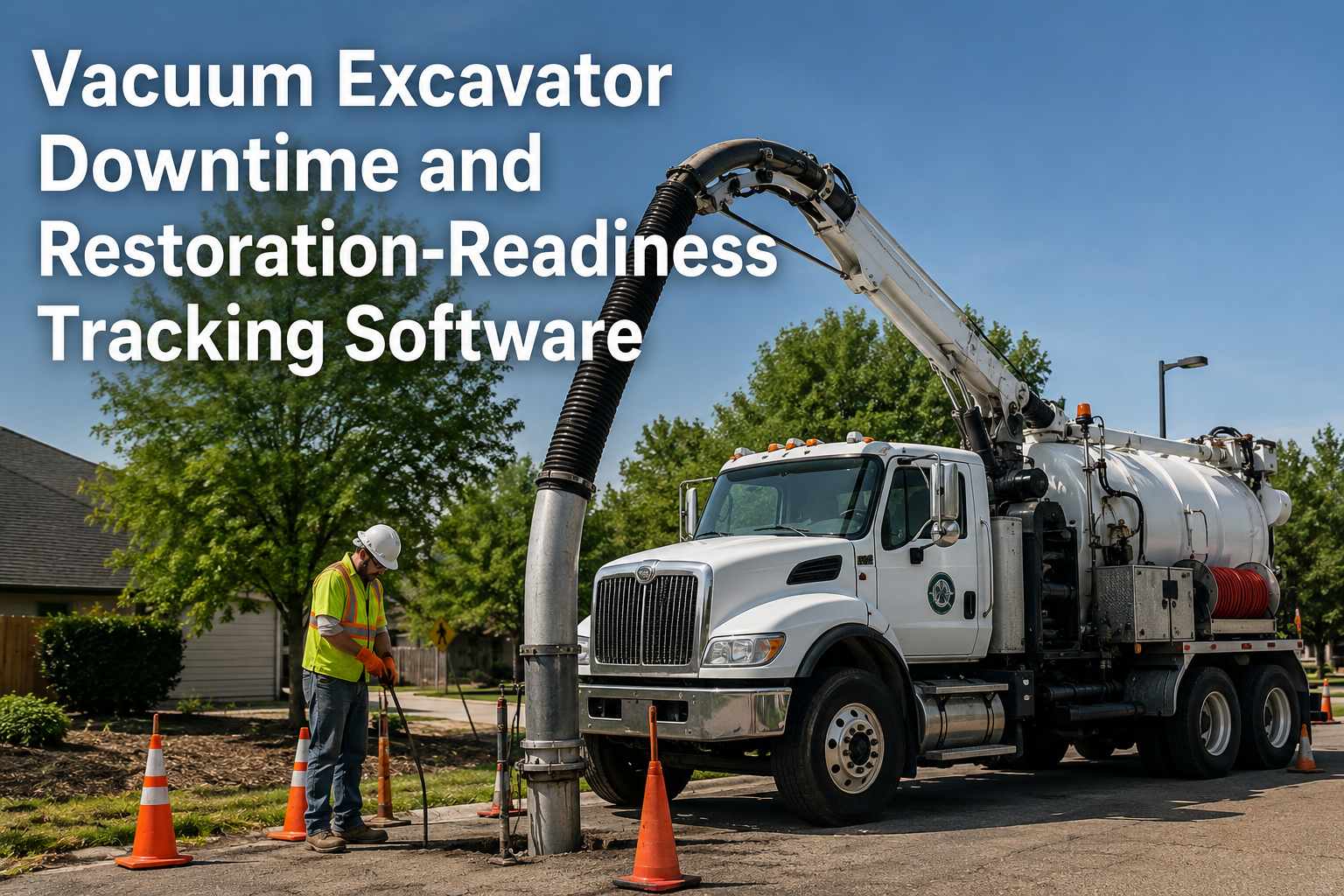
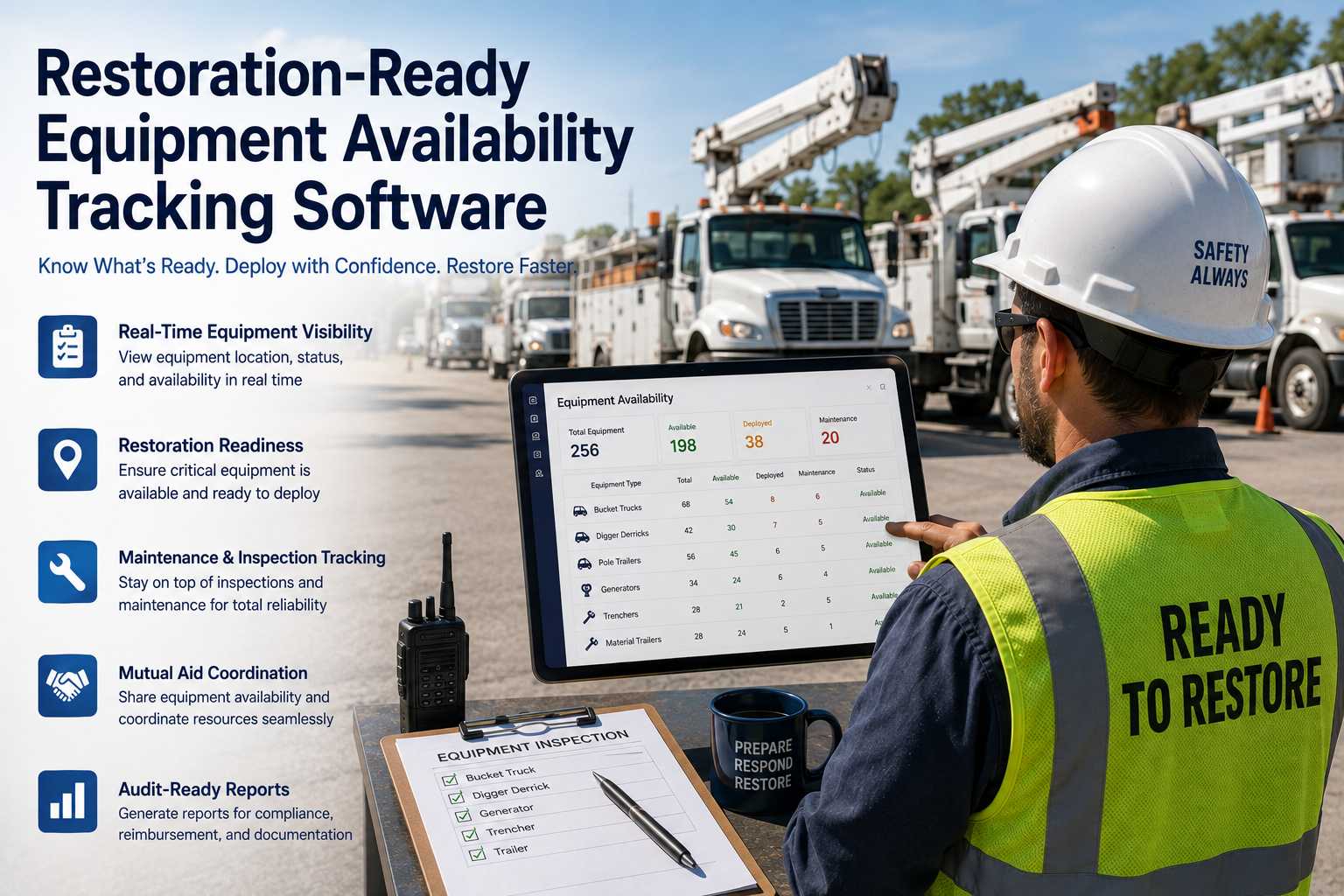
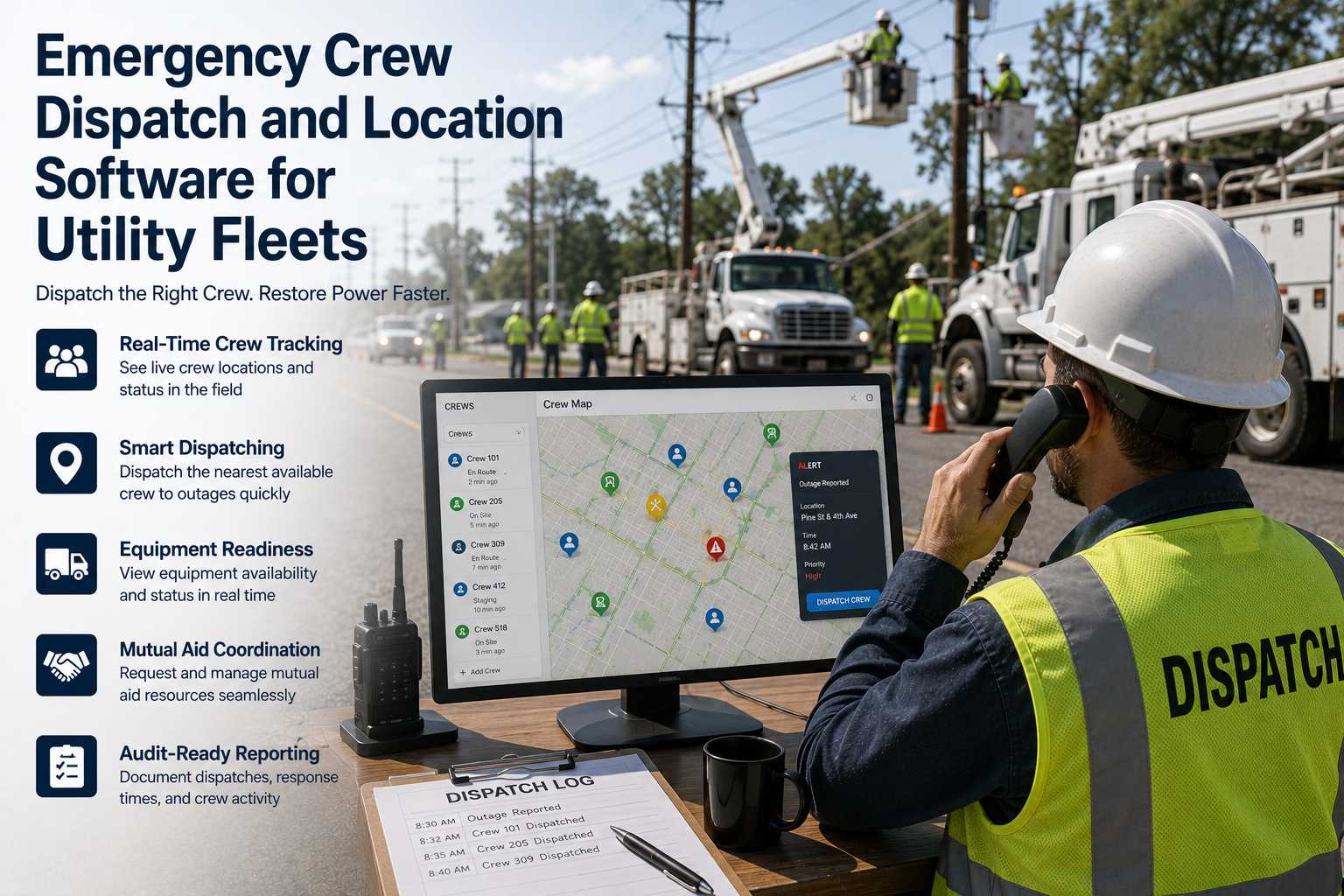
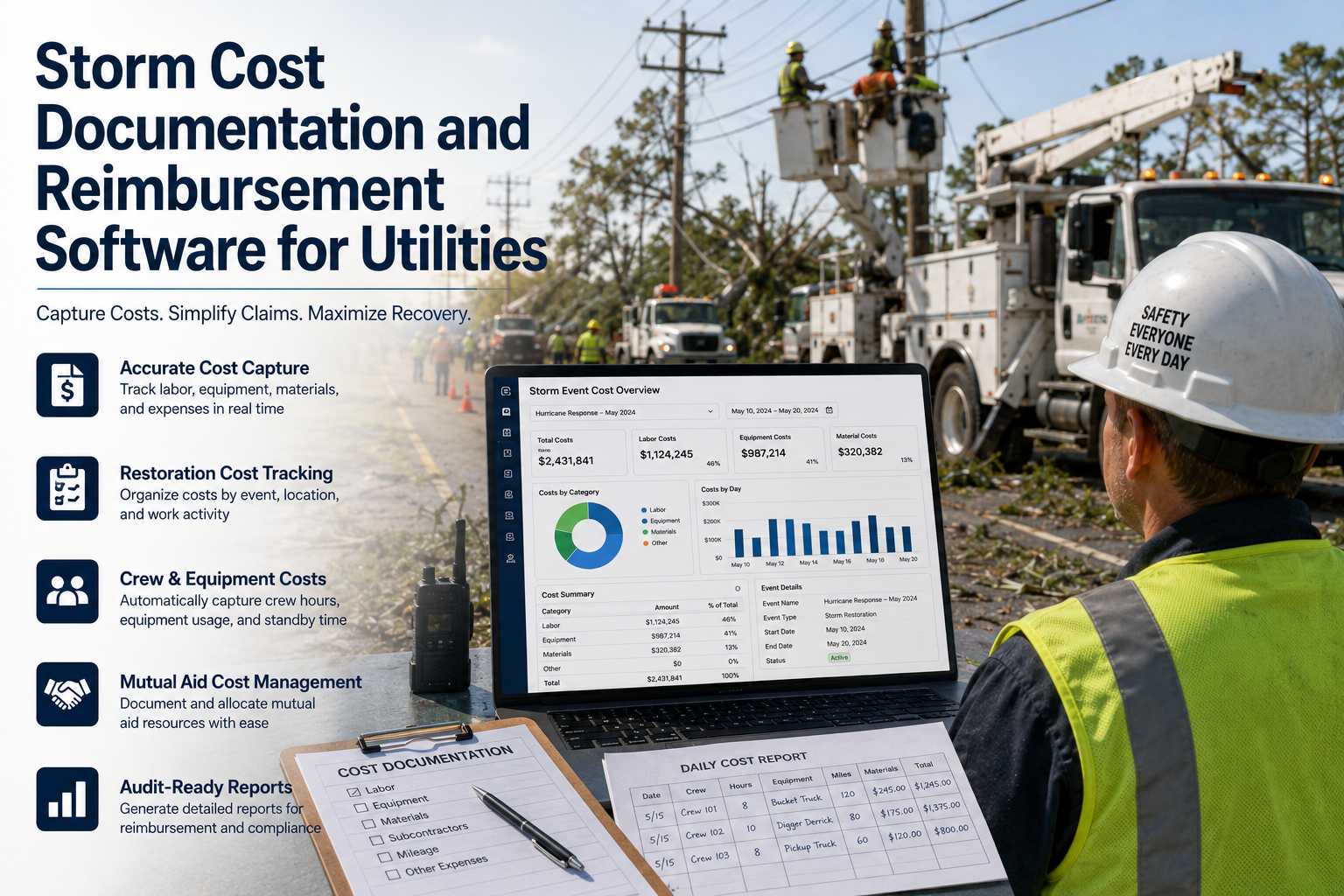
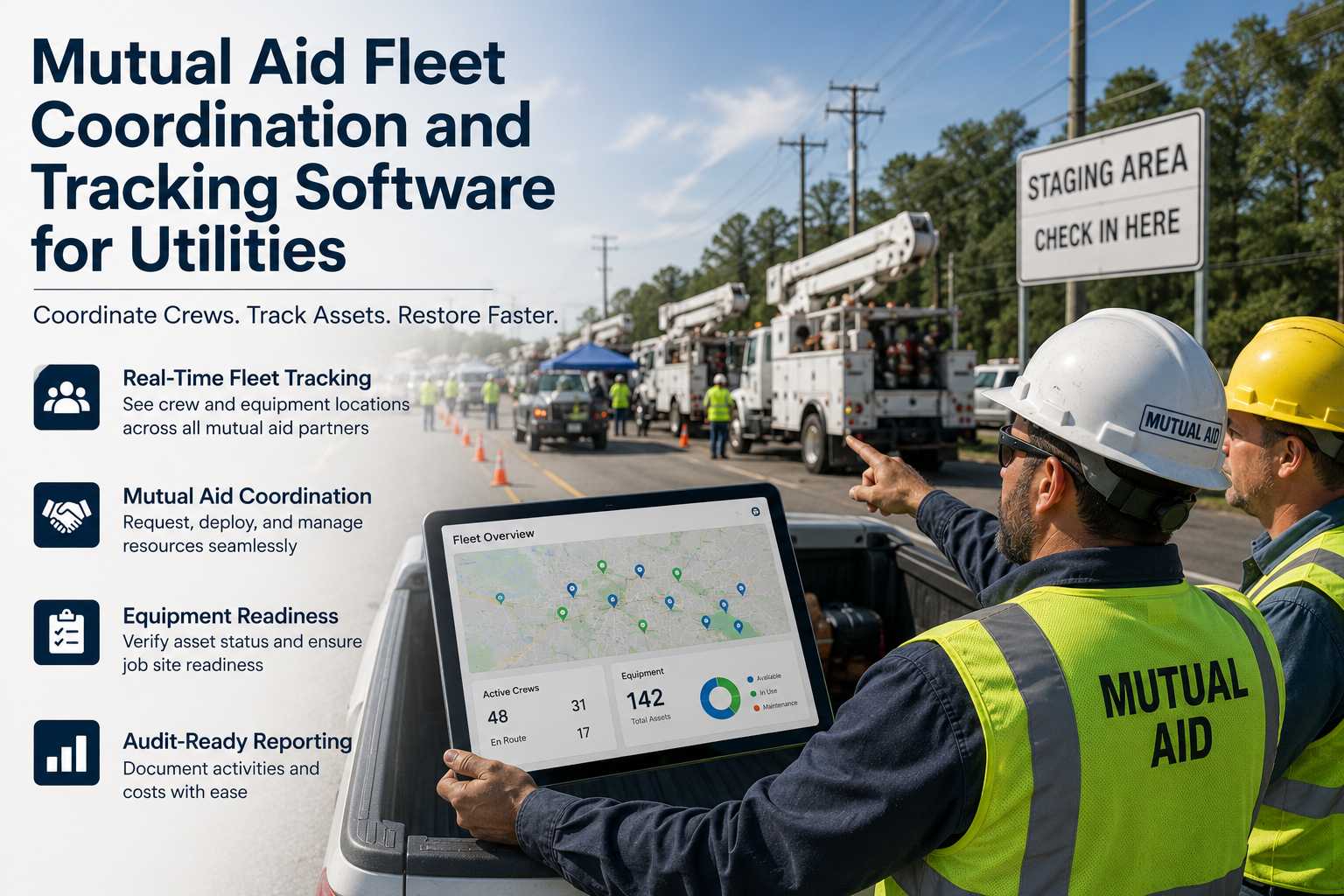
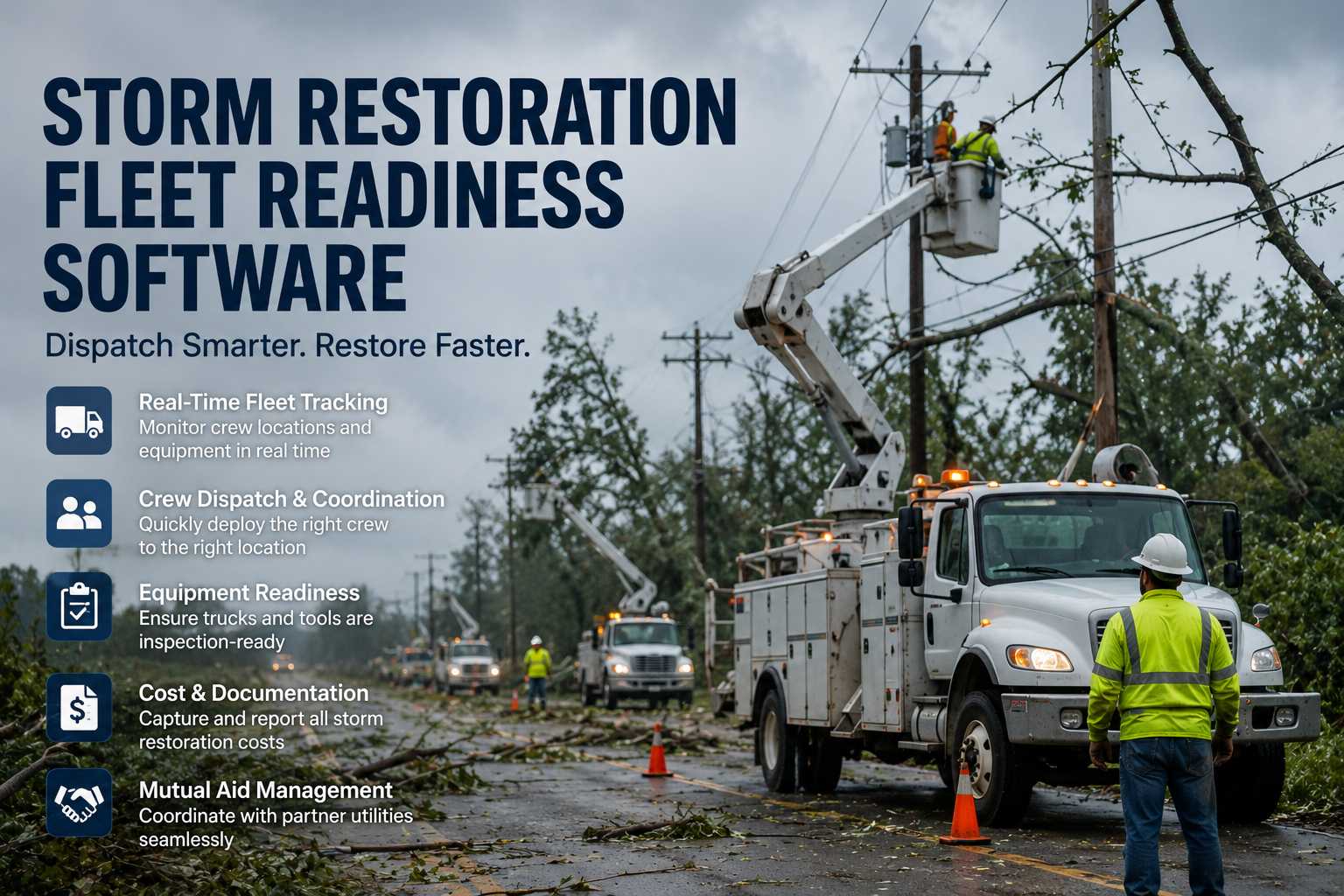
Utility operations directors and storm response coordinators face an urgent operational challenge: mobilizing vacuum excavators, hydro-vac units, and air-potholing rigs immediately when severe weather strikes while preventing catastrophic mechanical breakdowns in the field. When positive displacement blower health, deck-engine hours, and pre-storm readiness checklists sit across scattered depot clipboards and disconnected spreadsheets, utility fleets suffer unplanned downtime and delayed restoration timelines. Fleet Rabbit provides dedicated vacuum excavator downtime tracking and storm restoration readiness software, unifying real-time asset availability boards, automated engine-hour and PTO-based PM alerts, and ANSI/OSHA-ready mobilization checklists into one centralized platform. Maximize severe-weather fleet uptime, eliminate dispatch bottlenecks during mutual aid calls, and ensure field crews capture complete maintenance and inspection data offline when cellular networks collapse. Book a Demo to see Fleet Rabbit storm readiness workflows in action.
99%
Vacuum excavator fleet dispatch readiness maintained during emergency storm mobilizations
48%
Reduction in unscheduled jobsite breakdowns through proactive hour-based PM alerts
100%
Pre-storm readiness and ANSI-aligned inspection completion rate before field staging
5.5 hrs
Weekly administrative time saved per fleet supervisor via automated downtime tracking boards
Storm Restoration Demands Maximum Equipment Uptime. Fleet Rabbit Keeps Every Vac Rig Dispatch-Ready.
Fleet Rabbit automates auxiliary engine run-hour tracking, emergency mobilization checklists, and live downtime root-cause analytics into a single board built for utility line crews and contractors. Pre-configured templates for hydro-excavation rigs, suction booms, and water heater winterization require zero custom setup.
Why Standard Fleet Tracking Fails Storm Restoration & Downtime Tracking
Off-the-shelf fleet software logs road mileage and basic GPS locations, but severe weather restoration demands real-time tracking of auxiliary engine load, blower integrity, and emergency deployment status.
Unmonitored Severe-Duty Auxiliary Hours
Excavation rigs run continuous high-CFM vacuum cycles during emergency underground utility repairs; calendar reminders fail to capture rapid oil shearing and blower overheating.
No Real-Time Storm Staging Visibility
Spreadsheets cannot dynamically show which vacuum units have passed winterization checks, relief valve tests, and tank seal inspections before crews roll out to storm staging areas.
Disconnected Downtime Root-Cause Data
When vacuum pumps seize or hydraulic booms fail mid-restoration, repair notes stay buried in shop paper logs, preventing fleet managers from identifying recurring component failure trends.
Grid Blackouts Break Cloud-Only Software
Storm damage knocks out regional cellular towers, causing standard cloud apps to freeze and preventing field crews from logging daily DVIRs, fluid soundings, or urgent defect reports.
How Fleet Rabbit Powers Vacuum Excavator Uptime & Storm Readiness
Fleet Rabbit combines auxiliary engine telemetry, automated PM intervals, and specialized storm staging workflows to keep utility fleets operating at peak capacity. See a live demo focused on emergency storm readiness tracking.
01
Engine-Hour & PTO-Based PM Triggers
Preventive maintenance work orders automatically trigger based on auxiliary deck-engine hours and high-load blower run-time pulled directly from each machine.
02
Emergency Storm Mobilization Boards
Staging dashboards instantly categorize units by dispatch status, fuel levels, tank seals, and heater readiness so dispatchers deploy fully certified assets.
03
Deep Offline Field Mode with Auto-Sync
Crews log pre-trip DVIRs, filter cleanings, and defect photos in rural storm zones with zero cellular signal; all data synchronizes automatically once connection returns.
04
Real-Time Downtime Analytics & Triage
Track mean time between failures (MTBF), recurring hydraulic faults, and downtime costs across equipment makes and models to optimize emergency fleet allocation.
05
Closed-Loop Defect-to-Work-Order
Failed inspection items instantly generate priority repair work orders with attached field photos, routing critical issues directly to mobile service mechanics.
06
1-Click OSHA & DOT Compliance Exports
Export complete digital audit packages, daily operator DVIRs, and mechanic sign-offs in seconds during regulatory reviews or mutual aid reimbursement audits.
Built for Regional Safety & Emergency Restoration Frameworks
Fleet Rabbit’s downtime tracking and emergency inspection workflows are built to support utility contractors, electric co-ops, and municipal power authorities across major regions.
United States
Supports OSHA 1926 Subpart P excavation rules, ANSI equipment guidelines, Common Ground Alliance (CGA) safe-digging protocols, and DOT FMCSA Part 396 pre/post-trip mandates.
Canada
Aligns emergency maintenance logs and hydro-vac inspections with provincial Occupational Health and Safety (OHS) regulations and Canadian Common Ground Alliance (CCGA) standards.
United Kingdom
Maintains statutory inspection records aligned with PUWER 1998 work equipment safety directives and HSG47 avoiding danger from underground services during emergency works.
UAE & Middle East
Centralizes periodic inspection logs and pressure vessel maintenance records to comply with local municipality utility protection mandates and emergency HSE audit standards.
Fleet Rabbit vs. Competitors: Vacuum Excavator Downtime & Readiness Software
A feature-level comparison focused on emergency readiness tracking, auxiliary run-hour triggers, and offline utility capabilities. Competitor pricing and feature data sourced from publicly available documentation as of 2026. Request a 1-on-1 technical evaluation.
Storm Readiness & Downtime Software Deployment Roadmap
Fleet Rabbit provides a rapid onboarding process engineered for utility contractors, bringing your fleet from initial equipment tagging to automated storm readiness boards in two weeks.
01
Equipment & Telemetry Import
Import vacuum excavators, auxiliary deck engines, blowers, and water heater specs
02
Hour & PTO Trigger Setup
Configure runtime thresholds for blower lubrication, cyclone cleaning, and pump overhauls
03
Storm Checklist Customization
Configure emergency staging checklists for tank seals, winterization, and relief valves
04
Field Crew Mobile Rollout
Equip operators and mobile mechanics with the offline-first mobile inspection application
05
Live Readiness Board Go-Live
Activate real-time storm staging boards, downtime root-cause analytics, and audit reporting
2-Week Downtime Tracking & Readiness Deployment Timeline
Transform your vacuum excavator fleet from reactive repairs to predictive, storm-ready maintenance with zero operational downtime. Request a rollout scope tailored to your fleet.
Week 1
Telemetry Integration & Service Threshold Setup
Audit historical maintenance logs, auxiliary deck-engine meters, and blower service records
Configure usage-based PM triggers for 100-hr lubrication, 250-hr oil changes, and filter services
Assign user permission levels for field operators, mobile mechanics, and storm dispatchers
Week 2
Field Pilot & Emergency Board Go-Live
Conduct brief 15-minute field crew training on completing offline DVIRs and capturing defect photos
Validate automated work order creation on simulated hydraulic leaks and vacuum relief valve faults
Enable central operations dashboard with live storm staging indicators and downtime analytics
STORM READINESS GAINS WITHIN 14 DAYS
Utility contractors deploying Fleet Rabbit eliminate unverified storm dispatches, cut field equipment breakdowns in half, and accelerate emergency mutual aid deployments.
99%
Emergency fleet readiness
48%
Less jobsite downtime
5.5 hrs
Saved weekly per manager
Protect Your Emergency Restoration Operations with True Usage-Based Fleet Tracking.
Eliminate missed blower services, prevent mid-storm equipment breakdowns, and keep your utility crews working safely. Deploy across your entire fleet at $5/vehicle/month with a 14-day free trial.
Real-World Outcomes from Storm Readiness & Downtime Deployments
Proven operational outcomes reported by electric power contractors, infrastructure restoration groups, and municipal utilities. Request the full case study.
An electric utility contractor responding to regional hurricane restoration faced severe equipment downtime due to seized positive displacement blowers and blown water heater coils that were unserviced before deployment. Fleet Rabbit implemented automated 250-hour deck-engine triggers and pre-storm staging checklists, achieving a 99% fleet availability rate during emergency mutual aid operations and saving over $95,000 in emergency rental costs.
$95k+
Emergency rental savings
100%
Pre-trip DVIR compliance
A municipal underground infrastructure department struggled with lost paper inspection logs and zero visibility into equipment breakdowns when severe storms took down cellular networks. Fleet Rabbit's offline mobile DVIR allowed operators to log hydraulic defects and photo-verify vacuum relief valves without signal, cutting defect triage and mobile mechanic routing time by 75%.
Instant
Shop work order generation
0
Lost field inspection logs
What Utility Operations Directors Say About Fleet Rabbit
When severe weather hits, we cannot afford to have vacuum excavators breaking down with seized blowers or burst water heaters. Fleet Rabbit gave our storm dispatch team real-time visibility into machine running hours and staging readiness, ensuring every unit rolled out to the jobsite was 100% inspected, fueled, and mechanically sound.
VP of Emergency Restoration & Fleet Operations
Power Infrastructure & Utility Services Group, Southeast US
Frequently Asked Questions
How does Fleet Rabbit track vacuum excavator downtime and identify root causes across utility fleets?
Fleet Rabbit logs machine operating telemetry and categorizes all mechanical breakdowns, failed inspections, and scheduled servicing events into a centralized downtime tracking dashboard. The platform automatically calculates mean time between failures (MTBF), tracks recurring failure trends across severe-duty components like positive displacement blowers and triplex water pumps, and provides operations managers with actionable downtime cost analytics.
Book a demo to view the downtime analytics board.
How does the platform prepare vacuum excavators for emergency storm restoration and mutual aid staging?
Fleet Rabbit includes dedicated storm restoration staging boards and pre-configured emergency readiness checklists covering suction boom latches, water heater winterization, relief valves, filter cleanliness, and fuel levels. Dispatchers can verify at a glance which machines have completed pre-storm DVIRs and met usage-based PM requirements, preventing unverified or compromised assets from deploying to high-stress restoration zones.
Start a free trial to explore storm readiness workflows.
Can field crews and mobile mechanics use the software during severe storm grid and cellular blackouts?
Yes, the Fleet Rabbit mobile application features a native offline architecture engineered specifically for emergency field operations in disconnected environments. Excavation operators and mobile repair technicians can complete daily pre-trip DVIRs, record auxiliary meter readings, log replacement parts, and attach defect photos completely offline. All recorded data is cached securely on the device and automatically syncs to central cloud servers as soon as connectivity is restored.
Book a demo to test offline syncing.
How does the software calculate usage-based preventive maintenance using auxiliary engine and PTO data?
Fleet Rabbit integrates telemetry directly from primary truck chassis meters, auxiliary deck engines, and hydraulic PTO engagement monitors. Instead of relying on static calendar dates or vehicle road mileage, the system triggers automated maintenance work orders when specific runtime thresholds—such as 100-hour lubrication, 250-hour oil and filter changes, or 500-hour major blower and pump overhauls—are reached, ensuring equipment is maintained according to true operational wear.
Book a demo to view the PM configuration board.
What are the pricing options and contract terms for Fleet Rabbit downtime tracking software?
Fleet Rabbit is priced at a transparent rate of $5 per vehicle per month billed annually, covering complete downtime tracking, storm readiness staging boards, engine-hour and PTO maintenance triggers, digital DVIRs, and offline mobile capabilities with no hidden setup fees. We also provide flexible monthly billing terms and a 14-day free trial on up to 3 assets so utility teams can evaluate the platform in active field conditions.
Sign up for your free trial.
Modernize Your Storm Readiness and Downtime Tracking in Less Than 2 Weeks.
Fleet Rabbit gives utility operations real-time downtime analytics, automated engine-hour PM alerts, and emergency staging boards at $5/vehicle/month with a 14-day free trial.
Real-time downtime root-cause tracking & availability analytics
Pre-built storm staging & emergency mobilization checklists
Auxiliary engine-hour & PTO-based preventive maintenance alerts
Offline mobile inspection capture with automatic cloud synchronization
August 21, 2026
By Edward
All Posts