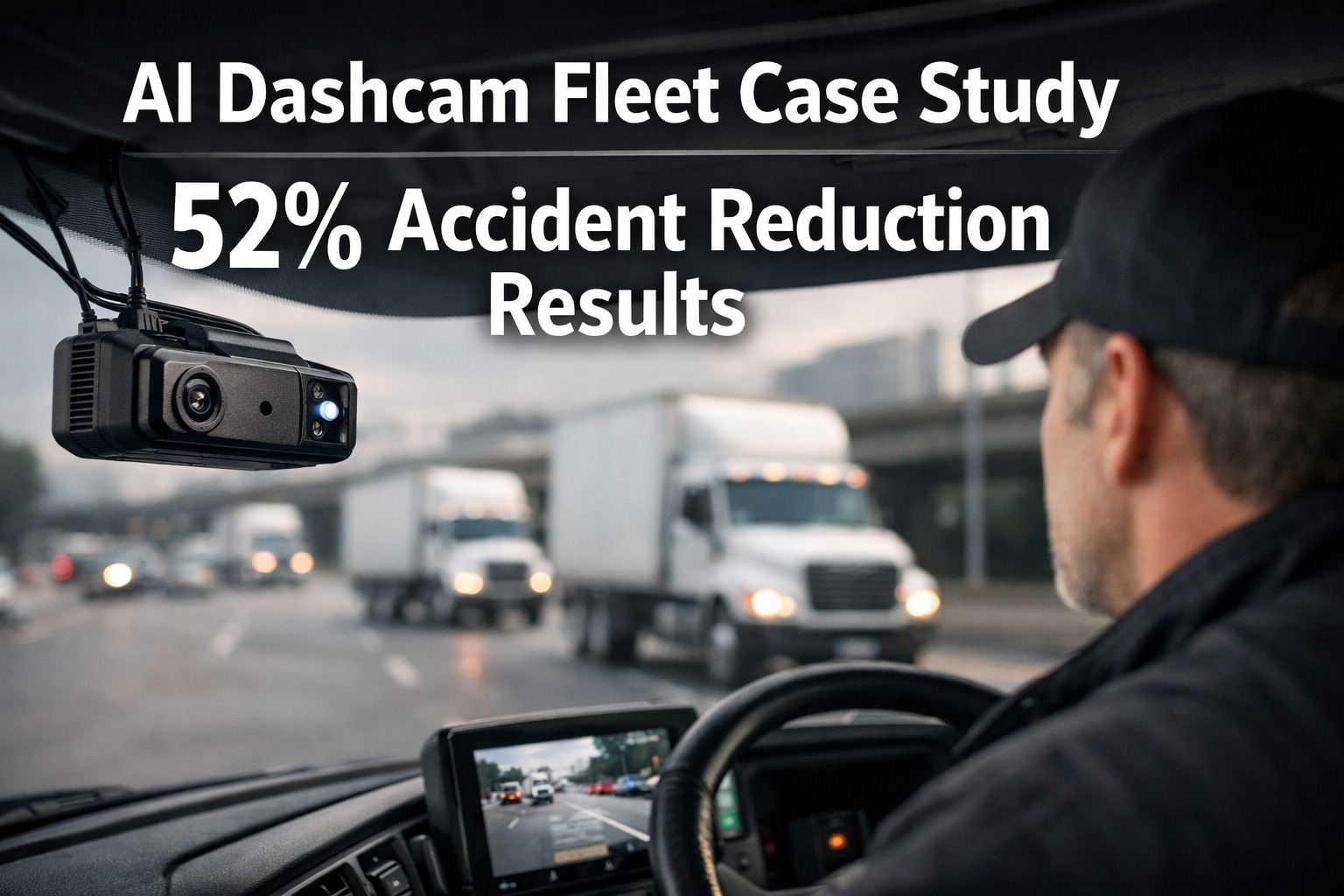
AI Dashcam Fleet Safety Case Study: How a 310-Vehicle Mixed Fleet Achieved 52% Accident Reduction and 80% Distraction Decrease Through AI-Powered Video Telematics. Discover how Cornerstone Logistics transformed their safety culture from reactive incident management to proactive prevention cutting accidents by half, eliminating $1.1M in annual claims, defeating 14 fraudulent claims with video evidence, and proving that AI dashcams deliver ROI that traditional safety programs cannot match.
Cornerstone Logistics: A Mixed Delivery & Service Operation
Cornerstone Logistics operates 310 vehicles across last-mile delivery vans, service trucks, and regional freight — running 18.6 million fleet miles annually across urban, suburban, and highway environments. With drivers making 400+ stops daily in congested metro areas, exposure to accident risk is constant. Before AI dashcam implementation, Cornerstone averaged 24 preventable accidents per year, costing $1.8M in claims, repairs, and lost productivity — not counting the human cost of injuries and the cultural toll of a reactive safety program.
Safety Baseline: What the Data Revealed
Before implementing AI dashcams, Cornerstone's safety program relied on post-incident investigation, quarterly training sessions, and manager ride-alongs. The approach was reactive — problems were discovered after accidents happened, not before. A deep dive into 3 years of incident data revealed troubling patterns:
Is your fleet bleeding money from preventable accidents? Start a free FleetRabbit trial and assess your safety baseline.
AI Dashcam Implementation Strategy
Cornerstone deployed FleetRabbit's AI-powered dual dashcam system across all 310 vehicles — road-facing cameras for collision evidence and driver-facing cameras with AI distraction detection. But hardware alone doesn't change behavior. The implementation included real-time coaching alerts, gamification, and a carefully designed driver adoption program.
Installed HD dual-facing cameras with edge AI processing. Road-facing captures collision context, near-misses, and exoneration evidence. Driver-facing uses computer vision to detect phone use, drowsiness, smoking, seatbelt compliance, and distraction in real-time — without recording when not triggered.
When AI detects risky behavior, immediate audio alerts coach drivers in the moment: "Phone detected — please secure device." Studies show real-time intervention is 4x more effective than post-trip review. Alerts are calibrated to avoid fatigue — only triggered for genuine risks.
AI automatically flags high-risk events for manager review — no need to watch hours of footage. Each event includes 10-second video clip, AI risk score, and recommended coaching action. Managers spend 15 minutes daily reviewing flagged events instead of hours investigating after accidents.
Weekly safety scores visible to all drivers. Top performers earn recognition and rewards. Friendly competition drives engagement — drivers who initially resisted cameras became advocates when they saw their scores improve. Monthly prizes for safest drivers.
Overcoming Privacy Concerns & Building Buy-In
Driver-facing cameras are controversial. Cornerstone faced initial pushback from drivers concerned about surveillance and privacy. Here's how they turned skeptics into advocates:
Driver-facing camera only records when AI detects an event — not continuous surveillance. Drivers can see exactly what's recorded and when. No audio recording during normal driving.
Engaged union leadership early. Agreed that cameras protect drivers from false accusations — 14 fraudulent claims were later defeated with video evidence, validating this promise.
Top safety performers earn quarterly bonuses. Perfect safety scores unlock premium route assignments. Recognition in company communications. Safety became a source of pride, not pressure.
Shared exactly how data would be used. Coaching-focused, not punishment-focused. First 90 days were "learning period" with no disciplinary action for camera events.
12-Month Safety Performance Data
Complete Before vs. After Breakdown
| Metric | Before AI | After AI (12 Mo) | Impact |
|---|---|---|---|
| Annual Accidents | 24 | 11 | -52% |
| Annual Claims Cost | $1.8M | $680K | -62% |
| Distraction Events/Month | 847 | 169 | -80% |
| Hard Braking Events/Month | 1,240 | 412 | -67% |
| Speeding Events/Month | 2,100 | 630 | -70% |
| Seatbelt Compliance | 84% | 99% | +15 pts |
| Fraudulent Claims Defeated | 0 (no evidence) | 14 | $340K saved |
| Insurance Premium | $892K/yr | $714K/yr | -20% |
Savings by Category
14 Fraudulent Claims Defeated with Video Evidence
Before AI dashcams, Cornerstone had no way to dispute fraudulent claims. "He said, she said" always favored the claimant. In 12 months, video evidence defeated 14 fraudulent or exaggerated claims worth $340K:
Safety Leaderboard: Turning Competition into Culture
The safety gamification system transformed how drivers viewed the cameras — from surveillance to scoreboard. Weekly rankings created friendly competition, and top performers became safety advocates.
Insurance Renegotiation with Hard Data
After 12 months of documented safety improvement, Cornerstone renegotiated their commercial auto insurance — armed with dashcam evidence their insurer couldn't ignore:
Factors That Drove Premium Reduction:
- 52% accident reduction — demonstrated with 12-month data
- Video evidence capability — reduced insurer's litigation risk
- Real-time coaching — proactive risk management documented
- Driver safety scores — individual accountability proven
- Fraud prevention — 14 exonerated claims reduced loss ratio
Lessons for Fleet Safety Leaders
47% of Cornerstone's accidents were distraction-related, but traditional telematics couldn't detect it. AI vision identifies phone use, drowsiness, and inattention that accelerometers miss. You can't fix what you can't see.
Immediate in-cab alerts reduced distraction events 80% — far more effective than reviewing events days later. Drivers correct behavior in the moment, before it becomes an accident.
Initial 61% acceptance jumped to 94% through transparent communication, privacy-first design, and reward programs. Cameras became a benefit (fraud protection, recognition) rather than surveillance.
$340K in defeated fraudulent claims wasn't in the original ROI projection. Video evidence doesn't just prevent accidents — it proves innocence when your drivers aren't at fault.
Ready to transform your fleet's safety culture? Sign up free and see AI dashcams in action.
See What Your Drivers Can't Tell You
Cornerstone proved that AI dashcams cut accidents 52% and paid for themselves in 44 days. Your fleet deserves the same visibility — and the same results.