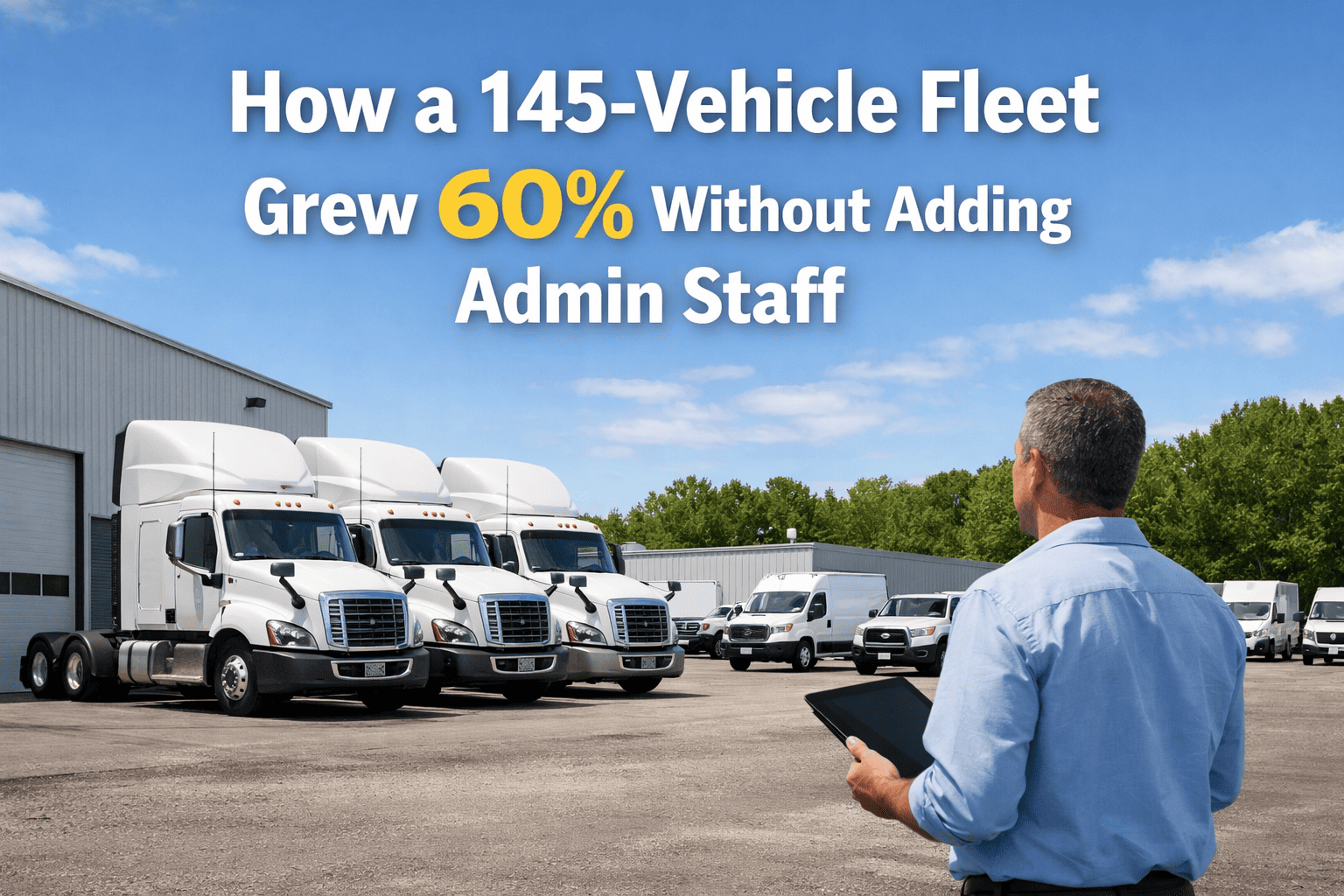
When your fleet crosses 100 vehicles, the processes that worked at 50 start breaking. Spreadsheets can't keep up. Manual PM tracking misses intervals. Fuel reconciliation takes days. Compliance paperwork multiplies. Most fleets respond by hiring more admin staff. Regional Express Distribution found a different path.
This is how a 145-vehicle regional distribution fleet grew 60% in 18 months without adding a single administrative position — and saved $520,000 in the process.
Regional Express Distribution scaled from 90 to 145 vehicles in 18 months. Same admin team. Zero new hires. $520K saved. Here's the system that made it possible.
Company Profile
Regional Express Distribution operates a mixed fleet of box trucks, straight trucks, and tractor-trailers serving the Mid-Atlantic region. The company won several large retail and food service contracts in 2024, triggering rapid fleet expansion. The challenge: scale operations without the administrative overhead that typically comes with growth.
The Challenge: When Manual Processes Break
At 90 vehicles, Regional Express managed fleet operations with a two-person admin team using spreadsheets, paper DVIRs, and manual fuel reconciliation. It worked barely. Then the growth started.
Spreadsheet Overload
PM schedules tracked in Excel. 17 separate sheets across 4 locations. Version conflicts. Missed service intervals increasing — 3 roadside breakdowns in Q2 2024 from deferred maintenance.
Admin Time Drain
Each new vehicle added 4+ hours/week of admin work: PM tracking, DVIR filing, fuel card reconciliation, registration monitoring. Two admins were maxed at 90 vehicles.
Fuel Leakage
Manual fuel card reconciliation took 6+ hours weekly. Discrepancies between receipts and card statements went unresolved. Estimated fuel leakage: 4-6% of total fuel spend.
Compliance Risk
Paper DVIRs scattered across locations. Two registration expirations caught at weigh stations. Annual inspection tracking unreliable — one OOS event from expired inspection.
We were adding trucks faster than we could process the paperwork. My admin team was drowning. The choice seemed clear: hire 2-3 more people or find technology that could scale with us. Hiring would cost $180K+ annually before benefits.
The Solution: Automation That Scales
Regional Express implemented FleetRabbit across all 4 terminals in a phased rollout over 6 weeks. The goal was specific: automate the repetitive work that consumed admin time so the existing team could manage a larger fleet.
Automated PM Scheduling
Every vehicle's PM schedule configured by asset type, mileage thresholds, and manufacturer specs. System pulls odometer from telematics, auto-generates work orders, alerts maintenance managers 14 days before service due.
Digital DVIR + Auto-Routing
Drivers complete pre/post-trip inspections on mobile app. Defects auto-route to maintenance with photos attached. Critical defects escalate immediately. All records stored digitally, searchable for DOT audits.
Fuel Card Integration
Fuel card transactions sync automatically. System flags discrepancies between GPS location and fuel purchase location. MPG tracked per vehicle. Exception reports surface anomalies weekly.
Compliance Monitoring
Registration, insurance, annual inspection, and CDL expiration dates tracked per asset. Automated alerts at 60/30/14 days before expiration. Dashboard shows compliance status across entire fleet.
See the System Regional Express Uses
Same platform. Same automation. Available at $3/vehicle/month.
The Results: 18 Months Later
From 90 to 145 vehicles in 18 months. New contracts with two national retailers drove expansion.
Same two-person admin team. Automation absorbed the workload that would have required 2-3 additional staff.
Manager Dashboard: Self-Service Visibility
A critical factor in Regional Express's success was giving terminal managers direct access to fleet data without going through the central admin team. Each location manager can now:
View PM Status
See which vehicles are due, overdue, or scheduled. Filter by location. No calls to admin required.
Access DVIR History
Pull any inspection record for any vehicle instantly. Search by date, driver, defect type.
Monitor Fuel Performance
Track MPG by vehicle, route, and driver. Identify underperformers before they become problems.
Check Compliance
See expiration dates for every asset. Know exactly what needs renewal and when.
Before FleetRabbit, I'd call the main office 10 times a day asking about vehicle status, inspection records, fuel reports. Now I just open the dashboard. That alone probably saves 2 hours of my time daily — and the admin team's time too.
Multi-Location Management: One System, Four Terminals
Regional Express operates terminals in Philadelphia, Baltimore, Richmond, and Norfolk. Before FleetRabbit, each location had its own processes and data silos. Now:
All 145 vehicles visible in one dashboard. Terminal managers see their own assets by default, VP sees everything.
Same PM templates, same DVIR checklists, same compliance tracking across all locations. No more process drift.
Track which shops serve which terminals. Compare costs across vendors. Route work orders to preferred providers.
One-click reports across all locations. Board-ready metrics without Excel gymnastics.
Managing multiple locations? See how FleetRabbit Multi-Location Management gives you centralized control with localized access.
Preparing for 200+ Vehicles
Regional Express is on track to reach 200 vehicles by Q4 2026. The infrastructure is already in place:
System scales automatically. No additional licensing complexity. Adding vehicles takes 5 minutes each.
New Charlotte location opening Q3 2026. FleetRabbit deployment included in opening checklist.
No plans to add admin headcount even at 200+ vehicles. Automation handles the growth.
The system we built at 90 vehicles is the same system we'll use at 200. That's the whole point — we invested in automation that scales, not processes that require more people as we grow. FleetRabbit pays for itself many times over.
Key Takeaways for Mid-Size Fleets
Regional Express implemented FleetRabbit at 90 vehicles — before the pain became critical. That preparation enabled smooth scaling to 145.
The $180K in avoided admin hiring alone exceeds FleetRabbit's annual cost by 40×. Fuel recovery and breakdown reduction are additional wins.
Giving terminal managers dashboard access eliminated hundreds of "status check" calls and emails weekly.
Same processes across all terminals means new locations can be brought online quickly without reinventing workflows.
Frequently Asked Questions
See How FleetRabbit Scales Mid-Size Fleet Operations
Whether you're at 50 vehicles preparing for 100, or at 100 preparing for 200 — the automation that worked for Regional Express works for you. Same platform. Same pricing.