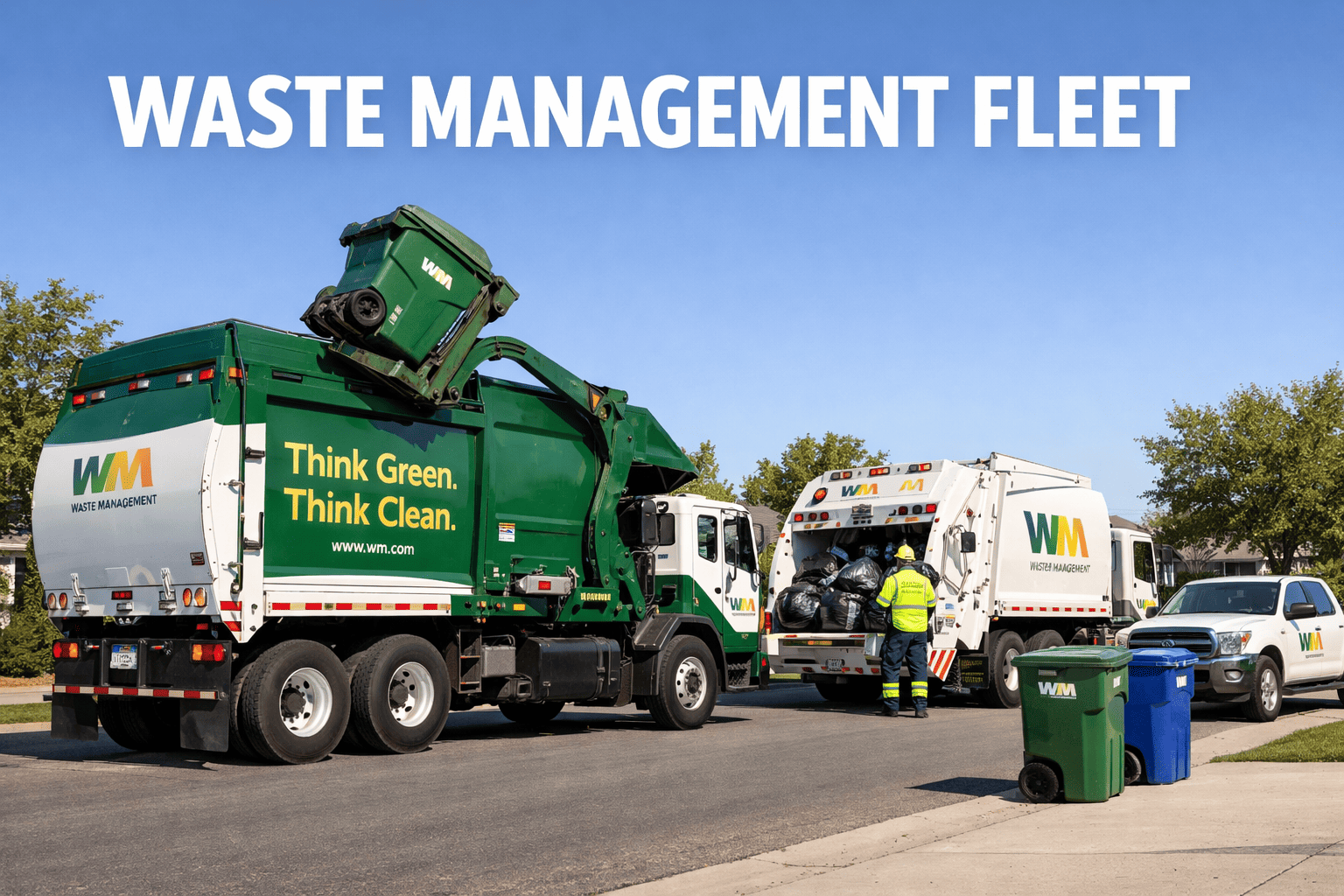
When a 78-truck municipal waste fleet was losing over $1.2 million annually to inefficient routes, missed pickups, and fuel waste, they knew something had to change. By implementing smart routing and container tracking, they reduced miles by 30%, saved $1.4M annually, and transformed garbage collection from daily chaos into a precision operation. Here's exactly how they did it — and how your waste fleet can achieve the same results.
The Challenge: Waste Collection in Crisis
This mid-sized municipal fleet was drowning in inefficiency. Routes designed 15 years ago hadn't kept up with population growth. Drivers followed the same paths whether containers were full or empty. Citizen complaints were flooding in, fuel costs were out of control, and the fleet manager spent more time apologizing than optimizing.
Trucks visiting half-empty bins on fixed schedules
Garbage trucks average just 3 MPG
Missed pickups, overflowing bins, wrong days
Reactive maintenance, breakdowns mid-route
The Solution: Smart Routing + Container Tracking
Ultrasonic sensors deployed on 2,400 commercial containers. Real-time fill data feeds directly into routing system.
Algorithms analyze fill levels, traffic, truck capacity, and disposal facility queues to build optimal daily routes.
GPS monitoring shows every truck position. Dispatchers reroute instantly for breakdowns, traffic, or missed stops.
Engine diagnostics predict failures 3-4 weeks early. No more mid-route breakdowns stranding trucks.
See how FleetRabbit's AI routing can cut your collection miles by 20-30%.
The Results: Transformation in 90 Days
How Container Tracking Changed Everything
Implementation Timeline
GPS installed on all 78 trucks. Historical route data imported. Sensor deployment on 500 commercial containers.
20 trucks on optimized routes. Driver training. Dispatcher dashboard live. Refined algorithms based on real performance.
All 78 trucks on AI-optimized routes. Remaining 1,900 sensors deployed. Predictive maintenance activated.
30% mile reduction confirmed. $1.4M annual savings validated. Citizen complaints down 88%.
Key Takeaways for Waste Fleet Operators
Studies show 10-35% cost savings. Collection accounts for 60-80% of total waste management costs — small improvements create massive impact.
40% of collection trips go to under-filled containers. IoT sensors route trucks only to bins that need service, cutting trips dramatically.
At 3-4.5 MPG with stop-and-go cyclesevery unnecessary mile costs $4-6 in fuel alone. Route optimization is the highest-leverage investment.
A breakdown during collection disrupts the entire day. 52% downtime reduction means routes complete as planned.
Frequently Asked Questions
How much can waste fleet route optimization actually save?
Industry studies show 10-35% cost savings from route optimization. The City of Virginia Beach achieved $1.1M annual savings with a 26% reduction in routes. This case study achieved $1.4M savings with 30% fewer miles. Collection costs are 60-80% of total waste management budgets, so even 10% improvement creates significant impact.
Do we need IoT sensors on every container?
No. Most fleets start with commercial and high-volume containers where variable fill rates create the biggest optimization opportunity. Residential routes can be optimized using historical data and zone-based algorithms. Sensors typically deliver ROI within 12 months at current prices ($50-150 per sensor).
How long does implementation take?
Most waste fleets are fully operational within 6-8 weeks. GPS installation takes 1-2 weeks. Pilot programs run 2-3 weeks to refine algorithms. Full rollout follows. This fleet achieved full ROI in 8 weeks — faster than most enterprise software implementations.
What about driver resistance to new routes?
Drivers typically prefer optimized routes because they're more logical and less frustrating. Better routes mean less overtime, fewer mid-route breakdowns, and more predictable schedules. This fleet saw driver satisfaction increase significantly after implementation.
Does this work for residential collection or just commercial?
Both. Commercial containers benefit most from IoT sensors due to variable fill rates. Residential routes benefit from zone optimization, traffic-aware scheduling, and dynamic re-routing. This fleet optimized both residential (185,000 households) and commercial collection.
Book a demo to see how FleetRabbit's AI routing and maintenance platform can cut your collection miles, reduce fuel costs, and eliminate missed pickups.