How to Build a Scalable E-Commerce Logistics Operation From the Ground Up
Building a scalable e-commerce logistics operation across the Western US — California, Nevada, Oregon, Washington, and Arizona — requires more than adding vehicles to a fleet. It demands a systems-level framework that absorbs growth without degrading delivery speed, cost control, or compliance. Fleet Rabbit's AI-powered logistics platform connects every vehicle, warehouse node, and last-mile route into one intelligent operation. Book a demo to see Fleet Rabbit applied to your e-commerce logistics operation.
Quick Answer
Scaling an e-commerce logistics operation from 10 to 500+ vehicles requires five infrastructure layers: real-time fleet visibility, dynamic route optimization, predictive vehicle maintenance, fulfillment integration, and driver performance analytics — unified in a single platform. Western US operators using Fleet Rabbit scale throughput 3x without proportional headcount growth, cut last-mile cost 22–31%, and maintain sub-2% exception rates at full fleet scale.
Why Western US E-Commerce Logistics Is a Different Problem
Western US logistics operators contend with California AB5 compliance, Nevada warehouse corridor congestion, Seattle's dense urban last-mile environment, and Phoenix's heat-driven vehicle maintenance cycles — all simultaneously. A 10-vehicle operation in Los Angeles faces fundamentally different scaling pressures than the same fleet in Chicago or Dallas. Fleet Rabbit's platform was built by operators who ran these exact routes.
Avg Scale Timeline
18 mo
10 → 100 vehicles without platform
Cost Bleed
$340K
avg annual ops waste / 50-vehicle fleet
Last-Mile Share
53%
of total delivery cost in CA/WA metros
CSAT Impact
41%
of returns tied to delivery experience
The Five-Layer Scaling Framework
Layer 1: Real-Time Fleet Visibility
Every vehicle on one live map — location, speed, idle status, and delivery progress updated every 30 seconds. Fleet managers in Sacramento and Portland dispatch with full situational awareness from day one, at any fleet size.
Layer 2: Dynamic Route Optimization
AI re-routes in real time around LA freeway incidents, Seattle port delays, and Phoenix heat closures. Stop sequencing adjusts automatically as orders are added mid-shift — reducing miles driven per delivery 18–24% at full scale.
Layer 3: Predictive Maintenance
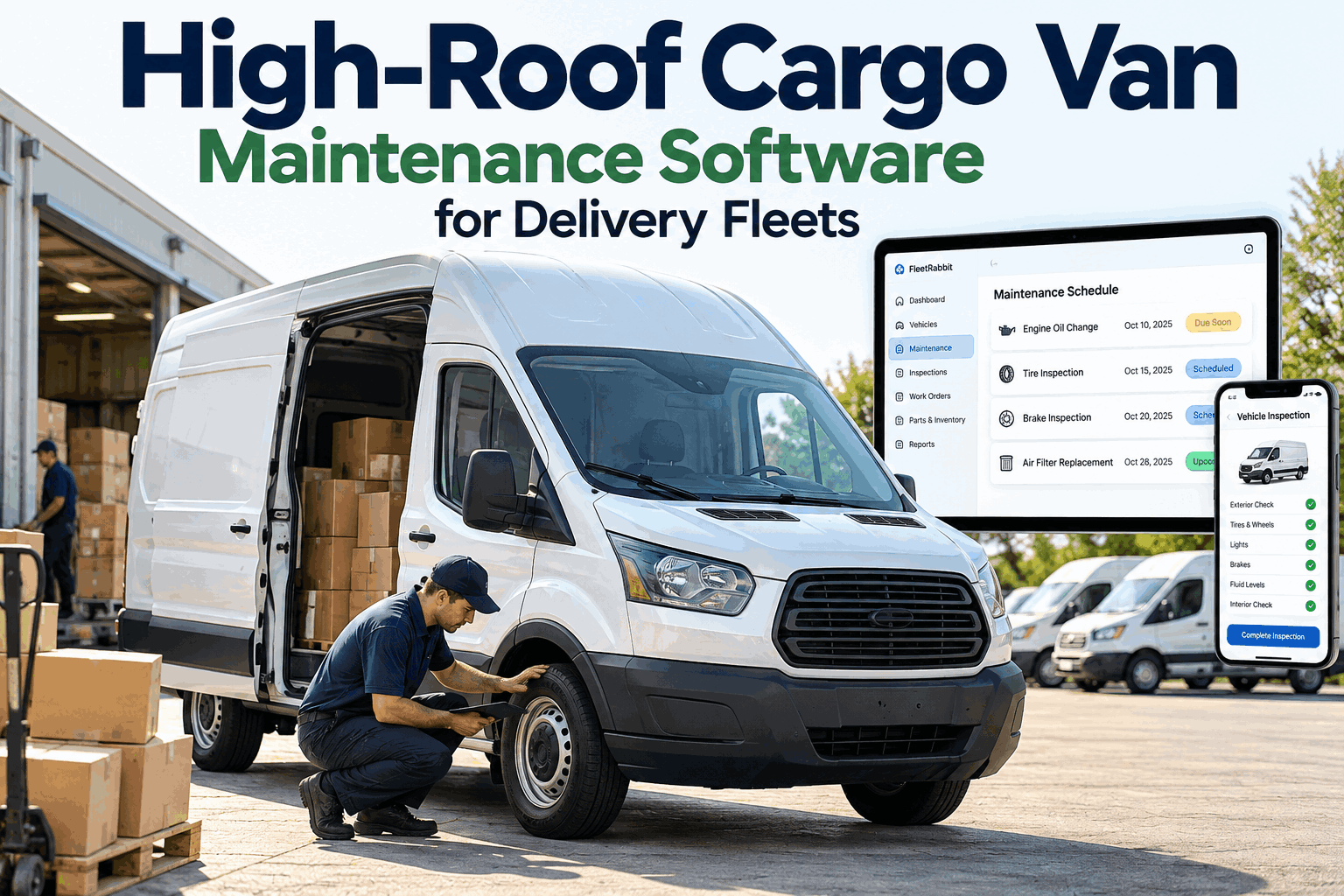
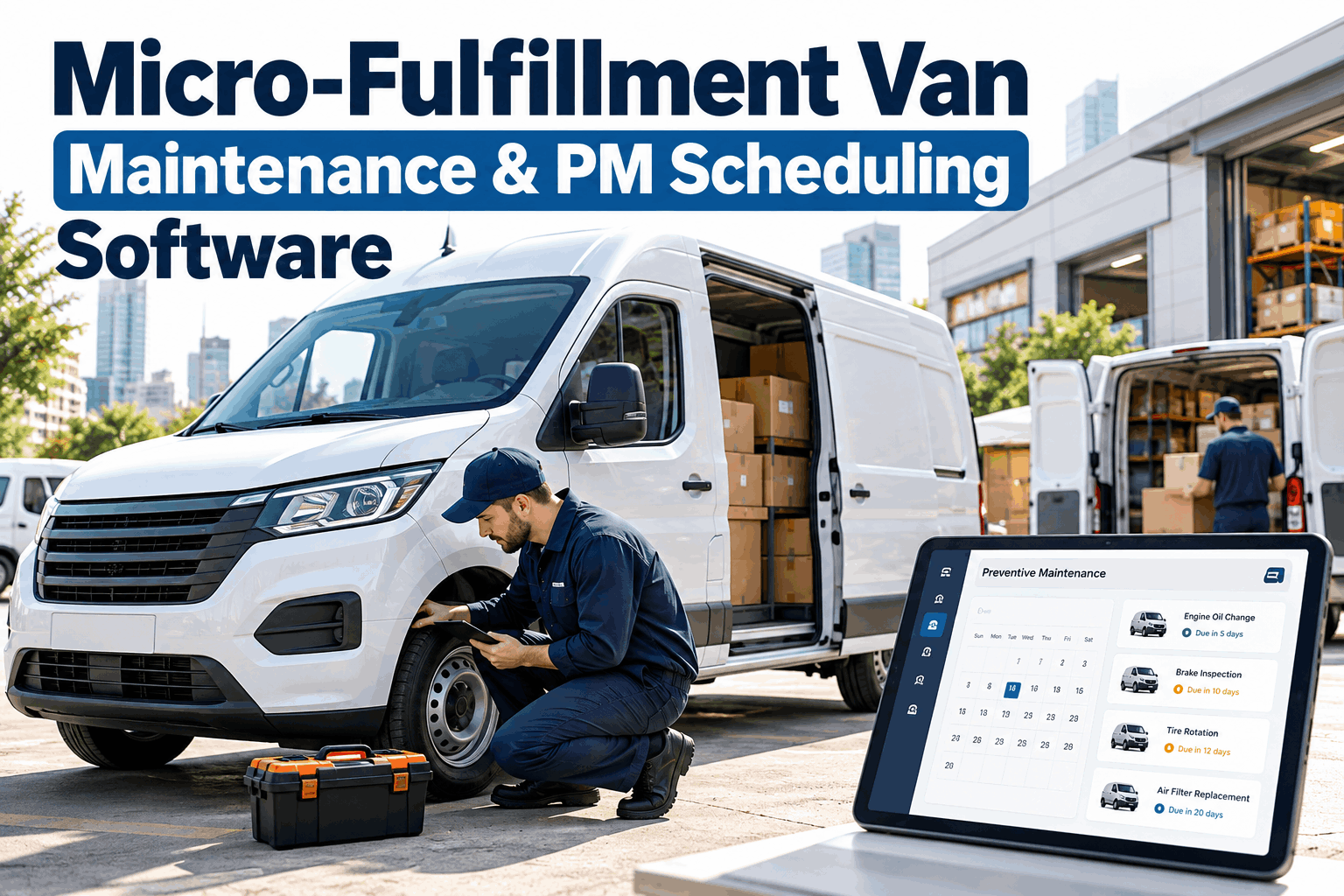
Engine diagnostics, brake wear, tire pressure, and battery health monitored continuously. Alerts fire 2–3 weeks before failure — preventing the $6,800–$14,000 breakdown cost that spikes during peak season when every vehicle is critical.
Layer 4: Fulfillment Integration
Fleet Rabbit connects WMS, carrier APIs, and e-commerce platforms — Shopify, WooCommerce, and custom ERPs — so dispatch triggers automatically at order confirmation. Zero manual handoffs from pick to doorstep.
Layer 5: Driver Performance Analytics
Delivery success rate, stop efficiency, idle time, and safety scoring tracked per driver. Weekly scorecards surface coaching opportunities — Western US fleets using driver analytics reduce failed delivery attempts 34% within 90 days.
Phase 1 (Vehicles 1–50): Build the Data Foundation
1
Instrument Every Vehicle From Day One
The most expensive scaling mistake is retrofitting visibility infrastructure after growth. Fleet Rabbit installs OBD-II and CAN bus sensors on all vehicle types — sprinter vans, box trucks, cargo bikes — in 2–4 hours per vehicle. California and Nevada operators field full installation teams with 48-hour deployment windows.
Los Angeles e-commerce operator, 28 vehicles: Deployed Fleet Rabbit in 3 days. Baseline data established within 30 days — idle rate 31%, avg miles/delivery 6.8, top vs. bottom driver delivery rate gap: 23%.
2
Establish Zone-Level Route Templates
Before scaling volume, define delivery zone boundaries for your Western US service area — LA basin, Bay Area, Phoenix metro, Seattle-Tacoma corridor. Fleet Rabbit's zone optimizer assigns vehicle types to zones by stop density and weight class, cutting average drive time per delivery 19% before a single route runs.
Zone mappingVehicle-type matchingStop density analysis
3
Set Performance Baselines Before You Scale
30 days of IoT data produces your operational fingerprint: cost-per-delivery, idle rate, failed attempt rate, fuel spend per mile. These baselines are the benchmark every future scaling decision is measured against.
Oregon-based DTC brand, 18 vans: Fleet Rabbit baseline identified $4.10 cost-per-delivery. Achieved $2.91 within 4 months — a 29% reduction with the same vehicle count.
E-Commerce Logistics Platform
Scale From 10 to 500+ Vehicles Without Losing Control — Free Trial
OEM-agnostic. Connects any vehicle type. Real-time routing, predictive maintenance, and driver analytics from day one across your Western US delivery network.
At 50+ vehicles, manual route planning is the primary operational bottleneck. Fleet Rabbit's dispatch engine ingests order manifests, driver availability, vehicle load capacity, and real-time traffic — generating optimized routes in under 90 seconds. Western US dispatch teams report 4–6 hours of daily planning time eliminated per 50-vehicle increment.
02
Compliance Layer
California AB5 and HOS Compliance at Scale
California's AB5 classification requirements and federal Hours of Service rules create compliance risk that compounds as fleets grow. Fleet Rabbit's compliance module tracks driver hours, break requirements, and contractor classification flags — generating audit-ready logs automatically for California DOT and FMCSA review.
Q4 peak season in Western US e-commerce concentrates maximum delivery volume in November–December — exactly when deferred maintenance failures surface. Fleet Rabbit's predictive engine flags brake wear, transmission stress, and cooling system degradation 3–4 weeks ahead, allowing scheduled repair before peak locks the maintenance window.
04
Cost Analytics
Per-Route P&L Surfaces Hidden Losses
Fleet Rabbit assigns fuel, labor, maintenance, and failed-attempt cost to every route and zone — producing per-delivery P&L by geography. Phoenix suburban routes routinely show 40% lower cost-per-delivery than LA urban cores, informing where to use owned-fleet capacity versus third-party carriers.
Before vs. After Fleet Rabbit — 50-Unit Western US E-Commerce Fleet
QHow does Fleet Rabbit handle California AB5 compliance for delivery fleets?
Fleet Rabbit logs driver hours, route assignments, and earnings data in formats aligned with California's AB5 worker classification requirements. The platform flags classification risk factors automatically and generates documentation for legal review — reducing audit exposure at scale as enforcement evolves.
QWhat vehicle types does Fleet Rabbit support for e-commerce delivery?
Fleet Rabbit connects cargo vans, sprinter vans, box trucks, flatbeds, and EV delivery vehicles via OBD-II and CAN bus interfaces. For electric vehicles — increasingly common in California and Washington — Fleet Rabbit tracks battery state-of-charge, range estimation, and charging stop optimization within route plans. Mixed ICE and EV fleets run in a single dashboard.
QHow long does it take to scale from 50 to 200 vehicles on Fleet Rabbit?
Fleet Rabbit's platform scales without re-implementation — adding vehicles is a hardware installation, not a software project. Western US installation teams onboard 8–12 vehicles per day. A 150-vehicle expansion deploys in 2–3 weeks. Route templates, compliance rules, and performance benchmarks established at 50 vehicles automatically apply to new units — there is no rework when you grow.
QDoes Fleet Rabbit integrate with our existing WMS or OMS?
Yes. Fleet Rabbit connects via REST API to major WMS platforms (Manhattan Associates, Blue Yonder, HighJump), OMS systems (Shopify, Magento, custom builds), and ERP platforms (SAP, Oracle, NetSuite). The API integration team targets 2–4 week implementation for standard connectors, with custom integration support for proprietary systems common in large Western US fulfillment operations.
The four AI capabilities transforming fleet operations — real-time GPS, predictive health monitoring, dynamic route optimization, and delivery performance analytics — with ROI data for each.
Real-time utilization tracking, idle reduction analytics, and fleet right-sizing data that reduce total operating cost for Western US operators at every growth stage.
How GPS hardware, IoT sensors, and cloud analytics combine to deliver real-time fleet visibility, predictive maintenance, and operational intelligence across any fleet type.
Build Your Scalable Logistics Operation — See Fleet Rabbit in Action
Fleet Rabbit's platform delivers all five scaling layers through one system — real-time visibility, dynamic routing, predictive maintenance, fulfillment integration, and driver analytics — across your Western US delivery network. Any vehicle type. Full ROI in 60 days.