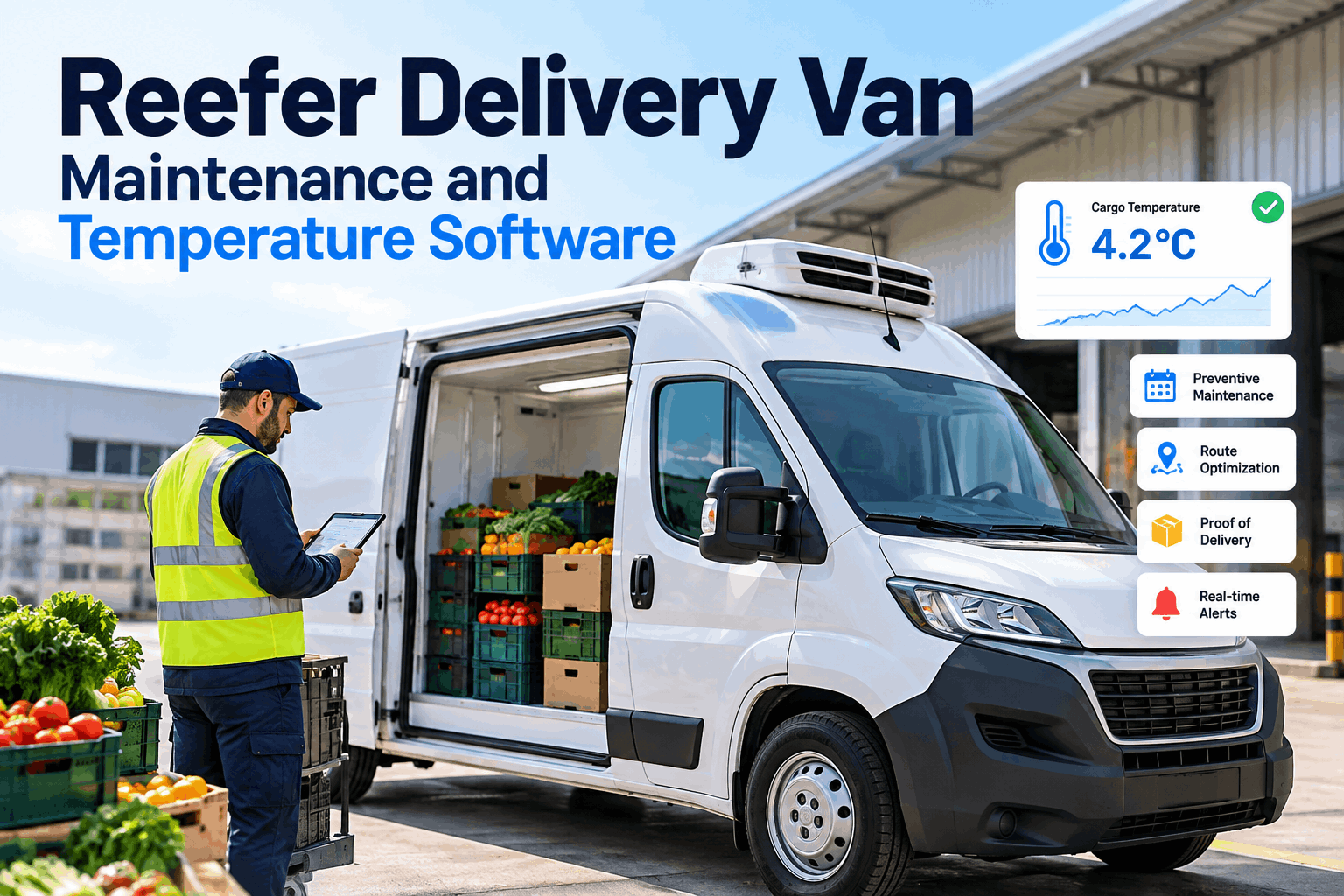
Direct-to-consumer grocery fulfillment carriers, pharmaceutical courier networks, and specialty cold-chain logistics providers operate high-density urban routes where mechanical van roadworthiness and thermal integrity are inseparable. In a multi-drop last-mile delivery cycle, a refrigerated delivery van (such as a Mercedes-Benz Sprinter, Ford Transit, or Ram ProMaster equipped with an engine-driven or electric rooftop transport refrigeration unit) opens its rear cargo doors between 40 and 80 times per shift. Each doorstep stop introduces ambient thermal shock, placing extreme strain on secondary auxiliary compressors, electric standby condenser fans, insulated bulkhead seals, and dual-battery alternator systems. When cold-chain delivery carriers attempt to manage van maintenance through disconnected spreadsheets, paper driver vehicle inspection reports (DVIR), or unlinked cab temperature gauges, mechanical breakdowns and product spoilage become inevitable. A slipping auxiliary compressor belt, blocked evaporator drain tube, or degraded rear door perimeter gasket can cause interior temperatures to spike above safe thresholds during afternoon delivery windows, resulting in rejected customer deliveries, wasted perishables, and FDA FSMA compliance violations. Implementing specialized reefer delivery van maintenance and temperature software bridges the gap between mechanical health and cold-chain monitoring. By coupling live Bluetooth Low Energy (BLE) temperature telemetry, door-dwell sensors, meter-based preventive maintenance (PM) triggers, and automated electronic proof of delivery (ePOD), fleet directors eliminate roadside breakdowns and defend product quality at the doorstep. To examine how connected reefer van intelligence safeguards perishable routes and optimizes maintenance budgets, book a technical demonstration with our cold-chain delivery operations team or configure your refrigerated van fleet roster immediately through our free platform sign up.
Reefer Delivery Van Maintenance and Temperature Software
An advanced cold-chain fleet maintenance and thermal compliance blueprint for last-mile logistics directors and refrigerated delivery superintendents. Unify rooftop TRU diagnostics, live compartment airflow telemetry, automated PM-A/B scheduling, and photo-verified contactless doorstep proof of delivery.
Protect Last-Mile Perishables and Modernize Your Reefer Van Maintenance
Eliminate doorstep food spoilage, connect directly to rooftop refrigeration units and wireless temperature probes, automate PM-A/B scheduling, and capture contactless proof of delivery starting from $3/vehicle/month with no hardware lock-in.
The Dual-System Operational Reality of Refrigerated Delivery Vans
Operating an urban refrigerated delivery van fleet introduces complex mechanical dependencies that standard dry-freight parcel vans never face. In a standard last-mile delivery van, vehicle maintenance focuses on commercial tire wear, brake pads, front suspensions, and engine oil changes. In a reefer delivery van, however, the vehicle chassis is mechanically and electrically linked to a dedicated transport refrigeration unit (TRU). Whether powered by a secondary engine bracket compressor, an all-electric 12V/24V high-output alternator feed, or a plug-in hybrid electric standby unit, the cooling apparatus operates under extreme strain in urban environments. Stop-and-go city traffic starves condenser coils of natural airflow, forcing electric fans to run continuously at maximum duty cycles. Simultaneously, delivery couriers open rear and side doors repeatedly in high summer humidity, introducing warm air that condenses across evaporator coils and leads to rapid frost build-up. If an auxiliary compressor drive belt stretches or an electric condenser fan motor draws excessive amperage, the van's main 12V electrical system can suffer voltage drops that drain the vehicle battery, leaving the courier stranded at the curb. Furthermore, the Food Safety Modernization Act (FSMA Rule 204) and global Good Distribution Practice (GDP) standards mandate unbroken thermal records from loading dock to doorstep. Purpose-built reefer delivery van software integrates vehicle CAN-bus diagnostics, auxiliary compressor runtime hours, wireless cargo compartment probes, and door-dwell sensors into an automated maintenance engine. Operations directors and fleet superintendents can evaluate multi-stop cold-chain workflows by scheduling an interactive reefer van software demonstration or configure custom multi-zone temperature rules directly through our quick platform sign up.
Auxiliary Compressor & Bracket Belt Tension Monitoring
Tracks auxiliary engine-mounted compressor hours, belt tension alignment, and electromagnetic clutch engagement independently of chassis odometer miles. Schedules proactive belt replacements and clutch gap inspections before highway shearing occurs.
Door-Dwell Geofencing & Rapid Thermal Recovery Alarms
Correlates wireless magnetic door-switch sensors with cargo compartment BLE temperature probes. If rear cargo doors remain open past acceptable drop thresholds (e.g., > 4 minutes), the system alerts the driver and stages cooling recovery modes.
Dual-Battery Alternator & Electric Standby Diagnostics
Monitors high-amp auxiliary alternator loads, secondary battery bank state-of-health, and overnight electric shore-power plug-in connections. Detects weak battery cells and grounded shore-power cords before morning route rollout.
Doorstep Contactless ePOD with Cryptographic Temp Stamps
Binds geofenced doorstep delivery photos directly to real-time cargo temperature data and delivery timestamps. The customer receives a digital receipt showing the verified delivery photo and cold-chain compliance proof at drop-off.
Direct Technical Matrix: Manual Clipboards vs. FleetRabbit Reefer Van Platform
Managing last-mile refrigerated delivery vans using paper vehicle inspection logs, standalone consumer thermometer displays, and manual post-route temperature audits creates serious operational blind spots. When a driver encounters a failing door seal or slipping compressor belt on the road, dispatchers only find out after customer delivery refusals happen. Review how legacy manual methods compare directly against FleetRabbit's automated, real-time reefer delivery van maintenance and temperature monitoring platform across primary operational criteria. Logistics directors and fleet safety managers can inspect automated temperature escalation workflows by booking an executive cold-chain software evaluation demo or explore our mobile pre-trip inspection checklists via our self-service sign up.
| Reefer Van Operation Dimension | Manual Paper DVIR & Standalone Temp Gauges | FleetRabbit Connected Reefer Van Platform | Carriers & Shippers Advantage |
|---|---|---|---|
| Temperature Excursion Interception | Identified at doorstep handoff; customer rejects warm load | Immediate in-cab and dispatch alerts within 30 seconds of drift | Enables real-time driver correction before product degrades |
| Rooftop TRU Maintenance Scheduling | Calendar-based guesses; ignored until compressor seizes | Automated PM triggers based on actual TRU runtime hours | Extends auxiliary cooling compressor operating life by over 3 years |
| Pre-Trip Pulldown Verification | Pencil-whipping common; unverified driver checkmarks | Photo-enforced mobile eDVIR logging verified pulldown curves | Guarantees vans never leave warehouse without reaching setpoint |
| Door-Open Dwell Accountability | Completely unmonitored; doors left open during deliveries | Wireless magnetic door sensors track exact dwell seconds | Cuts auxiliary cooling load and preserves cabin battery life |
| FDA FSMA Rule 204 Audit Records | Weeks spent collecting and sorting paper trip sheets | 1-click export of cryptographically signed thermal trip dossiers | Shields logistics carriers from food safety non-compliance fines |
4-Stage Complete Last-Mile Reefer Van Maintenance Sequence
FleetRabbit standardizes refrigerated delivery van operations into an automated, four-stage workflow that connects morning warehouse pulldown inspections to live multi-drop route tracking, automated garage maintenance, and verified customer delivery handoffs. To explore how this automated cycle protects your perishable deliveries, book an operational reefer van walkthrough demo with our team.
Warehouse Pulldown eDVIR & Seal Audit
The courier launches the mobile app, verifying that the cargo box reaches setpoint, inspecting door rubber gaskets for tears, checking electric standby cords, and photographing clean floor drains.
Multi-Drop In-Transit Thermal Telematics
While navigating urban delivery routes, wireless BLE sensors stream cargo box temperatures and door-open states every 30 seconds, alerting the driver immediately if an extended stop compromises cargo.
Automated Diagnostic Fault Triage
If telematics detect abnormal alternator voltage draw or compressor clutch slippage, the system alerts dispatch, opens a shop repair ticket, and schedules service before roadside failure occurs.
Contactless Doorstep ePOD & Trip Ledger
Upon completing each delivery, the courier captures doorstep photo proof with embedded temperature stamps, archiving verifiable cold-chain compliance records in the cloud.
Financial Capital Stewardship: Eliminating Last-Mile Cold-Chain Waste
Operating a fleet of refrigerated delivery vans without specialized maintenance and temperature monitoring software creates compounding financial losses across customer freight rejections, emergency mobile roadside technician fees, premature auxiliary compressor failures, and customer refund disputes. When an unmonitored van's cooling system fails mid-route on a hot summer afternoon, an entire $12,000 to $25,000 load of specialty meats, prepared meals, or sensitive pharmaceuticals is ruined within an hour. Beyond cargo loss, poor refrigeration tuning and failing compressor belts lead to continuous high-load idling that wastes vehicle fuel and strains alternators. Identifying these common operational drains helps logistics executives build an airtight business case for automated maintenance software. Calculate your fleet's exact cost recovery by booking an operational delivery fleet assessment demo or get started directly via our rapid platform sign up.
Top Causes of Budget Waste in Last-Mile Refrigerated Fleets
Reefer Delivery Platform Capabilities
Triggers preventative maintenance work orders based on actual auxiliary compressor hours, engine run hours, and door cycles rather than calendar dates.
Requires couriers to photograph clean floor drains, intact door seals, and verified pulldown temperature displays before clearing morning pull-out.
Runs seamlessly on standard mobile smartphones and connects to wireless Bluetooth Low Energy (BLE) temperature probes without expensive black-box commitments.
ROI & Cold-Chain Operational Scalability for Fleet Executives
When fleet leadership evaluates refrigerated delivery van software, operations directors must measure financial return across cargo protection, vehicle uptime, maintenance efficiency, and customer satisfaction. FleetRabbit delivers quantifiable financial return across all primary last-mile cold-chain operating categories. To review your customized reefer van fleet savings forecast, schedule an executive briefing demo with our cold-chain team or start configuring your reefer van profiles today with a free account.
Zero Spoilage Write-Offs
Catching failing compressor clutches and excessive door-open dwell times prevents temperature excursions on multi-stop routes, eliminating costly customer freight refunds.
Rooftop TRU Longevity
Runtime-based belt replacements, condenser coil cleanings, and electric fan services extend rooftop refrigeration unit life by up to 3.8 years, deferring major replacement costs.
100% FSMA Audit Readiness
Audit-ready electronic temperature logs and verified proof of delivery records ensure complete compliance with FDA FSMA Rule 204, protecting shipper contracts.
Frequently Asked Questions: Reefer Delivery Van Maintenance & Temperature Software
What is a reefer delivery van, and why does it require specialized maintenance software?
A reefer delivery van is a commercial cargo van (such as a Ford Transit, Mercedes-Benz Sprinter, or Ram ProMaster) equipped with an insulated cargo box and a rooftop transport refrigeration unit (TRU). Unlike standard parcel delivery vans, reefer vans feature complex dual systems: an engine-mounted secondary compressor, auxiliary electric condenser fans, dual-battery alternator systems, and insulated door gaskets that endure frequent multi-stop door openings, requiring specialized mechanical and thermal tracking.
How does the software monitor cargo temperatures during high-frequency doorstep delivery routes?
FleetRabbit utilizes wireless Bluetooth Low Energy (BLE) temperature and humidity probes mounted inside the cargo compartment, paired with magnetic door-switch sensors. The sensors transmit real-time thermal readings to the driver's mobile app and central dispatch every 30 seconds. If an extended door opening or equipment failure causes temperatures to drift outside safe limits, the software triggers immediate visual and audible alerts.
What happens when a van fails its morning temperature pulldown inspection?
When a courier records that the reefer unit fails to reach setpoint during the morning pre-trip eDVIR walkaround, FleetRabbit automatically marks the vehicle as Out of Service in the dispatch software, preventing gate departure. The system opens an emergency repair ticket for the shop and alerts dispatch to assign a pre-chilled reserve van, keeping customer delivery schedules on time.
How does the software generate proof of delivery with verified temperature stamps?
During doorstep drop-off, the courier uses the FleetRabbit mobile app to capture an electronic proof of delivery (ePOD) photo and scan the parcel barcode. The platform automatically embeds real-time compartment temperature readings, GPS coordinates, and timestamps directly into the delivery token, providing customers and shippers with proof of continuous cold-chain compliance.
Upgrade Your Last-Mile Reefer Delivery Operations Today
Eliminate doorstep freight spoilage, protect rooftop refrigeration units, automate meter-based PM scheduling, and capture verified temperature-stamped proof of delivery. Deploy FleetRabbit today with zero proprietary hardware lock-in.