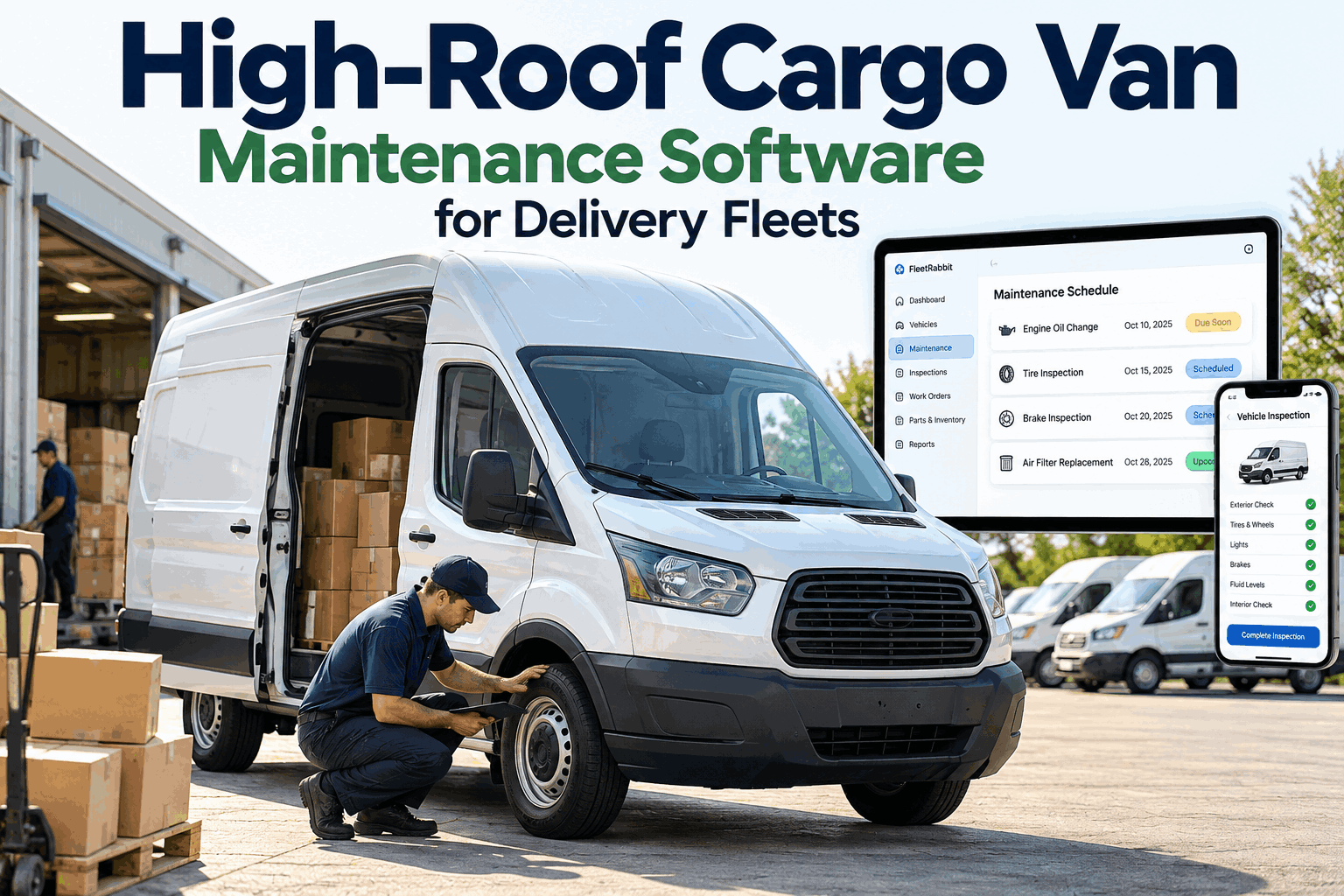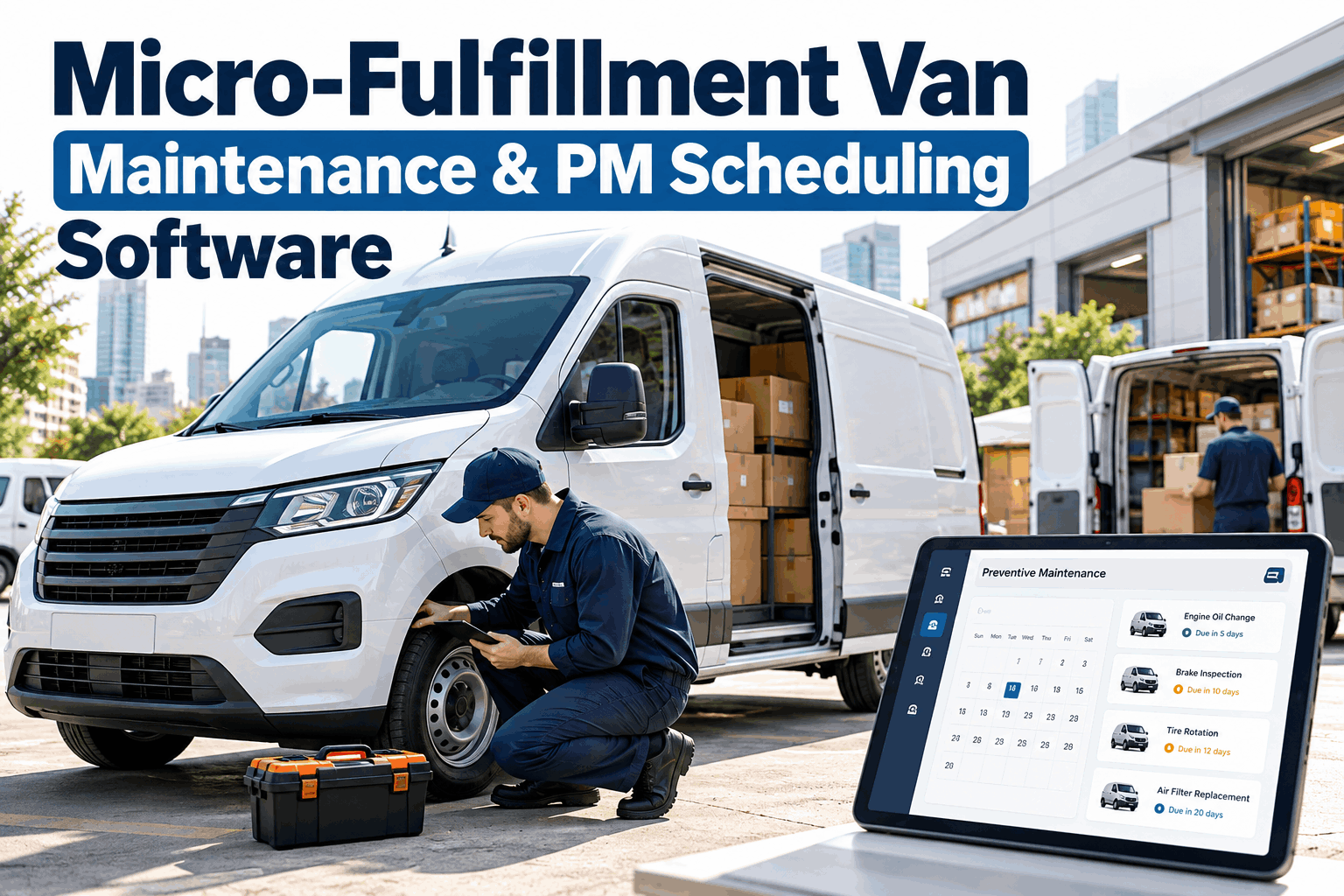
A micro-fulfillment van rarely leaves its neighborhood. It might drive twelve miles in a day and still work harder than a delivery truck that covers two hundred. The difference is cycles, not distance: the engine starts and stops dozens of times, the doors open and close on every run, and the van is back at the hub loading again before the odometer has moved much at all. Maintenance built around miles alone misses almost everything that is actually wearing this vehicle out. See how FleetRabbit schedules PM around real duty cycles, not just distance traveled.
Micro-Fulfillment Van Maintenance Software Built Around Trips, Not Just Miles
Schedule preventive maintenance by hub cycles, engine hours and calendar time, so a van that drives short and stops often gets serviced on the schedule it actually earns.
Illustrative figures for a typical hyperlocal delivery van. Your fleet's actual cycle count will vary by hub density and order volume.
Why a Short Route Doesn't Mean an Easy Life
Most preventive maintenance logic was built for trucks that spend hours at highway speed and accumulate wear in a predictable, mile-by-mile way. A micro-fulfillment van does almost the opposite. It runs a short loop from the hub to a cluster of doorsteps and back, several times a shift, which means the engine is constantly cycling between cold starts, idling at the curb and stop-and-go acceleration. That pattern is hard on a drivetrain in ways that steady highway miles are not, and none of it shows up clearly on the odometer.
This is the core scheduling problem for micro-fulfillment fleets: two vans can show the same mileage at the end of the month and be in genuinely different mechanical condition, because one of them made three times as many stops. A maintenance plan that only watches miles will service both vans on the same date and get it wrong for at least one of them.
What the odometer sees
Looks like a light week. On a mileage-only schedule, this van isn't due for anything.
What actually happened
Dozens of cold starts, hundreds of stops, hours of curb idling behind that low number.
The Hub-and-Spoke Day
Picture a single van's shift: it loads at the hub, runs a short loop of deliveries, returns to reload, and repeats. Each of those returns to the hub is also a moment when a quick check costs almost nothing, because the van is already stationary and being loaded anyway.
FleetRabbit's digital inspections are built for exactly this rhythm. A one-minute walk-around at the hub, logged on a phone between loads, catches a soft tire or a warning light long before it turns into a van stranded mid-loop with a live order on board.
Match your PM schedule to how the van is actually used
Set intervals by hub cycles, engine hours or calendar time, per vehicle. Free for your first three vans.
What Should Trigger Each Service Item
A single trigger for every task is where most fleets go wrong. The table below is a starting point for how different jobs align with different rhythms, not a fixed rulebook. Confirm intervals against your manufacturer's guidance and adjust as you learn your own fleet's wear patterns.
| Task | Best trigger | Why |
|---|---|---|
| Brake inspection | Engine hours / cycles | Frequent stops wear pads faster than steady driving does. |
| Battery and starter check | Cycles / calendar | Repeated cold starts stress the starting system regardless of miles. |
| Tire condition | Calendar + daily visual | Curb strikes and low-speed turns show up between formal inspections. |
| Oil and fluids | Engine hours or miles, whichever comes first | Idling accumulates engine hours without moving the odometer much. |
| Door and lift mechanisms | Cycles | Every stop is an open-close cycle, the real source of wear here. |
| Annual safety inspection | Calendar | Regulatory intervals don't care how the van was driven. |
What Downtime Actually Costs a Micro-Fulfillment Fleet
In a long-haul operation, a truck going down for a day is a scheduling headache. In micro-fulfillment, a van going down mid-shift is an active order with nowhere to go. The order was placed on a promise of minutes, not days, so there's no slack to absorb the interruption.
Whatever was on the van when it failed needs an immediate reassignment, not a next-day fix.
One van down can mean an entire hub's coverage radius shrinks for the rest of the shift.
More stops per van, longer loops, slower ETAs across the board.
Short delivery windows mean a delay is visible within minutes, not hours.
If Your Fleet Is Electric
Different wear, same principle
Electric micro-fulfillment vans trade engine hours for charge cycles and battery health, but the underlying idea doesn't change: short, frequent trips create their own maintenance rhythm that a simple mileage schedule won't catch.
Brakes often last longer with regenerative braking, while tires, suspension components and door mechanisms still wear on the same stop-and-go pattern as a combustion van.
A Two-Layer Inspection Rhythm
Quick hub check
Every return to hub- Tires and visible damage
- Warning lights
- Doors and lift mechanism
- Fluid leaks underneath
Full inspection
Weekly or on interval- Brakes and suspension
- Battery and electrical
- Fluid levels and condition
- Full underbody check
What FleetRabbit Gives a Micro-Fulfillment Fleet
Frequently Asked Questions
These vans accumulate wear through frequent starts, stops and short cycles rather than steady distance. Two vans with identical mileage can be in very different mechanical condition depending on how many stops each one made.
It's one full loop from the hub back to the hub. Counting cycles captures the stop-and-go workload that miles alone miss, and it lines up naturally with a moment the van is already stationary for a quick check.
Many fleets run a short walk-around at every return to the hub, since it costs almost no extra time while the van is being reloaded, with a deeper inspection on a weekly or interval basis.
Yes. Track charge cycles and battery health alongside brake, tire and door wear, each on the interval that fits it rather than one blanket schedule.
Yes. Start free with three vehicles and scale up as your hub network grows.
Service the Van for the Job It's Actually Doing
Cycle-aware PM, quick hub checks and full inspections, and live readiness across every hub. Free for your first three vehicles.