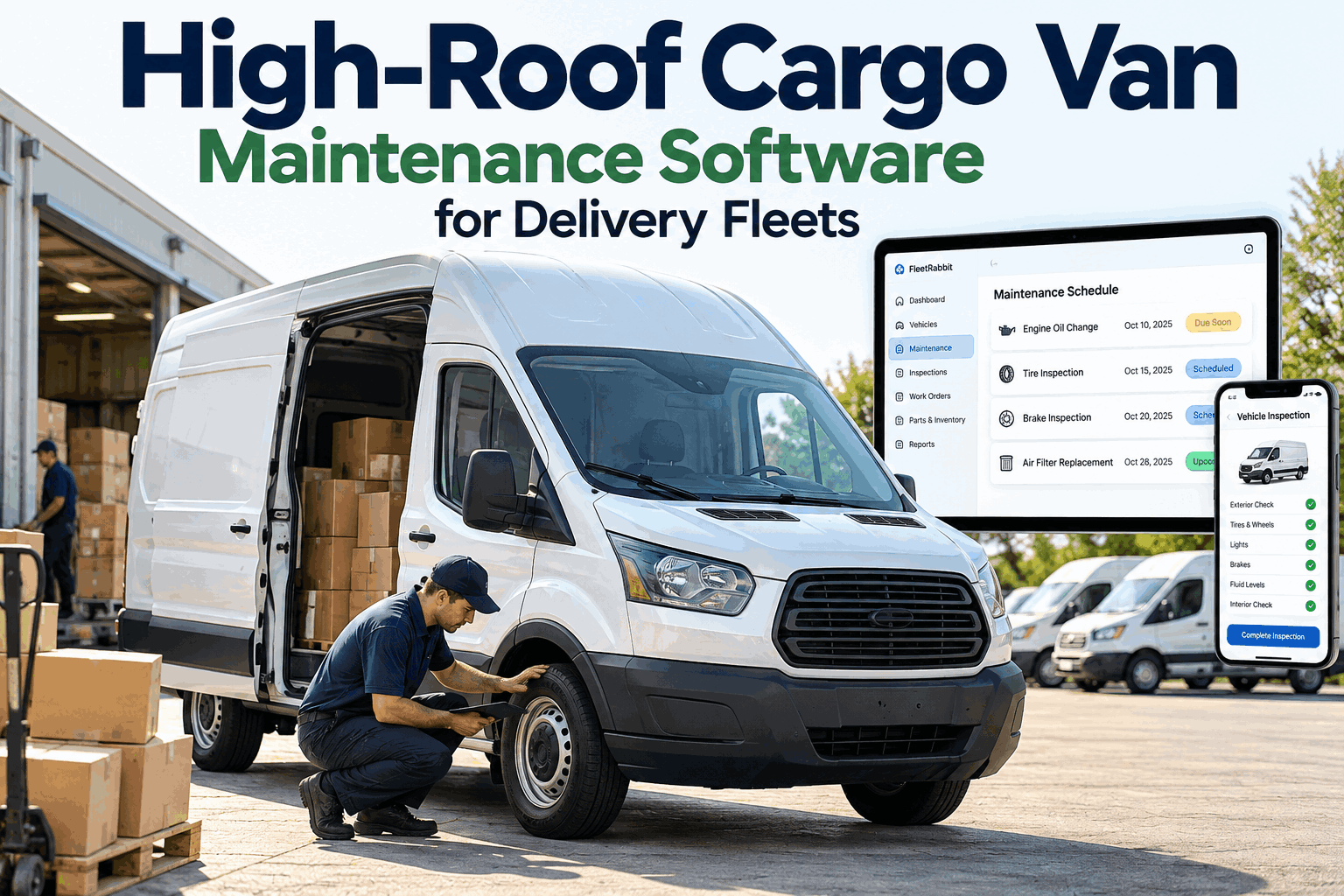
Add a few feet of roof height to a delivery van and you don't just get more room to stand up in the back. You get a taller, heavier vehicle with a higher center of gravity, a real risk of hitting something a standard van would clear, and interior racking that takes a beating nobody designed a checklist around. Most fleets service a high-roof van exactly like the low-roof model next to it, and miss most of what actually makes it different. See how FleetRabbit schedules maintenance around what actually wears on a high-roof van.
Schedule PM around the real wear points of a taller, heavier van, run digital inspections that check what a standard checklist misses, and keep every record in one place.
What Extra Height Actually Changes
A high-roof van isn't a taller version of the same problem. It's a different set of problems layered on top of the ones every delivery van already has. The added height and standing cargo space raises the center of gravity, shifts how weight sits over the axles, and adds a real, physical risk that a low-roof van simply doesn't carry: hitting something overhead that it wouldn't have touched at a lower height.
The Damage That Doesn't Show Up on a Standard Checklist
A roof strike rarely wrecks a van outright, which is exactly why it's dangerous. A scrape against a low beam or a parking garage ceiling can crack a roof vent, dent an antenna mount, or stress a seam without anyone noticing until water starts finding its way in weeks later. A checklist built for a low-roof van, focused on the usual bumper-height dents and scrapes, has no reason to look up.
Catch roof and upper-body damage before it becomes a leak
Digital inspections built for a high-roof van's real risk points. Free for your first three vehicles.
Suspension and Tires Work Harder Up Here
The extra weight up top doesn't stay up top when the van corners or brakes hard. It transfers into the suspension and tires, which is why these components often need closer attention on a high-roof van than the interval sheet for a standard model suggests.
Illustrative comparison. Actual wear depends on load, route and driving conditions.
Interior Racking Takes Its Own Beating
What Should Trigger Each Service Item
| Item | Best trigger | Why it matters more on a high-roof van |
|---|---|---|
| Suspension inspection | Miles, shorter interval | Higher center of gravity increases load |
| Tire wear and pressure | Calendar + visual check | Uneven wear from body roll in turns |
| Roof and upper body | Calendar | Strike damage isn't always visible at ground level |
| Interior racking | Calendar | Constant impact from daily loading |
| Brakes | Miles + daily check | Heavier loaded weight increases stopping distance |
What FleetRabbit Gives a High-Roof Cargo Van Fleet
Frequently Asked Questions
The chassis is often shared with a lower-roof model, but the added height and weight change how suspension, tires and the upper body wear, so a shared interval sheet can undersell the real risk.
Roof strikes often crack a vent or stress a seam without leaving an obvious mark at eye level, and the resulting leak can take weeks to show up.
Overhead clearance. A route, garage or drive-through a standard van clears without issue can be a direct hit for a high-roof model.
Yes. Every service item can be set per vehicle, so a high-roof van can run a tighter interval than a low-roof model on the same fleet.
Yes. Start free with three vehicles and scale up as your fleet grows.
Service the Van You Actually Have, Not the Standard One
PM built around real high-roof wear points, inspections that check the roof, and records ready whenever you need them.