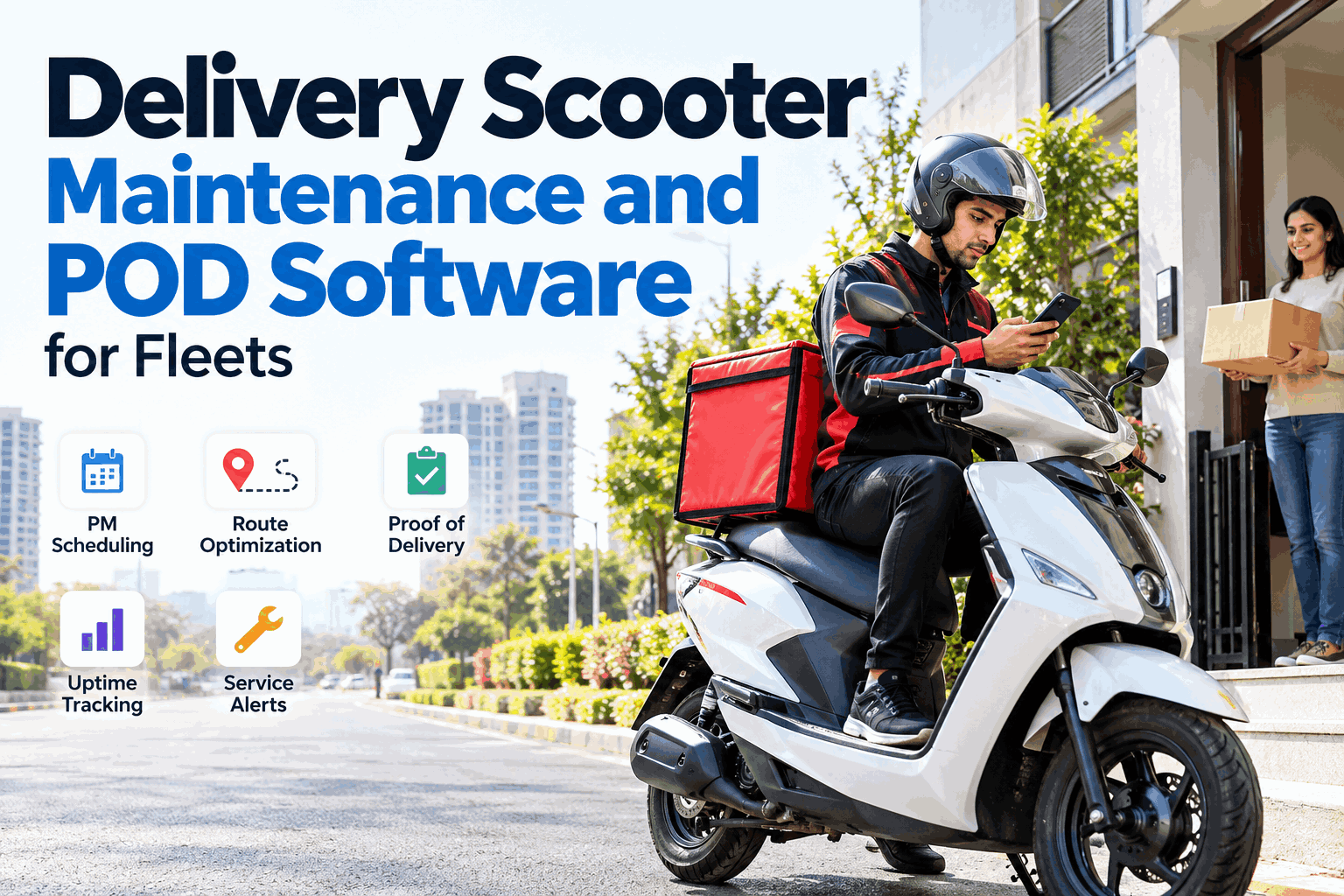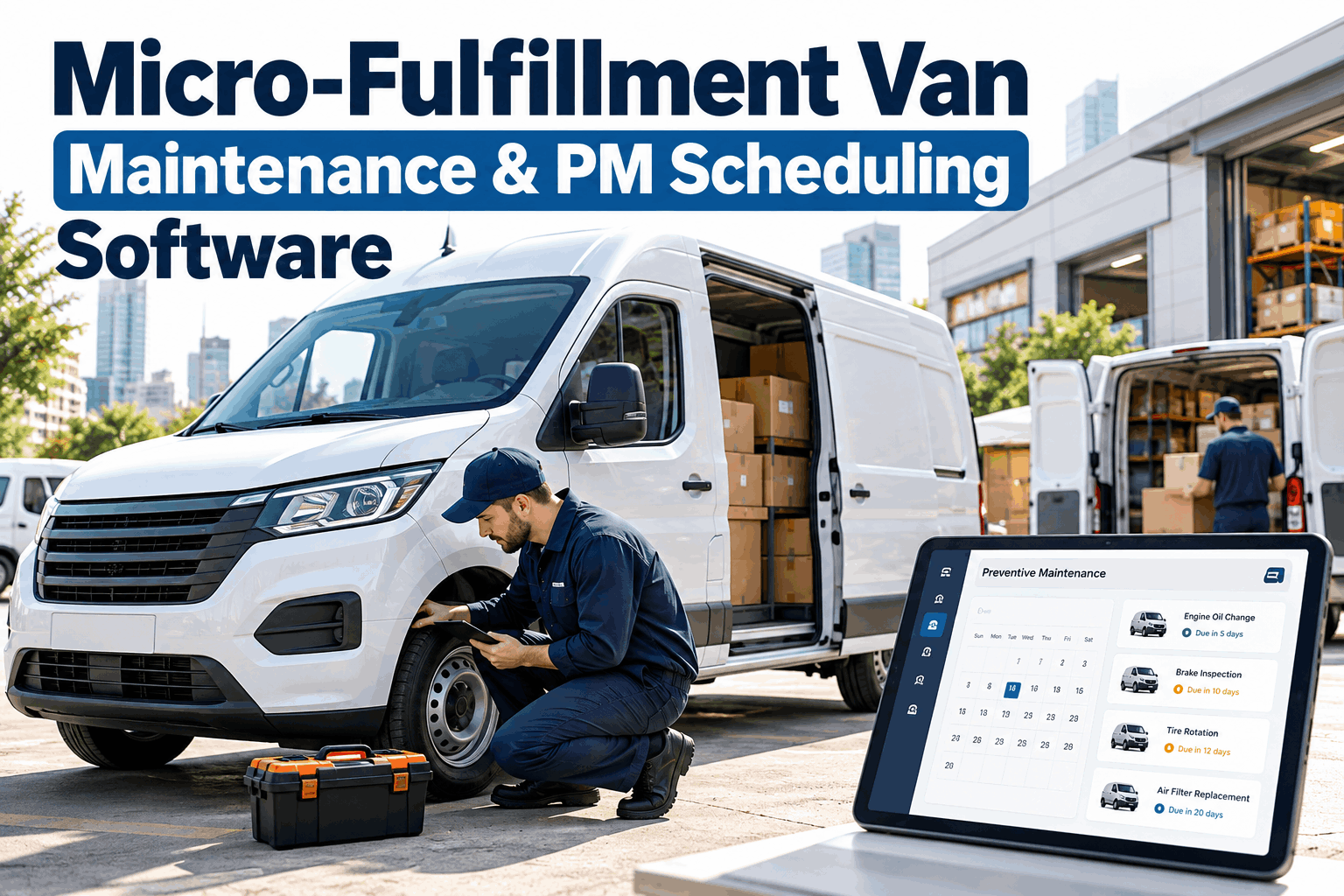
An e-trike doesn't fail like a van does. There's no engine warning light, no dashboard alert, just a battery that charges a little slower each week or brakes that grip a little later than they used to, until one day the rider notices on a hill with a full cargo box. Small vehicles wear in small, quiet ways, and that makes them easy to overlook on a maintenance schedule built for trucks. See how FleetRabbit keeps e-trike fleets serviced and every delivery documented.
Delivery E-Trike Maintenance and Proof of Delivery Software for Urban Fleets
Keep every battery, brake and cargo box on a service schedule built for small electric vehicles, and capture proof of delivery the moment a rider hands off the order.
Anatomy of an E-Trike, and What Actually Wears
An e-trike is small, but it isn't simple. It carries a battery, a motor, hydraulic or mechanical brakes, a drivetrain and a cargo box, and every one of those parts is asked to do more than it would on a personal bike: heavier loads, more stops, and hours outdoors in whatever the weather happens to be that day.
Weather Changes the Maintenance Math
Unlike a van cab, almost every part of an e-trike is exposed to the elements. That means the same component can wear at different rates depending on the season, and a fixed calendar interval alone won't always catch it.
General patterns for illustration. Follow your manufacturer's guidance for weather-specific care.
Put every trike component on its own schedule
Battery, brakes, tires and cargo box, each tracked on the interval that fits it. Free for your first three vehicles.
What Should Trigger Each Check
| Component | Best trigger | Daily rider check? |
|---|---|---|
| Battery health | Charge cycles | Range and charge speed |
| Brakes | Distance + calendar | Feel and stopping distance |
| Tires | Calendar | Pressure and visible wear |
| Chain or belt | Distance | Slipping or noise |
| Cargo box | Calendar | Latch and lock function |
| Lights and signals | Calendar | Function before every shift |
One Trike Down, One Rider Idle
A van fleet can sometimes shuffle a route to a spare vehicle. An e-trike fleet running tight urban zones often can't, because the trike and the rider are matched to a small area for a reason: it's what makes the delivery fast in the first place. When the trike is down, that rider and that zone are both effectively offline until it's fixed.
Proof of Delivery, Built for a Rider on Foot
An e-trike delivery usually ends with the rider stepping away from the vehicle entirely, walking a package to a door. Proof of delivery needs to work at that pace: a quick tap, not a multi-step process that slows the rider down between stops.
An answer that's already there
When a customer asks where their order is, or a dispatcher needs to confirm a delivery happened, the record already exists. No calling the rider mid-route to ask.
What FleetRabbit Brings to an E-Trike Fleet
Frequently Asked Questions
Components like batteries, brakes and cargo boxes wear in ways that aren't visible on a dashboard, and weather affects them more directly since most parts are exposed to the elements.
Charge cycles are usually a better signal than calendar time alone, since a heavily used trike accumulates cycles much faster than a lightly used one.
Yes. Pre-shift checks are built to take about a minute, covering the items most likely to cause a mid-route failure.
A timestamped record of location at drop-off, along with a photo or signature depending on how it's configured.
Yes. Start free with three vehicles and scale up as your fleet grows.
Keep Every Trike Rolling. Prove Every Delivery.
Component-level PM, quick rider inspections and proof of delivery in one place. Free for your first three vehicles.