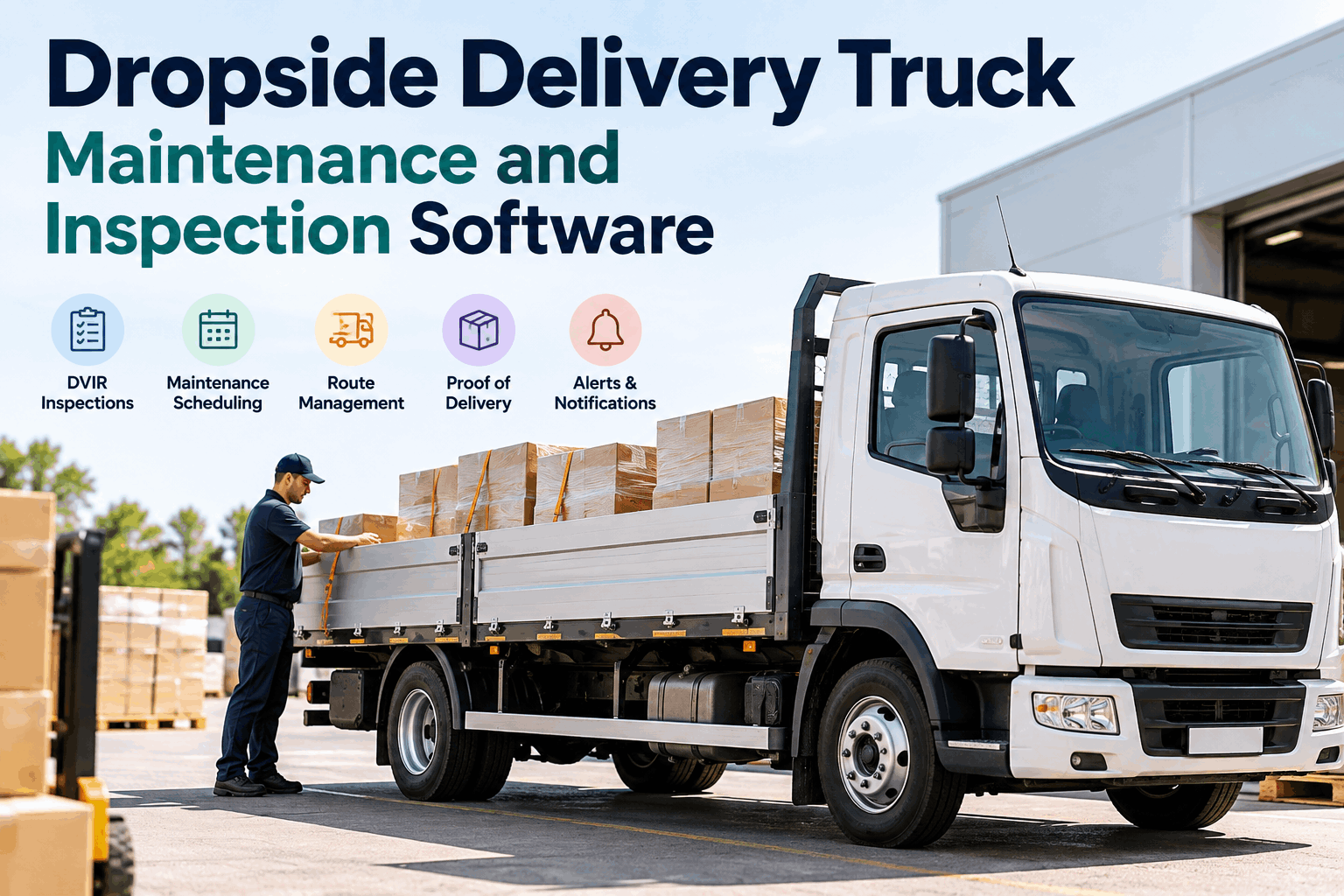
Building supply distributors, heavy parcel freight carriers, timber suppliers, and regional e-commerce logistics operators rely heavily on medium-duty dropside delivery trucks to manage oversized, palletized, and side-loaded cargo. With folding aluminum or steel side panels, removable corner pillars, rear tail-lifts, and flat load beds, dropside trucks offer rapid forklift turnaround times that conventional dry freight box vans cannot match. However, the unique mechanics of dropside utility bodies introduce severe structural and roadworthiness maintenance challenges. Side panel latches, hinge pins, load-securing stake pockets, under-chassis tie-down rails, and hydraulic tail-lift assemblies endure relentless lateral vibrations and mechanical shock from forklift impacts. When logistics carriers manage maintenance through static paper forms, grease-smeared vehicle condition reports, or fragmented spreadsheets, structural safety defects go unnoticed. A loose side-board hinge or damaged over-center locking latch can cause a drop-board to burst open at highway speeds, dumping tons of freight onto public roadways, creating catastrophic liability, and grounding vehicles with DOT out-of-service violations. Implementing purpose-built dropside delivery truck maintenance and inspection software combines digital pre-trip electronic Driver Vehicle Inspection Reports (eDVIR), meter-based preventative maintenance (PM), automated side-gate defect triage, and audit-ready DOT records into an integrated fleet operating engine. To explore how automated dropside fleet intelligence protects equipment uptime and freight safety, book a technical demonstration with our commercial vehicle operations specialists or launch your dropside fleet roster right away through our free platform sign up.
Dropside Delivery Truck Maintenance and Inspection Software
The dedicated maintenance scheduling, digital eDVIR, and side-load cargo safety blueprint for commercial delivery fleets. Automate hinge and latch inspections, schedule hydraulic tail-lift preventative service, streamline DOT pull-out compliance, and eliminate roadside cargo spills.
Upgrade Your Dropside Delivery Fleet Maintenance and Safety Operations
Eliminate paper pre-trip clipboards, automate hydraulic tail-lift service intervals, gate uninspected morning departures, and protect your commercial delivery margins starting from $3/vehicle/month with no hardware lock-in.
The Mechanical Vulnerabilities of Dropside Commercial Delivery Bodies
Operating a dropside delivery truck fleet involves maintaining complex structural hardware that conventional enclosed dry freight box trucks do not possess. In high-velocity regional delivery and construction logistics, dropside panels are opened, dropped, and slammed shut dozens of times per shift. Forklifts loading heavy palletized freight frequently scrape side-board rails, bend aluminum panel extrusions, or strike steel corner posts. Over thousands of highway transit miles, road vibrations work locking pins loose, fatigue hinge bracket welds, and degrade over-center clamp mechanisms. If a locking mechanism fails while a truck navigates an urban curve or highway interchange, the lateral cargo pressure can force the side-board outward, spilling heavy pallets into adjacent traffic lanes. Furthermore, many dropside trucks feature under-chassis hydraulic tail-lifts, PTO-driven cranes, or pneumatic load-leveling suspensions that require specialized lubrication and pressure testing. When commercial carriers rely on basic, generic oil-change schedules, critical dropside components are overlooked until roadside failures happen. Dedicated dropside delivery truck maintenance software establishes clear digital checklists, scheduled latch lubrication intervals, and mandatory photo-verified pre-trip inspections. Operations managers and garage superintendents can evaluate custom dropside inspection workflows by scheduling a tailored delivery fleet software demonstration or configure your commercial vehicle profiles directly through our quick platform sign up.
Side-Board Hinge Pin & Latch Retention Inspection
Guides drivers and shop mechanics through step-by-step physical inspections of all drop-down side panels, center pillar latches, over-center toggle clamps, and rear tail-board hinges, verifying that safety retainers and lock pins engage securely with zero play.
Load Bed Floor & Tie-Down Rail Integrity Audits
Checks heavy phenolic resin timber floors, steel diamond-plate bed overlays, recessed internal D-rings, and perimeter rope hooks. Alerts maintenance teams when floorboards rot or tie-down anchor welds crack under heavy pallet loads.
Hydraulic Tail-Lift & PTO Duty Cycle PM Scheduling
Tracks hydraulic liftgate cycles, power take-off (PTO) hours, and reservoir fluid levels independently of vehicle road mileage. Schedules preventative lubrication on lift arm bushings, cylinder packings, and electric control interlocks.
Audit-Ready DOT Part 396 eDVIR Compliance Vault
Maintains an immutable cloud record of every driver pre-trip and post-trip walkaround, corrective repair work order, and certified mechanic sign-off. Generates pre-formatted compliance dossiers for state DOT and FMCSA roadside safety audits.
Direct Technical Matrix: Manual Paper Checklists vs. FleetRabbit Dropside Platform
Managing dropside commercial vehicles using paper clipboards, driver logbooks, and generic garage maintenance databases leads to missing inspection records and delayed safety repairs. Review how traditional paper-based methods compare directly against FleetRabbit's specialized dropside delivery truck maintenance and inspection platform across essential commercial fleet metrics. Fleet directors and safety managers can inspect automated defect triage by scheduling an executive fleet software evaluation demo or explore our mobile pre-trip inspection checklists via our self-service sign up.
| Fleet Maintenance Dimension | Paper Clipboards & Manual Garage Spreadsheets | FleetRabbit Dropside Truck Platform | Logistics Carrier & Safety Advantage |
|---|---|---|---|
| Gate Pull-Out Readiness Enforcement | Subjective driver discretion; trucks roll with broken latches | Automated dispatch lock on failed critical side-gate checks | Zero compromised dropside vehicles operate on highways |
| Side-Board & Hinge Inspection Integrity | Pencil-whipping common; unverified driver checkmarks | Guided photo-enforced mobile eDVIR with timestamps | 100% verifiable driver accountability on every departure |
| Hydraulic Tail-Lift PM Scheduling | Calendar guesses; maintenance delayed until pump fails | Automated PM triggers based on actual lift cycles and hours | Cuts curbside lift breakdowns by over 88% |
| DOT & FMCSA Roadside Audit Preparation | Weeks spent collecting and sorting paper trip slips | 1-click export of certified digital inspection records | Eliminates DOT record-keeping audit fines and safety downgrades |
| Cargo Securement Tie-Down Verification | Ignored; straps and winches checked only during loading | Mandatory pre-trip tension and anchor rail checks | Prevents catastrophic load loss and costly cargo insurance claims |
4-Stage Daily Dropside Readiness and Maintenance Workflow
FleetRabbit standardizes commercial delivery fleet operations into an automated, four-stage workflow that connects morning driver walkarounds, terminal dispatch gating, certified shop repairs, and permanent audit compliance. To see how these automated stages protect your delivery routes, book an operational dropside fleet walkthrough demo with our team.
Driver Pull-Out eDVIR & Side-Gate Check
The driver logs into the mobile app at yard check-in, scanning the truck's QR code. The guided inspection requires photo verification of all side-board latches, tail-lift fluid levels, and tire tread before departure.
Automated Defect Triage & Dispatch Gating
If any safety component fails (such as an unlatched side-board toggle clamp or leaking lift cylinder), the platform immediately locks the truck from dispatch, alerts the fleet manager, and opens a shop repair ticket.
Certified Mechanic Repair & Sign-Off
Certified shop technicians pull required hinge pins and latch components from digital inventory, execute repairs, and sign off on roadworthiness using digital signatures on glass.
Return to Service & DOT Audit Synchronization
The completed repair releases the dispatch lock, updates the truck's maintenance dossier, logs lifecycle costs, and archives compliance records for annual DOT and FMCSA reviews.
Financial Capital Stewardship: Eliminating Dropside Fleet Budget Drains
Operating a fleet of commercial dropside delivery trucks without specialized maintenance software creates compounding financial losses across roadside towing calls, highway cargo loss claims, DOT out-of-service fines, and customer delivery delays. When a defective side panel opens at speed, scattering construction supplies across an interstate, the carrier faces vehicle damage, lost merchandise claims, tow recovery bills, and potential civil lawsuits. Identifying these common operational drains helps logistics leaders build an airtight business case for automated maintenance software before executive management. Calculate your fleet's exact cost recovery by booking an operational delivery fleet assessment demo or get started directly via our rapid platform sign up.
Top Causes of Budget Waste in Commercial Dropside Fleets
Delivery Fleet Platform Capabilities
Triggers preventative maintenance work orders based on actual hydraulic lift cycles, engine run hours, and mileage rather than generic calendar intervals.
Requires drivers to capture timestamped photographs of side-gate hinges, toggle clamps, and tie-down rails before clearing yard dispatch.
Runs seamlessly on standard smartphones and mobile tablets, connecting directly to existing dispatch and telematics modems without expensive black-box hardware.
ROI & Operational Scalability Framework for Logistics Leadership
When fleet leadership evaluates dropside maintenance management software, operations directors must measure financial return across vehicle uptime, component longevity, regulatory compliance, and cargo protection. FleetRabbit delivers quantifiable financial return across all primary commercial delivery fleet operating categories. To review your customized dropside fleet savings forecast, schedule an executive briefing demo with our logistics team or start configuring your dropside fleet profiles today with a free account.
Zero Load Spill Incidents
Catching worn hinge pins and fractured locking latches during morning staging prevents side-board collapses on public highways, eliminating expensive cargo loss write-offs.
Hydraulic Tail-Lift Longevity
Cycle-based hydraulic oil changes, bushing greasing, and interlock alignments extend liftgate service life by up to 3.5 years, deferring costly component replacements.
100% DOT Audit Defensibility
Audit-ready electronic pre-trip inspection dossiers and technician repair sign-offs ensure complete compliance with DOT FMCSA Part 396, defending commercial safety ratings.
Frequently Asked Questions: Dropside Delivery Truck Maintenance & Inspections
What is a dropside delivery truck, and why does it require specialized maintenance?
A dropside truck is a commercial flatbed vehicle equipped with hinged, fold-down side and rear panels that can be dropped to allow unobstructed side-loading with forklifts. Unlike enclosed box trucks, dropside bodies feature numerous moving mechanical parts—such as hinge pins, over-center toggle clamps, removable corner pillars, and perimeter tie-down rails—that endure continuous stress from cargo shifting and forklift impacts, requiring dedicated mechanical inspections.
What specific dropside body components must be verified during a pre-trip eDVIR?
Under DOT FMCSA Part 396 and cargo securement regulations, pre-trip inspections must verify that all drop-board hinges are securely pinned, locking latches engage with zero lateral play, corner posts lock firmly into stake pockets, tie-down rails and D-rings are uncracked, and hydraulic tail-lifts deploy and stow without hydraulic fluid leaks.
What happens when a driver identifies a damaged side panel latch before pull-out?
When a driver records a critical safety defect (such as a broken latch or cracked hinge pin), FleetRabbit immediately flags the vehicle as Out of Service in the dispatch software, preventing gate departure. The system opens an emergency work order for the maintenance shop and alerts dispatch to assign a pre-inspected reserve truck, keeping customer deliveries on schedule.
How does mobile eDVIR software prevent pencil-whipping during rushed morning walkarounds?
FleetRabbit enforces digital accountability by requiring drivers to capture real-time, time-stamped photographs of critical inspection points (including side-board locking clamps, tail-lift cylinders, and cargo tie-downs). The software measures inspection duration to prevent drivers from submitting unverified checklists in seconds.
Upgrade Your Dropside Delivery Fleet Maintenance Operations Today
Eliminate highway cargo spills, protect equipment uptime, automate hydraulic tail-lift service, and ensure complete DOT compliance. Deploy FleetRabbit today with zero proprietary hardware lock-in.
Share This Story, Choose Your Platform!
From our blog

Pull-Out Readiness in Transit: Pre-Trip Inspection Guide 2026

Non-Revenue Transit Vehicle Maintenance Software for Fleets

Wheelchair Van Maintenance Software for ADA Transit Compliance

Hybrid Transit Bus Maintenance Software for Transit Agencies

Reefer Downtime Tracking & Temperature Excursion Software

Transport Refrigeration Unit Temperature Monitoring Software

Government Fuel Card Integration for Fleet Management